

Syscia transisthmica
- Scientific Name
- Syscia transisthmica
- Subfamily
- Dorylinae
- Author
- Longino & Branstetter, 2021
- Distribution
- Found in 1 countries
Syscia transisthmica Overview
Syscia transisthmica is an ant species of the genus Syscia. It is primarily documented in 1 countries , including Mexico. Detailed taxonomic data and occurrence records can be further explored via authoritative databases such as AntWeb or the Global Biodiversity Information Facility (GBIF).
Syscia transisthmica
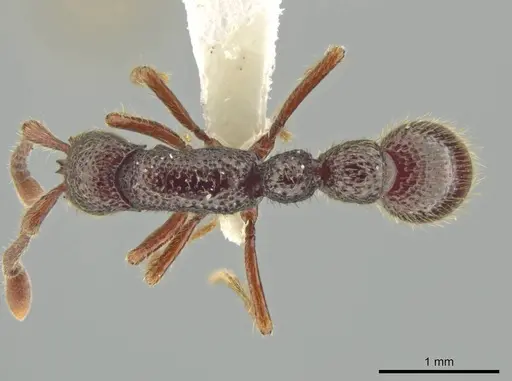
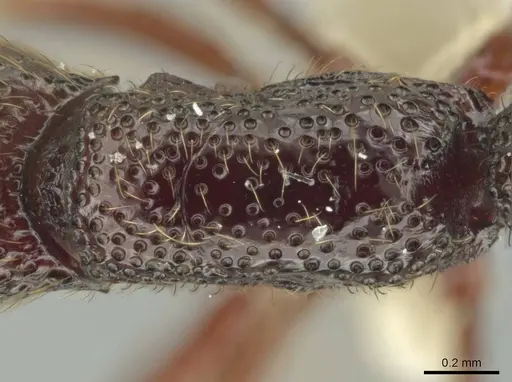
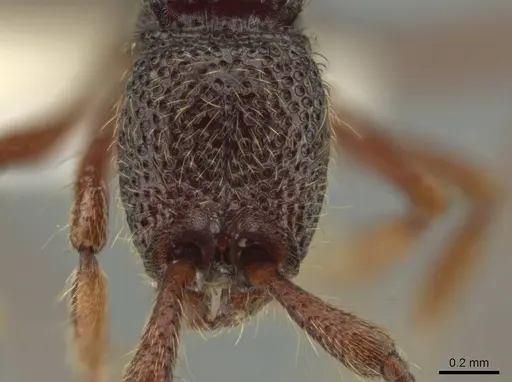
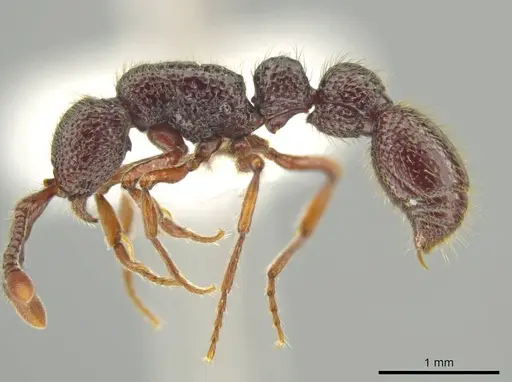
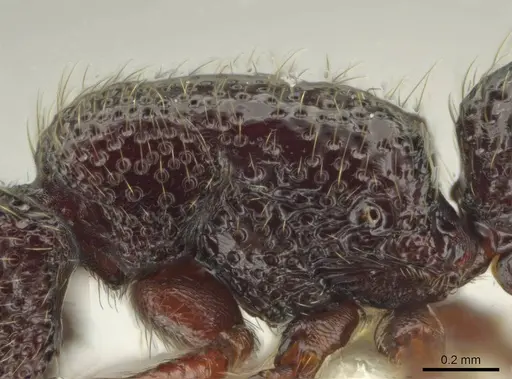
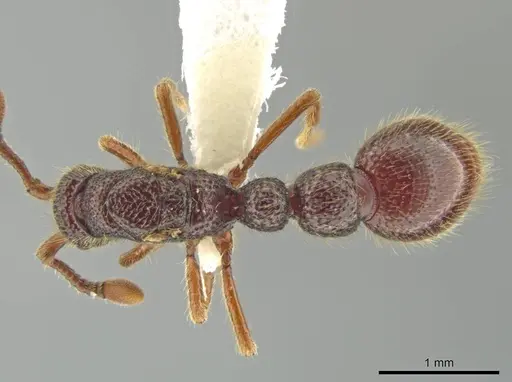
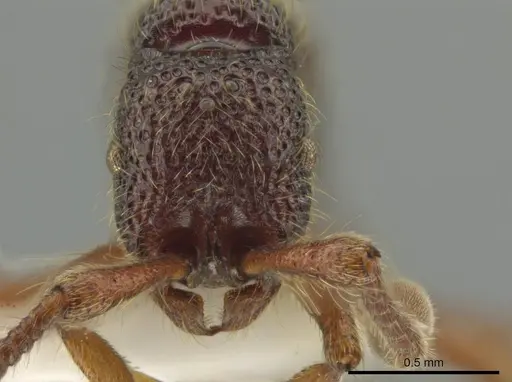
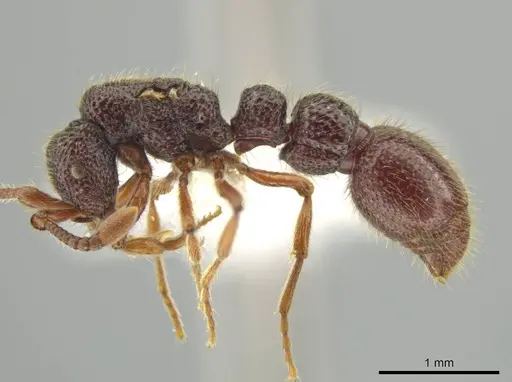
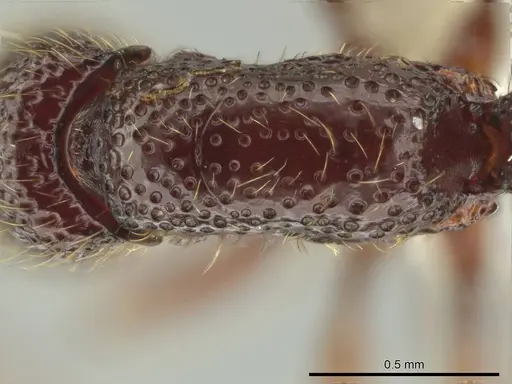
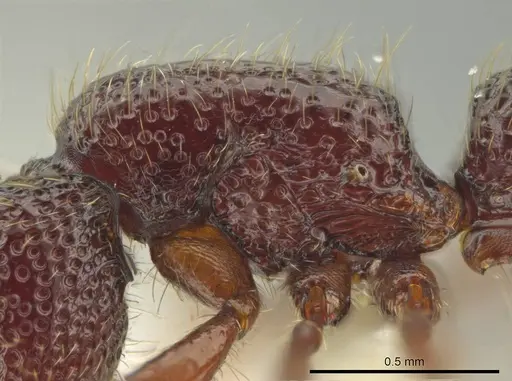
Syscia transisthmica is a tiny army ant species from the Dorylinae subfamily, recently described in 2021 from specimens collected in montane tropical rainforests of Mexico and Guatemala [1]. Workers are among the smallest ants you'll encounter, measuring only about 0.68mm in head width, roughly the size of a period at the end of this sentence. They are dark brown with relatively long, coarse standing hairs on their body, and have distinctive large punctures (dots) on their abdominal segments . Queens are slightly larger in body length (1.30mm mesosoma vs 1.13mm in workers) but have similarly sized heads, and appear to be brachypterous, meaning they have short, non-functional wings . This species represents a relatively recent discovery in ant taxonomy, and much of what we know comes from the original species description.
Quick Summary
- Difficulty: Unknown, likely Expert
- Origin & Habitat: Native to the Neotropical region, specifically Mexico (Oaxaca, Puebla) and Guatemala. Found in lowland to lower montane wet forest and montane tropical rainforest at elevations around 990 meters . All known specimens have been collected by sifting leaf litter in Winkler extraction samples, indicating they live in the forest floor layer .
- Colony Type: Colony structure is unconfirmed. Dorylinae (army ants) typically form colonies with single queens, though some species can have multiple queens. The brachypterous queen suggests limited dispersal ability, which may affect colony founding behavior .
- Size & Growth:
- Queen: 0.67mm head width,1.30mm mesosoma length, estimated from single specimen
- Worker: 0.68mm head width,0.83mm head length,1.13mm mesosoma length
- Colony: Unknown, no colony size data available
- Growth: Unknown, no development data available
- Development: Unknown, no direct measurements exist. Based on typical Dorylinae patterns and their small size, development may take 4-8 weeks at optimal temperature, but this is an estimate. (No published development data exists for this species. Related Syscia species from China (2025) was identified through phylogenetic analysis but also lacks biological data [2].)
- Antkeeping:
- Temperature: Based on their natural habitat in montane tropical rainforest (around 990m elevation in Oaxaca), they likely prefer warm, stable temperatures in the low-to-mid 20s°C range. Start around 22-25°C and observe colony activity. Avoid temperatures below 18°C or above 30°C .
- Humidity: Based on their wet forest habitat, they need high humidity, think damp forest floor conditions. Keep the nest substrate consistently moist but not waterlogged. Provide a humidity gradient so ants can choose their preferred zone. Expect 70-85% relative humidity in the nest area .
- Diapause: Unknown, tropical species from low elevations may not require formal hibernation, but may slow down during cooler seasonal periods. Monitor colony activity and adjust feeding accordingly.
- Nesting: In the wild, they live in leaf litter and soil at the forest floor. In captivity, a naturalistic setup with moist substrate (like a mixture of soil and rotting wood) or a small test tube setup with good moisture retention would likely work. They are tiny and may nest in very small cavities. Avoid dry, airy setups.
- Behavior: As a Dorylinae species, they are likely predatory, hunting small invertebrates in the leaf litter layer. Army ants are typically aggressive foragers that raid in groups, though this behavior varies by species. Their tiny size means they likely target very small prey like springtails, mites, and other micro-arthropods. They probably have good escape abilities despite their small size, always use fine mesh barriers. The long, coarse hairs on their body may serve as sensory functions for navigating in dark, humid microhabitats .
- Common Issues: no established care guidelines, this is a newly described species with no captive breeding history, tiny size makes escape prevention critical, they can squeeze through standard mesh, humidity requirements are critical, dry conditions will kill colonies quickly, predatory diet means they need constant access to live micro-prey, limited availability, wild-caught colonies are the only option since no captive breeding exists
Discovery and Taxonomy
Syscia transisthmica was formally described in 2021 by Longino and Branstetter in their comprehensive study integrating UCE phylogenomics with traditional taxonomy of New World Syscia species [1]. The holotype worker was collected from Mirador Grande in Oaxaca, Mexico, at an elevation of 990 meters in montane tropical rainforest, using sifted leaf litter extraction methods [1]. The species name 'transisthmica' refers to its distribution across the Isthmus of Tehuantepec, the narrow land bridge connecting North and Central America. The discovery revealed that Syscia diversity in the New World was previously underestimated, with many cryptic species waiting to be found in leaf litter samples [1]. This species is part of the Dorylinae subfamily, commonly known as army ants, though not all Dorylinae exhibit the classic nomadic army ant lifestyle.
Identification and Morphology
Workers of Syscia transisthmica are tiny, measuring only 0.68mm in head width and 1.13mm in mesosoma length . They are characterized by their dark brown coloration and notably long, coarse standing hairs that protrude from their body . The abdominal segments (specifically AIII and AIV) have distinctive large punctures that are widely separated, these punctures appear as distinct dots on the surface . The subpetiolar process (a small projection on the underside of the ant) is subtriangular in shape . Queens are similar in head size (0.67mm) but have a longer mesosoma (1.30mm) to accommodate their reproductive functions . Most notably, the queen appears brachypterous, she has short, underdeveloped wings that would not be functional for flight . This is unusual and suggests limited dispersal ability, with new colonies likely being established near the parent nest.
Natural Habitat and Distribution
This species is known from only a few collections in the Neotropical region, specifically Mexico (Oaxaca and Puebla states) and Guatemala . Their habitat is lowland to lower montane wet forest, with the type locality at approximately 990 meters elevation in Oaxaca . All specimens have been collected from sifted leaf litter using Winkler extraction methods, which involves collecting leaf litter from the forest floor and placing it in special bags to extract tiny invertebrates . This collection method tells us they are litter-dwelling ants, living in the moist decomposing layer at the base of the forest. The montane tropical rainforest environment provides consistent warmth, high humidity, and abundant small prey organisms in the leaf litter. Their limited known distribution across the Isthmus of Tehuantepec suggests they may have specific habitat requirements related to moisture and forest structure.
Housing and Care Recommendations
Since no captive care history exists for this species, recommendations must be based on推断 from their natural habitat and related species. Set up a naturalistic terrarium-type enclosure with several inches of moist substrate (a mix of soil, sand, and rotting leaf litter works well). Maintain high humidity, aim for 75-85% relative humidity in the nest area, with the substrate feeling consistently damp but not waterlogged. Provide a moisture gradient by moistening one end more than the other. Temperature should be kept warm and stable, around 22-25°C, avoiding both cold drafts and direct heat sources that could dry them out. Since they are tiny and likely live in very small cavities in leaf litter, they may do well in a small test tube setup with a water reservoir, placed inside a humid enclosure. Escape prevention is critical, use fine mesh (0.5mm or smaller) on any openings because they can squeeze through standard ant mesh .
Feeding and Diet
As a Dorylinae species, Syscia transisthmica is likely predatory on small invertebrates, similar to other army ants in the subfamily. In captivity, you should offer small live prey such as springtails, fruit flies, tiny crickets, and other micro-arthropods. Because of their extremely small size, prey items should be appropriately sized, no larger than the ant itself. They may also accept small pieces of insects like crushed fruit flies or bloodworms. Unlike some larger army ants that conduct massive raids, these tiny leaf-litter dwellers likely forage individually or in small groups for very small prey. Feed every 2-3 days, removing uneaten prey after 24 hours to prevent mold. Always provide a shallow water source or moist cotton for drinking. Sugar sources are unlikely to be accepted given their predatory nature, but you can occasionally offer a tiny drop of honey water to test acceptance.
Behavior and Temperament
While specific behavioral observations for this species are not documented, Dorylinae ants typically exhibit predatory foraging behaviors. Their long, coarse standing hairs may help them detect vibrations and chemical signals in their dark, humid leaf-litter environment . They are likely more secretive than typical army ants, spending much of their time hidden within the substrate rather than forming visible foraging columns. Their tiny size and brachypterous queen suggest they may form smaller colonies than the massive swarms seen in some other Dorylinae. When threatened, they may bite or use chemical defenses, though given their size, any defensive response would be minimal to humans. They are not dangerous to keepers. Expect them to be shy and reclusive, with most activity occurring in the evening or when disturbed.
Frequently Asked Questions
How long does it take for Syscia transisthmica to go from egg to worker?
The egg-to-worker development time is unknown, no published data exists for this species. Based on typical Dorylinae patterns and their very small size, development may take approximately 4-8 weeks at optimal warm temperatures (around 24°C), but this is purely an estimate. Related species in the genus have not been studied for development timing.
What do Syscia transisthmica ants eat?
As a Dorylinae (army ant) species, they are predatory and likely hunt small invertebrates. In captivity, offer small live prey such as springtails, fruit flies, pinhead crickets, and other micro-arthropods. Prey should be appropriately sized for their tiny bodies. They probably do not accept sugar sources. Remove uneaten prey within 24 hours to prevent mold issues.
Can I keep Syscia transisthmica in a test tube?
A test tube setup may work for a founding colony, but you will likely need to create a more naturalistic setup as the colony grows. Their tiny size means they can live in very small spaces, but they need high humidity and access to live prey. Consider using a test tube as a founding chamber connected to a small outworld with moist substrate.
Are Syscia transisthmica ants dangerous?
No, they are not dangerous to humans. They are tiny ants (workers about 1mm total length) and any potential bite would be barely perceptible. As Dorylinae, they may have a stinger, but their small size means any sting would be minimal and they are not considered a health threat.
What temperature do Syscia transisthmica ants need?
Based on their montane tropical rainforest habitat, aim for warm temperatures in the 22-25°C range. Avoid temperatures below 18°C or above 30°C. Use a heating cable on one side of the enclosure only if room temperature falls below this range, and always provide a temperature gradient so ants can move to their preferred zone.
How big do Syscia transisthmica colonies get?
Colony size is unknown, no published data exists on maximum colony size for this species. Given their tiny size and limited known distribution, colonies are likely smaller than many common ant species, possibly under 100-500 workers. The brachypterous queen suggests colonies may establish new nests through budding rather than long-distance nuptial flights.
Do Syscia transisthmica ants need hibernation?
Diapause requirements are unknown for this species. As a tropical species from Mexico and Guatemala, they likely do not require a true hibernation period. However, they may slow down during cooler seasonal periods. Monitor your colony and reduce feeding if activity decreases, but do not force cold temperatures.
Why are my Syscia transisthmica ants dying?
The most likely causes are: (1) Low humidity, they need damp conditions, dry housing will kill them quickly, (2) Inadequate prey, they need constant access to small live prey, (3) Escape, their tiny size means they can escape through standard mesh, (4) Temperature stress, too cold or too hot. Review all housing parameters and ensure escape prevention is excellent with fine mesh.
Can I keep multiple Syscia transisthmica queens together?
This has not been documented. Dorylinae typically have single-queen colonies, but the brachypterous queen suggests unique colony founding behavior. Do not attempt combining unrelated queens without evidence they will accept each other. It is safest to keep colonies founded by single queens.
Is Syscia transisthmica a good species for beginners?
No, this species is not recommended for beginners. It was only described in 2021,meaning no established care protocols exist. They require high humidity, specific prey, and excellent escape prevention due to their tiny size. They are best suited for experienced antkeepers who can provide specialized care and are comfortable with experimental husbandry.
When will my Syscia transisthmica colony produce alates (reproductives)?
This is unknown. No data exists on reproductive development or nuptial flight timing for this species. The brachypterous queen suggests alates may not be produced, or if they are, they likely have limited dispersal ability. Do not expect typical alate production timelines.
Where can I get Syscia transisthmica ants?
This species is extremely rare in the antkeeping hobby. It was only described in 2021 and has a limited distribution in Mexico and Guatemala. Wild-caught colonies may occasionally be available from specialized importers, but they are not commonly traded. Expect to pay premium prices if available at all.
References

This caresheet is licensed under CC BY-SA 4.0 .
Literature
Loading...Loading products...