

Syllophopsis thrascolepta
- Scientific Name
- Syllophopsis thrascolepta
- Tribe
- Solenopsidini
- Subfamily
- Myrmicinae
- Author
- Bolton, 1987
- Distribution
- Found in 1 countries
Syllophopsis thrascolepta Overview
Syllophopsis thrascolepta is an ant species of the genus Syllophopsis. It is primarily documented in 1 countries , including Gabon. Detailed taxonomic data and occurrence records can be further explored via authoritative databases such as AntWeb or the Global Biodiversity Information Facility (GBIF).
Syllophopsis thrascolepta
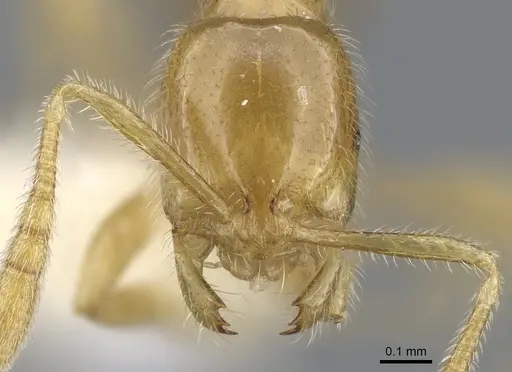
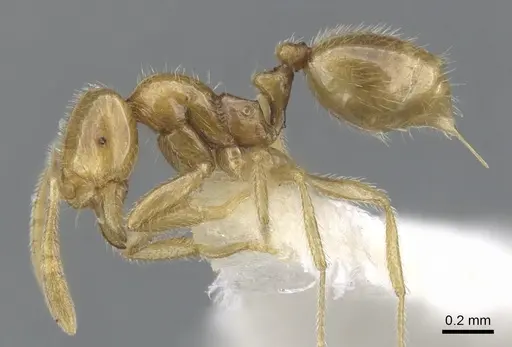
Syllophopsis thrascolepta is a tiny yellow ant native to the rainforests of West Africa, specifically Ivory Coast and surrounding regions. Workers measure just 1.9-2.2mm, making them one of the smaller ant species you'll encounter in the hobby. They have a distinctive appearance with extremely long antennal scapes (the segment connecting the antenna to the head) that give them an almost elongated look, and remarkably tiny eyes, literally just a single lens. Their body is uniformly yellow and completely smooth and shiny [1]. This species is the largest member of its group in West Africa and the only one in that region with scape index consistently over 100 [1]. They live in leaf litter in rainforest habitats at elevations around 375-640 meters [2].
Quick Summary
- Difficulty: Medium
- Origin & Habitat: West African rainforests, specifically Ivory Coast and Central African Republic. Found in leaf litter at elevations between 375-640 meters [2][1].
- Colony Type: Colony structure is unconfirmed. The species belongs to the Monomorium hildebrandti-group [3]. No data on whether they are single-queen or multi-queen colonies.
- Size & Growth:
- Queen: Unknown, queen caste has not been described in scientific literature
- Worker: 1.9-2.2mm [1]
- Colony: Unknown, no colony size data available
- Growth: Unknown
- Development: Unconfirmed, no direct development data exists for this species (Based on related Monomorium species, expect development of several months at room temperature)
- Antkeeping:
- Temperature: As a rainforest species from equatorial Africa, keep them warm, aim for 24-28°C. Avoid temperatures below 20°C. A gentle heat gradient allows them to choose their preferred spot.
- Humidity: High humidity is essential. These are leaf-litter rainforest ants that need consistently moist substrate. Keep the nest substrate damp but not waterlogged, with some variation so ants can move to preferred moisture levels.
- Diapause: Unconfirmed, as a tropical species, they likely do not require a true hibernation period. Some reduction in activity during cooler months may occur.
- Nesting: They naturally nest in leaf litter and rotting wood in rainforest floors. In captivity, a small test tube setup or Y-tong nest works well. Given their tiny size, chambers should be appropriately scaled, tight spaces help them feel secure.
- Behavior: These are tiny, docile ants that are unlikely to bite or sting. They are shy and slow-moving, typically foraging in leaf litter for small prey. Their extremely small size (under 2.5mm) means escape prevention is critical, they can squeeze through gaps that seem impossible. They are not aggressive and will likely flee from threats rather than engage. Workers have functional stingers as they belong to the Myrmicinae subfamily, but their small size makes stinging negligible to humans.
- Common Issues: escape prevention is critical due to their tiny size, use fine mesh and tight-fitting lids, high humidity requirements can lead to mold if ventilation is poor, small size makes them easy to accidentally crush during colony maintenance, wild-caught colonies may contain parasites that can devastate the colony, slow growth may lead beginners to overfeed or disturb the colony excessively
Housing and Setup
Because of their tiny size, Syllophopsis thrascolepta needs carefully designed housing. A small test tube setup works well for founding colonies, the narrow space helps the queen and small workers feel secure. For established colonies, a Y-tong (AAC) nest with small chambers or a properly scaled plaster nest works well. The key is scale, these ants are under 2.5mm, so chambers and passages should be correspondingly tiny. Avoid large, open spaces where they may feel exposed. Escape prevention is absolutely critical: use fine mesh (at least 0.5mm or smaller), tight-fitting lids, and barrier tape. These ants can and will escape through gaps you didn't think were possible [1].
Feeding and Diet
In the wild, these ants likely forage in leaf litter for tiny prey items. Based on related species in the Monomorium group, they probably accept small live prey like springtails, fruit flies, and other micro-arthropods. Sugar sources may also be accepted, try offering a drop of diluted honey or sugar water occasionally. However, given their tiny size, protein prey should be appropriately sized: very small insects or pieces thereof. Feed small amounts and remove any uneaten prey to prevent mold. A constant sugar source is recommended once workers are established.
Temperature and Humidity
As a rainforest species from equatorial West Africa, these ants need warm and humid conditions. Keep the nest area at 24-28°C, a heating cable on one side of the nest can create a gentle gradient. Avoid temperatures below 20°C, as this species is not adapted to cool conditions. Humidity should be high: keep the substrate consistently moist but not flooded. A water tube connected to the test tube or nest maintains humidity. Mist the area occasionally, but ensure good ventilation to prevent mold buildup. The combination of warmth and humidity mimics their natural leaf-litter habitat in African rainforests [2].
Colony Development
Specific development data for this species does not exist in scientific literature. Based on related Monomorium species, expect a relatively slow founding period, claustral queens typically seal themselves in and the first nanitic (first-generation) workers emerge after 6-10 weeks under warm conditions. Initial colony growth is slow, with the queen raising just a few workers at a time. Patience is essential, small colony species like this build up gradually over months or years. Do not disturb the founding chamber unnecessarily. Once established, growth rate is likely moderate but colonies probably remain small (likely under a few hundred workers maximum based on related species).
Behavior and Temperament
Syllophopsis thrascolepta is a docile, shy species. Workers are slow-moving and unlikely to show aggression. They spend most of their time foraging in the substrate and leaf litter layers. Their tiny eyes (a single ommatidium) suggest they may rely more on chemical cues than vision. They are not defensive and pose no threat to keepers. However, their small size makes them vulnerable, when moving or cleaning the colony, be extremely careful not to crush workers. They are not escape artists in the sense of being active climbers, but their tiny size means they will find any gap, making prevention essential. [1]
Frequently Asked Questions
How long does it take for Syllophopsis thrascolepta to have first workers?
The exact timeline is unconfirmed for this species. Based on related Monomorium species, expect 6-10 weeks from founding to first nanitic workers emerging, assuming temperatures around 24-28°C. Founding can take longer if temperatures are lower.
What do Syllophopsis thrascolepta ants eat?
They likely accept small live prey like springtails and fruit flies, plus sugar sources. Based on related species, offer tiny protein items and occasional sugar water or diluted honey. Remove uneaten prey to prevent mold.
Can I keep Syllophopsis thrascolepta in a test tube?
Yes, a test tube setup is ideal for this tiny species. Use a small test tube with a water reservoir and cotton plug. Ensure tight-fitting escape prevention and maintain humidity. Move to a larger nest only when the colony is well-established.
Do Syllophopsis thrascolepta ants sting?
They have a functional stinger as members of Myrmicinae, but their tiny size means any sting would be negligible to humans. They are docile and unlikely to sting unless handled roughly.
Are Syllophopsis thrascolepta good for beginners?
They are moderate difficulty, their small size and humidity needs require attention to detail, but their docile nature and simple care requirements make them manageable for keepers willing to pay attention to escape prevention and proper humidity.
What temperature do Syllophopsis thrascolepta need?
Keep them warm at 24-28°C. As rainforest ants from equatorial Africa, they do not tolerate cool temperatures well, avoid anything below 20°C.
How big do Syllophopsis thrascolepta colonies get?
Colony size is not documented, but based on related small Monomorium species, colonies likely remain small, probably under a few hundred workers at maximum. They are not large colony species.
Why are my Syllophopsis thrascolepta escaping?
Their tiny size allows them to escape through impossibly small gaps. Use fine mesh (0.5mm or smaller), tight lids, and barrier tape. Check all connections and seams. Even a tiny crack is an escape route for these 2mm ants.
Do Syllophopsis thrascolepta need hibernation?
Unlikely, as a tropical rainforest species from equatorial Africa, they probably do not require a true hibernation period. Some reduction in activity during cooler months may occur naturally.
What makes Syllophopsis thrascolepta different from other ants?
They have extremely long antennal scapes (SI over 100), the longest relative to head size of any West African species in their group. They also have remarkably tiny eyes, just a single lens. Their yellow color and smooth shiny body are distinctive [1].
References

This caresheet is licensed under CC BY-SA 4.0 .
CASENT0408869
View on AntWeb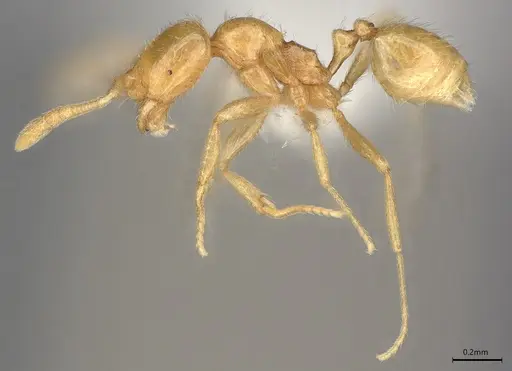
CASENT0902228
View on AntWeb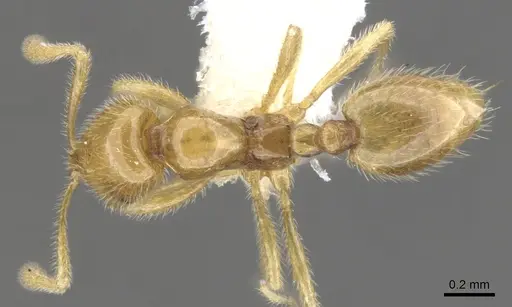
Literature
Loading...Loading products...