

Strumigenys tetraphanes
- Scientific Name
- Strumigenys tetraphanes
- Tribe
- Attini
- Subfamily
- Myrmicinae
- Author
- Brown, 1954
- Distribution
- Found in 4 countries
Strumigenys tetraphanes Overview
Strumigenys tetraphanes is an ant species of the genus Strumigenys. It is primarily documented in 4 countries , including Congo, Democratic Republic of the, Gabon. Detailed taxonomic data and occurrence records can be further explored via authoritative databases such as AntWeb or the Global Biodiversity Information Facility (GBIF).
Strumigenys tetraphanes
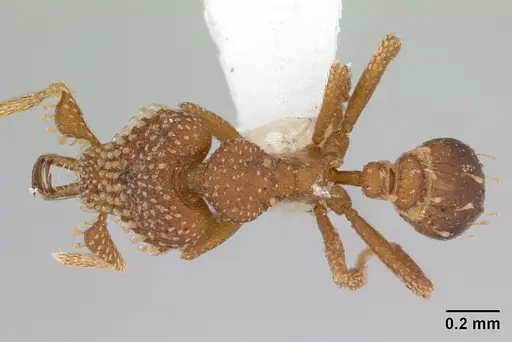
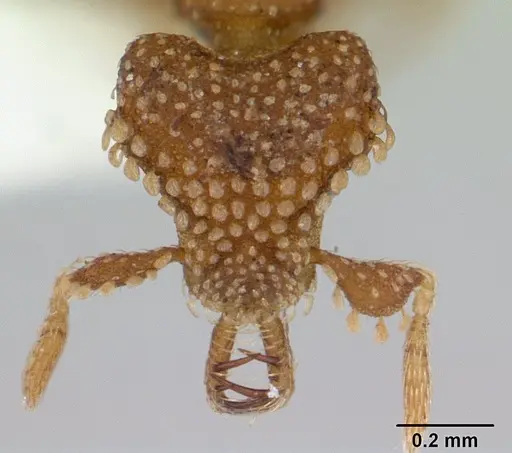
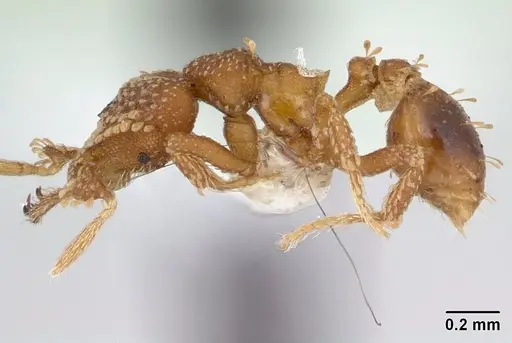
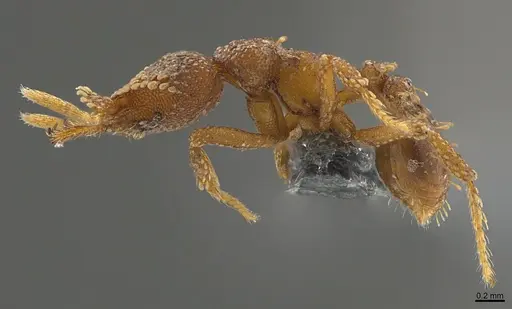
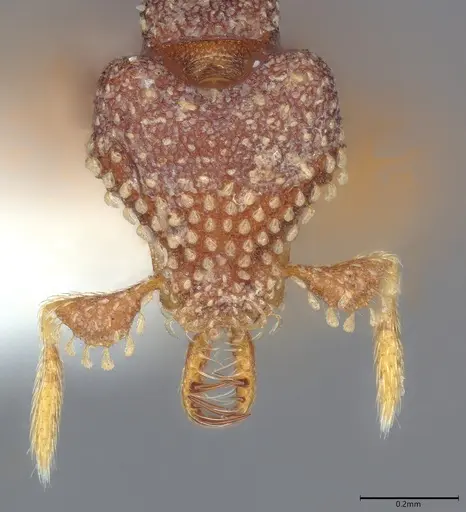
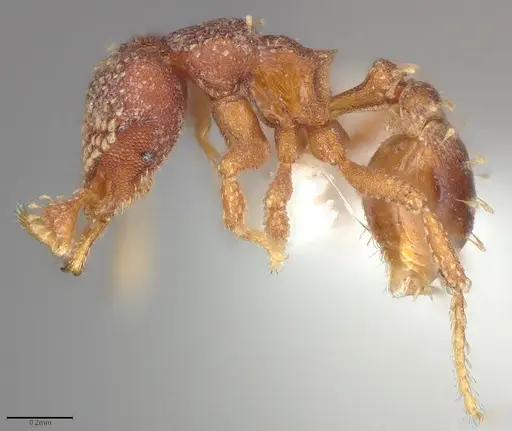
Strumigenys tetraphanes is one of the most distinctive Afrotropical dacetine ants, instantly recognizable by its enormously expanded antennal scapes that form large flattened lobes on either side of the head. Workers are tiny at just 2.0-2.2mm, making them among the smaller ant species you'll encounter. They inhabit wet forests across central and eastern Africa, from Cameroon through the Congo Basin to Uganda and Kenya, where they live in leaf litter on the forest floor [1][2]. The genus Strumigenys belongs to the tribe Dacetini, specialized predators with trap-jaw mandibles that snap shut on prey. This species has unique forked mandibles with two spiniform teeth at the apex, and its head is densely covered with broad, scale-like hairs that give it a somewhat fuzzy appearance in close-up photos.
Quick Summary
- Difficulty: Medium
- Origin & Habitat: Wet forests of the Afrotropical region, Cameroon, Democratic Republic of Congo, Gabon, Kenya, and Uganda. Found from sea level to around 640m elevation in montane forest leaf litter [1][2].
- Colony Type: Unknown colony structure, no research documents queen number or colony size in the wild. Based on related Strumigenys species, likely small colonies with single queens.
- Size & Growth:
- Queen: Undocumented in primary literature, estimated 3-4mm based on worker size and genus patterns
- Worker: 2.0-2.2mm
- Colony: Unknown, likely under 100 workers based on typical Strumigenys colony sizes
- Growth: Unknown, likely slow to moderate given small colony sizes
- Development: Estimated 6-8 weeks at optimal temperature based on related dacetine ants (No direct development data exists for this species. Estimates based on genus-level patterns for small Myrmicinae.)
- Antkeeping:
- Temperature: Aim for 22-26°C, warm, stable conditions matching wet tropical forest floor. Avoid temperatures below 20°C.
- Humidity: High humidity required, these are wet forest ants. Keep substrate consistently moist but not waterlogged. Think damp leaf litter conditions.
- Diapause: Unknown, no research on overwintering behavior. Given their African distribution, they likely do not require true hibernation but may reduce activity in cooler conditions.
- Nesting: Naturalistic setup with deep substrate (soil/peat mix) works best, they nest in leaf litter and soil in the wild. Test tubes can work but need secure barriers due to tiny size.
- Behavior: Very small predatory ants with specialized trap-jaw mandibles. They hunt springtails and other micro-arthropods in leaf litter. Workers are shy and non-aggressive, they will flee rather than fight. Escape prevention is critical due to their tiny 2mm size, they can squeeze through standard test tube cotton and gaps in lids. They are slow-moving and spend most of their time foraging in the substrate.
- Common Issues: escape prevention is critical, they are tiny enough to squeeze through standard barriers, high humidity needs can lead to mold if ventilation is poor, slow growth means colonies may appear stagnant for weeks, no documented captive breeding success, wild-caught colonies may struggle in captivity, predatory diet makes them difficult to feed, need constant supply of live micro-prey
Housing and Nest Setup
Strumigenys tetraphanes are tiny leaf-litter ants that need a naturalistic setup to thrive. A deep container (at least 5-7cm of substrate) filled with a soil and peat mixture works well, this mimics the damp forest floor they inhabit in the wild. Keep the substrate consistently moist but not waterlogged. You can add pieces of dead leaves, twigs, or small stones to give them foraging surfaces and hiding spots. Because they are only 2mm long, escape prevention is absolutely critical, use fine mesh on any ventilation holes, and ensure lid seals are tight. A test tube setup can work for founding colonies, but you'll need to wrap the cotton with filter paper or use a tight-fitting plug to prevent escapes. Many keepers find that a small plastic box with a soil layer works better than traditional formicaria for these tiny ants. [1]
Feeding and Diet
These are specialized predators in the dacetine ant tribe. In the wild, they hunt small soil arthropods like springtails, mites, and other micro-invertebrates. In captivity, their primary food should be live springtails, these are ideal because they are small enough for the ants to tackle and provide proper nutrition. Other live micro-prey like small fruit flies, psyllids, or tiny crickets may be accepted. Unlike many ants, they are unlikely to accept sugar water or honey, they are obligate predators. Feed them small prey items every few days, removing any uneaten prey after 24 hours to prevent mold. A constant supply of live springtails in the setup is ideal, as this mimics their natural hunting environment.
Temperature and Humidity
Strumigenys tetraphanes come from wet tropical forests in central and eastern Africa, so they need warm and humid conditions. Aim for temperatures in the 22-26°C range, stable warmth is more important than exact numbers. A heating cable on one side of the setup can create a gentle gradient if your room temperature is cooler. High humidity is essential, keep the substrate consistently damp but not sitting in water. Mist the setup occasionally, but rely on substrate moisture rather than misting schedules. Good ventilation is important to prevent mold, but avoid excessive airflow that dries things out. These ants are sensitive to drying out, so check substrate moisture regularly. [1]
Behavior and Handling
These are shy, non-aggressive ants that prefer to flee rather than fight. Workers are slow-moving and spend most of their time foraging through the substrate and leaf litter. They have specialized trap-jaw mandibles that they use to catch small prey, you might occasionally hear a faint click as they snap their jaws. They are not defensive and pose no threat to keepers. However, their tiny size makes them easy to lose track of during transfers or cleaning. When working with them, use white paper or containers so you can spot them easily. They are not suited for observation-focused setups, they are cryptic ants that prefer to stay hidden in the substrate.
Colony Establishment
No research documents the founding behavior of Strumigenys tetraphanes specifically. Based on related Strumigenys species and typical small Myrmicinae patterns, the queen likely seals herself in a small chamber and raises her first workers on stored fat reserves (claustral founding). However, this is an educated guess rather than confirmed behavior. Wild-caught colonies may have difficulty adjusting to captivity, these are not commonly kept species and there is little captive breeding success documented. If you obtain a colony, give them time to settle and do not disturb them during the founding period. Expect slow growth, small colonies of dacetine ants typically grow slowly, with colony sizes remaining under 100 workers.
Frequently Asked Questions
How long does it take for Strumigenys tetraphanes to go from egg to worker?
The egg-to-worker timeline is not directly documented for this species. Based on related dacetine ants and typical small Myrmicinae development, estimate 6-8 weeks at optimal temperature (around 24°C). Expect this to vary based on conditions.
Can I keep Strumigenys tetraphanes in a test tube?
Yes, test tubes can work for these ants, but escape prevention is critical. Standard cotton plugs may need to be wrapped with filter paper or replaced with tight-fitting foam because workers are only 2mm and can squeeze through gaps. A naturalistic setup with soil substrate is often better for long-term housing.
What do Strumigenys tetraphanes eat?
They are specialized predators that need live prey. Their primary food should be live springtails, small micro-arthropods that they can hunt in the substrate. They are unlikely to accept sugar water or honey. Other small live prey like fruit flies may be accepted occasionally.
Are Strumigenys tetraphanes good for beginners?
No, this is not a beginner-friendly species. They are tiny (2mm), require high humidity, need a constant supply of live prey, and have no documented captive breeding success. They are best suited for experienced antkeepers interested in unusual species.
How big do Strumigenys tetraphanes colonies get?
Colony size is not documented in scientific literature. Based on typical Strumigenys species, colonies likely remain small, probably under 100 workers even in mature colonies.
Do Strumigenys tetraphanes need hibernation?
Unknown, no research documents their seasonal behavior. Given their African distribution across Uganda, Kenya, and Congo, they likely do not require true hibernation. They may reduce activity in cooler conditions but probably do not need a diapause period.
Why are my Strumigenys tetraphanes dying?
Common causes include: escaping due to inadequate barriers (they are only 2mm), drying out from low humidity, mold from poor ventilation, starvation if not enough live prey, and stress from wild-caught colonies struggling to adapt. Ensure high humidity, fine mesh barriers, and a constant supply of springtails.
When should I move my colony to a formicarium?
If using a test tube setup, you can leave them in it as long as the water reservoir lasts and they have space. For a naturalistic approach, transfer to a soil-based setup early, these ants prefer to forage in substrate rather than on exposed surfaces. Wait until the colony is established with at least 10-15 workers before moving.
Can I keep multiple Strumigenys tetraphanes queens together?
This has not been documented. No research describes their colony founding or queen behavior. Based on related species, they likely have single-queen colonies. Do not attempt combining unrelated queens without evidence they will tolerate each other.
References

This caresheet is licensed under CC BY-SA 4.0 .
Literature
Loading...Loading products...