

Strumigenys stauroma
- Scientific Name
- Strumigenys stauroma
- Tribe
- Attini
- Subfamily
- Myrmicinae
- Author
- Bolton, 2000
- Distribution
- Found in 3 countries
Strumigenys stauroma Overview
Strumigenys stauroma is an ant species of the genus Strumigenys. It is primarily documented in 3 countries , including Costa Rica, Honduras, Nicaragua. Detailed taxonomic data and occurrence records can be further explored via authoritative databases such as AntWeb or the Global Biodiversity Information Facility (GBIF).
Strumigenys stauroma
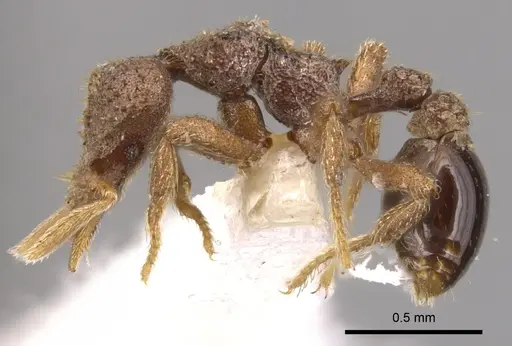
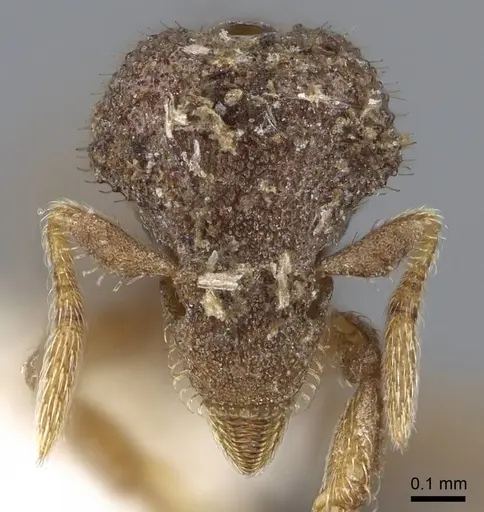
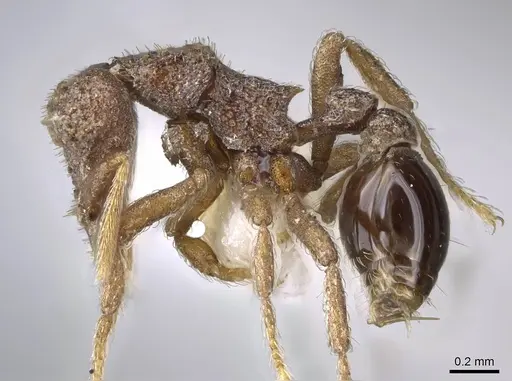
Strumigenys stauroma is a tiny predatory ant belonging to the subfamily Myrmicinae, found in Costa Rica [1]. These ants are part of the famous trap-jaw ant group, their mandibles can snap shut at incredible speeds to capture small prey. Workers are among the smallest ants you'll encounter, typically measuring just 2-3mm. They have a distinctive appearance with elongated mandibles and often spiny protrusions on their bodies. In the wild, they live in moist forest habitats where they hunt small soil-dwelling arthropods like springtails. Their colonies remain relatively small, usually containing only a few dozen to a couple hundred workers.
Quick Summary
- Difficulty: Medium/Hard
- Origin & Habitat: Central America, specifically documented in Costa Rica [1]. In nature, these ants live in humid forest floor environments, typically in rotting wood, under stones, or in leaf litter. They prefer damp, shaded microhabitats.
- Colony Type: Monogyne, single queen colonies are typical for this genus. Queens are small and claustral, sealing themselves in to raise their first workers.
- Colony: Monogyne
- Founding: Claustral
- Size & Growth:
- Queen: Estimated 3-4mm based on genus patterns
- Worker: Estimated 2-3mm based on genus patterns
- Colony: Likely 50-300 workers based on typical Strumigenys colony sizes
- Growth: Slow, trap-jaw ants typically develop slowly, with colonies taking many months to establish
- Development: Estimated 8-12 weeks based on related Strumigenys species (Development is slow compared to many common ant species. First workers (nanitics) will be very small.)
- Antkeeping:
- Temperature: Keep at 20-24°C. They prefer stable, moderate temperatures typical of their forest floor habitat. Avoid overheating.
- Humidity: High humidity is essential, aim for 70-85%. These ants come from moist tropical environments and can quickly die in dry conditions. Keep the nest substrate consistently damp but not waterlogged.
- Diapause: No, being a tropical species, they do not require hibernation. However, they may slow down slightly during cooler periods.
- Nesting: Best kept in naturalistic setups with moist substrate. Y-tong (AAC) nests or plaster nests work well. They need tight chambers scaled to their tiny size. Avoid dry, airy setups.
- Behavior: These ants are peaceful but specialized predators. They are not aggressive toward humans and rarely sting. Their main defense is escape, they are fast runners for their size. They pose no danger to keepers. They are escape artists due to their tiny size, excellent escape prevention is critical. They hunt individually using their trap-jaw mandibles, slowly stalking prey before striking.
- Common Issues: escape prevention is critical, they are tiny and can squeeze through the smallest gaps, colonies grow very slowly, which can frustrate beginners, high humidity requirements make them prone to mold issues if ventilation is poor, dry conditions kill them quickly, they cannot tolerate low humidity, wild-caught colonies may be stressed or carry parasites
Housing and Nest Setup
Strumigenys stauroma needs a setup that maintains high humidity while providing proper ventilation. A Y-tong (AAC) nest with narrow chambers works well, as does a plaster nest with a water reservoir. The key is keeping the substrate consistently moist without creating stagnant air. Because they are tiny, all connections between the nest and outworld must be sealed with cotton or other barriers. A small outworld is fine since their colonies stay small. Avoid test tubes for long-term housing, they dry out too quickly for these humidity-dependent ants.
Feeding and Diet
These are specialized predators. Their primary food in captivity should be small live prey, springtails are ideal and most Strumigenys readily accept them. Other small live prey like fruit flies, pinhead crickets, and tiny mealworms can be offered. They are unlikely to accept sugar water or honey since they're not foragers of sweet liquids. Feed them small prey items every few days, removing any uneaten prey after 24 hours. A well-fed colony will have workers with slightly distended abdomens.
Temperature and Humidity
Keep temperatures in the 20-24°C range. They can tolerate slightly warmer conditions but should never be overheated. High humidity is non-negotiable, aim for 70-85% relative humidity in the nest area. The substrate should feel damp to the touch. Check moisture levels daily and rehydrate as needed. A water reservoir attached to the nest helps maintain stable humidity. Avoid placing the colony near heating elements or in direct sunlight.
Behavior and Temperament
Strumigenys stauroma is a peaceful species that poses no threat to keepers. They are not aggressive and rarely attempt to sting. Their main activity is hunting, they move slowly and deliberately, using their trap-jaw mandibles to snap up small prey. Workers are active mostly at night or in dim conditions. They are excellent escape artists due to their tiny size, always use fine mesh on all openings and check barriers regularly. Their colonies remain small even at maturity, typically maxing out around 100-200 workers.
Colony Growth and Development
Expect slow growth. A newly founded colony may take 2-3 months for the first workers to emerge, and another 6-12 months to reach 20-30 workers. Full maturity with 100+ workers may take 1-2 years or more. This slow growth is normal for the genus and should not be cause for concern. The first workers (nanitics) will be very small and may have lighter coloration. Do not disturb the queen during founding, stress can cause her to eat the brood or abandon the nest.
Frequently Asked Questions
How long does it take for Strumigenys stauroma to produce first workers?
Expect 8-12 weeks from egg to first worker at optimal temperature. This is slow compared to many common ant species. The queen will seal herself in and not emerge until her first workers hatch.
What do Strumigenys stauroma ants eat?
They are specialized predators that need live small prey. Springtails are the ideal food, they're small enough for these tiny ants to tackle and are readily accepted. You can also offer fruit flies, tiny mealworms, and other small insects.
Are Strumigenys stauroma good for beginners?
They are not ideal for complete beginners due to their specific humidity requirements and slow growth. However, they can be kept by intermediate antkeepers who are prepared to maintain high humidity and provide live prey regularly.
How big do Strumigenys stauroma colonies get?
Colonies remain relatively small, typically reaching 50-300 workers at maturity. This is smaller than many common pet ant species.
Do Strumigenys stauroma need hibernation?
No, they are tropical ants and do not require hibernation. However, they may slow down slightly during cooler periods. Keep them at stable room temperature year-round.
Why are my Strumigenys stauroma dying?
The most common causes are low humidity (they die quickly in dry conditions), escape (check all barriers), and stress from disturbance during founding. Also check for mold issues in the nest.
Can I keep multiple Strumigenys stauroma queens together?
This species is monogyne, single queen colonies are typical. Combining unrelated queens is not recommended and likely results in fighting.
How often should I feed Strumigenys stauroma?
Offer small live prey every 2-3 days. Remove any uneaten prey after 24 hours. A well-fed colony will have workers with slightly swollen abdomens.
References

This caresheet is licensed under CC BY-SA 4.0 .
CASENT0624025
View on AntWeb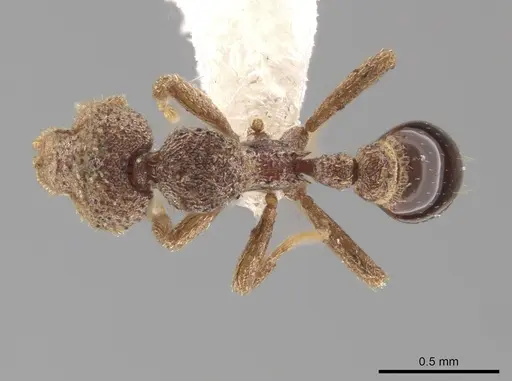
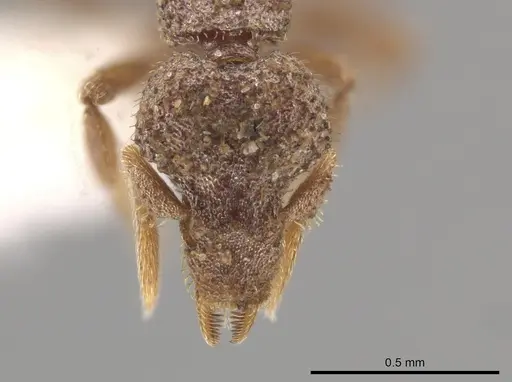
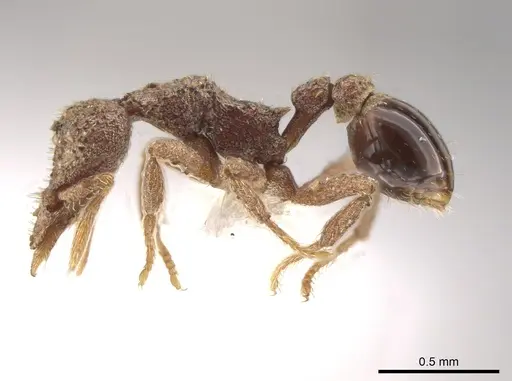
INB0003666747
View on AntWeb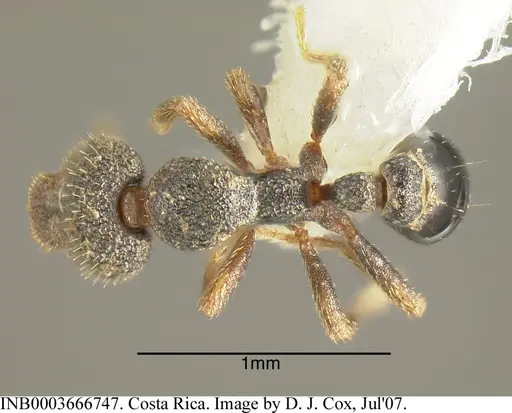
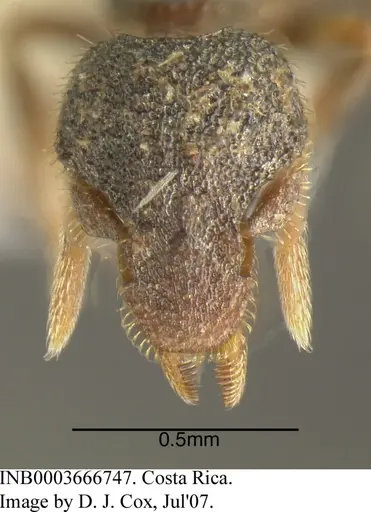
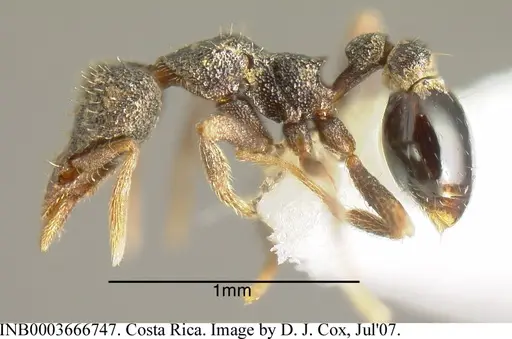
INBIOCRI001283707
View on AntWeb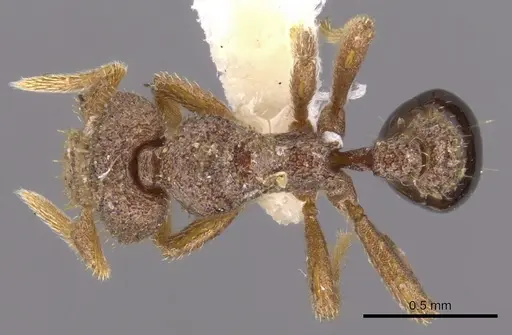
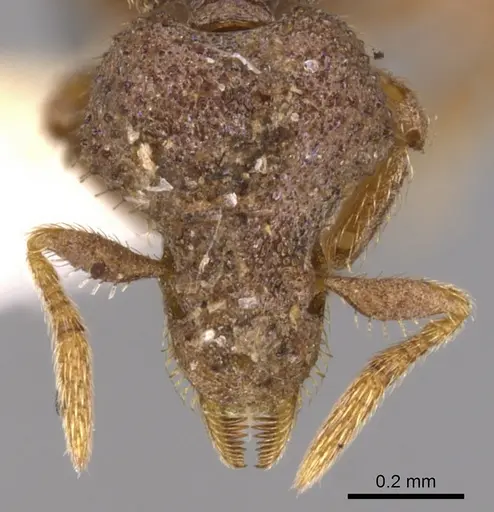
INBIOCRI001283710
View on AntWeb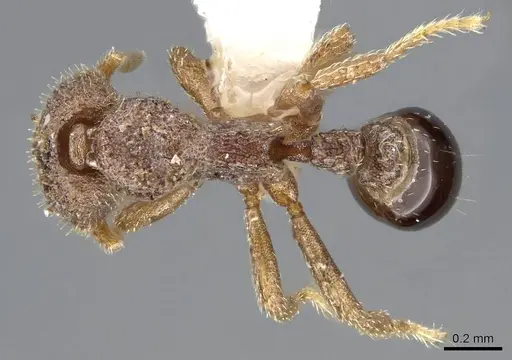
Literature
Loading...Loading products...