

Strumigenys spathoda
- Scientific Name
- Strumigenys spathoda
- Tribe
- Attini
- Subfamily
- Myrmicinae
- Author
- Bolton, 1983
- Distribution
- Found in 1 countries
Strumigenys spathoda Overview
Strumigenys spathoda is an ant species of the genus Strumigenys. It is primarily documented in 1 countries , including Gabon. Detailed taxonomic data and occurrence records can be further explored via authoritative databases such as AntWeb or the Global Biodiversity Information Facility (GBIF).
Strumigenys spathoda
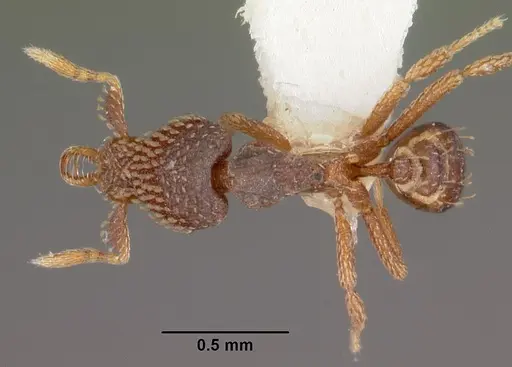
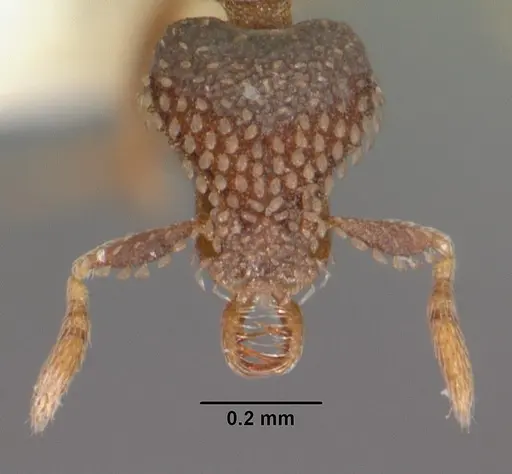
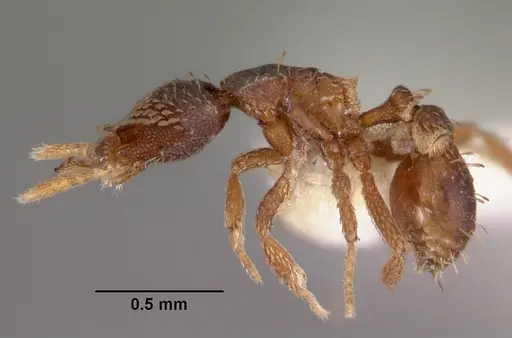
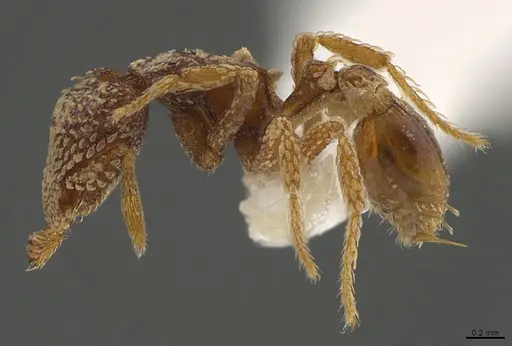
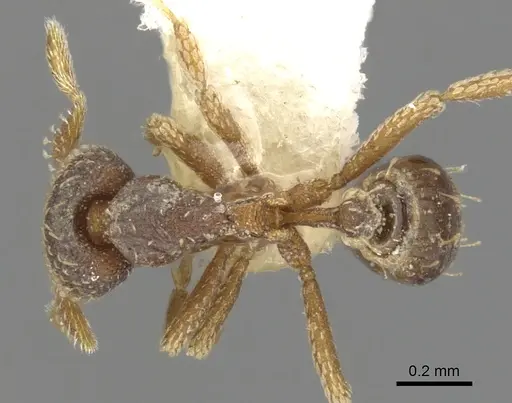
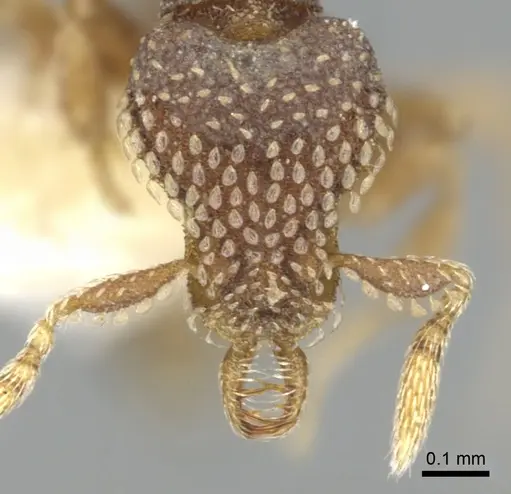
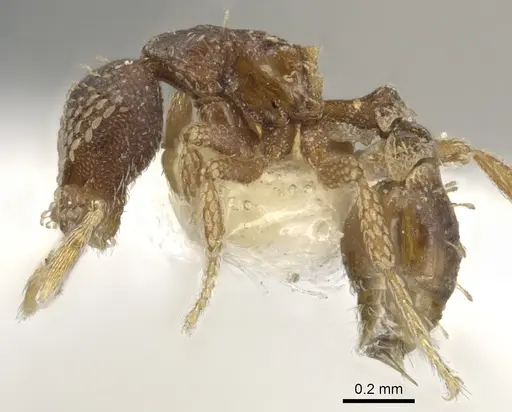
Strumigenys spathoda is a tiny predatory ant native to West African rainforests. Workers measure just 2.0-2.1mm, making them one of the smaller ant species you'll encounter . They have a distinctive appearance with very short, powerful mandibles, the shortest recorded for any Strumigenys in the Afrotropical region, and a medium brown coloration . Their most striking feature is the row of large spoon-shaped hairs along the leading edge of their flattened antennal scapes, giving them a somewhat fuzzy appearance under magnification . This species belongs to the Dacetini tribe (sometimes spelled Dacetonini), which are specialized predators known for their trap-jaw mandibles [1].
Quick Summary
- Difficulty: Medium
- Origin & Habitat: West African rainforests, found in Cameroun, Gabon, Ghana, Ivory Coast, and Togo. They live in leaf litter in humid rainforest environments at elevations around 375m [1][2].
- Colony Type: Single-queen colonies (monogyne). Queens seal themselves in during founding (claustral).
- Colony: Monogyne
- Founding: Claustral
- Size & Growth:
- Queen: Unknown, not directly measured in available literature
- Worker: 2.0-2.1mm
- Colony: Likely small, under 100 workers typical for this genus
- Growth: Slow, typical for small Myrmicinae
- Development: Estimated 8-12 weeks at optimal temperature based on genus patterns (Direct development data unavailable, estimates based on typical Dacetini development at 24-26°C)
- Antkeeping:
- Temperature: Keep at 24-26°C, they prefer warm, humid conditions matching their rainforest origin [1]
- Humidity: High humidity is essential, aim for 70-85%. These ants live in leaf litter where moisture stays consistently high. Keep the nest substrate damp but not waterlogged.
- Diapause: Not required, being from tropical West Africa, they don't need a winter rest period. Maintain consistent warmth year-round.
- Nesting: Y-tong (AAC) nests work well due to their small size. Provide a shallow foraging area with moist substrate. They prefer tight, humid chambers scaled to their tiny 2mm body size.
- Behavior: These are shy, slow-moving ants that hunt small prey. They use their short but powerful mandibles to capture tiny invertebrates. They're not aggressive and will flee rather than fight. Escape prevention is critical, at 2mm, they can slip through standard test tube cotton. Use fine mesh barriers and ensure all connections are sealed. They are not stinging ants.
Housing and Escape Prevention
Because Strumigenys spathoda workers are only 2mm long, escape prevention is your biggest challenge. These tiny ants can squeeze through gaps that seem impossible. Use fine mesh (at least 0.5mm) on any ventilation holes, and check all connections between the nest and outworld. Test tube setups work but require tight-fitting cotton or rubber stoppers, standard cotton batting may be too loose. A Y-tong (AAC) nest with narrow chambers scaled to their size is ideal. The foraging area should be shallow since these small ants struggle to navigate tall spaces. Always use a barrier like fluon around the edges of the outworld to prevent escapes [2].
Feeding and Diet
Strumigenys ants are specialized predators in the Dacetini tribe. In the wild, they hunt small soil invertebrates like springtails, mites, and other micro-arthropods. In captivity, offer small live prey such as springtails, fruit flies, and tiny crickets. They need protein to raise brood, this is their primary food source. Sugar acceptance varies, you can offer a drop of honey or sugar water occasionally, but don't rely on it as a primary food. Feed small amounts 2-3 times per week, removing uneaten prey after 24 hours to prevent mold. The key is offering prey small enough for their tiny 2mm workers to handle [1][2].
Temperature and Humidity
Being from West African rainforests, these ants need warm, humid conditions. Keep the nest at 24-26°C consistently, avoid temperatures below 22°C or above 30°C. Use a heating cable on one side of the nest to create a gentle gradient if your room temperature is lower. Humidity should stay high at 70-85%. The substrate should feel damp to the touch, with some condensation occasionally visible on the nest walls. However, avoid standing water, they're from leaf litter, not waterlogged soil. A moisture gradient with damp areas on one side lets ants choose their preferred spot. Mist the outworld occasionally but avoid direct spraying on the nest [1].
Colony Development
Strumigenys spathoda colonies start with a claustral queen who seals herself in a small chamber and raises her first workers alone, living off stored fat reserves. The first workers (nanitics) will be tiny, even smaller than normal workers. Growth is slow, expect 8-12 weeks from egg to first worker at optimal temperature. Colonies likely stay small, probably under 100 workers in captivity. This is normal for the genus. Don't be tempted to overfeed or disturb the nest during founding, queens are sensitive to vibration and disturbance. Once the first workers emerge, you can begin regular feeding. Be patient with these slow-growing ants . [2]
Frequently Asked Questions
How long does it take for Strumigenys spathoda to get their first workers?
Expect 8-12 weeks from egg to first worker at optimal temperature (24-26°C). This is typical for small Dacetini ants and reflects their slow development rate. The queen seals herself in during founding and raises the first brood alone.
Can I keep Strumigenys spathoda in a test tube setup?
Yes, but with caution. Their tiny 2mm size means escape prevention must be excellent. Use tight-fitting stoppers and fine mesh on any ventilation. A test tube with a water reservoir works, but check that the cotton doesn't have gaps. Consider a Y-tong nest with narrow chambers instead.
What do Strumigenys spathoda ants eat?
They are predators that need live small prey. Offer springtails, fruit flies, and tiny crickets. Protein is essential for brood development. They may accept honey or sugar water occasionally, but don't rely on sweet foods as a primary diet.
How big do Strumigenys spathoda colonies get?
Likely under 100 workers. This genus typically produces small colonies, and given their tiny 2mm worker size, large colonies are uncommon. They're not fast-growing ants.
Do Strumigenys spathoda need hibernation?
No. Being from tropical West Africa, they don't require a winter rest period. Keep them warm and humid year-round at 24-26°C. Temperature drops below 20°C for extended periods could be harmful.
Why are my Strumigenys spathoda escaping?
At 2mm, they're one of the smallest ants you can keep. They can slip through tiny gaps. Use fine mesh (0.5mm or smaller), apply fluon barriers, and check all connections. Standard ant keeping equipment often has gaps too large for them.
Are Strumigenys spathoda good for beginners?
They're moderate difficulty. The main challenges are escape prevention (due to their tiny size) and providing appropriate live prey. If you're comfortable with small ants and can provide springtails or fruit flies, they're manageable. However, their specific humidity and temperature needs require attention.
What temperature should I keep Strumigenys spathoda at?
Keep them at 24-26°C consistently. This matches their West African rainforest origin. Use a heating cable if needed, but create a gradient so they can move between warmer and cooler areas of the nest.
When should I move Strumigenys spathoda to a formicarium?
Wait until the colony has at least 10-15 workers and is actively foraging. Moving too early stresses the colony. A Y-tong nest with small chambers works well once they've outgrown a test tube setup.
References

This caresheet is licensed under CC BY-SA 4.0 .
Literature
Loading...Loading products...