

Strumigenys smilax
- Scientific Name
- Strumigenys smilax
- Tribe
- Attini
- Subfamily
- Myrmicinae
- Author
- Bolton, 2000
- Distribution
- Found in 1 countries
Strumigenys smilax Overview
Strumigenys smilax is an ant species of the genus Strumigenys. It is primarily documented in 1 countries , including Brazil. Detailed taxonomic data and occurrence records can be further explored via authoritative databases such as AntWeb or the Global Biodiversity Information Facility (GBIF).
Strumigenys smilax
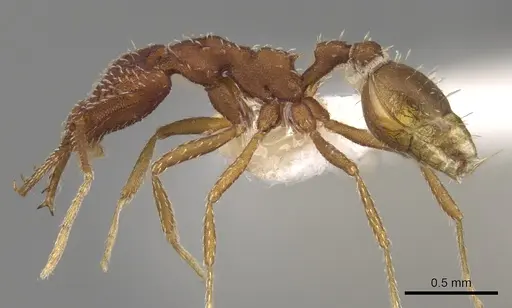
Strumigenys smilax is a tiny dacetine ant measuring just 2.9-3.1mm in total length, native to the Neotropical region of Brazil [1]. Workers are immediately recognizable by their extremely long preocular carina that divides the scrobe into upper and lower compartments, a long narrow petiole node, and a distinctly carinate pronotum with coarse marginal carina running down the side [2]. The species has notably reduced eyes with only 5-6 ommatidia (sometimes just one), and relatively long scapes with an SI of 111-112 [2]. This is the sole member of the Strumigenys smilax group, making it relatively distinctive within the genus [3]. Nothing is documented about their biology in the wild, but as a dacetine ant, they likely share the predatory habits typical of this tribe, specializing in hunting small soil-dwelling arthropods.
Quick Summary
- Difficulty: Hard
- Origin & Habitat: Native to the Neotropical region of Brazil, specifically documented from Goiás (Niquelândia) and Rondônia (Porto Velho) [1][4]. The type locality is a riparian area (Peneira Rio do Peixe) in Goiás, suggesting preference for moist habitats near water bodies.
- Colony Type: Colony structure is unconfirmed, no data exists on queen number or colony size in the wild. As a dacetine ant, colonies are expected to be small.
- Size & Growth:
- Queen: Undescribed, queen caste has not been documented [3]
- Worker: 2.9-3.1mm [3]
- Colony: Unknown, no colony size data exists
- Growth: Unknown, no development data exists for this species
- Development: Unconfirmed, no direct observations of development exist. Based on typical dacetine ant patterns, expect 6-10 weeks at warm temperatures, but this is an estimate. (No species-specific development data exists. Related Strumigenys species typically have slow colony growth with small worker numbers.)
- Antkeeping:
- Temperature: Keep at 24-26°C as a starting point, this is typical for Neotropical dacetine ants. Provide a gentle temperature gradient if possible.
- Humidity: High humidity is likely required given the riparian habitat where the type was collected. Keep substrate consistently moist but not waterlogged.
- Diapause: Unknown for this species. Many Neotropical ants do not enter true diapause but may show reduced activity during cooler dry seasons.
- Nesting: No nesting data exists. Based on typical dacetine behavior, they likely nest in soil or rotting wood in the wild. In captivity, a small test tube setup or plaster nest with fine chambers would work well given their tiny size.
- Behavior: Behavior is unstudied in captivity. Dacetine ants in general are slow-moving, cryptic predators that hunt small prey using their specialized mandibles. Workers likely forage individually in leaf litter and soil. Their extremely reduced eyes suggest they rely more on chemical and tactile cues than vision. Escape prevention should be excellent given their tiny 3mm size, they can easily slip through standard test tube barriers.
- Common Issues: no biological data exists, all care recommendations are speculative based on genus-level patterns, tiny size makes escape likely without fine mesh barriers, slow growth typical of dacetines means colonies may appear stagnant for months, high humidity requirements can lead to mold if ventilation is poor, prey acceptance is unknown, may require specific micro-prey items
Appearance and Identification
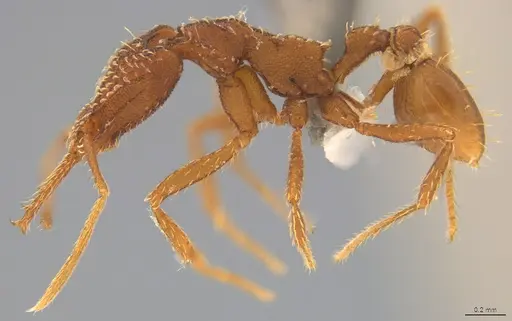
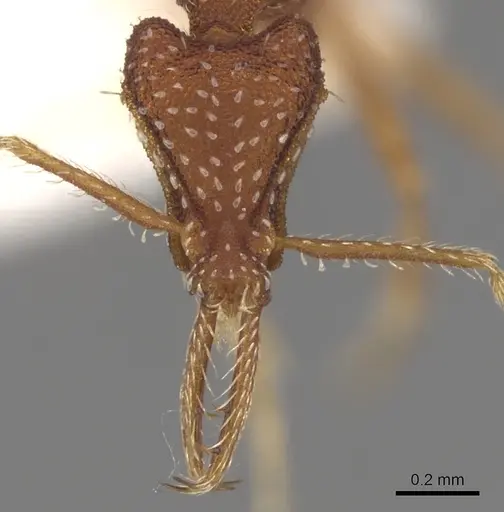
Strumigenys smilax workers are tiny ants measuring just 2.9-3.1mm in total length [3]. The most distinctive morphological features include an extremely long preocular carina that extends back almost to the apex of the scrobe, well beyond the level of the minute eye [2]. The eye itself is extremely reduced, consisting of only 5-6 small ommatidia (sometimes just a single ommatidium in some specimens) [3]. The scapes are relatively long with an SI of 111-112 [2]. The pronotum has a distinctive coarse carina that runs obliquely down the side of the sclerite, terminating above the front coxa [3]. The petiole node is notably long and narrow when viewed from above, and in profile the dorsal length of the node is much greater than the height of its anterior face [3]. The femoral glands have bullae positioned proximally of midlength on the dorsal surfaces of the middle and hind femora [2]. This is the only known species in the Strumigenys smilax group, making identification relatively straightforward within the genus [3].
Distribution and Habitat
Strumigenys smilax is known from the Neotropical region of Brazil, with confirmed records from Goiás state (Niquelândia) and Rondônia state (Porto Velho) [1][4]. The type specimen was collected in Goiás at Niquelândia (14°17'06'S,48°55'01'W) from a location described as Peneira Rio do Peixe, a riparian area, during May 1996 [1]. This habitat association suggests preference for moist environments near water bodies. The species has also been recorded from Guyana, extending the known range significantly northward from Brazil [2]. The distribution data is extremely limited, with only a handful of specimens ever documented.
Biology and Behavior
Unfortunately, absolutely nothing is known about the biology of Strumigenys smilax in the wild [3]. No observations of colony size, queen behavior, foraging patterns, or diet have been documented. However, as a member of the dacetine ant tribe (Attini), it is reasonable to infer certain biological traits based on what is known about related species in the genus. Dacetine ants are specialized predators that typically hunt small soil-dwelling arthropods such as springtails, mites, and other micro-invertebrates. They use their specialized mandibles to capture prey, often with a snapping action. Workers are typically slow-moving and cryptic, foraging individually through leaf litter and soil rather than in obvious trails. The extremely reduced eyes of S. smilax suggest it relies heavily on chemical and tactile senses rather than vision for navigation and prey detection.
Housing and Care
Since no captive care data exists for this species, all recommendations are based on typical dacetine ant requirements and must be considered speculative. Housing should consist of a small, well-humidified setup, a small test tube setup or a plaster/acrylic nest with tight chambers scaled to their tiny 3mm size would be appropriate. Escape prevention is critical as they can easily slip through standard barriers, use fine mesh and tight-fitting lids. Temperature should be maintained in the 24-26°C range, typical for Neotropical species. Humidity should be high given the riparian habitat where the type was collected, keep substrate consistently moist but avoid waterlogging. Provide a small outworld for feeding. For feeding, offer small live prey items typical of dacetine diets: micro-arthropods like springtails, tiny mites, and fruit fly larvae. Acceptance of sugar sources is uncertain, offer occasionally but do not rely on them. Start with very small prey items and observe acceptance.
Challenges and Considerations
This is one of the least-studied ant species in captivity, with essentially zero biological data available to guide keepers. The primary challenge is the complete lack of species-specific information, everything must be inferred from related dacetine ants, which may or may not apply accurately. Colony growth is expected to be slow, typical of dacetines, which may test keeper patience. The tiny worker size (under 3mm) creates practical challenges for feeding appropriate prey and preventing escapes. High humidity requirements must be balanced against mold risks, requiring adequate ventilation without excessive airflow. Until more specimens are collected and studied in the wild, and until someone successfully keeps and breeds this species in captivity, much about its care will remain speculative. This species is best suited for experienced antkeepers who enjoy the challenge of working with poorly-documented species and who can document their observations carefully.
Frequently Asked Questions
How long does it take for Strumigenys smilax to produce first workers?
The egg-to-worker timeline is unconfirmed for this species, no captive observations exist. Based on typical dacetine ant patterns, expect approximately 6-10 weeks at optimal warm temperatures (24-26°C), but this is purely an estimate.
What do Strumigenys smilax ants eat?
Diet is unconfirmed for this species. As a dacetine ant, they are likely specialized predators that hunt small soil-dwelling arthropods. Offer small live prey like springtails, micro mites, and fruit fly larvae. Sugar acceptance is uncertain.
Are Strumigenys smilax good for beginners?
No. This species is not suitable for beginners. No captive care information exists, and all recommendations are speculative. Additionally, their tiny 3mm size creates practical challenges for feeding and escape prevention.
How big do Strumigenys smilax colonies get?
Colony size is unknown, no wild colony size data exists. Based on typical dacetine patterns, colonies are likely small, probably under 100 workers at maturity.
Do Strumigenys smilax need hibernation?
Diapause requirements are unknown for this species. As a Neotropical species from Brazil, they likely do not require true hibernation but may show reduced activity during cooler periods.
Can I keep Strumigenys smilax in a test tube setup?
A test tube setup would be appropriate given their tiny size, but escape prevention must be excellent, they can easily slip through standard barriers. Ensure the cotton is packed tightly and consider using fine mesh over any air holes.
Where does Strumigenys smilax live in the wild?
The species is known from Brazil (Goiás and Rondônia states) and also Guyana. The type was collected from a riparian area in Goiás, suggesting preference for moist habitats near water bodies.
Is Strumigenys smilax aggressive?
Aggression levels are unstudied. Dacetine ants in general are not aggressive toward humans, they are specialized predators focused on hunting small prey, not defending against large threats.
References

This caresheet is licensed under CC BY-SA 4.0 .
ANTWEB1032491
View on AntWeb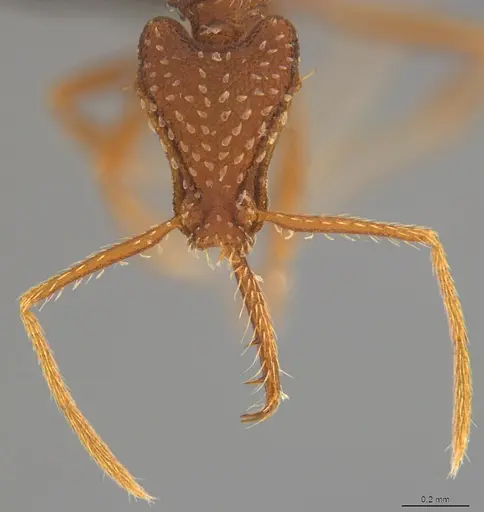
CASENT0280721
View on AntWeb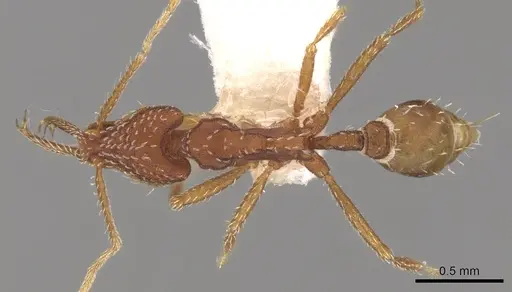
Literature
Loading...Loading products...