

Strumigenys scelesta
- Scientific Name
- Strumigenys scelesta
- Tribe
- Attini
- Subfamily
- Myrmicinae
- Author
- Mann, 1921
- Distribution
- Found in 1 countries
Strumigenys scelesta Overview
Strumigenys scelesta is an ant species of the genus Strumigenys. It is primarily documented in 1 countries , including Fiji. Detailed taxonomic data and occurrence records can be further explored via authoritative databases such as AntWeb or the Global Biodiversity Information Facility (GBIF).
Strumigenys scelesta
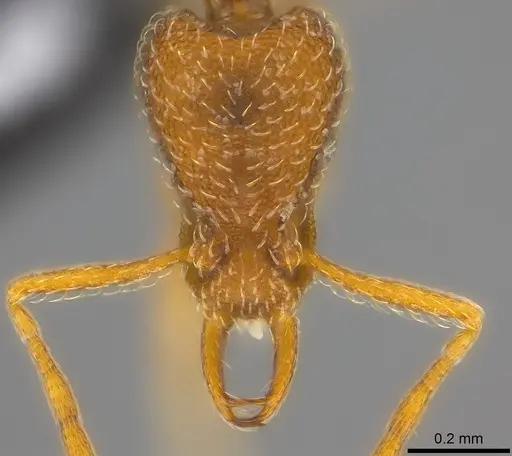
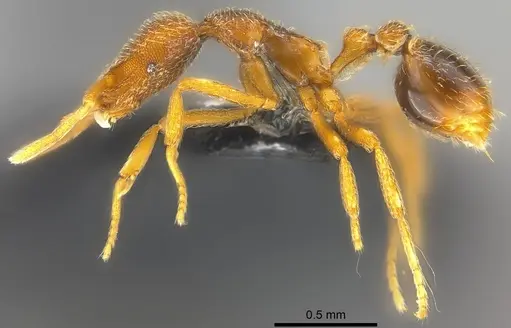
Strumigenys scelesta is an extremely rare ant species endemic to Fiji, one of the smallest ants in the world at just 2.3mm in total length [1][2]. Workers are light reddish-brown with a distinctive dense covering of short, curved hairs covering all dorsal surfaces [1][2]. This species belongs to the smythiesii complex within the Strumigenys godeffroyi group, a lineage of specialized trap-jaw ants known for their elongated mandibles used to capture tiny prey [3]. What makes S. scelesta unique among Fijian Strumigenys is the combination of three specific characters: a flagellate basitarsal hair on the legs, complete absence of projecting hairs near the antennae (apicoscrobal hairs), and no projecting hairs on the shoulder of the thorax (pronotal humeral hairs) [1][2]. Originally described from a single poorly preserved specimen collected in 1921 from Taveuni, recent surveys have found additional specimens on Vanua Levu and Viti Levu at lower elevations [1][2].
Quick Summary
- Difficulty: Expert
- Origin & Habitat: Fiji Islands endemic, found in forest habitat on Taveuni, Vanua Levu, and Viti Levu [3][1][2]. This is a tropical island species from the Pacific.
- Colony Type: Colony structure is unconfirmed. Based on typical Strumigenys patterns, likely single-queen colonies with small worker populations.
- Size & Growth:
- Queen: Unknown, no queen has been described [1][2]
- Worker: 2.3mm total length [1][2]
- Colony: Unknown, likely small colonies under 100 workers based on genus patterns for rare tropical species
- Growth: Unknown, likely slow based on genus patterns
- Development: Unconfirmed, no direct observations. Based on related Strumigenys species, estimate 6-10 weeks at optimal temperature (Development timeline has not been studied for this species. Related tropical Strumigenys typically develop slowly.)
- Antkeeping:
- Temperature: Keep warm at 24-28°C, tropical forest species requiring stable warm conditions. A heating cable on one side of the nest creates a gentle gradient.
- Humidity: High humidity required, think damp tropical forest floor. Keep nest substrate consistently moist but not waterlogged. Mist occasionally and provide a water tube.
- Diapause: Unlikely, as a tropical species from Fiji, they probably do not require a diapause period. Maintain warm conditions year-round.
- Nesting: In nature they likely nest in rotting wood or soil in forest habitats. In captivity, a small test tube setup or small acrylic/plaster nest works well. The key is maintaining high humidity while providing small prey items.
- Behavior: Strumigenys are specialized predators using trap-jaw mandibles to capture tiny arthropods, primarily springtails. Workers are likely slow-moving and forage individually. They are not aggressive and pose no threat to humans. The extremely small size (2.3mm) makes escape prevention critical, they can squeeze through tiny gaps. These ants are not suitable for beginners due to their specialized diet and limited availability.
- Common Issues: extremely small size means escapes are likely without fine mesh barriers, specialized diet requires live springtails or micro-prey, they cannot survive on sugar or standard ant food, very rare species with no captive breeding history, wild colonies are the only source, high humidity requirements can lead to mold if ventilation is poor, slow growth and small colony sizes make them challenging to maintain
Identification and Unique Traits
Strumigenys scelesta is one of the smallest ants you could keep, measuring just 2.3mm from head to tail tip [1][2]. Workers are a light reddish-brown color with a distinctive dense covering of short, curved hairs across their entire body [1][2]. The species is best identified by three characters that no other Fijian Strumigenys shares: a long flagellate hair on the basitarsus (the lowest leg segment), complete absence of projecting hairs near the antennae, and no projecting hairs on the shoulder of the thorax [1][2]. The mandibles are short relative to other Strumigenys (MI 37), giving them a distinctive facial profile [1][2]. They have a broad propodeal lamella (a flat extension on the rear of the thorax) [1][2]. This species belongs to the smythiesii complex within the godeffroyi group, a group of trap-jaw ants that use their specialized mandibles to snap shut on small prey [3].
Distribution and Habitat
Strumigenys scelesta is endemic to Fiji, meaning it is found nowhere else on Earth [4][5]. The original specimen was collected from Taveuni, one of the larger islands in the Fijian archipelago, specifically from the mountains near Lake Tagimaucia [2]. For decades, this species was known only from that single holotype, which was in rather poor condition [1][2]. A more recent survey conducted between 2002-2008 recovered several specimens that closely match the original description, leading researchers to confirm they belong to S. scelesta [1][2]. These newer specimens were found at lower elevations on Vanua Levu and Viti Levu, suggesting the species prefers forest habitats at various altitudes [1][2]. The fact that this species has been found so rarely is likely due to both its tiny size and the specialized microhabitats it occupies in Fiji's forests [3].
Feeding and Diet
Strumigenys ants are specialized predators, and S. scelesta is no exception. In the wild, these ants hunt tiny prey such as springtails (collembola), mites, and other micro-arthropods found in forest floor litter. Their trap-jaw mandibles are designed for capturing small, fast-moving prey. In captivity, you must replicate this specialized diet. Live springtails should be the primary food source, these can be cultured separately and added to the outworld. Other small live prey such as booklice (psocids), fruit flies, and tiny mites may also be accepted. Sugar sources are unlikely to be accepted, Strumigenys are obligate predators and do not forage for honeydew or nectar. Feed small amounts of live prey every few days, removing any uneaten prey after 24 hours to prevent mold.
Temperature and Care
As a tropical species from Fiji, Strumigenys scelesta requires warm, stable temperatures in captivity. Aim for 24-28°C in the nest area, this matches the warm, humid conditions of Fijian forests. A small heating cable placed on one side of the nest can create a gentle temperature gradient, allowing the ants to regulate their own temperature by moving between warmer and cooler areas. Be careful not to overheat, temperatures above 32°C can be lethal. Humidity should be high, around 70-80%, which you can achieve by keeping the nest substrate moist and providing a water tube. Good ventilation is essential to prevent mold while maintaining humidity. Avoid placing the nest near windows or in direct sunlight, as temperature fluctuations can stress the colony. These ants do not require hibernation or diapause due to their tropical origin.
Nesting and Setup
In their natural habitat in Fiji, Strumigenys scelesta likely nests in rotting wood, under bark, or in soil pockets within forest litter. For captivity, a small test tube setup works well for founding colonies, while established colonies can be moved to small acrylic or plaster nests. The key requirements are: small chambers scaled to their tiny 2.3mm size, high humidity retention, and a connection to an outworld for foraging. Because they are so small, escape prevention is critical, use tight-fitting lids and consider applying a barrier such as Fluon to the edges of the outworld. A small outworld with a layer of moist substrate or leaf litter provides a natural hunting ground where they can search for prey. Keep the nest area dark or covered, as these ants prefer dim conditions.
Behavior and Temperament
Strumigenys scelesta workers are slow-moving foragers that hunt individually rather than in groups. They do not form large colonies or display aggressive behavior toward keepers. Their tiny size means they pose no sting risk, Myrmicinae ants do have stingers, but Strumigenys are not aggressive and would only use their mandibles defensively if directly handled. Workers likely forage alone through leaf litter and soil, using their trap-jaw mandibles to snap shut on any small prey they encounter. Colonies are probably small, possibly under 100 workers even at maturity, which is typical for rare tropical Strumigenys species. The main behavioral concern for keepers is escape prevention, at 2.3mm, they can slip through incredibly tiny gaps that would not concern larger ant species.
Frequently Asked Questions
How long does it take for Strumigenys scelesta to develop from egg to worker?
The development timeline has not been directly studied for this species. Based on related Strumigenys species, estimate approximately 6-10 weeks from egg to first worker at optimal temperature (around 26°C). This is a rough estimate, actual development time may vary.
What do Strumigenys scelesta ants eat?
They are specialized predators that require live small prey. Live springtails should be their primary food, as they would hunt these in the wild. Other tiny live prey like booklice, fruit flies, and small mites may also be accepted. Sugar sources and standard ant foods are unlikely to be accepted, they are obligate predators.
Can I keep Strumigenys scelesta in a test tube?
Yes, a test tube setup works well for founding colonies. Use a small test tube with a water reservoir, keeping the cotton moist to maintain humidity. The tube should be kept warm (24-28°C) and placed in a dark area. As the colony grows, you can connect the test tube to a small outworld for foraging.
Are Strumigenys scelesta good for beginners?
No, this species is not recommended for beginners. It is extremely rare with no captive breeding history, requires a specialized diet of live springtails, needs high humidity and warm temperatures, and its tiny size makes escape prevention challenging. Additionally, wild colonies are the only source since no captive breeding programs exist.
How big do Strumigenys scelesta colonies get?
Colony size is not documented, but based on genus patterns for rare tropical Strumigenys, colonies likely remain small, probably under 100 workers even at maturity. This is typical for species that are known from few specimens.
Do Strumigenys scelesta need hibernation?
No, they do not require hibernation. As a tropical species from Fiji, they need warm conditions year-round. Maintain temperatures between 24-28°C throughout the year without any cooling period.
Why is Strumigenys scelesta so rare in the wild?
The species is known from very few specimens because of its extremely small size (2.3mm) and likely specialized microhabitat requirements in Fijian forests. It was originally known from only a single specimen collected in 1921. Recent surveys have found more specimens, but the species remains one of the rarest Fijian ants.
When will Strumigenys scelesta produce alates (reproductives)?
Nuptial flight timing and reproductive behavior have not been documented for this species. There is no data on when alates are produced or when mating flights occur.
Can I keep multiple queens together?
Colony structure is unconfirmed for this species. Based on typical Strumigenys patterns, they likely have single-queen colonies. Combining unrelated queens has not been documented and is not recommended given how rare and valuable this species is.
References

This caresheet is licensed under CC BY-SA 4.0 .
CASENT0186833
View on AntWeb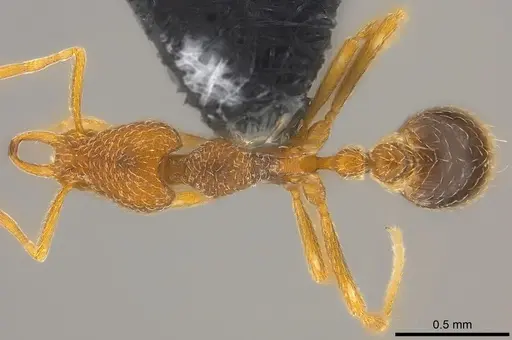
Literature
Loading...Loading products...