

Strumigenys rostrataeformis
- Scientific Name
- Strumigenys rostrataeformis
- Tribe
- Attini
- Subfamily
- Myrmicinae
- Author
- Brown, 1949
- Distribution
- Found in 1 countries
Strumigenys rostrataeformis Overview
Strumigenys rostrataeformis is an ant species of the genus Strumigenys. It is primarily documented in 1 countries , including Japan. Detailed taxonomic data and occurrence records can be further explored via authoritative databases such as AntWeb or the Global Biodiversity Information Facility (GBIF).
Strumigenys rostrataeformis
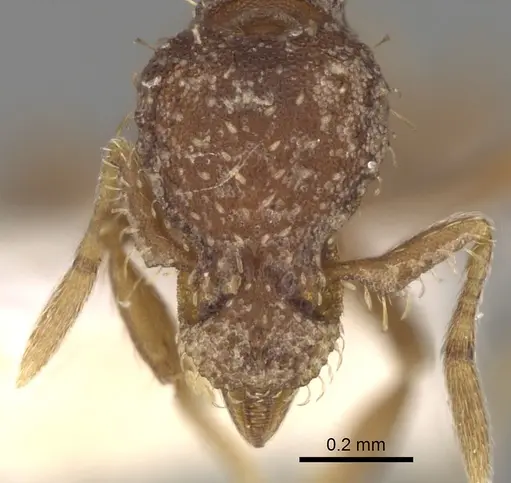
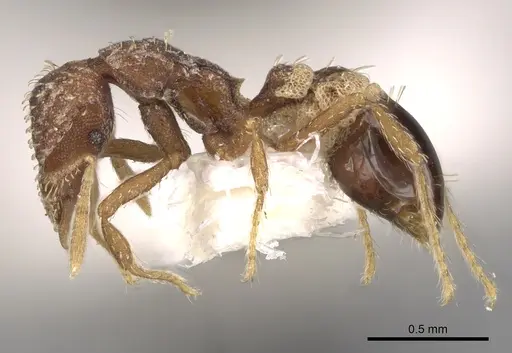
Strumigenys rostrataeformis is a tiny predatory ant native to Japan and the Korean Peninsula. Workers measure just 2.3-2.4mm, making them one of the smaller ant species kept in captivity. They have a rusty brown coloration and belong to the Strumigenys rostrata group, characterized by their distinctive spatulate (spoon-shaped) hairs and relatively short mandibles compared to other Strumigenys species. This species is rare in its native Japan, found only in specific forested areas from Shikoku north to Miyagi Prefecture [1][2].
What makes S. rostrataeformis unusual among Strumigenys is its foraging behavior, while most Strumigenys species are cryptic leaf-litter dwellers, this species has been observed foraging actively on open surfaces, making it more visible than its relatives [3]. These ants are specialized predators that hunt tiny springtails, using their trap-jaw mandibles to capture prey [3].
Quick Summary
- Difficulty: Hard
- Origin & Habitat: Native to Japan (Shikoku, Kyushu, Honshu) and South Korea. Found in damp decaying wood, tree stumps, and forest floor habitats, particularly in flaky areas at the base of tree roots [1][2][4].
- Colony Type: Likely monogyne (single queen) based on typical Strumigenys patterns. Colony size is small, likely under 100 workers given the tiny worker size and rare collection records [2].
- Size & Growth:
- Queen: Unconfirmed, queen has not been described in scientific literature
- Worker: 2.35-2.37mm
- Colony: Likely under 100 workers based on collection records and small worker size [2]
- Growth: Slow, based on typical Strumigenys development patterns
- Development: Estimated 8-12 weeks based on typical dacetine ant development at warm temperatures (Development time is estimated from genus-level data since species-specific studies are unavailable)
- Antkeeping:
- Temperature: Keep at 20-24°C. This species is found in temperate Japan and Korea, suggesting they prefer cooler conditions than tropical ants. Avoid temperatures above 26°C [4].
- Humidity: High humidity required, they naturally inhabit damp decaying wood. Keep nest substrate consistently moist but not waterlogged. Provide a humidity gradient so ants can choose their preferred zone.
- Diapause: Yes, this is a temperate species requiring winter hibernation. Reduce temperature to 10-15°C for 2-3 months during winter months, mimicking natural seasonal cycle [4].
- Nesting: Best kept in naturalistic setups with damp soil/wood substrate. They naturally nest in decaying tree stumps and under loose bark. Y-tong or plaster nests with high humidity chambers work well. Provide access to small prey items.
- Behavior: These ants are specialized predators of springtails. Workers forage actively on surfaces rather than remaining cryptic, which is unusual for Strumigenys [3]. They have trap-jaw mandibles designed for capturing small arthropods. Colonies are small and workers are not aggressive. Escape prevention is critical due to their tiny 2.4mm size, they can squeeze through standard mesh barriers. Handle with care as their small size makes them fragile.
- Common Issues: tiny size means escapes are likely without fine mesh barriers, specialized diet makes feeding challenging, need constant supply of springtails or micro-prey, slow colony growth can lead to keeper impatience and overfeeding, damp conditions required, improper humidity causes colony failure, winter diapause is essential for temperate species, skipping it weakens colonies
Housing and Nest Setup
Strumigenys rostrataeformis requires high-humidity housing due to their natural habitat in damp decaying wood. A naturalistic setup with a soil/peat mixture works best, fill a container with moist substrate and add pieces of decaying wood or bark for them to nest in. Alternatively, a Y-tong (acrylic) nest with a water reservoir works well, but ensure the chambers stay humid. Because they are tiny, use a test tube setup with a cotton plug for the founding colony, then move to a more elaborate setup as the colony grows. Always use excellent escape prevention, these 2.4mm ants can slip through standard mesh. A thin layer of fluon on container edges or fine mesh (0.5mm or smaller) is essential [3][4].
Feeding and Diet
This species is a specialized predator that hunts springtails in the wild [3]. In captivity, you must provide a constant supply of tiny live prey. Springtails (Symphypleona and Entomobryomorpha) are their natural prey and the ideal food source. Other small live prey may be accepted experimentally, including fruit flies, tiny booklice, and other micro-arthropods. Do not rely on sugar sources, Strumigenys are predatory and typically do not accept honey or sugar water. Feed small prey items every 2-3 days, removing uneaten prey to prevent mold. A well-fed colony will have workers actively hunting, hungry colonies may appear sluggish [3].
Temperature and Seasonal Care
Keep these ants at 20-24°C, this matches their temperate Japanese and Korean habitat. They can tolerate slightly cooler temperatures (down to 18°C) but avoid sustained temperatures above 26°C. During winter, this species requires a diapause period. Reduce temperatures to 10-15°C for 2-3 months, typically from late autumn through early spring. Place the colony in a cool location (unheated garage or basement works) during this period. Do not feed during diapause but ensure the substrate remains slightly moist. Skipping hibernation will weaken the colony over time and may prevent proper seasonal cycling [4].
Colony Founding and Growth
Queen founding behavior has not been directly documented for this species, but based on typical Strumigenys patterns, it is likely claustral, the queen seals herself in a chamber and raises the first workers alone on stored fat reserves. Expect a slow growth rate, dacetine ants develop slowly compared to many common ant species. The first workers (nanitics) will be very small. Colony size remains small throughout the life of the colony, likely under 100 workers even in mature colonies. This is normal for the species and reflects their natural biology. Do not expect rapid colony expansion. Be patient, a healthy founding colony may take 6-12 months to produce its first workers, and several years to reach moderate size [2].
Handling and Observation
These ants are extremely small and fragile. Minimize disturbance to the colony, especially during the founding phase. When you need to observe or move them, use soft tools and avoid shaking or jostling the nest. Their small size also means they are easily crushed. For observation, a magnifying glass or stereo microscope is helpful. Watch for their unique hunting behavior, they use their trap-jaw mandibles to capture springtails with remarkable speed. Colonies are not aggressive and workers will flee rather than defend when disturbed [3][4].
Frequently Asked Questions
Can I keep Strumigenys rostrataeformis in a test tube?
Yes, test tubes work well for founding colonies. Use a small test tube with a cotton plug and water reservoir. Keep it humid but not wet, condensation should be visible but not pooling. However, you will need to transition them to a more elaborate setup with space for hunting as the colony grows, since they need access to live prey [4].
What do Strumigenys rostrataeformis eat?
They are specialized predators that eat springtails. In captivity, provide live springtails as their primary food. Other tiny live prey like fruit flies may be accepted. They do not typically eat sugar or honey, this is a predatory species. Remove uneaten prey after 24 hours to prevent mold [3].
How long does it take for first workers to appear?
Estimated 8-12 weeks from egg to worker at optimal temperature (around 22°C). This is based on typical dacetine ant development since species-specific studies are unavailable. Expect slow growth, be patient with founding colonies [4].
Are Strumigenys rostrataeformis good for beginners?
No. This is a difficult species to keep, they require a specialized diet of live springtails, high humidity, and a winter diapause period. Their tiny size also makes them prone to escape and difficult to handle. We recommend starting with easier species like Lasius or Tetramorium before attempting Strumigenys.
Do they need hibernation?
Yes. This is a temperate species native to Japan and Korea. You should provide a winter rest period of 2-3 months at 10-15°C during late autumn and winter. Skipping diapause will weaken the colony over time [4].
How big do colonies get?
Colony size remains small, likely under 100 workers even in mature colonies. This is normal for the species and reflects their natural biology as a rare, cryptic predator. Do not expect large colonies [2].
Why are my Strumigenys rostrataeformis dying?
Common causes include: lack of live prey (they need springtails, not just protein mix), incorrect humidity (too dry causes colony failure), temperatures too high (above 26°C), or escape/dehydration due to their tiny size. Check these parameters first. Also ensure you are not disturbing the colony too frequently during founding.
When should I move them to a formicarium?
Move from test tube to a naturalistic or Y-tong setup once the colony reaches 10-20 workers. The new setup must have damp substrate and space for hunting live prey. Do not move founding colonies prematurely, wait until they are established.
Can I keep multiple queens together?
Not recommended. Combining unrelated queens of this species has not been documented and is likely to result in aggression. Keep one queen per colony unless you have specific guidance from experienced Strumigenys keepers.
References

This caresheet is licensed under CC BY-SA 4.0 .
CASENT0280714
View on AntWeb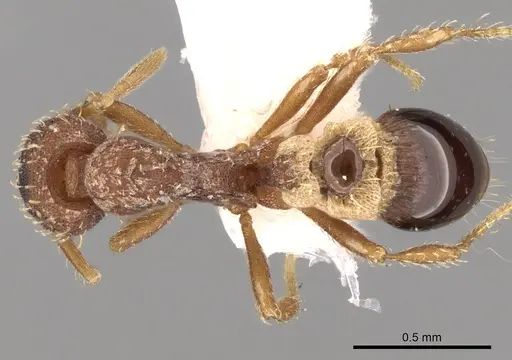
Literature
Loading...Loading products...