

Strumigenys rofocala
- Scientific Name
- Strumigenys rofocala
- Tribe
- Attini
- Subfamily
- Myrmicinae
- Author
- Bolton, 2000
- Distribution
- Found in 3 countries
Strumigenys rofocala Overview
Strumigenys rofocala is an ant species of the genus Strumigenys. It is primarily documented in 3 countries , including Brunei Darussalam, Indonesia, Malaysia. Detailed taxonomic data and occurrence records can be further explored via authoritative databases such as AntWeb or the Global Biodiversity Information Facility (GBIF).
Strumigenys rofocala
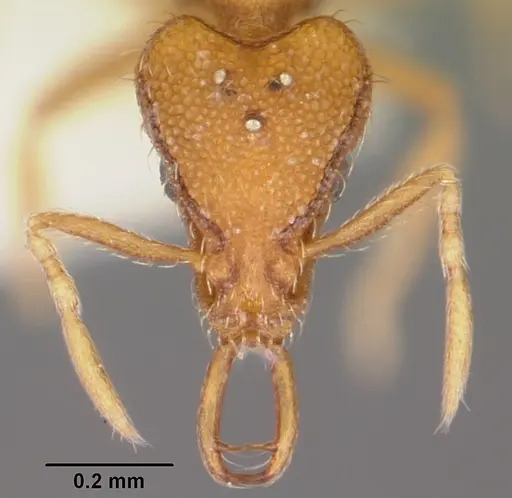
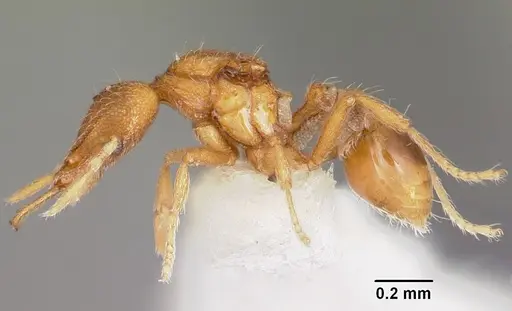
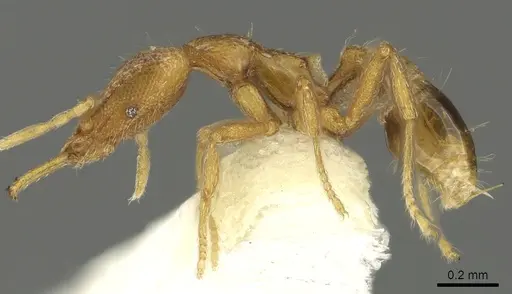
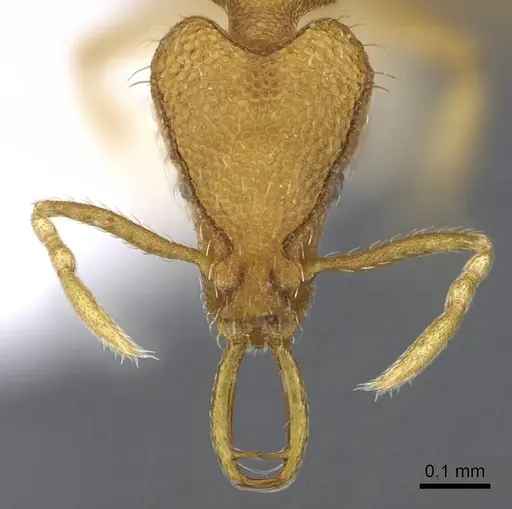
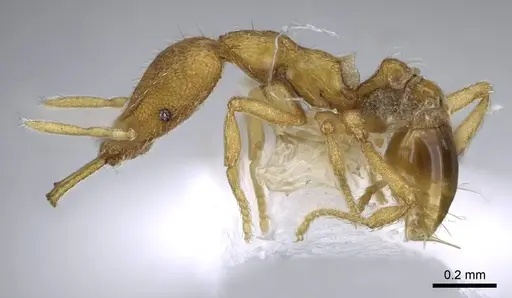
Strumigenys rofocala is a minute predatory ant measuring just 1.8-1.9mm in total length, belonging to the Myrmicinae subfamily and Attini tribe. Workers have a distinctive appearance with a narrow head (0.33-0.35mm wide), small elongated mandibles adapted for hunting small prey, and a transverse row of stiff erect hairs at the back of the head that are the longest hairs on the dorsal surface. The species is a member of the Strumigenys godeffroyi group and is closely related to S. datryx, S. tenitecta, and S. uichancoi, all of which are very small leaf-litter ants. This ant is native to Borneo, Indonesia, and Malaysia, where it inhabits rainforest leaf-litter in lowland forest environments [1].
What makes S. rofocala particularly interesting is its ecological dominance, it was the most common Strumigenys species recorded in Bornean rain forest surveys with 76 occurrences across all forest types, and one of only two genera with more than twenty species documented [2]. These ants are highly active predators, moving significantly faster than other leaf-litter ant species at 8.8mm per second, and they spend nearly twice as much time foraging in leaf litter compared to topsoil [3]. Their high nitrogen isotope values (δ15Ncor = 7.38) confirm they are specialized predators feeding on small soil micro-arthropods [4].
Quick Summary
- Difficulty: Expert
- Origin & Habitat: Borneo, Indonesia, and Malaysia in the Indomalaya region. Inhabits rainforest leaf-litter in lowland forests, particularly alluvial and dipterocarp forest types [1][5].
- Colony Type: Colony structure is unconfirmed. Only two nests have been documented with 11 and 13 workers respectively, suggesting small colony sizes typical of litter-dwelling ants [3]. Queens have been collected alongside workers in leaf-litter samples.
- Size & Growth:
- Queen: Undescribed in detail, only fragmentary queen measurements available
- Worker: 1.8-1.9mm total length,0.48-0.52mm head length,0.33-0.35mm head width
- Colony: Small, documented colonies contain 11-13 workers [3]. Based on related species and the genus pattern, colonies likely reach 50-200 workers.
- Growth: Unknown, no development data available for this species
- Development: Unknown, no direct measurements available. Based on typical Strumigenys patterns and tropical litter ant development, estimate 6-10 weeks at optimal temperature. (Development timeline is unconfirmed. Related Strumigenys species in tropical environments typically develop from egg to worker in 6-10 weeks.)
- Antkeeping:
- Temperature: Tropical species, keep around 24-28°C. The species inhabits lowland Bornean rainforests where temperatures are warm year-round. A gentle gradient is recommended.
- Humidity: High humidity required, these ants live in rainforest leaf-litter. Keep the nest substrate consistently moist but not waterlogged. The foraging area should remain humid with some drying areas available.
- Diapause: No, as a tropical species from Borneo, S. rofocala does not require hibernation or winter dormancy. Maintain consistent warm conditions year-round.
- Nesting: Natural nesting occurs in soil attached to small saplings about 10cm above the ground, and within leaf-litter layers [3]. In captivity, a naturalistic setup with moist substrate (like a mixing bowl or terrarium style) works best. They prefer tight, humid spaces with access to the substrate surface for hunting.
- Behavior: S. rofocala is an active, fast-moving predator. Workers forage individually through leaf-litter, using their small elongated mandibles to capture tiny prey (primarily springtails and other micro-arthropods) [3][4]. They are significantly more active than other leaf-litter ant species, moving at 8.8mm per second [3]. Colonies are small and docile, these ants pose no threat to keepers. Escape prevention is critical due to their extremely small size (under 2mm), they can squeeze through standard mesh barriers. They are not aggressive and do not sting.
- Common Issues: escape prevention is critical, at only 1.8mm, workers can slip through standard mesh and gaps in most formicaria, small colony size means colonies are fragile and slow to grow, beginners may lose patience, specialized predatory diet makes feeding challenging, they require live micro-prey like springtails, high humidity requirements create mold risk in enclosed nests, tropical species cannot tolerate temperature drops, cold exposure can be fatal
Housing and Nest Setup
Strumigenys rofocala requires a setup that mimics their natural leaf-litter habitat. A naturalistic terrarium-style enclosure works best, use a shallow container filled with moist, decomposing leaf litter and soil. The substrate should be kept consistently humid but not waterlogged. You can attach small soil masses to vertical surfaces (like small saplings or pieces of wood) about 10cm above the ground to simulate their natural nest sites [3]. Avoid standard test tube setups as these tiny ants need more space to forage and hunt. A mixing bowl setup or similar shallow container with a secure lid works well. Ensure excellent escape prevention, these ants are extremely small and will escape through any gap. Use fine mesh (0.5mm or smaller) on any ventilation holes.
Feeding and Diet
S. rofocala is a specialized predator that feeds almost exclusively on tiny soil micro-arthropods. Their high nitrogen isotope values (δ15Ncor = 7.38) confirm a predatory diet high in protein [4]. In captivity, their primary food should be live springtails, these are the ideal size for their small mandibles and match their natural prey. Other tiny live prey like pot worms (enchytraeids), micro-arthropods, and newly hatched pinhead crickets may be accepted. Do not rely on sugar sources or honey, these ants are predators, not sugar feeders. Feed small amounts of live prey every few days, removing any uneaten prey to prevent mold. The key to success is establishing a sustainable culture of springtails to feed your colony long-term.
Temperature and Care
As a tropical lowland rainforest species from Borneo, S. rofocala requires warm, stable temperatures. Keep the colony at 24-28°C for optimal activity and any potential growth. Avoid any temperature drops below 22°C, this species has no tolerance for cold conditions. Use a gentle heat source if needed, such as a heating cable on one side of the enclosure to create a temperature gradient. Room temperature within this range is acceptable. Do not attempt hibernation or cooling periods, this species does not experience cold winters in its native habitat. Temperature stability is more important than exact precision, but avoid drafts and air conditioning units that might cool the enclosure.
Behavior and Activity
These ants are remarkably active for their size, they walk significantly faster than other leaf-litter ant species, recorded at 8.8mm per second [3]. Workers forage individually through the leaf-litter layer rather than in groups, hunting small prey with their specialized elongated mandibles. They are significantly more likely to be found in leaf litter than in topsoil (537 individuals in leaf litter vs 268 in topsoil from 805 total samples) [3]. The colony will likely show constant activity in the foraging area. They are not aggressive toward keepers and cannot sting. Their small size and fast movement make them fascinating to observe but challenging to contain.
Colony Establishment
Establishing a colony of S. rofocala is challenging due to their small colony sizes in the wild (documented nests contain only 11-13 workers) and specialized requirements [3]. If you obtain a queen or colony, expect slow growth, small founding colonies are fragile and vulnerable to stress. The queen likely seals herself in a claustral chamber to raise first workers, as is typical for the genus. Do not disturb the founding chamber. Once workers emerge, they will begin foraging for tiny live prey. Patience is essential, growth will be slow, and overfeeding can cause mold issues in the small enclosure. Monitor humidity carefully to prevent fungal problems while maintaining the moisture levels these ants need.
Frequently Asked Questions
How long does it take for Strumigenys rofocala to develop from egg to worker?
The exact development timeline is unconfirmed for this species. Based on typical Strumigenys patterns and related tropical leaf-litter ants, estimate 6-10 weeks from egg to first worker at optimal temperature (around 26°C).
Can I keep Strumigenys rofocala in a test tube setup?
A test tube is not recommended for S. rofocala. These tiny ants need space to forage through leaf-litter and hunt small prey. A naturalistic setup with moist substrate and leaf litter is much more appropriate. They also need humidity control that test tubes make difficult.
What do Strumigenys rofocala ants eat?
S. rofocala is a specialized predator that feeds on tiny soil micro-arthropods. Their primary food should be live springtails. They may also accept other small live prey like pot worms and micro-arthropods. They do not typically accept sugar sources or dead protein.
Are Strumigenys rofocala ants good for beginners?
No, this species is not recommended for beginners. They require specialized care including live prey cultures, high humidity, tropical temperatures, and excellent escape prevention. Their small size and specific dietary needs make them challenging even for experienced antkeepers.
How big do Strumigenys rofocala colonies get?
Colony size is unconfirmed but likely small. The largest documented colonies contain only 11-13 workers [3]. Based on related species, colonies probably reach 50-200 workers at maturity, much smaller than typical ant colonies.
Do Strumigenys rofocala need hibernation?
No, S. rofocala does not require hibernation. As a tropical species from Borneo, they need warm conditions year-round. Maintain temperatures of 24-28°C consistently.
Why are my Strumigenys rofocala escaping?
Escape prevention is critical for this species. At only 1.8mm in length, workers can slip through standard mesh and tiny gaps. Use fine mesh (0.5mm or smaller), ensure all lid seams are sealed, and check for any gaps around cables or ventilation.
Can I keep multiple queens together?
Combining unrelated queens has not been documented for this species and is not recommended. Limited field data shows small colonies with single queens, and introducing multiple foundresses would likely result in fighting.
What temperature is ideal for Strumigenys rofocala?
Keep S. rofocala at 24-28°C. This tropical lowland rainforest species requires warm, stable conditions. Avoid temperatures below 22°C as they have no tolerance for cold.
References

This caresheet is licensed under CC BY-SA 4.0 .
CASENT0102622
View on AntWeb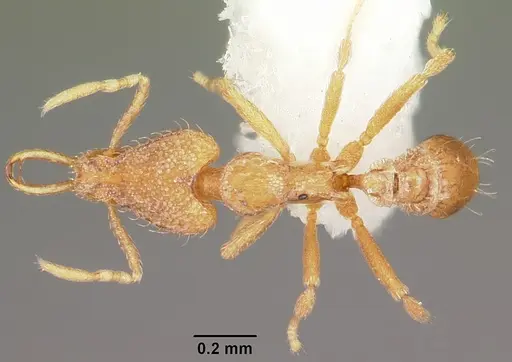
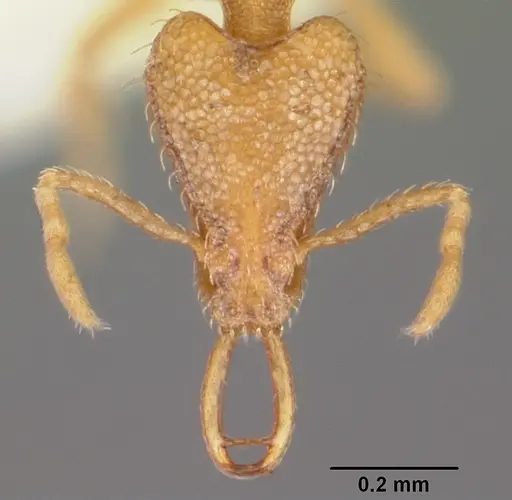
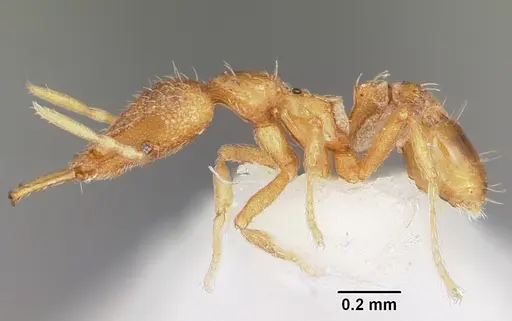
CASENT0104944
View on AntWeb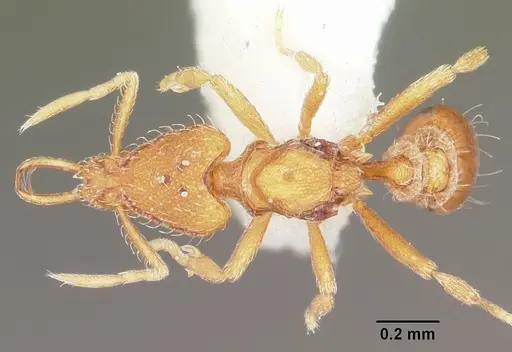
CASENT0900828
View on AntWeb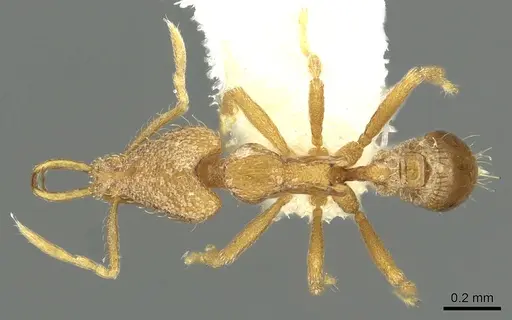
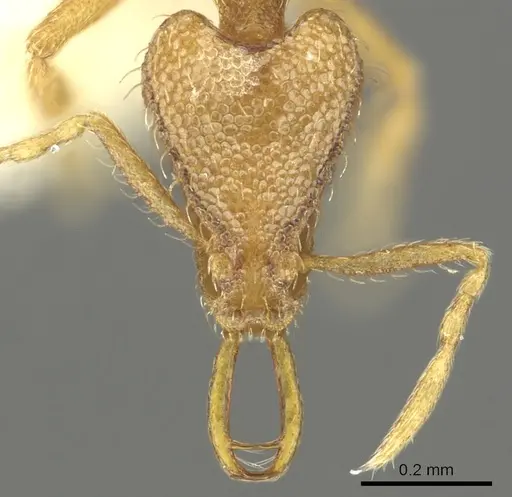
CASENT0914864
View on AntWeb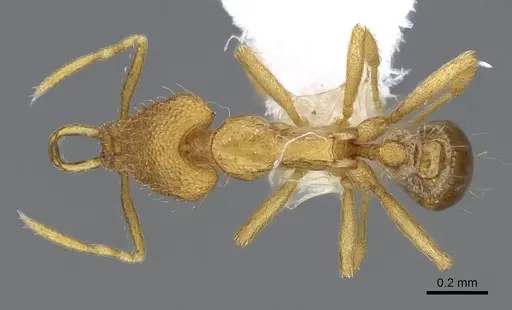
Literature
Loading...Loading products...