

Strumigenys raptans
- Scientific Name
- Strumigenys raptans
- Tribe
- Attini
- Subfamily
- Myrmicinae
- Author
- Bolton, 2000
- Distribution
- Found in 1 countries
Strumigenys raptans Overview
Strumigenys raptans is an ant species of the genus Strumigenys. It is primarily documented in 1 countries , including Colombia. Detailed taxonomic data and occurrence records can be further explored via authoritative databases such as AntWeb or the Global Biodiversity Information Facility (GBIF).
Strumigenys raptans
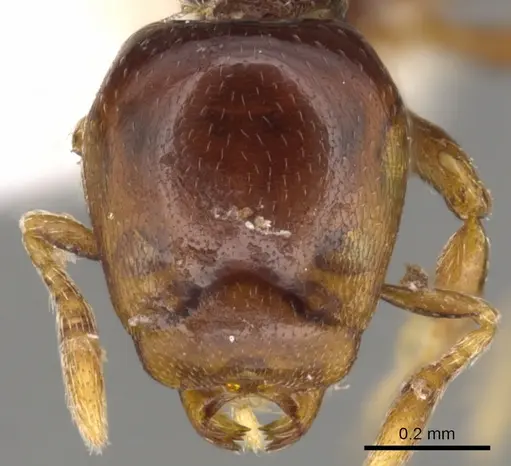
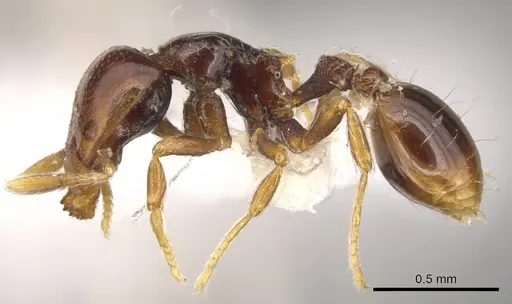
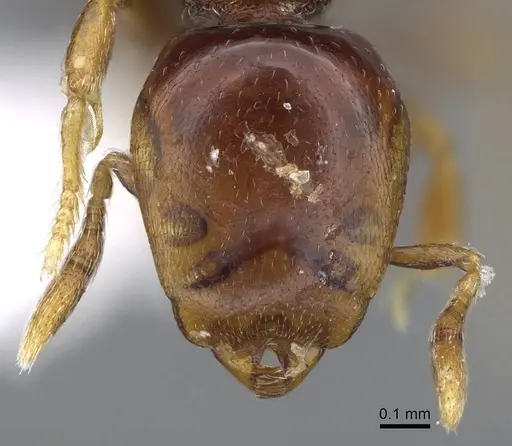
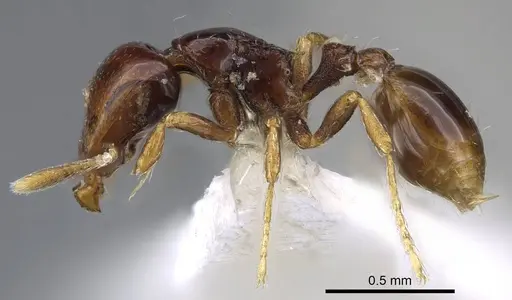
Strumigenys raptans is a remarkably tiny ant species measuring just 2.0-2.2mm in total length, belonging to the Myrmicinae subfamily and Attini tribe [1]. These ants are native to Colombia's Neotropical regions, where they inhabit cloud forests at elevations around 1700m [1]. They belong to the Strumigenys appretiata group and feature distinctive trap-jaw mandibles with 6 teeth, 4 huge recurved teeth that make them specialized predators [1]. Their most notable physical features include long flagellate hairs on the pronotum and mesonotum, and long fine hairs on the gaster [1].
Nothing is known specifically about the biology of S. raptans, but like other Strumigenys species, they are almost certainly specialized predators of tiny soil arthropods, particularly springtails [2]. Their trap-jaw mandibles are designed for snapping shut on prey. In the wild, they are found exclusively in forest patches, indicating they require humid, shaded leaf-litter environments [3].
Quick Summary
- Difficulty: Expert
- Origin & Habitat: Colombia, South America, found in cloud forest habitats at approximately 1700m elevation in the Sumapaz region, and across multiple departments including Cundinamarca, Caquetá, Santander, and others [1][4]. They are exclusively found in forest patches, not open areas [3].
- Colony Type: Likely monogyne (single queen) based on typical Strumigenys patterns, but colony structure is unconfirmed for this species
- Size & Growth:
- Queen: Unknown, no queen description available [2]
- Worker: 2.0-2.2mm [1]
- Colony: Unknown, likely small colonies typical of Strumigenys genus
- Growth: Unknown, likely slow like other Strumigenys species
- Development: Unknown, likely 6-10 weeks based on related Strumigenys species (No specific development data exists for this species. Estimates based on genus-level patterns for similar tiny Myrmicinae.)
- Antkeeping:
- Temperature: Keep at low-to-mid room temperature, around 20-24°C. Avoid overheating, these are cool-adapted cloud forest ants from high elevation Colombia.
- Humidity: High humidity required, think damp forest floor. Keep the nest substrate consistently moist but not waterlogged. Provide a humidity gradient so ants can choose their preferred zone.
- Diapause: Unknown, may not require strong diapause given their tropical/cloud forest origin, but a slight cool period during winter months may be beneficial
- Nesting: Use a small, tight-scale nest appropriate for their tiny size. Y-tong (AAC) nests or small test tube setups work well. They prefer dark, humid chambers. Avoid large open spaces.
- Behavior: These ants are specialized predators with trap-jaw mandibles. They are likely slow-moving and secretive, hunting tiny prey in the leaf litter layer. Their tiny size (under 3mm) means escape prevention must be excellent, they can squeeze through the smallest gaps. Handle with care as they are fragile.
- Common Issues: no biological data exists, all care must be inferred from genus patterns, tiny size makes escape likely without fine mesh barriers, specialized diet may be difficult to replicate in captivity, slow growth may frustrate keepers expecting rapid colony development, high humidity needs can lead to mold problems if not managed
Housing and Nest Setup
Because Strumigenys raptans are extremely small (only 2.0-2.2mm), you need to house them in appropriately scaled enclosures. A small test tube setup or a Y-tong (AAC) nest with narrow chambers works best. These ants prefer dark, humid conditions and will do poorly in bright or dry environments. The nest chamber should be small, avoid large open spaces that stress these tiny ants. Use a small outworld as well, scaled to their size. Escape prevention is critical: use fine mesh barriers and ensure all connections are sealed, as they can squeeze through gaps that seem impossibly small. A layer of moist substrate in the nest area helps maintain humidity. [1]
Feeding and Diet
Strumigenys species are specialized predators, almost exclusively hunting springtails (Collembola) and other tiny soil arthropods [2]. Their trap-jaw mandibles are specifically adapted for catching small, fast-moving prey. In captivity, you should offer live springtails as a primary food source, these can be cultured separately or collected from the wild. Other tiny live prey such as booklice (psocids), minute soil mites, and fruit flies may also be accepted. Sugar sources are unlikely to be accepted, these are strict predators. Do not offer large prey items, everything should be tiny enough for their miniscule mandibles to handle. Feed small amounts of live prey every few days, removing any uneaten prey after 24 hours.
Temperature and Humidity
As cloud forest ants from approximately 1700m elevation in Colombia, Strumigenys raptans prefer cool, stable conditions. Keep temperatures in the range of 20-24°C, avoid anything above 26°C. Room temperature is often ideal. They require high humidity to thrive, similar to damp forest floor conditions. Keep the nest substrate consistently moist but not waterlogged. You can achieve this by using a water reservoir connected to the nest or by lightly misting the substrate. Provide a humidity gradient so the ants can self-regulate by moving between wetter and drier areas. Good ventilation is important to prevent mold, but avoid excessive airflow that dries them out. [3][1]
Understanding Their Extreme Rarity
Strumigenys raptans is an exceptionally rare species in the antkeeping hobby precisely because almost nothing is known about its biology in the wild [2]. The species was described in 2000 from just a few specimens collected in Colombia, and there have been virtually no additional studies on its ecology or behavior since then [1]. This means you are essentially pioneering the captive care of this species. Expect experimentation to be necessary, and be prepared to adjust your setup based on colony behavior. Document your observations carefully, they could contribute valuable knowledge to the antkeeping community. The fact that they are found exclusively in forest patches in the wild suggests they are sensitive to environmental disturbance and require stable, humid, shaded conditions [3].
Growth and Colony Development
Colony growth for Strumigenys raptans is expected to be slow, as is typical for the genus. Strumigenys colonies typically remain small, often under 100 workers even in mature colonies. The first workers (nanitics) will likely be very small and may take 6-10 weeks to develop from egg to worker, based on patterns from related species. Do not expect rapid expansion, these are not fast-growing ants. Be patient and maintain consistent care conditions. A healthy founding queen may produce only a small number of workers in the first year. Avoid disturbing the nest during the founding stage, as stress can cause queens to abandon or consume their brood. [2]
Frequently Asked Questions
How long does it take for Strumigenys raptans to produce first workers?
The exact timeline is unknown for this species, but based on related Strumigenys species, expect approximately 6-10 weeks from egg to first worker at optimal temperature (around 22°C). Growth is typically slow, so be patient with founding colonies.
What do Strumigenys raptans eat?
Like other Strumigenys species, S. raptans are specialized predators that likely hunt springtails and other tiny soil arthropods. Offer live springtails as a primary food source. Other tiny live prey such as booklice, minute mites, and fruit flies may also be accepted. Sugar sources are unlikely to be taken.
Can I keep Strumigenys raptans in a test tube setup?
Yes, a small test tube setup is appropriate for these tiny ants. Use a small chamber scaled to their 2mm size, and keep the substrate consistently moist. Ensure excellent escape prevention, their small size means they can escape through tiny gaps.
Are Strumigenys raptans good for beginners?
No. This is an expert-level species because almost nothing is known about its biology in the wild, it requires specialized prey (live springtails), and its tiny size creates practical challenges. Only experienced antkeepers should attempt this species.
What temperature do Strumigenys raptans need?
Keep them at cool room temperature, around 20-24°C. These are cloud forest ants from high elevation Colombia and do not tolerate heat. Avoid temperatures above 26°C.
How big do Strumigenys raptans colonies get?
Colony size is unknown for this species, but Strumigenys colonies typically remain small, likely under 100 workers even in mature colonies. They are not large colony builders.
Do Strumigenys raptans need hibernation?
Diapause requirements are unknown for this species. Given their tropical/cloud forest origin in Colombia, they likely do not require a true hibernation period. A slight reduction in temperature during winter months may be beneficial, but strong diapause is probably unnecessary.
Why are my Strumigenys raptans dying?
Common causes include: temperature too high (keep under 26°C), humidity too low (they need damp conditions), inadequate prey (they need live tiny prey, not dead insects), and escape/small gaps in the setup. Also ensure they are not being disturbed during the founding stage.
Where is Strumigenys raptans found in the wild?
This species is endemic to Colombia, South America. It has been recorded in multiple departments including Cundinamarca, Caquetá, Santander, and others at elevations around 1700m in cloud forest habitats. They are found exclusively in forest patches, not open areas [3][4][1].
When do Strumigenys raptans have nuptial flights?
Nuptial flight timing is unknown for this species. No research has documented their reproductive behavior in the wild.
Can I keep multiple Strumigenys raptans queens together?
Colony structure is unconfirmed for this species. Based on typical Strumigenys patterns, they are likely monogyne (single queen). Combining unrelated queens is not recommended as it has not been studied for this species.
References

This caresheet is licensed under CC BY-SA 4.0 .
CASENT0900206
View on AntWeb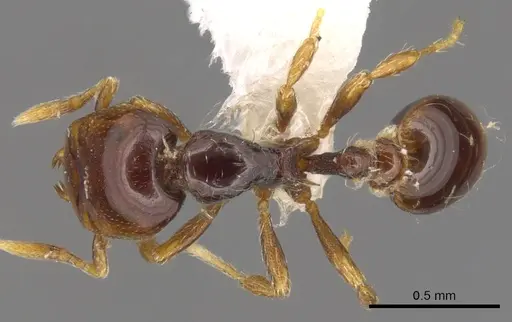
CASENT0914615
View on AntWeb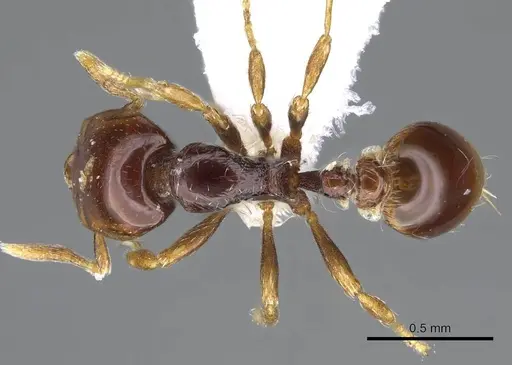
Literature
Loading...Loading products...