

Strumigenys pergandei
- Scientific Name
- Strumigenys pergandei
- Tribe
- Attini
- Subfamily
- Myrmicinae
- Author
- Emery, 1895
- Distribution
- Found in 1 countries
Strumigenys pergandei Overview
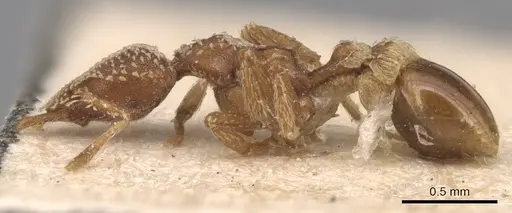
Strumigenys pergandei is an ant species of the genus Strumigenys. It is primarily documented in 1 countries , including United States of America. Detailed taxonomic data and occurrence records can be further explored via authoritative databases such as AntWeb or the Global Biodiversity Information Facility (GBIF).
Strumigenys pergandei
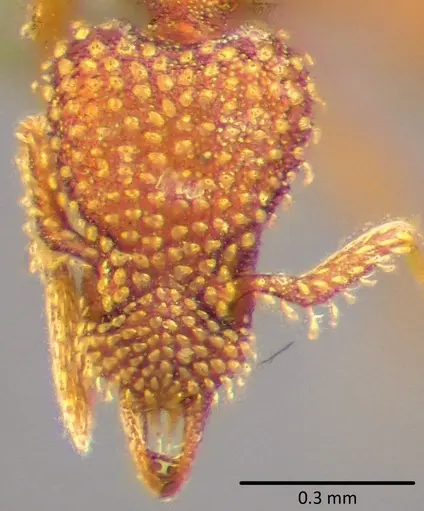
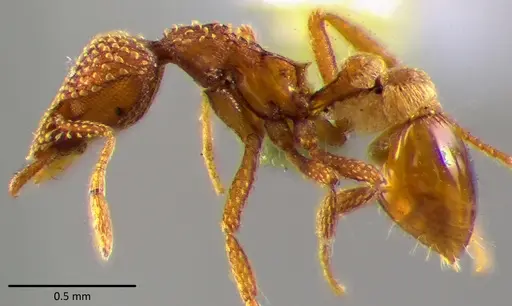
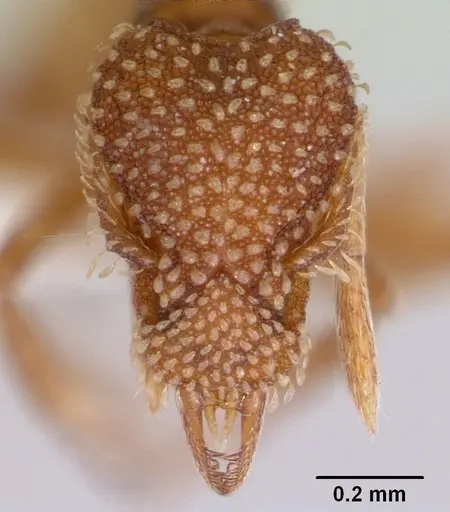
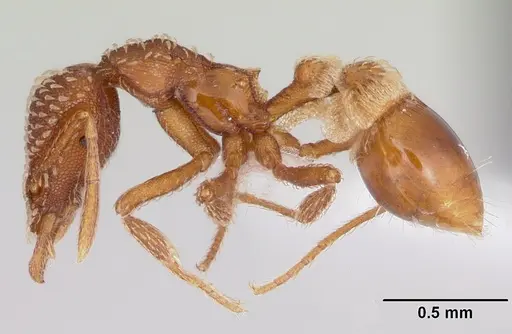
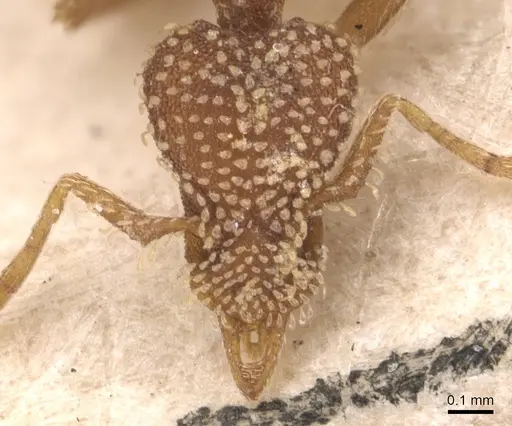
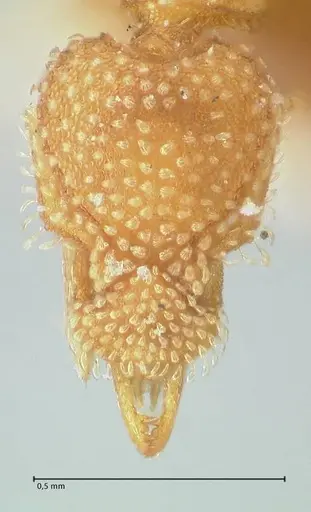
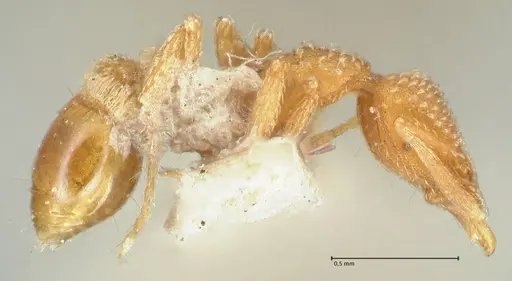
Strumigenys pergandei is a tiny predatory ant native to eastern North America, ranging from Canada down to the southeastern United States. Workers measure just 2.5-2.9mm, making them one of the smaller ant species you'll encounter [1]. They have distinctive elongate mandibles (not the trap-jaw type seen in some relatives) and a generally pale, yellowish-brown coloration. These ants are famous for their extremely specialized diet, they hunt almost exclusively on springtails (Collembola), using their elongated mandibles to seize these slippery prey items [2]. Unlike most ants, they don't eat typical ant foods like sugar water or insects, they are obligate springtail predators.
Quick Summary
- Difficulty: Expert
- Origin & Habitat: Native to eastern North America, found from southern Canada (Ontario) through the eastern United States to Georgia, and west to Iowa and Kansas [1]. In the wild, they nest in moist soil under rocks, in rotting logs, or in the duff beneath pine moss, almost always in close association with larger ant colonies like Aphaenogaster, Formica, and Camponotus species [2]. The host ant nests provide access to springtails, which thrive in the humid microenvironments around these colonies.
- Colony Type: Monogyne (single-queen colonies). Queens are present in the colony but reproduction is limited. Colonies can grow unusually large for this genus, over 700 workers has been documented, whereas most Nearctic Strumigenys species max out around 30 workers [1].
- Colony: Monogyne
- Size & Growth:
- Queen: Not specifically measured in available literature, estimated similar to worker proportions
- Worker: 2.5-2.9mm [1]
- Colony: Up to 700+ workers documented in wild colonies [1]
- Growth: Slow
- Development: Approximately 10-11 weeks (egg 15-16 days, larvae ~42 days, pupae ~18 days) [2] (Development is slow compared to many ants, this is typical of specialized predators)
- Antkeeping:
- Temperature: Keep at room temperature, roughly 20-24°C. As a temperate species, they do not need additional heating but should not be exposed to cold drafts.
- Humidity: High humidity is essential. These ants naturally live in moist microhabitats under rocks and moss near host ant nests. Keep the nest substrate consistently damp but not waterlogged, with good ventilation to prevent mold.
- Diapause: Yes, they require a winter dormancy period. Reduce temperature to around 10-15°C for 2-3 months during winter, mimicking natural seasonal cycles.
- Nesting: These tiny ants need very small, tight chambers. A Y-tong (AAC) nest or small acrylic formicarium with narrow passages works well. They also do well in naturalistic setups with moist soil and a flat stone or glass over top to observe them. The key is providing chambers small enough for their tiny size.
- Behavior: Extremely shy and non-aggressive. Workers are slow-moving and spend most of their time hunting springtails in the crevices of their enclosure. They show no aggression toward host ants in the wild and will ignore other ants in captivity. They are not defensive and cannot sting, they rely on their cryptic lifestyle and small size to avoid attention. Escape risk is moderate, while small, they are not particularly good climbers and standard barriers work well, but their tiny size means you should still use fine mesh on any openings.
- Common Issues: Springtail supply is critical, they will starve without live springtails, and may even eat their own brood when springtails are scarce [2], High humidity creates mold risk, balance moisture with ventilation, Slow growth tests keeper patience, colonies take many months to establish, Finding springtails in winter is difficult, culture your own year-round, They may refuse all foods except live springtails, do not expect them to accept sugar water, honey, or dead insects
Housing and Setup
Strumigenys pergandei requires a setup that accommodates both their tiny size and their need for high humidity. A Y-tong (AAC) nest with very narrow chambers works well, as does a small acrylic formicarium with tight passages. Because they are so small, standard ant nest chambers are often too large, they prefer to cluster in small groups in tiny cavities. For the outworld, a simple container works fine, but ensure all openings are sealed with fine mesh (at least 0.5mm) to prevent escapes. The nest area should have a water reservoir to maintain humidity without frequent misting. You can also create a naturalistic setup with a layer of moist soil or plaster, covered by a flat stone or glass for observation. The key is providing multiple small chambers connected by narrow tunnels, these ants feel safest in tight spaces. [2]
Feeding and Diet - The Springtail Challenge
This is the most critical aspect of keeping Strumigenys pergandei. They are obligate springtail predators and will not thrive on typical ant foods. In the original 1935 observations, Wesson noted that these ants refused all other foods and would even consume their own brood when springtail supply ran low [2]. You must maintain a live culture of springtails (Collembola) year-round. Springtail cultures are readily available from pet stores or online suppliers, they are commonly sold as food for dart frogs. The ants hunt springtails by lying in wait or actively searching crevices. When they detect a springtail (1-4mm away), they slowly approach, lower their head, and strike when the springtail contacts their mandibles, then sting and consume it [2]. Feed as many springtails as the colony will consume, typically several dozen per week for an established colony. Remove uneaten springtails if they begin to breed in the outworld, as they may compete with your ants.
Temperature and Seasonal Care
Keep your colony at room temperature, ideally 20-24°C. This temperate species does well in typical household conditions and does not require additional heating. However, they do need a winter dormancy period. During late autumn/winter, reduce the temperature to around 10-15°C for 2-3 months. This mimics their natural seasonal cycle and helps maintain healthy colony rhythms. You can achieve this by moving the colony to a cooler room, basement, or unheated garage (as long as temperatures stay above freezing). Do not feed during the dormancy period, the colony will be largely inactive. Return them to normal temperatures in spring when you resume feeding. This diapause period is important for long-term colony health and reproduction. [2]
Host Ant Associations
In the wild, Strumigenys pergandei almost always lives in close association with larger ant colonies, particularly Aphaenogaster fulva, Aphaenogaster rudis, Formica species, and Camponotus species [3]. This is not true parasitism, the relationship appears to be commensal, the Strumigenys gain access to springtails that thrive in the humid environment around host ant nests, while the host ants largely ignore them. In captivity, you do NOT need to keep host ants with them. The association exists in nature but is not required for survival. However, if you want to observe their natural behavior, you could set up a two-chambered system where Aphaenogaster or Formica workers can access the Strumigenys chamber through a small entrance (too small for the host ants to enter). Wesson's 1935 experiments showed the Strumigenys moved freely among Aphaenogaster workers without aggression [2].
Behavior and Observation
Watching Strumigenys pergandei hunt is fascinating. They are not your typical active foragers, instead, they are patient ambush hunters. Workers will position themselves in crevices or corners of the nest, waiting motionlessly for springtails to wander by. When a springtail approaches, they slowly creep closer over several minutes, then strike with remarkable speed. Their elongated mandibles and specialized maxillary lobes are adaptations for grasping these slippery prey items [2]. Workers are slow-moving and deliberate in their movements. They are not aggressive toward humans and cannot sting. When disturbed, they simply try to flee or hide. Colonies are quiet and spend most of their time in the nest area. You may see workers antennating (touching with antennae) each other, this is normal communication. They also engage in a unique behavior where they rub their forelegs against their head, possibly for transferring chemical substances [2].
Frequently Asked Questions
Can I keep Strumigenys pergandei in a test tube?
Test tubes can work for founding colonies, but these tiny ants do better in setups with multiple small chambers. A Y-tong nest with narrow passages or a small acrylic formicarium is more suitable for established colonies. The key is providing tight spaces scaled to their 2.5mm size.
What do Strumigenys pergandei eat?
They eat ONLY live springtails. This is not optional, they are obligate springtail predators and will starve if fed sugar water, honey, or dead insects. You must maintain a year-round springtail culture to feed them [2].
How long does it take for first workers?
Development from egg to worker takes approximately 10-11 weeks (egg 15-16 days, larvae ~42 days, pupae ~18 days) [2]. This is slower than many common ant species.
Are Strumigenys pergandei good for beginners?
No, this is an expert-level species. Their requirement for live springtails makes them one of the most difficult ants to keep. You need to maintain a springtail culture, provide high humidity, and manage seasonal cooling for winter dormancy. Only attempt this species after you have experience with easier ants.
Do Strumigenys pergandei need hibernation?
Yes, they require a winter dormancy period. Reduce temperatures to 10-15°C for 2-3 months during winter. This is essential for long-term colony health and mimics their natural seasonal cycle in eastern North America [2].
How big do colonies get?
Colonies can reach over 700 workers in the wild, which is unusually large for this genus where most species max around 30 workers [1]. In captivity, expect slow growth over several years to reach similar sizes.
Why are my Strumigenys pergandei dying?
The most common cause is lack of live springtails, they will starve even if other food is available. Other causes include low humidity (they need consistently moist conditions), mold from poor ventilation, or stress from too-large enclosures where they feel exposed. Check your springtail culture first.
Can I keep multiple queens together?
This species is monogyne, single queen colonies. While they live near other ant species in the wild, they do not form multi-queen colonies. Attempting to introduce multiple queens will likely result in fighting.
When should I move them to a formicarium?
Wait until the colony has at least 20-30 workers and is actively hunting springtails in the outworld. Moving too early can stress the colony. They prefer very small chambers, so choose your formicarium carefully, standard sizes may be too large.
References

This caresheet is licensed under CC BY-SA 4.0 .
ANTWEB1041767
View on AntWeb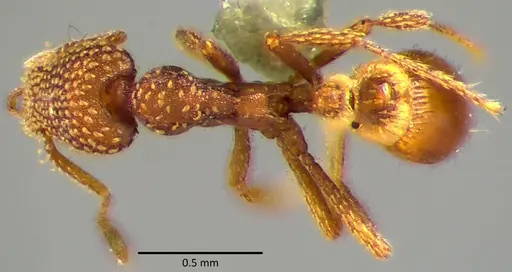
CASENT0104882
View on AntWeb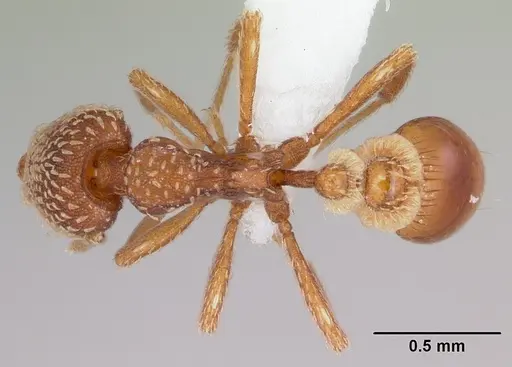
CASENT0904956
View on AntWeb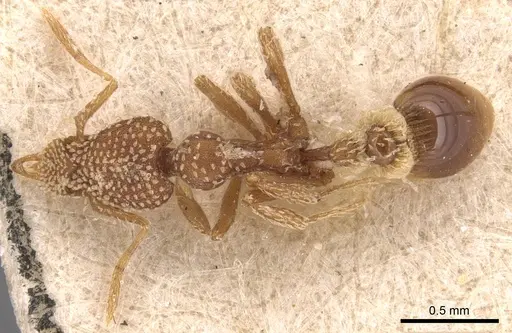
FOCOL2171
View on AntWeb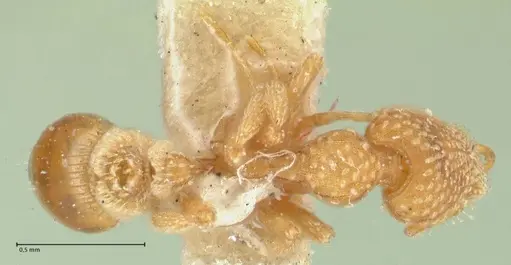
Literature
Loading...Loading products...