

Strumigenys paradoxa
- Scientific Name
- Strumigenys paradoxa
- Tribe
- Attini
- Subfamily
- Myrmicinae
- Author
- Bolton, 2000
- Distribution
- Found in 1 countries
Strumigenys paradoxa Overview
Strumigenys paradoxa is an ant species of the genus Strumigenys. It is primarily documented in 1 countries , including Honduras. Detailed taxonomic data and occurrence records can be further explored via authoritative databases such as AntWeb or the Global Biodiversity Information Facility (GBIF).
Strumigenys paradoxa
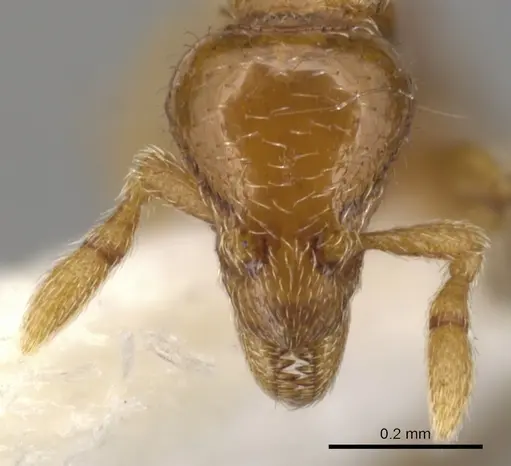
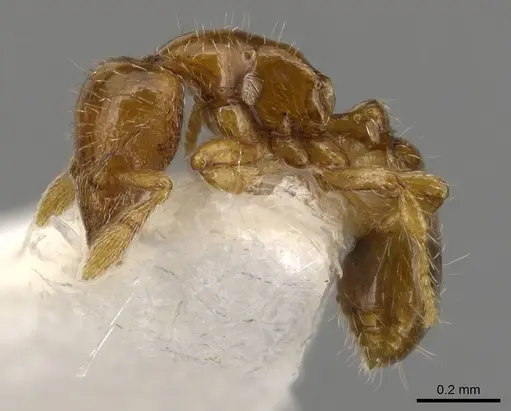
Strumigenys paradoxa is a remarkably tiny ant, measuring just 1.7mm in total length [1]. Workers have a smooth, shining orange body with a distinctive downward-curving mandible and an unarmed propodeum (the section behind the waist) [1]. This species belongs to the ant tribe Attini, which includes the famous leafcutter ants, though Strumigenys are 'pretended' fungus-growers that don't actually cultivate fungus [1]. The species was originally described as Strumigenys paradoxa in 2000 before being reclassified to Strumigenys in 2007 [1].
This is a leaf-litter dwelling ant found in wet forests of Central America. The type specimen was collected from a soil sample 10cm deep in old-growth forest at La Selva Biological Station in Costa Rica, using a Berlese funnel to extract it from decomposing leaf litter [1]. Subsequent collections confirm this is a wet forest species that inhabits the leaf litter layer [1].
Quick Summary
- Difficulty: Medium
- Origin & Habitat: Costa Rica and Honduras, wet old-growth forests in lowland tropical areas, living in leaf litter on the forest floor [1]
- Colony Type: Likely single-queen colonies based on typical Strumigenys behavior
- Colony: Monogyne
- Founding: Claustral
- Size & Growth:
- Queen: Undescribed, estimated 2-2.5mm based on worker size
- Worker: 1.7mm total length [1]
- Colony: Unknown, likely small colonies of under 100 workers based on genus patterns
- Growth: Moderate, typical for small Myrmicinae
- Development: Estimated 6-8 weeks at optimal temperature based on related species (Direct development data unavailable, estimate based on typical Strumigenys growth patterns)
- Antkeeping:
- Temperature: Keep at 24-26°C, these are lowland tropical ants requiring warm, stable conditions [1]
- Humidity: High humidity required, think damp forest floor. Keep substrate consistently moist but not waterlogged
- Diapause: No, being a tropical species, they do not require hibernation
- Nesting: Prefers tight, humid chambers. Y-tong (AAC) nests or naturalistic setups with moist substrate work well. Their tiny size means they need very small chambers and narrow passages
- Behavior: Very small, cryptic ants that forage in leaf litter. They are predatory on micro-arthropods like springtails and mites. Workers are docile and not aggressive. CRITICAL: Their tiny size makes escape prevention essential, they can squeeze through standard mesh barriers. Use fine mesh or fluon barriers. Activity level is low, they move slowly and spend most time in the nest area.
- Common Issues: escape prevention is critical, they are extremely small and can slip through standard barriers, high humidity must be maintained or colonies will fail, slow growth can frustrate beginners, don't overfeed or disturb the colony, tropical species cannot tolerate temperatures below 20°C, wild-caught colonies may arrive with parasites from leaf litter
Housing and Nest Setup
These tiny ants need appropriately scaled housing. A Y-tong (AAC) nest with very small chambers works well, or you can use a naturalistic setup with moist soil and leaf litter. The key is maintaining high humidity while allowing some ventilation to prevent mold. Use a test tube setup for founding colonies, with the cotton kept damp but not soaking. Because they are so small, even small gaps in commercial formicaria can be escape routes. Apply fluon to any edges or use nested setups with fine mesh barriers. The nest area should be dark or dimly lit, these leaf-litter ants prefer subdued lighting [1].
Feeding and Diet
Strumigenys paradoxa is a predatory ant that feeds on micro-arthropods found in leaf litter. In captivity, offer small live prey such as springtails, tiny mites, or fruit fly larvae. They are too small to tackle larger prey items. Some keepers report that Strumigenys species may accept minute amounts of honey or sugar water, but protein from live prey is essential for brood development. Feed small amounts 2-3 times per week, removing any uneaten prey within 24 hours to prevent mold. The key is offering appropriately sized prey, if the prey is larger than their 1.7mm body, they cannot subdue it [1].
Temperature and Humidity
As a lowland wet forest species from Costa Rica, Strumigenys paradoxa requires warm and humid conditions. Keep the nest at 24-26°C, avoiding any temperature drops below 20°C. A heating cable on one side of the nest can create a gentle gradient. Humidity is critical, maintain substrate moisture at all times. The substrate should feel consistently damp but never waterlogged. In dry conditions, these ants will quickly decline. A water reservoir in the outworld or regular misting (when condensation disappears) helps maintain humidity. Avoid placing the nest near air conditioning or drafty areas [1].
Colony Founding
The founding process has not been directly observed for this species, but based on typical Strumigenys patterns, the queen likely seals herself in a small chamber and raises the first workers alone (claustral founding). The first workers, called nanitics, will be very small. The colony should be left undisturbed during founding, do not check on the test tube frequently as vibrations and light can cause the queen to abandon or eat her brood. Expect 4-8 weeks for the first workers to emerge at 24-26°C. Once workers arrive, they will begin foraging in the outworld for small prey items [1].
Behavior and Temperament
These are docile, non-aggressive ants that pose no threat to keepers. They are cryptic foragers that move slowly through leaf litter and substrate. Workers are tiny and nearly blind, relying more on chemical cues. They do not have a functional stinger, being in the subfamily Myrmicinae tribe Attini, they rely on their bite and chemical defenses. The main behavioral concern is their escape ability: despite being small, they are excellent at finding and squeezing through tiny gaps. Excellent escape prevention is non-negotiable. Colonies are slow-growing and relatively inactive compared to larger ant species [1].
Frequently Asked Questions
How long does it take for Strumigenys paradoxa to produce first workers?
Expect 6-8 weeks from egg to first worker at optimal temperature (24-26°C). This is an estimate based on related Strumigenys species, as specific development data for S. paradoxa is not available [1].
What do Strumigenys paradoxa ants eat?
They are predators of micro-arthropods. Feed small live prey like springtails, tiny mites, or fruit fly larvae. Appropriately sized prey is critical, they are only 1.7mm and cannot tackle large insects [1].
Are Strumigenys paradoxa good for beginners?
They are rated as medium difficulty. Their small size and high humidity requirements make them more challenging than larger, hardier species. They are best suited for keepers with some experience who can maintain consistent temperature and humidity [1].
How big do Strumigenys paradoxa colonies get?
Colony size is unknown but likely remains small, probably under 100 workers. This is typical for leaf-litter dwelling Strumigenys species that live in cryptic microhabitats [1].
Do Strumigenys paradoxa need hibernation?
No. Being a tropical wet forest species from Costa Rica, they do not require hibernation. Keep them warm year-round at 24-26°C [1].
Why are my Strumigenys paradoxa escaping?
Their tiny size allows them to squeeze through gaps that seem impossible. Use fine mesh (0.5mm or smaller), apply fluon to all edges, and check for any cracks in the setup. Even standard ant keeping mesh may not contain them [1].
Can I keep Strumigenys paradoxa in a test tube?
Yes, test tubes work well for founding colonies. Use a small-diameter tube with a cotton plug that stays damp but not soaked. Once the colony reaches 15-20 workers, consider moving to a small formicarium with appropriate humidity control [1].
What temperature is ideal for Strumigenys paradoxa?
Keep them at 24-26°C. This matches their natural lowland tropical forest habitat in Costa Rica. Avoid temperatures below 20°C [1].
Where is Strumigenys paradoxa found in the wild?
They live in wet forests of Costa Rica and Honduras, specifically in leaf litter on the forest floor. The type specimen was collected from old-growth forest at La Selva Biological Station [1].
References

This caresheet is licensed under CC BY-SA 4.0 .
CASENT0617538
View on AntWeb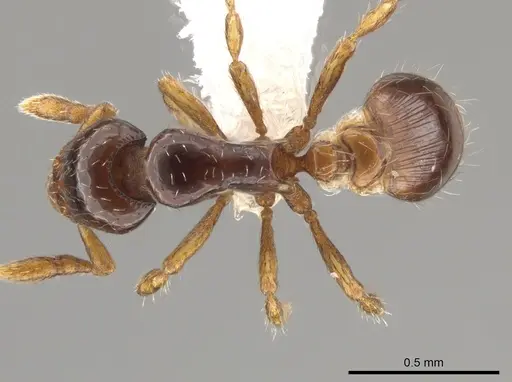
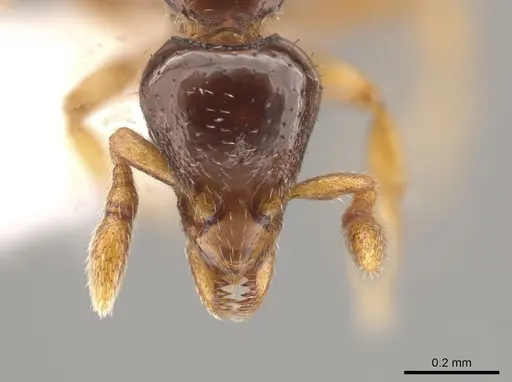
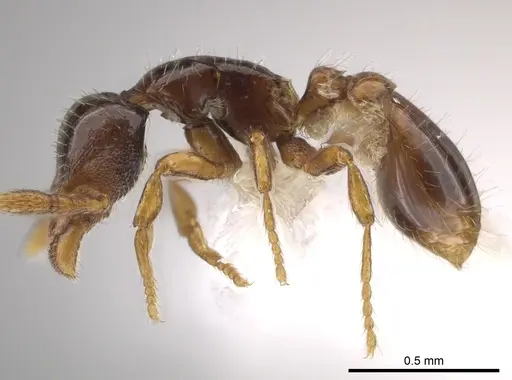
INBIOCRI001259868
View on AntWeb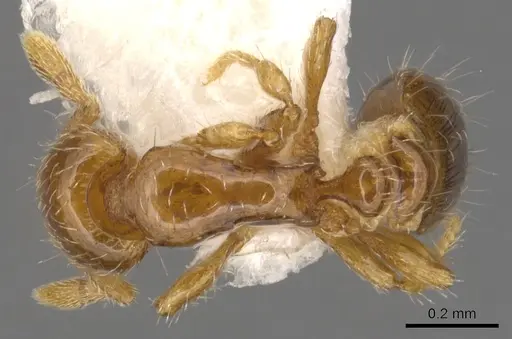
Literature
Loading...Loading products...