

Strumigenys opaca
- Scientific Name
- Strumigenys opaca
- Tribe
- Attini
- Subfamily
- Myrmicinae
- Author
- Brown, 1954
- Distribution
- Found in 1 countries
Strumigenys opaca Overview
Strumigenys opaca is an ant species of the genus Strumigenys. It is primarily documented in 1 countries , including Australia. Detailed taxonomic data and occurrence records can be further explored via authoritative databases such as AntWeb or the Global Biodiversity Information Facility (GBIF).
Strumigenys opaca
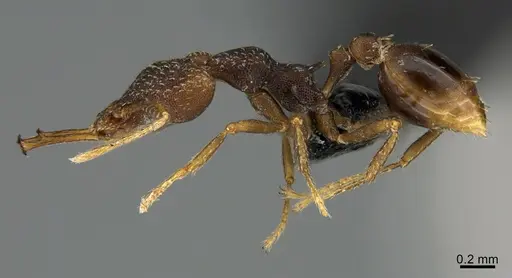
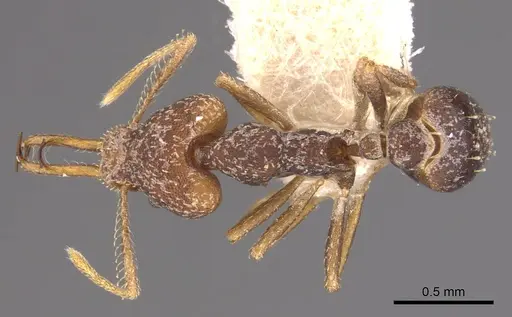
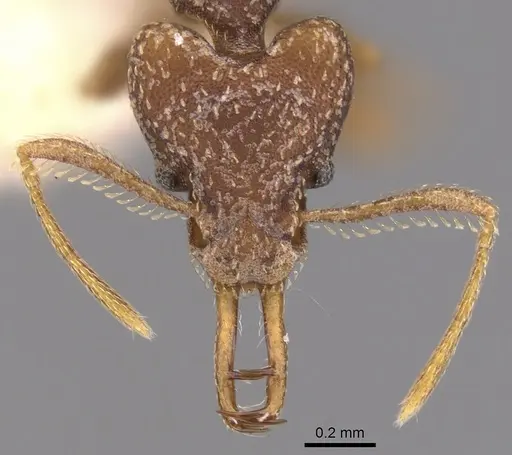
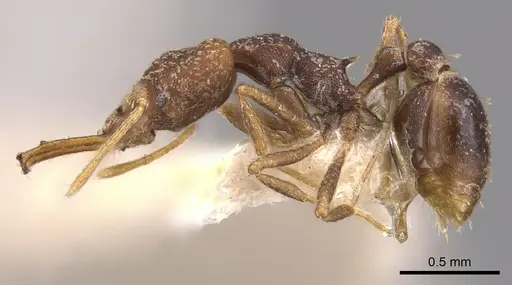
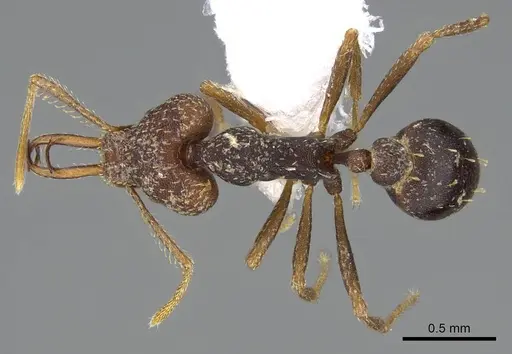
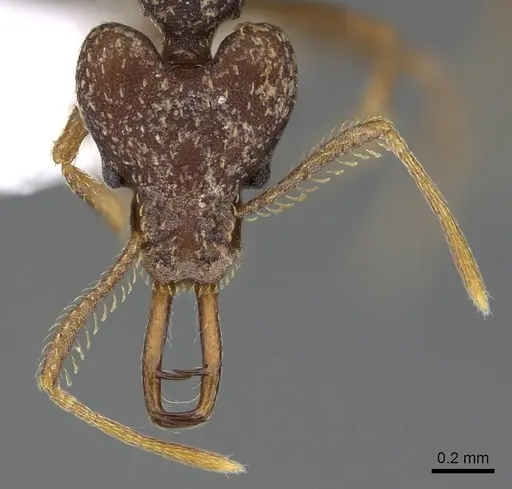
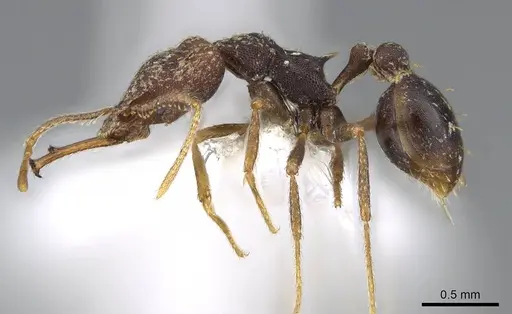
Strumigenys opaca is a tiny predatory ant measuring just 2.6-3.5mm in worker length, native to the rainforests of Cape York Peninsula in Queensland, Australia [1]. These ants belong to the dacetine tribe (Attini), known for their remarkable trap-jaw mandibles that can snap shut at incredible speeds to capture prey. Workers have a distinctive appearance with very large, protuberant eyes positioned on low tumuli, long slender mandibles with high mandibular index (MI 57-63), and a deep brownish-red coloration with lighter appendages [1]. The species is a member of the Strumigenys wallacei group and is closely related to the Malesian S. wallacei, from which it can be distinguished by its more evenly rounded mesonotum versus the prominent hump seen in wallacei [2].
What makes S. opaca particularly interesting is its extreme specialization as a predator. Like other Strumigenys species, it uses its elongated mandibles to hunt small prey, primarily springtails (Collembola) and other micro-arthropods found in rainforest leaf litter [2]. This specialized predatory lifestyle means they have different care requirements than typical omnivorous ants, they need live prey and cannot survive on sugar water alone. Their colonies remain small, typically containing only a few dozen to a few hundred workers.
Quick Summary
- Difficulty: Expert
- Origin & Habitat: Native to Cape York Peninsula, Queensland, Australia. Found exclusively in rainforest leaf litter samples from the McIlwraith Range near Coen [1][2].
- Colony Type: Likely monogyne (single queen) based on typical Strumigenys colony structure. Colony size is small, typically under 200 workers given the species' tiny size and litter-dwelling habits.
- Colony: Monogyne
- Founding: Claustral
- Size & Growth:
- Queen: Unconfirmed, likely around 4-5mm based on genus patterns
- Worker: 2.6-3.5mm [1]
- Colony: Likely under 200 workers based on typical Strumigenys colony sizes
- Growth: Slow, dacetine ants typically develop slowly
- Development: Estimated 8-12 weeks based on related Strumigenys species (Development times are not specifically documented for this species, but dacetine ants generally have slower development compared to typical Myrmicinae)
- Antkeeping:
- Temperature: Keep at 22-26°C, these are tropical rainforest ants requiring warm, stable conditions. Avoid temperatures below 20°C.
- Humidity: High humidity (70-85%) is essential. Keep the nest substrate consistently moist but not waterlogged. These ants live in rainforest leaf litter where humidity stays consistently high.
- Diapause: No, as a tropical species from northern Queensland, they do not require hibernation. Maintain warm conditions year-round.
- Nesting: In captivity, they do well in small test tube setups or small acrylic nests with moist substrate. Provide a small outworld for hunting. They prefer tight, humid chambers scaled to their tiny size. A layer of moist soil or plaster works well to maintain humidity.
- Behavior: These ants are specialized predators with a calm temperament. They are not aggressive toward humans and cannot sting. Workers hunt individually using their trap-jaw mandibles to capture small prey like springtails. They are slow-moving compared to many ants and spend most of their time foraging through leaf litter. Escape prevention is critical due to their tiny size, they can squeeze through standard test tube barriers. They are not escape artists in the traditional sense but their small size means they can fit through gaps that larger ants cannot.
- Common Issues: tiny size means escapes are likely without fine mesh barriers and careful sealing, specialized diet makes them difficult to feed, they need live springtails or other micro-prey, colonies stay small and grow slowly, which can frustrate keepers expecting rapid colony development, high humidity requirements can lead to mold issues if ventilation is poor, wild-caught colonies may have parasites that kill them in captivity
Housing and Setup
Strumigenys opaca requires a small, humid setup that mimics their rainforest leaf litter habitat. A small test tube setup works well for founding colonies, use a test tube with a water reservoir sealed with cotton, providing a humidity gradient. For established colonies, a small acrylic nest (like a Mini-Hearth or similar) with chambers scaled to their tiny size works best. The nest material should be able to hold moisture, plaster, soil-filled test tubes, or acrylic nests with water chambers all work. Add a small outworld (a small container or foraging area) where you can offer prey. Because they are so tiny, use fine mesh for any ventilation holes, standard mesh will not contain them. A layer of moist leaf litter in the outworld can help them feel at home and may harbor natural prey. Keep the entire setup in a warm area or use a small heating cable on one side to maintain temperatures in the 22-26°C range. [1][2]
Feeding and Diet
This is the most critical aspect of keeping Strumigenys opaca. They are specialized predators that require live prey, they cannot survive on sugar water or honey alone like many ant species. Their primary prey in the wild is springtails (Collembola), and you should culture a springtail colony to provide a reliable food source. Other small live prey may be accepted, including fruit flies, tiny crickets, and other micro-arthropods, but springtails should form the bulk of their diet. Feed small prey items (smaller than the ants themselves) every 2-3 days, adjusting based on how quickly the colony consumes them. Remove any uneaten prey after 24 hours to prevent mold. Do not offer large prey items, these tiny ants cannot tackle prey much larger than themselves. Sugar sources are generally not accepted and are not necessary for this species. [2]
Temperature and Seasonal Care
As a tropical rainforest species from northern Queensland, Strumigenys opaca requires warm conditions year-round. Maintain temperatures between 22-26°C, with 24°C being ideal. Temperatures below 20°C can slow their metabolism and reduce feeding activity, while temperatures above 28°C may stress the colony. No hibernation or diapause is required, these ants come from a tropical climate without cold winters. If your room temperature is below 22°C, use a small heating cable or heat mat on one side of the setup to create a warm zone. Place the heating element on top of the nest, not underneath, to avoid drying out the substrate. Monitor temperatures with a small digital thermometer placed near the nest. Stable temperatures are important, avoid drafts and sudden temperature fluctuations. [1]
Behavior and Foraging
Strumigenys opaca workers are calm, methodical foragers rather than aggressive hunters. They patrol through leaf litter and substrate, using their large eyes to spot small prey. When they encounter suitable prey, they use their specialized trap-jaw mandibles to capture it, the mandibles can snap shut at incredible speeds. Workers are not defensive and will not attempt to sting or bite handlers. They are primarily nocturnal or crepuscular in activity, though they may forage during the day as well. Colonies are quiet and not particularly active compared to many ants, you may not see constant movement. The small colony size means you will typically see only a handful of workers at a time. They do not produce swarmers (reproductives) in large numbers, and nuptial flights have not been specifically documented for this species. [1][2]
Colony Founding
The founding behavior of Strumigenys opaca has not been specifically documented, but it likely follows the typical Strumigenys pattern. A newly mated queen probably seals herself in a small chamber (claustral founding) and raises her first brood using stored fat reserves. The first workers (nanitics) will be smaller than mature workers and will begin foraging for prey to feed subsequent broods. Given their small size, founding colonies may take several months to produce their first workers. During this time, the queen needs complete darkness and minimal disturbance. Do not attempt to feed founding queens, they do not forage and may be stressed by food items in their chamber. Wait until you see workers before offering food.
Common Problems
The biggest challenge with Strumigenys opaca is their specialized diet, without live springtails or similar prey, colonies will starve. Never rely on commercial ant foods or sugar water as primary nutrition. Escape prevention is also critical despite their small size, they can squeeze through standard test tube cotton barriers and mesh. Use fluon (ant barrier) on test tube rims and fine mesh (at least 0.5mm) for any ventilation. High humidity can lead to mold growth, so balance humidity with adequate ventilation. Wild-caught colonies may carry parasites (mites, nematodes) that can decimate the colony in captivity. Quarantine and observe wild-caught colonies before introducing them to your collection. Finally, their slow growth and small colony size can be frustrating, do not expect rapid population explosions. A mature colony may only reach 100-200 workers.
Frequently Asked Questions
Can I keep Strumigenys opaca in a test tube?
Yes, test tubes work well for this species, especially for founding colonies. Use a small test tube with a water reservoir and cotton barrier. However, because they are so tiny, you need to ensure the cotton barrier is packed tightly and consider applying fluon around the rim to prevent escapes. For established colonies, a small acrylic nest with moist substrate is preferable.
What do Strumigenys opaca eat?
They are specialized predators that require live prey. Their primary food should be live springtails (Collembola), which you can culture yourself. Other small live prey like fruit flies may be accepted occasionally. They do not eat sugar water, honey, or commercial ant foods, these will not sustain them.
How long does it take for the first workers to emerge?
Based on related Strumigenys species, expect 8-12 weeks from egg to first worker at optimal temperature (around 24°C). Development is slower than many common ant species, so patience is required. The queen will remain sealed in her chamber until the first workers emerge.
Are Strumigenys opaca good for beginners?
No, this species is not recommended for beginners. Their specialized diet (requiring live springtail cultures), high humidity needs, tiny size (escape risk), and slow growth make them challenging. They are best suited for experienced antkeepers who can provide the specific conditions they require.
How big do Strumigenys opaca colonies get?
Colony size remains small, likely under 200 workers at maturity. This is typical for Strumigenys species, which are litter-dwelling ants that do not form large colonies. A few dozen to a couple hundred workers represents a mature colony.
Do Strumigenys opaca need hibernation?
No, they do not require hibernation. As tropical rainforest ants from northern Queensland, Australia, they need warm conditions year-round. Maintain temperatures between 22-26°C throughout the year.
Why are my Strumigenys opaca dying?
The most common causes are: starvation (they need live springtails, not sugar water), escape (tiny size means they can slip through barriers), low humidity (below 70%), or temperatures below 20°C. Also check for parasites like mites. Review each of these factors and adjust your setup accordingly.
When should I move them to a formicarium?
You can keep them in test tubes or small acrylic nests indefinitely since colonies stay small. There is no need to move to a large formicarium. A small nest with humid chambers is sufficient for colonies of any size.
Can I keep multiple queens together?
This has not been documented for this species. Based on typical Strumigenys behavior, they are likely monogyne (single queen). Combining unrelated queens is not recommended as it may result in aggression.
What temperature range is ideal for Strumigenys opaca?
Keep them at 22-26°C, with 24°C being ideal. This matches their natural rainforest habitat in northern Queensland. Avoid temperatures below 20°C or above 28°C.
How often should I feed Strumigenys opaca?
Offer food every 2-3 days, adjusting based on consumption rate. Provide small amounts of live prey (springtails) that can be consumed within 24 hours. Remove uneaten prey to prevent mold. Unlike many ants, they do not need constant access to sugar water.
References

This caresheet is licensed under CC BY-SA 4.0 .
Literature
Loading...Loading products...