

Strumigenys nidifex
- Scientific Name
- Strumigenys nidifex
- Tribe
- Attini
- Subfamily
- Myrmicinae
- Author
- Mann, 1921
- Distribution
- Found in 2 countries
Strumigenys nidifex Overview
Strumigenys nidifex is an ant species of the genus Strumigenys. It is primarily documented in 2 countries , including Fiji, Wallis and Futuna. Detailed taxonomic data and occurrence records can be further explored via authoritative databases such as AntWeb or the Global Biodiversity Information Facility (GBIF).
Strumigenys nidifex
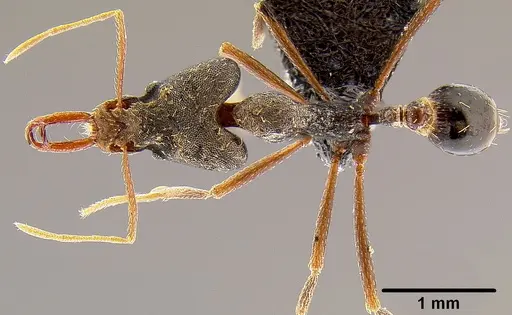
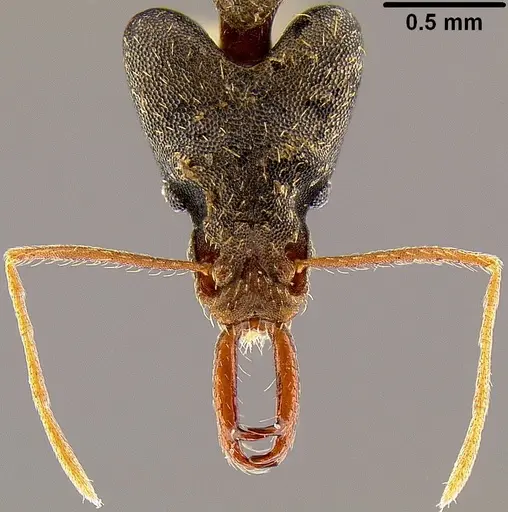
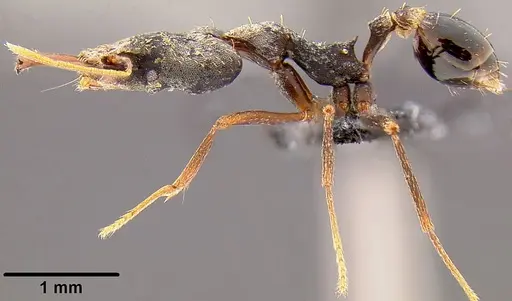
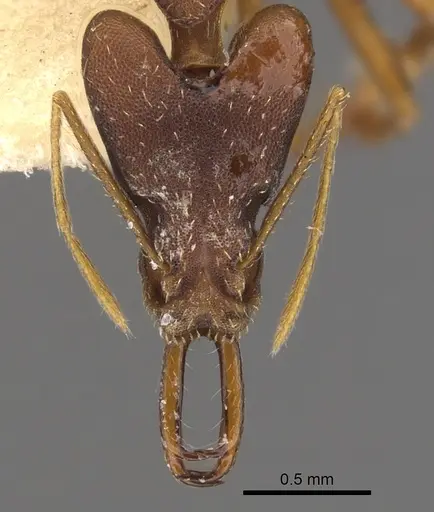
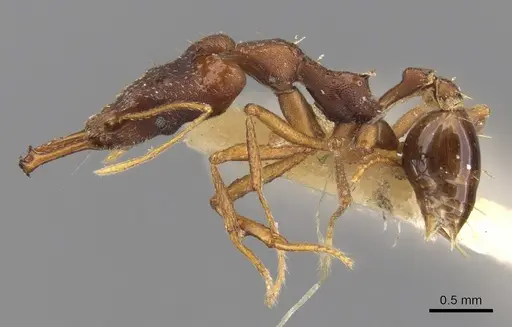
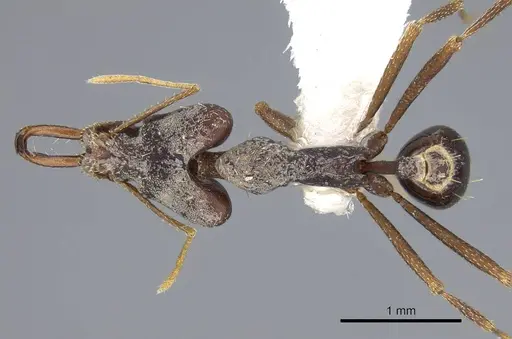
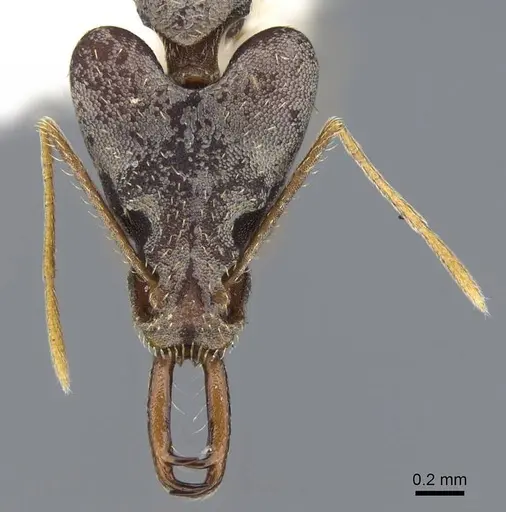
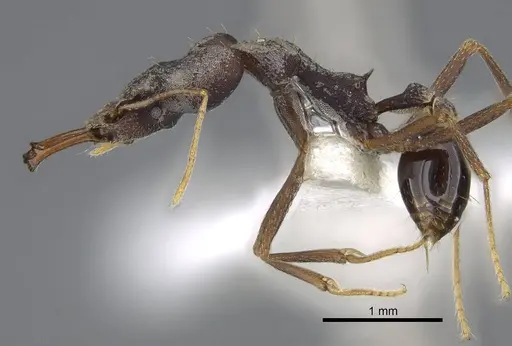
Strumigenys nidifex is a remarkable ant species endemic to the Fiji Islands, representing one of the largest trap-jaw ants in the world with workers reaching 4.7-5.1mm [1][2]. This species stands out with its distinctively broad head featuring a preocular impression on the ventrolateral margin, and all surfaces of the head, mesosoma, waist, and coxae are covered in a punctate-reticulate sculpture giving them a textured, dark brown to blackish-brown appearance [1]. Found across multiple Fijian islands including Viti Levu, Vanua Levu, Kadavu, Taveuni, Koro, and Gau, these ants inhabit high-elevation forest environments though they've also been recorded in disturbed areas [3][4].
What makes S. nidifex particularly special is that it's one of the very few native Fijian Strumigenys species with detailed natural history documented, a laboratory colony kept by E.O. Wilson in the 1960s-70s thrived for two years and produced multiple queen broods, giving us valuable insights into their care [1][2]. Unlike many ants where the queen seals herself away during founding, these ants are semi-claustral, the queen must hunt and forage to feed her larvae during the founding phase [5].
Quick Summary
- Difficulty: Medium
- Origin & Habitat: Fiji Islands endemic, found on Viti Levu, Vanua Levu, Kadavu, Taveuni, Koro, and Gau. Inhabits high-elevation forest habitats but also recorded in disturbed areas [3][4]. Nests in rotten wood on the densely shaded forest floor, between layers of stone, or in earth under stones [5].
- Colony Type: Single-queen (monogyne) colonies with documented ergatoid replacement reproductives. Colonies contain upwards of 100 individuals [1][2].
- Colony: Monogyne
- Founding: Semi-claustral
- Size & Growth:
- Queen: Larger than workers with coarser sculpture, rugulose on alitruncal dorsum and striate postpetiolar disc [5]. Exact measurements not fully documented in available literature.
- Worker: 4.7-5.1mm total length [1][2]. Head width 0.98-1.13mm, head length 1.38-1.48mm [2].
- Colony: Up to 100 or more workers per colony [5]. Lab colonies of 70-80 workers maintained successfully [1].
- Growth: Moderate, lab colonies produced broods of males and queens 3 times in 2 years [1].
- Development: Unconfirmed, specific development timeline has not been directly studied. Based on typical Strumigenys patterns and lab observations of colony productivity, estimate 6-10 weeks at warm temperatures. (Lab colonies at room temperature (68-85°F / 20-29°C) produced multiple broods over 2 years, indicating successful reproduction in captivity [5].)
- Antkeeping:
- Temperature: Keep at room temperature, roughly 20-29°C (68-85°F). The lab colony that thrived was kept at home room temperature within this range [5]. Avoid temperatures below 18°C or above 32°C.
- Humidity: Requires high humidity reflecting their forest floor habitat. Keep nest substrate consistently moist but not waterlogged. Provide a water tube and mist the outworld regularly. These ants naturally live in damp forest environments.
- Diapause: No, as a tropical species from Fiji, they do not require hibernation or diapause. Maintain consistent temperatures year-round.
- Nesting: In nature they nest in rotten wood, under stones, and in soil. In captivity, a naturalistic setup with moist substrate (like a mixing bowl colony or acrylic nest with dirt) works well. They build thin walls of mud throughout the nest to separate small chambers, so provide materials they can work with [1]. A test tube setup can work for founding colonies but they'll need more space as the colony grows.
- Behavior: These ants are active and effective predators. Workers hunt by attacking quickly with mandibles open to more than 180°, striking with precision. If prey continues to struggle after being caught, they will sting [5]. They are not aggressive toward humans but can deliver a sting if handled roughly. They are medium-sized ants (~5mm) so escape prevention is important but not as critical as with tiny species. Workers are fast-moving and will readily hunt live prey. Colonies show defensive behavior, when threatened, workers make repeated strikes with their mandibles followed by hurried retreats [5].
- Common Issues: Live prey requirement, these are obligate predators that will not accept dead food or sugar sources. Colonies can starve if adequate live prey isn't provided., Semi-claustral founding means the queen must leave to hunt, unlike claustral species, founding queens cannot seal themselves away and must forage., Sensitive to dry conditions, forest floor habitat means they need consistent moisture. Dry conditions cause colony decline., Avoid poduroid collembolans, these are noxious to S. nidifex and cause them to recoil and groom vigorously as if attempting to remove a toxic substance [5]., Temperature sensitivity, being tropical, they cannot tolerate cold and have no diapause capability.
Housing and Nest Setup
For Strumigenys nidifex, you'll want to replicate their natural forest floor environment. A naturalistic setup works best, a mixing bowl colony with moist soil or an acrylic nest filled with dirt allows them to build their characteristic mud walls and create small chambers [1]. The nest material should be kept consistently moist but never waterlogged. For founding colonies, you can start with a test tube setup, but be prepared to move them to a larger setup once the colony reaches 15-20 workers. These ants need vertical space to forage and hunt, so include an outworld area where you can introduce live prey. Use a secure lid as these medium-sized ants can escape through gaps.
Feeding and Diet
This is the most critical aspect of keeping S. nidifex successfully. They are obligate predators that require live small arthropods, they will not accept dead prey or sugar sources [5]. In laboratory conditions, they successfully captured and fed to their larvae: mosquitoes, Drosophila, mites, aphids, beetles, cockroach nymphs, geophilomorph centipedes, and various springtails (Collembola) [1]. They are enthusiastic hunters that attack quickly and directly. Feed small live prey roughly twice weekly for established colonies, and more frequently for founding colonies or growing broods. One important exception: avoid poduroid collembolans (a type of springtail) as these are clearly noxious to S. nidifex, when forced to strike at them defensively, the ants immediately recoil and begin vigorous grooming of their mandibles as if trying to remove a toxic substance [5].
Temperature and Seasonal Care
As a tropical species from Fiji, Strumigenys nidifex does not require any hibernation or diapause period. Keep your colony at stable room temperature between 20-29°C (68-85°F), the laboratory colony that successfully produced multiple broods over two years was kept at home room temperature within this range [5]. Avoid temperatures below 18°C as this species is not adapted to cool conditions. Being a high-elevation forest species from Fiji, they prefer warmth and humidity. No seasonal adjustments are needed, maintain consistent conditions year-round.
Reproduction and Colony Growth
S. nidifex is one of the few Fijian Strumigenys species where captive reproduction has been documented. In Wilson's laboratory colony, queens produced broods of males and queens three times over two years [1]. Queens lay eggs by bringing their gaster forward under their head while holding their mandibles perpendicular to the floor, the egg appears slowly at the tip of the gaster and is then received directly into the mandibles near their apices without touching the floor. The queen then carries the egg herself to the egg pile and places it, showing no further interest [5]. This indicates the species can be successfully bred in captivity with proper care. Colony growth is moderate, expect 6-12 months to reach 30-50 workers from a founding colony, with full maturity (100+ workers) taking 2-3 years under good conditions.
Behavior and Defense
These ants have fascinating hunting and defensive behaviors. When hunting, they attack quickly and directly, striking with mandibles open to more than 180 degrees. If prey continues to struggle after being caught, they will sting [5]. Their defensive behavior against other Strumigenys species (observed with S. loriae, S. yaleogyna, and S. nigrescens) consists of repeated strikes with the mandibles followed by hurried retreats from the enemy [5]. Workers are fast-moving and active foragers. They are not particularly aggressive toward keepers but can deliver a sting if threatened or handled roughly. The sting is not medically significant for healthy humans but may cause mild irritation. Their trap-jaw mandibles are primarily used for hunting prey rather than defense.
Frequently Asked Questions
Can I keep Strumigenys nidifex in a test tube?
You can start a founding colony in a test tube, but these ants will eventually need more space. S. nidifex builds mud walls to create chambers within their nest, so a naturalistic setup with moist soil or an acrylic nest filled with substrate is preferable as the colony grows. Move them to a larger setup once the colony reaches 15-20 workers.
What do Strumigenys nidifex ants eat?
They are obligate predators that require live small arthropods. They will not accept dead food or sugar sources. Offer small live prey like fruit flies, mosquitoes, small crickets, springtails (except poduroids), small beetles, and other tiny insects. Feed roughly twice weekly, more often for growing colonies.
How long does it take for Strumigenys nidifex to develop from egg to worker?
The exact egg-to-worker timeline has not been directly documented in scientific literature. Based on typical Strumigenys development patterns and the fact that lab colonies produced multiple broods over two years at room temperature, estimate approximately 6-10 weeks at optimal warm temperatures (24-27°C).
Are Strumigenys nidifex good for beginners?
This species is rated as Medium difficulty. While they are fascinating ants with interesting behaviors, they have specific care requirements that make them better suited for intermediate antkeepers. The main challenge is their requirement for live prey, they cannot survive on dead food or sugar, which requires more effort than feeding typical ant species. They also need high humidity and warm temperatures year-round.
Do Strumigenys nidifex need hibernation?
No, they do not require hibernation. As a tropical species endemic to Fiji, they are not adapted to cold temperatures or seasonal cycles. Maintain consistent warm (20-29°C) and humid conditions year-round.
How big do Strumigenys nidifex colonies get?
Colonies can reach 100 or more workers in nature [5]. Lab colonies of 70-80 workers were successfully maintained for over two years [1]. Expect 2-3 years to reach full colony size under good conditions with regular feeding.
Can I keep multiple Strumigenys nidifex queens together?
This species is monogyne (single-queen) in structure. While colonies may contain several dealate (wingless) queens, they function as single-queen colonies. Combining unrelated founding queens is not recommended and has not been documented as successful.
Why are my Strumigenys nidifex dying?
Common causes include: lack of live prey (they cannot survive without hunting), dry conditions (they need consistently moist substrate), temperatures below 18°C, or stress from too much handling. They are sensitive to their environment and require specific conditions to thrive. Ensure you provide adequate humidity, warmth, and regular live prey.
When should I move my Strumigenys nidifex to a formicarium?
Move them when the test tube colony reaches 15-20 workers or when you notice workers foraging extensively outside the tube. A naturalistic setup with moist soil works best since they naturally build mud walls to create chambers. Make sure the new setup has both a moist nesting area and a dry outworld for hunting.
References

This caresheet is licensed under CC BY-SA 4.0 .
Literature
Loading...Loading products...