

Strumigenys nanzanensis
- Scientific Name
- Strumigenys nanzanensis
- Tribe
- Attini
- Subfamily
- Myrmicinae
- Author
- Lin & Wu, 1996
- Distribution
- Found in 5 countries
Strumigenys nanzanensis Overview
Strumigenys nanzanensis is an ant species of the genus Strumigenys. It is primarily documented in 5 countries , including China, Hong Kong, Lao People's Democratic Republic. Detailed taxonomic data and occurrence records can be further explored via authoritative databases such as AntWeb or the Global Biodiversity Information Facility (GBIF).
Strumigenys nanzanensis
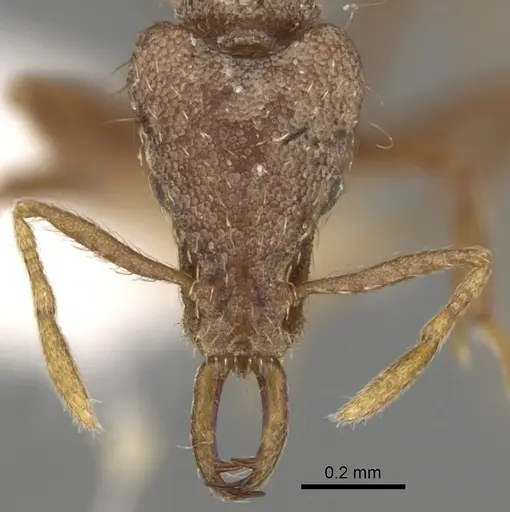
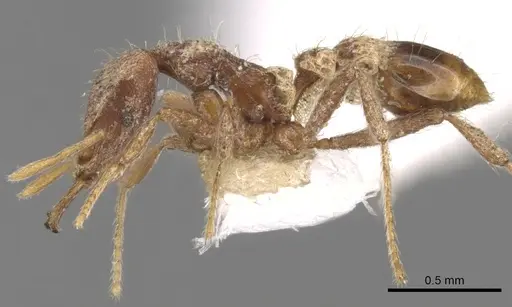
Strumigenys nanzanensis is a tiny predatory ant belonging to the tribe Attini (formerly Dacetini), known for its elongated mandibles and spongiform tissues. Workers measure just 2.2-2.6mm in total length, making them one of the smaller ant species you'll encounter [1]. They belong to the godeffroyi-species group, characterized by distinctive long hairs on the head that are fine and either abruptly angled or looped toward the front. The propodeum (the section behind the waist) has a broad, conspicuous spongiform lamella, and the propodeal teeth are often buried within this tissue. These ants are native to the Oriental and Sino-Japanese regions, found across Bhutan, southern China, India, Indonesia, Malaysia, Thailand, and Taiwan, typically living in rainforest litter and rubber plantations at elevations between 20-240 meters [2][3].
What makes S. nanzanensis stand out is its specialized predatory lifestyle. Like other Strumigenys species, they are obligate predators that hunt springtails and other tiny arthropods using their long, trap-like mandibles. They are considered relatively rare in most of their range, with Hong Kong populations known only from secondary forests at 143-230m elevation [3]. Nuptial flights occur from April to mid-May in Hong Kong, when winged queens leave their nests to mate and establish new colonies [4].
Quick Summary
- Difficulty: Expert
- Origin & Habitat: Native to the Oriental and Sino-Japanese regions, found in Bhutan, southern China (Hong Kong, Taiwan, Yunnan, Jiangxi), India, Indonesia, Malaysia, Singapore, and Thailand. Inhabits rainforest litter and rubber plantations at elevations of 20-240 meters [2][3][5].
- Colony Type: Monogyne (single-queen colonies). Colony structure in the wild is not well-documented, but related Strumigenys species typically have single founding queens that establish colonies independently.
- Colony: Monogyne
- Founding: Claustral
- Size & Growth:
- Queen: Undocumented in primary literature, estimated slightly larger than workers at 2.5-3mm based on related species
- Worker: 2.2-2.6mm total length (TL), with head length 0.58-0.71mm and scape length 0.34-0.42mm [1]
- Colony: Unknown, likely small colonies of under 100 workers based on typical Strumigenys colony sizes and their tiny individual size
- Growth: Slow, estimated based on small colony sizes and tropical distribution
- Development: Unconfirmed, estimated 6-10 weeks based on typical Attini development patterns (Development timeline has not been directly studied for this species. Related tropical Strumigenys species typically take 6-10 weeks from egg to worker at warm temperatures.)
- Antkeeping:
- Temperature: Keep at 24-28°C, these are tropical ants that need warm conditions. A gentle heating gradient allows them to regulate their temperature. Room temperature in most homes may be too cool, consider a heating cable on one side of the nest.
- Humidity: High humidity required, think damp rainforest floor. Keep the nest substrate consistently moist but not waterlogged. These ants live in litter samples from rainforest and rubber plantations, indicating they need humid conditions [5]. Provide a water tube and mist occasionally, but avoid standing water.
- Diapause: No, this is a tropical species that does not require hibernation. Keep them warm year-round.
- Nesting: These tiny ants need small, tight chambers scaled to their 2-3mm size. A Y-tong (AAC) nest or plaster nest with narrow passages works well. They do well in naturalistic setups with moist substrate (like a mix of soil and sand) that mimics their forest floor habitat. Avoid large, open spaces, they prefer tight, enclosed chambers.
- Behavior: Strumigenys nanzanensis is a specialized predator that hunts tiny prey using its elongated mandibles. They are not aggressive toward keepers and cannot sting. Their small size (under 3mm) means they can escape through very small gaps, excellent escape prevention is essential. They are slow-moving compared to many ants and rely on ambush hunting rather than active pursuit. Workers likely forage individually through the substrate and leaf litter. They are not known to be particularly aggressive or defensive.
- Common Issues: tiny size means escapes are likely without fine mesh barriers and tight-fitting lids, specialized diet, they need live springtails or other tiny prey, and may refuse standard ant foods, slow colony growth can lead to impatience and overfeeding, causing mold problems, high humidity requirements can lead to mold if ventilation is poor, wild-caught colonies may have parasites that kill them in captivity
Housing and Nest Setup
Strumigenys nanzanensis is a tiny ant that needs appropriately scaled housing. A Y-tong (AAC) nest with narrow chambers or a plaster nest with small tunnels works well. The chambers should be tight, these ants feel secure in enclosed spaces and may be stressed in large, open formicaria. A naturalistic setup with a moist soil/sand mixture also works and better mimics their natural habitat in forest litter. Use a test tube setup for founding colonies, a small test tube with a water reservoir and cotton plug provides the humidity they need. When the colony grows, you can transition to a small formicarium. Regardless of nest type, ensure you have excellent escape prevention, these 2-3mm ants can squeeze through surprisingly small gaps. Use fine mesh on any ventilation holes and ensure lid seals are tight.
Feeding and Diet
This is the most critical aspect of keeping Strumigenys nanzanensis. They are specialized predators that require live tiny prey, primarily springtails (Collembola), which are their natural prey in the wild. You can culture your own springtail colony to provide a constant food source. Other accepted prey may include tiny isopods, booklice (psocids), and other minute arthropods found in leaf litter. They will NOT accept standard ant foods like mealworms, crickets, or honey water, their elongated mandibles are specifically adapted for catching small, soft-bodied prey. Do not attempt to feed them anything larger than about 1mm in size, they simply cannot handle it. Feed small live prey every 2-3 days, removing any uneaten prey after 24 hours to prevent mold. Some keepers report success with tiny pieces of freeze-dried insects, but live springtails remain the most reliable food[4].
Temperature and Humidity
Strumigenys nanzanensis comes from tropical and subtropical regions, so they need warm, humid conditions. Keep the nest at 24-28°C, this is warmer than typical room temperature in many homes. A small heating cable placed on one side of the nest can provide a gentle warmth gradient. For humidity, aim for 70-80% relative humidity in the nest area. These ants live in rainforest litter and rubber plantations, indicating they need consistently moist conditions [5]. Keep the substrate damp but not waterlogged, standing water can drown tiny ants. A water tube connected to the nest helps maintain humidity. Avoid placing the nest near air conditioning or heating vents, as drafts can dry them out. Monitor condensation on test tubes or nest walls as an indicator of humidity levels.
Colony Development and Growth
Colony growth is slow. The queen lays small numbers of eggs, and the larvae develop slowly compared to many common ant species. A mature colony likely contains fewer than 100 workers, Strumigenys species are not known for large colony sizes. The first workers (nanitics) will be very small and may take 6-10 weeks to develop from egg to worker at optimal temperatures. After that, growth continues slowly. Be patient, these ants are not for keepers who want rapid colony expansion. Do not overfeed in an attempt to speed growth, as excess food leads to mold that can kill small colonies. A healthy founding queen may produce 5-10 workers in the first few months, with growth gradually accelerating as the colony establishes.
Behavior and Handling
Strumigenys nanzanensis is a peaceful, non-aggressive ant. They are not defensive and pose no threat to keepers, they cannot sting and their mandibles are too small to bite effectively. Workers are slow-moving and spend most of their time hunting in the substrate. They are not climbers and rarely venture far from their nest. When hunting, they use their elongated mandibles to ambush springtails and other tiny prey, they do not chase prey actively. Their most notable behavior is the spongiform tissues on their body, which are exocrine glands that likely produce chemical signals [6]. These ants are fascinating to watch but require specialized care. They are not suitable for beginners due to their specific dietary needs and slow growth.
Common Problems
The biggest challenge is food, these ants absolutely require live tiny prey, and many keepers struggle to provide a consistent supply. Culturing your own springtail colony is essentially mandatory for long-term success. Escape is another issue, at 2-3mm, they can slip through mesh that would hold larger ants. Use fine mesh (at least 0.5mm or smaller) and check all seals regularly. Mold is a constant threat in humid setups, remove uneaten prey promptly and ensure adequate ventilation. Wild-caught colonies may carry parasites that can wipe out the colony in captivity. Finally, slow growth tests patience, resist the urge to overfeed or disturb the nest, as this can stress the colony. If your ants are dying, check first for escape, then food availability, then mold.
Frequently Asked Questions
Can I keep Strumigenys nanzanensis in a test tube?
Yes, test tubes work well for founding colonies. Use a small test tube with a water reservoir and cotton plug to maintain humidity. The tube should be kept warm (24-28°C) and in a dark, quiet location. Once the colony reaches 20-30 workers, consider moving to a small Y-tong or plaster nest with appropriately sized chambers.
What do Strumigenys nanzanensis eat?
They eat live tiny prey, primarily springtails (Collembola), which are their natural prey. You can culture your own springtail colony for a constant food source. They may also accept tiny isopods, booklice, and other minute arthropods. They will NOT eat standard ant foods like mealworms, honey, or sugar water. Their elongated mandibles are specialized for catching small, soft-bodied prey [4].
How long does it take for the first workers to emerge?
The exact timeline is unconfirmed for this species, but based on related Strumigenys species, expect 6-10 weeks from egg to first worker at optimal temperatures (around 26°C). Development is slow, and nanitics (first workers) will be very small. Be patient, colony growth is gradual.
Are Strumigenys nanzanensis good for beginners?
No, they are not recommended for beginners. Their specialized diet (requiring live springtails), high humidity needs, slow growth, and escape risk make them challenging. They are best suited for experienced antkeepers who can provide the specific conditions they need.
How big do Strumigenys nanzanensis colonies get?
Colony size is not well-documented, but based on related species, colonies likely remain small, probably under 100 workers at maturity. They are not a large, rapidly expanding species. Growth is slow, and colonies stay compact.
Do Strumigenys nanzanensis need hibernation?
No, they do not need hibernation. This is a tropical/subtropical species from regions like Hong Kong, Taiwan, and southern China. Keep them warm year-round at 24-28°C. Hibernation could be fatal.
Why are my Strumigenys nanzanensis dying?
Common causes include: lack of appropriate live prey (they must have springtails or tiny arthropods), low humidity (they need 70-80%), temperatures below 24°C, escapes through small gaps, and mold from overfeeding or poor ventilation. Check these factors first. Wild-caught colonies may also have internal parasites.
When should I move my colony to a formicarium?
Move to a small formicarium (Y-tong or plaster nest) when the colony reaches 20-30 workers. The chambers should be small and tight, these tiny ants prefer enclosed spaces. Ensure the new setup maintains the same humidity and temperature they were used to.
Can I keep multiple queens together?
This has not been documented for this species. Based on typical Strumigenys behavior, they are likely monogyne (single queen). Combining unrelated queens is not recommended as it could result in fighting. Stick to single-queen colonies.
What temperature should I keep Strumigenys nanzanensis at?
Keep them at 24-28°C. This is warmer than typical room temperature. Use a small heating cable on one side of the nest to create a gentle gradient, or keep the entire setup in a warm room. Avoid temperatures below 22°C or above 30°C.
Is Strumigenys nanzanensis invasive anywhere?
No, they are not considered invasive. Their native range is the Oriental and Sino-Japanese regions (southern China, Taiwan, India, Southeast Asia). They have not been documented as established introduced populations anywhere outside their native range.
References

This caresheet is licensed under CC BY-SA 4.0 .
CASENT0280740
View on AntWeb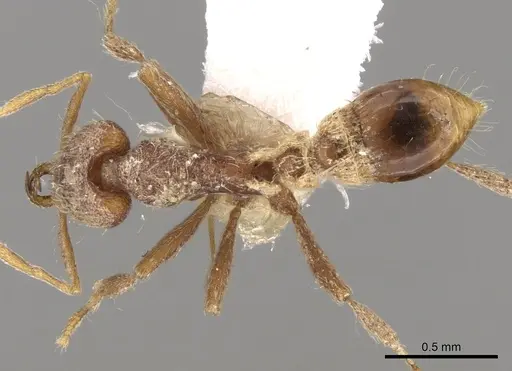
Literature
Loading...Loading products...