

Strumigenys macerina
- Scientific Name
- Strumigenys macerina
- Tribe
- Attini
- Subfamily
- Myrmicinae
- Author
- Bolton, 2000
- Distribution
- Found in 1 countries
Strumigenys macerina Overview
Strumigenys macerina is an ant species of the genus Strumigenys. It is primarily documented in 1 countries , including Brunei Darussalam. Detailed taxonomic data and occurrence records can be further explored via authoritative databases such as AntWeb or the Global Biodiversity Information Facility (GBIF).
Strumigenys macerina
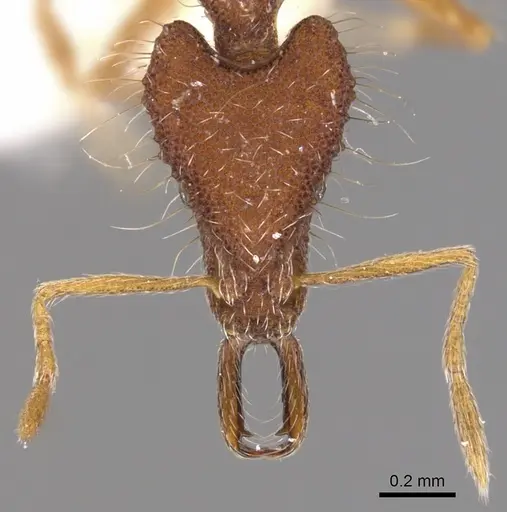
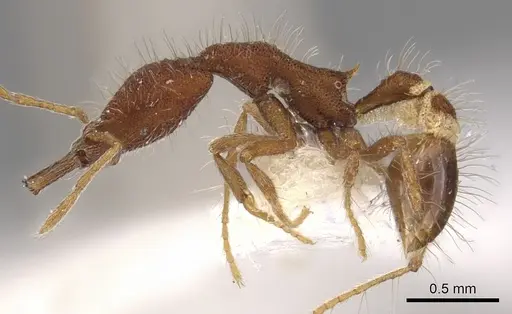
Strumigenys macerina is a tiny predatory ant measuring just 3.1mm in total length. Workers have distinctive long filiform hairs projecting from the head and body, with particularly prominent hairs on the dorsolateral margins arising from tubercles. The mandibles are relatively short with preapical teeth, and the propodeal teeth are notably long and weakly upcurved. This species belongs to the Strumigenys caniophanes group and is known from Borneo, Indonesia, and Malaysia in the Indomalaya region. The single Sumatran specimen measured HL 0.86mm, HW 0.58mm, confirming their minute size.
Quick Summary
- Difficulty: Hard
- Origin & Habitat: Borneo, Indonesia, and Malaysia, found in tropical rainforests, with one specimen collected from alluvial forest using the Winkler method [1].
- Colony Type: Unknown colony structure, founding behavior and queen details have not been documented. Based on related Strumigenys species, likely single-queen colonies with small colony sizes.
- Size & Growth:
- Queen: Undescribed, no queen caste has been documented for this species
- Worker: 3.1mm total length, HL 0.84mm, HW 0.55mm
- Colony: Unknown, Strumigenys colonies typically contain only dozens to a few hundred workers
- Growth: Unknown, likely slow given small colony sizes typical of the genus
- Development: Unknown, no development data exists for this species (Related Strumigenys species suggest 2-4 months from egg to worker at tropical temperatures)
- Antkeeping:
- Temperature: Keep at 24-28°C, these are tropical ants requiring warm, stable conditions similar to their Bornean rainforest habitat
- Humidity: High humidity (70-85%), maintain consistently moist substrate. These leaf-litter ants prefer damp conditions
- Diapause: No, as a tropical species, they do not require hibernation. Keep temperatures stable year-round
- Nesting: Provide moist substrate with plenty of hiding spaces. Y-tong nests or naturalistic setups with damp soil work well. They prefer dark, humid microhabitats
- Behavior: Strumigenys are specialized predators with unique snapping mandibles used to catch springtails and other micro-arthropods. They are cryptobiotic, spending most of their time hidden in leaf litter and soil crevices. Workers are not aggressive toward larger threats but will defend their colony. Escape prevention is critical due to their tiny size, they can squeeze through remarkably small gaps.
- Common Issues: tiny size means escapes are likely without fine mesh barriers, specialized diet requires live prey, colonies often fail because keepers don't provide enough small live insects, high humidity needs can lead to mold if ventilation is poor, no available biology data makes captive care largely experimental, slow colony growth can lead to keeper impatience and overfeeding problems
Housing and Nest Setup
Strumigenys macerina requires a setup that mimics their natural leaf-litter habitat. Use a naturalistic terrarium with damp soil substrate, or a Y-tong nest with narrow chambers scaled to their tiny size. The nest area should be kept dark and humid. Provide a small outworld for foraging with pieces of leaf litter, bark, or stones for cover. Because they are so small, escape prevention must be excellent, use fine mesh on any ventilation holes and ensure all connections are sealed tightly. A hydration system that maintains consistent moisture without flooding is essential [2].
Feeding and Diet
Strumigenys are specialized predators that primarily hunt springtails and other micro-arthropods. The high δ15N value (6.58) from the Borneo study confirms this species occupies a high trophic level, indicating predatory feeding habits [1]. Offer small live prey such as springtails, booklice, and tiny fruit fly larvae. Do not rely on sugar sources, these ants are predators and unlikely to accept honey or sugar water. Feed small prey items every 2-3 days, adjusting based on colony consumption. A well-fed colony will have workers that actively patrol the foraging area.
Temperature and Humidity
As a tropical species from Borneo, Strumigenys macerina requires warm temperatures between 24-28°C. Use a heating cable or mat on one side of the nest to create a gentle gradient, but avoid direct heat that could dry out the substrate. Humidity should be high (70-85%), the substrate should feel consistently damp but not waterlogged. Mist the setup occasionally and use a water reservoir in the nest to maintain humidity. Good ventilation is important to prevent mold while maintaining these humid conditions. [2]
Colony Development
Nothing is known about the founding behavior or development timeline of Strumigenys macerina specifically. Based on related species in the genus, queens likely seal themselves in a small chamber and raise the first workers alone (claustral founding). First workers (nanitics) will be smaller than mature workers. Colony growth is typically slow, with colonies reaching only dozens to a few hundred workers. Be patient, Strumigenys colonies do not grow quickly, and rushing them with too much food can cause mold problems. [2]
Behavior and Temperament
Strumigenys workers are not aggressive toward humans and rarely sting. Their defense is primarily through avoidance and their cryptic lifestyle. They are most active at night or in dim conditions, patrolling leaf litter for prey. Workers use their specialized mandibles to capture prey quickly. The long hairs on their body may serve as sensory organs to detect vibrations from potential prey or threats. Observe your colony during low-light conditions to see their natural foraging behavior. [2]
Frequently Asked Questions
How long does it take for Strumigenys macerina to produce first workers?
The development timeline is unknown for this species. Based on related Strumigenys species, expect 2-4 months from egg to worker at tropical temperatures (24-28°C).
What do Strumigenys macerina ants eat?
They are specialized predators that need live micro-prey. Offer springtails, booklice, and tiny fruit fly larvae. Sugar sources are unlikely to be accepted.
Can I keep Strumigenys macerina in a test tube?
A test tube can work for a founding queen, but these ants need more space as the colony grows. A naturalistic setup with damp substrate is better for established colonies.
Are Strumigenys macerina good for beginners?
No, this species is rated as difficult. Their specialized predatory diet, high humidity needs, tiny size, and lack of available biology data make them challenging even for experienced antkeepers.
How big do Strumigenys macerina colonies get?
Colony size is unknown but likely small, probably dozens to a few hundred workers. Strumigenys species typically maintain small colonies.
Do Strumigenys macerina need hibernation?
No, as a tropical species from Borneo, they do not require hibernation. Keep temperatures stable year-round in the 24-28°C range.
Why are my Strumigenys macerina dying?
Common causes include: lack of live prey (they need small live insects), incorrect humidity (too dry or too wet), temperature issues (too cold), and escape due to their tiny size. Check all of these parameters carefully.
When should I move my colony to a formicarium?
Wait until the colony has at least 20-30 workers and is actively foraging. Strumigenys do better in naturalistic setups than traditional formicariums anyway.
Can I keep multiple Strumigenys macerina queens together?
This has not been documented for this species. Based on related Strumigenys behavior, single-queen colonies are most common. Do not combine unrelated queens.
References

This caresheet is licensed under CC BY-SA 4.0 .
CASENT0900792
View on AntWeb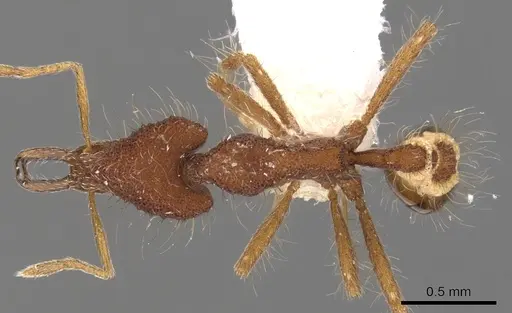
Literature
Loading...Loading products...