

Strumigenys kumadori
- Scientific Name
- Strumigenys kumadori
- Tribe
- Attini
- Subfamily
- Myrmicinae
- Author
- Yoshimura & Onoyama, 2007
- Distribution
- Found in 3 countries
Strumigenys kumadori Overview
Strumigenys kumadori is an ant species of the genus Strumigenys. It is primarily documented in 3 countries , including China, Japan, Korea. Detailed taxonomic data and occurrence records can be further explored via authoritative databases such as AntWeb or the Global Biodiversity Information Facility (GBIF).
Strumigenys kumadori
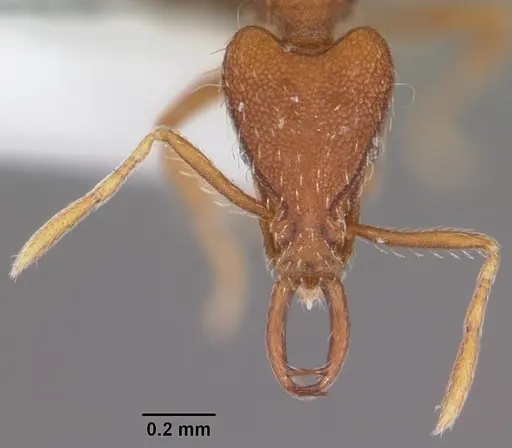
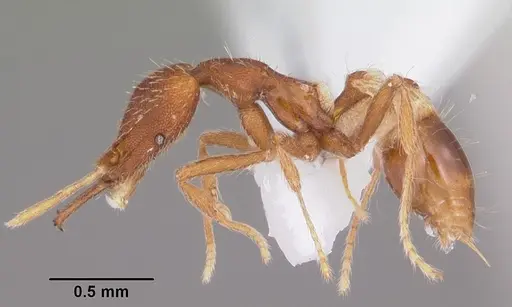
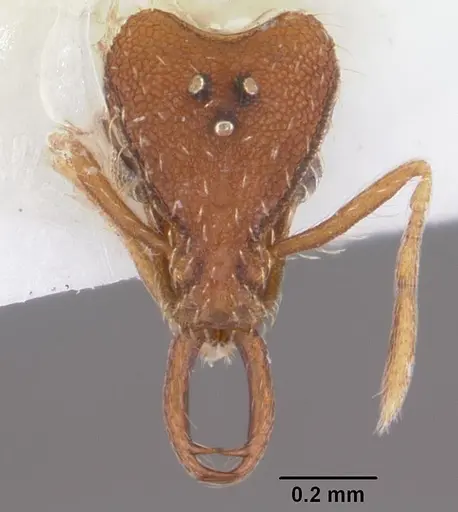
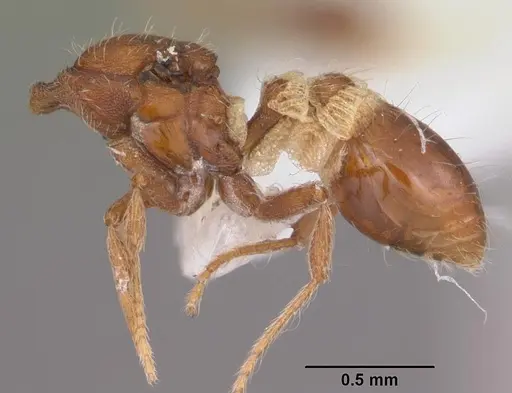
Strumigenys kumadori is a tiny predatory ant native to East Asia, found in Japan, Korea, China, and Taiwan. Workers measure just 2.2-2.5mm with a distinctive appearance featuring long linear mandibles, six-segmented antennae, and long flagellate hairs on the head and pronotum that serve as key identification features [1][2]. The body coloration ranges from orange to yellow or reddish brown [3]. This species was only formally described in 2007,having been previously confused with its close relative S. lewisi for decades [3]. Queens are slightly larger at 0.65-0.67mm and can be distinguished from S. lewisi by their notably larger compound eyes and distinctly developed ocelli with pigmented margins [3].
These ants are specialized predators that hunt tiny soil arthropods using their elongated snapping mandibles. They nest in moist, shaded forest habitats, typically in rotting wood, beneath bark, inside rotten acorns, under cracked rocks, and in leaf litter under stones [2]. The species shows interesting flexibility in colony structure: while predominantly single-queen (monogynous), about 17% of wild colonies contain multiple queens, though only one remains fertile in polygynous nests [3]. This makes them a facultatively polygynous species with functional monogyny even when multiple queens are present.
Quick Summary
- Difficulty: Medium
- Origin & Habitat: East Asia, Japan (southern Hokkaido, Honshu, Kyushu), Korea, China (Peking), and Taiwan. Found in leaf-litter of mountainous forests in shady, damp locations [3][2][1].
- Colony Type: Predominantly monogyne (single-queen colonies), but approximately 17% of wild colonies contain multiple queens. Even in polygynous colonies, only a single queen is fertile (functional monogyny). Polygyny occurs only in larger colonies with more than 37 workers [3].
- Colony: Optionally polygyne
- Founding: Claustral
- Size & Growth:
- Queen: 0.65-0.67mm head length [3]
- Worker: 2.2-2.5mm total length, 0.62-0.67mm head length [1][3]
- Colony: Likely small colonies, polygyny only observed in colonies with 37+ workers [3]. Estimated max 100-200 workers based on typical Strumigenys patterns.
- Growth: Moderate, estimated based on genus patterns
- Development: Estimated 6-10 weeks at optimal temperature based on related Strumigenys species (Direct development data unavailable for this species, estimates based on genus-level patterns for small Myrmicinae predators)
- Antkeeping:
- Temperature: Moderate temperatures, aim for 20-24°C. Being from temperate East Asia, they can tolerate cooler conditions than tropical species but prefer warmth.
- Humidity: High humidity required, they naturally inhabit damp forest floor environments. Keep substrate consistently moist but not waterlogged. Provide a gradient with damp areas and slightly drier zones for choice.
- Diapause: Likely requires winter cooling period given temperate distribution. Reduce temperature to around 10-15°C for 2-3 months during winter months, mimicking natural seasonal cycle.
- Nesting: Prefer naturalistic setups with moist substrate. Y-tong nests with tight chambers work well, or a naturalistic setup with soil, rotting wood pieces, and stones. They nest under objects in damp substrate in the wild [2].
- Behavior: Docile and non-aggressive. These tiny ants are specialized predators that hunt springtails and other micro-arthropods. They are slow-moving and rarely escape, but their small size (under 3mm) means escape prevention should still be considered. They are not known to sting and pose no danger to keepers. Workers forage individually rather than in groups.
- Common Issues: high humidity is essential, colonies fail in dry conditions, slow growth can frustrate beginners who overfeed or disturb the nest, tiny size makes them vulnerable to drowning in water reservoirs, use small test tube setups, wild-caught colonies may contain parasites that can devastate captive populations, they are specialized predators and may refuse standard ant foods, live prey is typically required
Housing and Nest Setup
Strumigenys kumadori requires high humidity and benefits from naturalistic setups that mimic their forest floor habitat. In the wild, they nest in rotting wood, beneath bark, inside rotten acorns, under cracked rocks, and in leaf litter under stones in shady forests [2]. For captivity, a Y-tong (AAC) nest with tight chambers works well, or you can create a naturalistic setup with a moist soil substrate mixed with pieces of rotting wood, small stones, and leaf litter. The key is maintaining consistently damp substrate without creating standing water. Test tube setups can work but monitor water levels closely, these tiny ants can drown in large water reservoirs. Place the nest in a shaded area away from direct light, as they naturally inhabit shady forest environments.
Feeding and Diet
Strumigenys kumadori is a specialized predator that hunts tiny soil arthropods. Their long linear mandibles are adapted for catching small prey. In captivity, their primary food should be live springtails, these are ideal size and readily accepted. Other small live prey such as micro-arthropods, tiny booklice, and fruit fly larvae can also be offered. They are unlikely to accept sugar water or honey as a food source since they're predatory specialists. Feed small amounts of live prey every few days, removing any uneaten prey after 24-48 hours. Do not rely on commercial ant foods, these tiny predators need live prey to thrive. [3]
Temperature and Seasonal Care
Keep Strumigenys kumadori at moderate temperatures around 20-24°C. Being native to temperate East Asia (Japan, Korea, China), they can tolerate cooler conditions than purely tropical species but prefer stable warmth. A heating cable on one side of the nest can create a gentle gradient if your room temperature runs cool. During winter months (roughly November-February in the Northern Hemisphere), reduce temperatures to around 10-15°C to provide a natural winter rest period. This cooling period matches their natural seasonal cycle in mountainous forest habitats. Monitor colony activity, if workers become sluggish and cluster together, the temperature may be too low. [3][2]
Colony Structure and Queen Care
This species shows interesting flexibility in colony structure. While predominantly monogyne (single-queen colonies), approximately 17% of wild colonies contain multiple queens, but only when the colony reaches more than 37 workers [3]. Even in polygynous colonies, only a single queen is functionally fertile, making this 'functional monogyny.' For keepers, this means single-queen colonies are the norm. If you acquire a colony with multiple queens, do not separate them unless aggression is observed, they coexist peacefully. Queens measure 0.65-0.67mm and are slightly larger than workers. They are claustral founders, the queen seals herself in a chamber and raises the first workers alone on stored body reserves.
Humidity and Moisture Requirements
High humidity is critical for this species. In the wild, they inhabit the litter-fermentation-humidification horizon in forest soils, typically found up to 25cm depth [4]. The substrate should feel consistently damp to the touch, similar to a forest floor after rain. Avoid both drying out and waterlogging, aim for moist but not saturated conditions. Provide a water tube or small reservoir, but ensure the cotton is tight enough that tiny workers cannot drown. Condensation on the nest walls is a good indicator of adequate humidity. If the substrate begins drying, rehydrate by adding small amounts of water to the edges, not directly on the colony.
Frequently Asked Questions
How long does it take for Strumigenys kumadori to raise first workers?
The exact development timeline has not been directly studied for this species. Based on typical Strumigenys patterns and related small Myrmicinae, expect approximately 6-10 weeks from egg to first worker at optimal temperature (around 22-24°C). The first workers (nanitics) will be smaller than mature workers.
Can I keep multiple Strumigenys kumadori queens together?
Yes, this species is facultatively polygynous, about 17% of wild colonies naturally have multiple queens, though only one is fertile. If your colony arrived with multiple queens, they can be kept together peacefully. However, combining unrelated foundress queens has not been documented and is not recommended.
What do Strumigenys kumadori ants eat?
They are specialized predators that need live prey. Their primary food should be live springtails, these are the ideal size and readily accepted. They may also accept other tiny live prey like micro-arthropods, booklice, and fruit fly larvae. They are unlikely to accept sugar water or commercial ant foods.
Are Strumigenys kumadori good for beginners?
This species is rated as medium difficulty. While not overly demanding, they require high humidity, live prey feeding, and may be slower to establish than more common species. Their specialized diet and humidity needs make them better suited for keepers who have some experience with ant keeping basics.
Do Strumigenys kumadori need hibernation?
Based on their temperate distribution in Japan and Korea, they likely benefit from a winter cooling period. Reduce temperatures to around 10-15°C for 2-3 months during winter (roughly November-February). This mimics their natural seasonal cycle in mountainous forest habitats.
How big do Strumigenys kumadori colonies get?
Colony size data is limited, but based on typical Strumigenys patterns and the observation that polygyny only occurs in colonies with 37+ workers, maximum colony size is likely in the 100-200 worker range. They are not among the larger Strumigenys species.
When should I move my Strumigenys kumadori to a formicarium?
Wait until the colony reaches at least 20-30 workers before considering a move. They do well in test tube setups for the founding stage and early growth. A naturalistic setup with moist substrate works best when ready to expand. Always ensure the new setup maintains the high humidity they require.
Why are my Strumigenys kumadori dying?
Common causes include: low humidity (they need consistently damp substrate), improper diet (they need live prey, not sugar water), temperature stress (too cold or too hot), or parasites from wild-caught colonies. Check humidity levels first, then verify they are accepting live prey. Wild-caught colonies often contain mites or other parasites.
References

This caresheet is licensed under CC BY-SA 4.0 .
CASENT0102909
View on AntWeb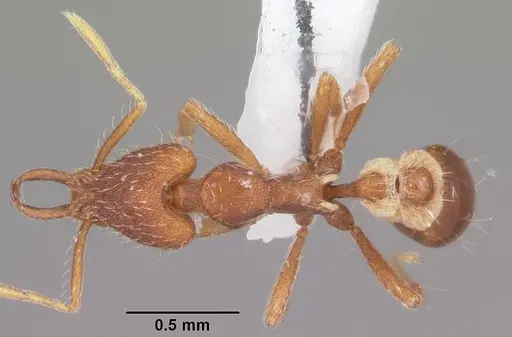
CASENT0102910
View on AntWeb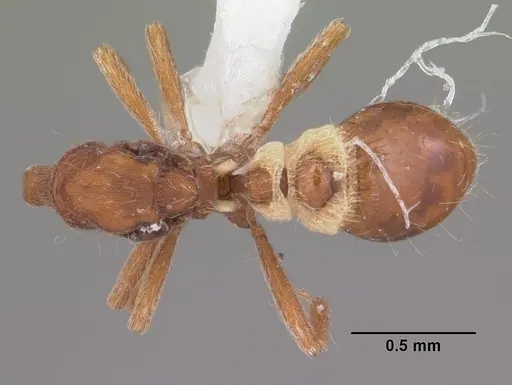
Literature
Loading...Loading products...