

Strumigenys juliae
- Scientific Name
- Strumigenys juliae
- Tribe
- Attini
- Subfamily
- Myrmicinae
- Author
- Forel, 1905
- Distribution
- Found in 4 countries
Strumigenys juliae Overview
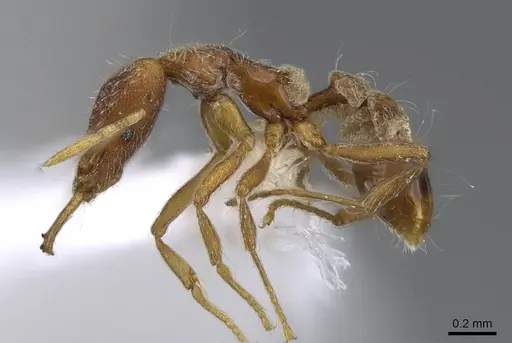
Strumigenys juliae is an ant species of the genus Strumigenys. It is primarily documented in 4 countries , including Indonesia, Malaysia, Thailand. Detailed taxonomic data and occurrence records can be further explored via authoritative databases such as AntWeb or the Global Biodiversity Information Facility (GBIF).
Strumigenys juliae
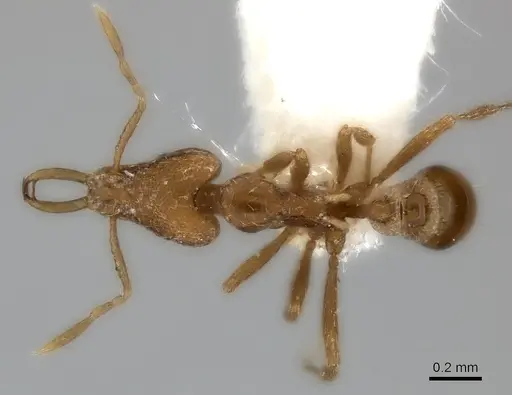
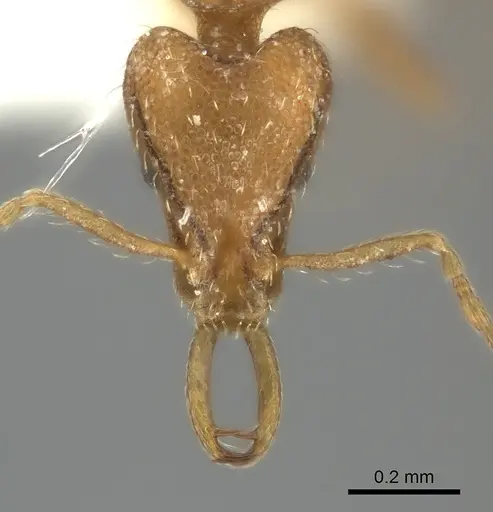
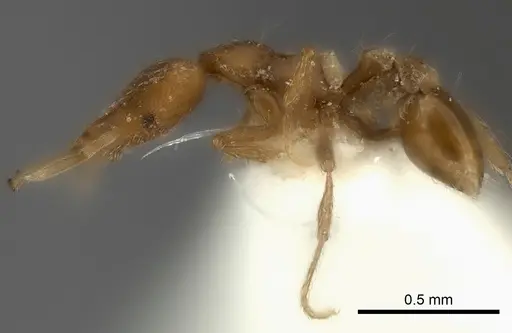
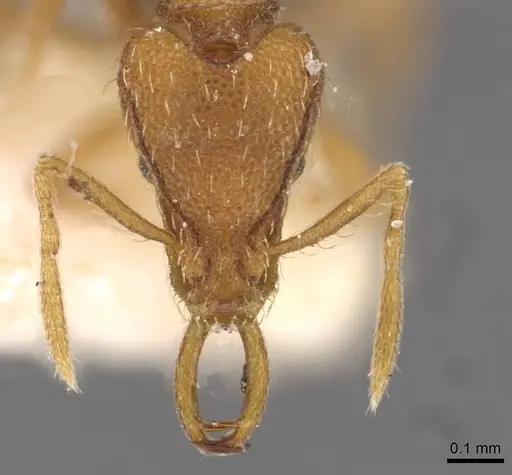
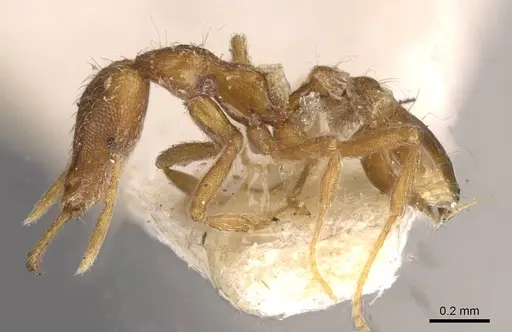
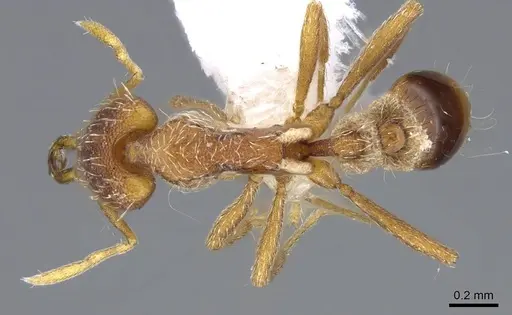
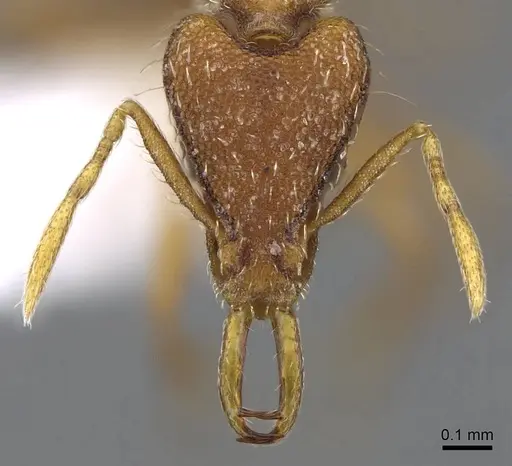
Strumigenys juliae is a tiny predatory ant measuring just 1.9-2.4mm in total length, belonging to the Myrmicinae subfamily and Attini tribe [1]. This species features the characteristic trap-jaw mandibles of the genus, used to snap shut on small prey like springtails. Workers have a dark brown to black coloration with a smooth and shining body. The species is a member of the godeffroyi-complex within the Strumigenys godeffroyi group, identified by specific hair patterns on the head and pronotum [2].
This ant inhabits wet tropical forests across Southeast Asia, from Borneo and Indonesia through Malaysia, the Philippines, Singapore, Thailand, and Vietnam [1]. Unlike many ants, Strumigenys juliae is a specialized micro-predator that hunts springtails and other tiny soil arthropods using its lightning-fast mandibles. The species has been collected from leaf litter samples in both primary and secondary forests, as well as mature rubber plantations, indicating some tolerance for disturbed habitats while preferring humid, shaded environments [1][2].
Quick Summary
- Difficulty: Hard
- Origin & Habitat: Southeast Asia, found in Borneo, Indonesia (Java, Lesser Sunda Islands), Malaysia, Philippines, Singapore, Thailand, and Vietnam. Inhabits wet forest and rainforest leaf litter in primary forest, secondary forest, and mature rubber plantations [1][2].
- Colony Type: Colony structure is unconfirmed. Strumigenys genus typically forms small colonies with single queens, but specific data for S. juliae is lacking.
- Size & Growth:
- Queen: Undocumented for this species, estimated 3-4mm based on genus patterns
- Worker: 1.9-2.4mm total length [1]
- Colony: Likely small colonies, Strumigenys species typically have dozens to a few hundred workers
- Growth: Slow, small ants with specialized diets typically develop slowly
- Development: Estimated 8-12 weeks at optimal temperature based on genus patterns (Development time is unconfirmed for this species. Small predatory ants typically have longer development cycles than omnivorous species.)
- Antkeeping:
- Temperature: Keep at 24-28°C, these are tropical forest ants requiring warm, stable temperatures. A gentle heating gradient is recommended.
- Humidity: High humidity is essential, maintain 70-85% relative humidity. Keep the nest substrate consistently moist but not waterlogged, mimicking damp forest floor conditions.
- Diapause: Unlikely to require true hibernation, being tropical, they may experience reduced activity during cooler seasons but probably don't need a full diapause period.
- Nesting: These tiny ants live in leaf litter and soil in nature. In captivity, a small naturalistic setup with moist substrate (like a terrarium-style formicarium) or a small test tube setup with high humidity works well. They need tight chambers scaled to their tiny size.
- Behavior: Strumigenys juliae is a specialized predator that uses its trap-jaw mandibles to capture springtails and other micro-arthropods. Workers forage individually through the substrate rather than in obvious trails. They are not aggressive toward humans and cannot sting. Their tiny size (under 2.5mm) means escape prevention is critical, they can squeeze through remarkably small gaps. Activity level is moderate, they are not particularly active outside the nest but will hunt when prey is present.
- Common Issues: tiny size makes escape prevention difficult, use fine mesh barriers and tight-fitting lids, specialized diet means they may refuse standard ant foods, live springtails are essential, high humidity requirements can lead to mold problems if ventilation is poor, slow growth can frustrate beginners who may overfeed or disturb the colony, wild-caught colonies may have parasites that are difficult to detect
Housing and Setup
Strumigenys juliae requires a setup that mimics their natural leaf litter habitat. A small naturalistic terrarium-style formicarium with moist substrate works best, or you can use a small test tube setup kept in a humid enclosure. The key is maintaining high humidity while preventing flooding. Use a substrate that holds moisture well but doesn't become waterlogged, a mix of soil and coco fiber works well. Because they are tiny, the chambers and passages in any formicarium should be small and tight. A layer of leaf litter or moss on top helps maintain humidity and gives them hunting grounds. Keep the setup in a warm area away from direct sunlight. [1][2]
Feeding and Diet
This is the most challenging aspect of keeping Strumigenys juliae. They are obligate predators that specialize in hunting springtails and other micro-arthropods. Their trap-jaw mandibles are specifically adapted for catching tiny, fast-moving prey. You must establish a culture of live springtails before acquiring these ants, as they will not accept most commercial ant foods. Offer springtails regularly, and occasionally other tiny prey like booklice (psocids), dust mites, or fruit fly larvae. Some keepers report success with tiny pieces of mealworm or other small insects, but live springtails should be the primary food source. Remove uneaten prey after 24-48 hours to prevent mold. [2]
Temperature and Humidity
As tropical forest ants, Strumigenys juliae needs warm and humid conditions. Maintain temperatures between 24-28°C, with a slight gradient if possible so workers can choose their preferred zone. Room temperature may be too cool in some climates, a small heating mat on one side of the enclosure can help. Humidity should be high, around 70-85%. The substrate should feel consistently moist but never soggy. Mist the enclosure regularly and use a water reservoir in test tube setups. Poor humidity leads to desiccation and colony failure. However, balance humidity with adequate ventilation to prevent mold growth, which can be deadly for small colonies. [1][2]
Behavior and Colony Life
Strumigenys juliae workers are solitary hunters that patrol through the substrate and leaf litter searching for prey. They do not form obvious foraging trails like many ants. Their trap-jaw mechanism allows them to snap shut on prey in milliseconds, this is fascinating to watch but means they are specialized hunters, not generalists. Colonies are likely small, probably under 200 workers at maturity based on typical Strumigenys patterns. Queens are probably claustral founders that seal themselves in a chamber and raise the first workers alone, but this is inferred from genus patterns rather than directly documented for this species. Workers are not aggressive and cannot sting, they pose no danger to keepers. [2]
Growth and Development
Specific development times for Strumigenys juliae are not documented, but small predatory ants typically develop slower than larger omnivorous species. Expect 8-12 weeks from egg to worker at optimal temperature (around 26°C). The first workers (nanitics) will be smaller than mature workers. Growth is slow, and colonies remain small even when established. Do not expect rapid colony expansion, these ants prioritize quality over quantity. Avoid disturbing the colony frequently, as stress can cause queen abandonment or worker mortality. Patience is essential with this species.
Common Problems
The biggest challenge with Strumigenys juliae is their specialized diet, without a reliable springtail culture, the colony will starve. Escape is also a major issue due to their tiny size, standard ant keeping barriers may not work. Use fine mesh (at least 0.5mm or smaller) on all openings. High humidity can cause mold, which spreads quickly in small setups and can kill colonies. Wild-caught colonies may carry parasites that are difficult to detect and treat. Finally, their slow growth tests keeper patience, resist the urge to overfeed or check on them constantly. If workers disappear or the colony shrinks, review humidity, food quality, and escape prevention. [2]
Frequently Asked Questions
Can I keep Strumigenys juliae in a test tube?
Yes, a test tube setup can work, but you must keep it inside a humid enclosure like a plastic tub with damp substrate. The test tube provides the nest chamber while the tub maintains humidity. Use a small water reservoir in the test tube and ensure the cotton stays moist. However, you'll need to provide hunting space outside the tube for springtails.
What do Strumigenys juliae eat?
They eat live springtails and other micro-arthropods. This is not optional, they are specialized predators that cannot survive on sugar water or standard ant foods. Establish a springtail culture before getting these ants. Offer springtails every few days and remove uneaten prey.
How long does it take for first workers to appear?
It likely takes 8-12 weeks from egg to first worker at optimal temperature (around 26°C), but this is estimated based on genus patterns since specific data for S. juliae is not available. Growth is slow, so patience is essential.
Are Strumigenys juliae good for beginners?
No, this is a difficult species recommended for experienced antkeepers. Their specialized diet (live springtails), high humidity requirements, tiny size making escape prevention difficult, and slow growth make them challenging. Beginners should start with easier species like Lasius or Messor.
How big do Strumigenys juliae colonies get?
Colony size is likely small, probably under 200 workers at maturity based on typical Strumigenys patterns. They are not large colony builders like some Myrmicinae.
Do Strumigenys juliae need hibernation?
Probably not. Being a tropical species from Southeast Asia, they likely do not require a true diapause period. However, they may slow down during cooler seasons. If you keep them at room temperature (around 20-24°C), no special winter care is needed.
Why are my Strumigenys juliae dying?
Common causes include: starvation (no springtails), low humidity (below 60%), escape and lost workers, mold from poor ventilation, or parasites from wild-caught colonies. Review each of these factors. Also check that temperatures are in the 24-28°C range.
Can I keep multiple queens together?
This has not been documented for this species. Strumigenys typically have single-queen colonies, and combining unrelated queens is not recommended without specific evidence that they can coexist.
When should I move them to a formicarium?
Wait until the colony has at least 20-30 workers and is actively hunting. Moving too early can stress the queen. A small naturalistic setup works better than large formicaria, they prefer tight spaces scaled to their tiny size.
What temperature do Strumigenys juliae need?
Keep them at 24-28°C. A heating mat on one side of the enclosure can help achieve this, but avoid direct heat on the nest. Room temperature may suffice in warm climates.
Is Strumigenys juliae invasive anywhere?
No, their range is limited to Southeast Asia (Borneo, Indonesia, Malaysia, Philippines, Singapore, Thailand, Vietnam). They have not been documented as invasive in other regions.
References

This caresheet is licensed under CC BY-SA 4.0 .
Literature
Loading...Loading products...