

Strumigenys jepsoni
- Scientific Name
- Strumigenys jepsoni
- Tribe
- Attini
- Subfamily
- Myrmicinae
- Author
- Mann, 1921
- Distribution
- Found in 1 countries
Strumigenys jepsoni Overview
Strumigenys jepsoni is an ant species of the genus Strumigenys. It is primarily documented in 1 countries , including Fiji. Detailed taxonomic data and occurrence records can be further explored via authoritative databases such as AntWeb or the Global Biodiversity Information Facility (GBIF).
Strumigenys jepsoni
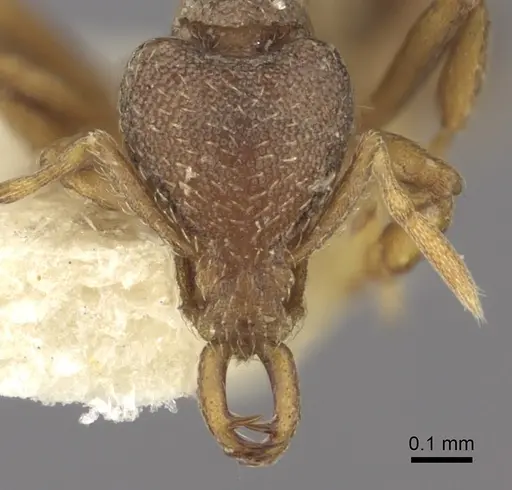
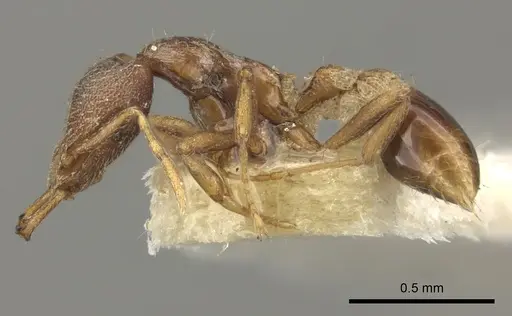
Strumigenys jepsoni is a tiny predatory ant endemic to Fiji, measuring just 2.4-2.7mm in total length [1]. Workers are a small, long-mandibled, reddish-brown species with short pilosity and strongly shining dorsal surfaces on the petiole and postpetiole [1]. This species belongs to the smythiesii complex within the Strumigenys godeffroyi group, and can be distinguished from other Fijian members by its stiff and simple humeral hair (as opposed to the flagellate hair found in related species) [2]. Only two collections of this species have ever been recorded, both from Vanua Levu island, making it one of the rarest ants in Fiji [1][3].
This species represents a real challenge for antkeepers interested in keeping rare Fijian biodiversity. As a member of the dacetine ant tribe (Attini), these ants possess specialized elongated mandibles used to snap shut on prey. Based on related Strumigenys species, they are likely specialized predators of micro-arthropods like springtails. However, almost no biological data exists for this specific species, it has never been collected during major surveys since its original description, suggesting it may be extremely rare or localized in its natural habitat [1][3].
Quick Summary
- Difficulty: Expert
- Origin & Habitat: Endemic to Fiji, specifically Vanua Levu island. The original type locality is Suene (now known as Taveuni) in the Fiji Islands [2]. Only two historical records exist, the type series and a collection by G. Kuschel in Ndreketi on Vanua Levu [2]. Based on the limited collection data and Fiji's tropical rainforest environment, this species likely inhabits humid, shaded forest floor microhabitats.
- Colony Type: Unknown, colony structure has never been studied. No data exists on whether this species is single-queen (monogyne) or multi-queen (polygyne).
- Size & Growth:
- Queen: Unknown, queens have never been described for this species [1][3].
- Worker: 2.4-2.7mm total length [1]. Head length 0.59-0.66mm, head width 0.43-0.48mm [1].
- Colony: Unknown, no colony size data exists for this species.
- Growth: Unknown, growth rate has never been documented. Based on typical Strumigenys patterns, growth is likely slow to moderate.
- Development: Unknown, no development data exists for this species. Based on typical Strumigenys genus patterns, estimate 6-10 weeks at optimal temperature, but this is a rough guess. (Development timeline is unconfirmed, no direct observations of brood development exist for this species.)
- Antkeeping:
- Temperature: Unknown for this species specifically. As a tropical Fijian ant from rainforest habitat, likely prefers warm conditions around 24-28°C. Start in the mid-20s and observe colony activity.
- Humidity: Likely requires high humidity, Fiji's climate is humid tropical. Keep nest substrate consistently moist but not waterlogged. Provide a humidity gradient so ants can choose their preferred zone.
- Diapause: Unknown, no data on overwintering requirements. As a tropical species from Fiji (near the equator), may not require a true diapause. Some form of seasonal slowdown may occur during cooler months.
- Nesting: No specific nesting data exists. Based on related species, likely nests in rotting wood, leaf litter, or soil in shaded forest areas. In captivity, a naturalistic setup with moist substrate or a Y-tong/plaster nest works well for tiny Strumigenys.
- Behavior: Almost nothing is known about this species' behavior in captivity or the wild. Based on genus-level knowledge, Strumigenys are slow-moving, cryptic ants that hunt by ambush, they wait motionless until prey comes within striking range of their elongated mandibles. They are not aggressive toward humans and cannot sting. Their tiny size (under 3mm) means escape prevention is critical, they can squeeze through standard test tube cotton and tiny gaps. Handle with care as they are fragile and easily crushed.
- Common Issues: extreme rarity makes obtaining this species nearly impossible, only two collections have ever been recorded, no biological data exists to guide captive care, keepers are essentially pioneering husbandry for a completely unknown species, tiny size means excellent escape prevention is essential, use fine mesh barriers and tight-fitting lids, growth rate is likely slow, keepers must be patient and avoid overfeeding which can cause mold, humidity requirements are unknown, start with high humidity and adjust based on colony survival, as a Fijian endemic, this species may not survive temperate climate conditions without careful temperature control
Obtaining Strumigenys jepsoni
This is perhaps the biggest challenge with this species, Strumigenys jepsoni has only been collected twice in nearly a century of ant research. The original collection was by W.M. Mann in 1921 from Suene (Taveuni), and the second was by G. Kuschel in Ndreketi on Vanua Levu [2]. Major surveys conducted between 2002-2008 failed to find any specimens [1][3]. This species is not available through commercial ant vendors and would require either fieldwork in Fiji or connection to academic researchers conducting ant surveys in the region. For most antkeepers, this species remains a scientific curiosity rather than a realistic keeping goal. If you do obtain specimens, document your observations carefully, any captive data would be genuinely new scientific knowledge for this poorly understood species. [2][1][3]
Housing and Setup
Since no captive husbandry data exists for this species, recommendations must be based on what works for related Strumigenys species. Use a setup designed for tiny tropical ants, a small test tube setup works for founding colonies, or a naturalistic terrarium-style formicarium with moist substrate for established colonies. Given their extremely small size (under 3mm), ensure all connections and barriers are tight. A layer of moist coco fiber or peat moss as substrate works well, with pieces of rotting wood or leaf litter to provide hunting grounds. Keep the setup humid and shaded, these are forest floor ants that avoid direct light. The nest area should have a water reservoir to maintain humidity without flooding.
Feeding and Diet
No direct data exists for what this species eats. However, all known Strumigenys are specialized predators of micro-arthropods, primarily springtails (Collembola). Their elongated snap-trap mandibles are specifically adapted for catching small, fast-moving prey. In captivity, you should attempt to culture live springtails as a primary food source. Other tiny prey like booklice (psocids), dust mites, and fruit fly larvae may also be accepted. Do not offer large prey items, their tiny size limits what they can tackle. Sugar sources are unlikely to be accepted, Strumigenys are not known for tending aphids or consuming nectar. Start with springtail cultures and observe hunting behavior.
Temperature and Seasonal Care
No specific temperature data exists for this species. As a tropical ant from Fiji (located near the equator at approximately 17°S), it likely experiences warm, stable temperatures year-round with minimal seasonal variation. Aim for temperatures in the mid-to-high 20s Celsius (around 24-28°C). Room temperature may be sufficient in warm climates, but a small heating cable or mat on one side of the nest can provide a gradient if needed. Place heating on top of the nest, not underneath, to avoid drying out the substrate. Monitor for signs of stress, if workers appear sluggish and cluster together, the temperature may be too low. No diapause is expected given Fiji's tropical climate, but activity may slow slightly during the cooler winter months.
Frequently Asked Questions
Is Strumigenys jepsoni available for purchase?
No, this species is not available through commercial ant vendors. It has only been collected twice in history and was not found during major surveys between 2002-2008. Obtaining this species would require fieldwork in Fiji or connection to academic researchers. [1][3]
How big do Strumigenys jepsoni colonies get?
Unknown, no colony size data exists for this species. The largest Strumigenys colonies in general rarely exceed a few hundred workers. Given the extreme rarity of this species, no one has ever documented a mature colony size. [1]
What do Strumigenys jepsoni ants eat?
Based on genus-level knowledge, they are specialized predators of micro-arthropods, primarily springtails. Their elongated mandibles are snap-traps designed for catching small, fast-moving prey. In captivity, culture live springtails as a primary food source. Other tiny prey like booklice and fruit fly larvae may also be accepted. Sugar sources are unlikely to be taken.
What temperature do Strumigenys jepsoni need?
No specific temperature data exists for this species. As a tropical Fijian ant, aim for warm conditions around 24-28°C. Room temperature in heated homes may be sufficient. Use a small heating cable on one side of the nest if your room is cooler.
Are Strumigenys jepsoni good for beginners?
No, this species is firmly in the Expert category. Almost no biological data exists to guide captive care, it is extremely rare with no commercial availability, and any captive husbandry would be pioneering new scientific knowledge. Even experienced antkeepers would struggle to maintain this species given the complete lack of reference information. [1][3]
Where does Strumigenys jepsoni live in the wild?
This species is endemic to Fiji, specifically Vanua Levu island. Only two collections have ever been recorded, the original type series from Suene (Taveuni) and one collection by G. Kuschel in Ndreketi on Vanua Levu. It has not been collected since the 1920s despite multiple scientific surveys. [2][1][3]
How long does it take for Strumigenys jepsoni to develop from egg to worker?
Unknown, no development data exists for this species. Based on typical Strumigenys genus patterns, development likely takes 6-10 weeks at optimal temperature, but this is a rough estimate. Any observations of captive development would represent genuinely new scientific knowledge.
Do Strumigenys jepsoni need hibernation?
Unlikely, as a tropical species from Fiji (near the equator), no true diapause is expected. Fiji experiences minimal seasonal temperature variation. However, some reduction in activity during cooler months may occur. Do not attempt to force a hibernation period without evidence that the species requires it.
Can I keep multiple Strumigenys jepsoni queens together?
Unknown, colony structure has never been studied for this species. No data exists on whether they are single-queen (monogyne) or multi-queen (polygyne). Without this basic biological information, combining queens is not recommended.
References

This caresheet is licensed under CC BY-SA 4.0 .
CASENT0235852
View on AntWeb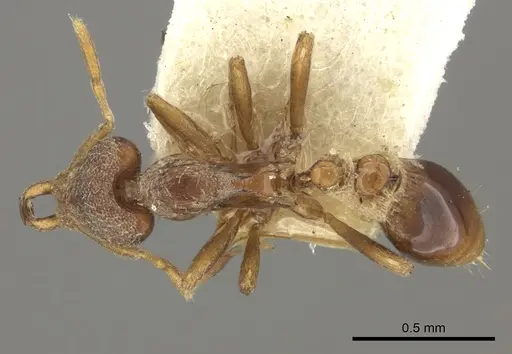
Literature
Loading...Loading products...