

Strumigenys horvathi
- Scientific Name
- Strumigenys horvathi
- Tribe
- Attini
- Subfamily
- Myrmicinae
- Author
- Emery, 1897
- Distribution
- Found in 1 countries
Strumigenys horvathi Overview
Strumigenys horvathi is an ant species of the genus Strumigenys. It is primarily documented in 1 countries , including Papua New Guinea. Detailed taxonomic data and occurrence records can be further explored via authoritative databases such as AntWeb or the Global Biodiversity Information Facility (GBIF).
Strumigenys horvathi
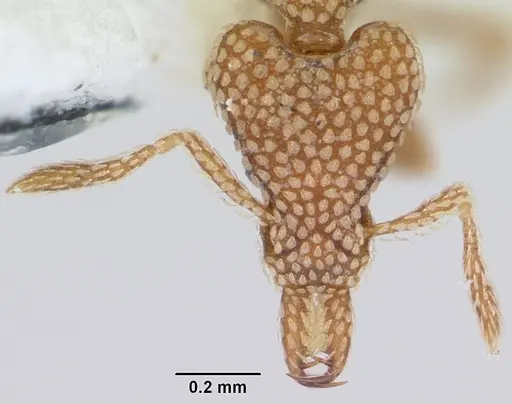
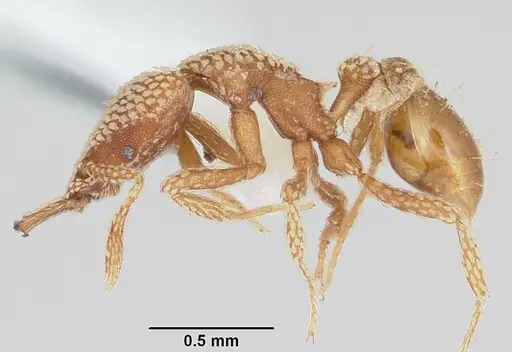
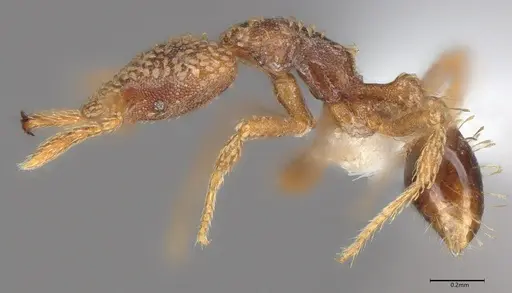
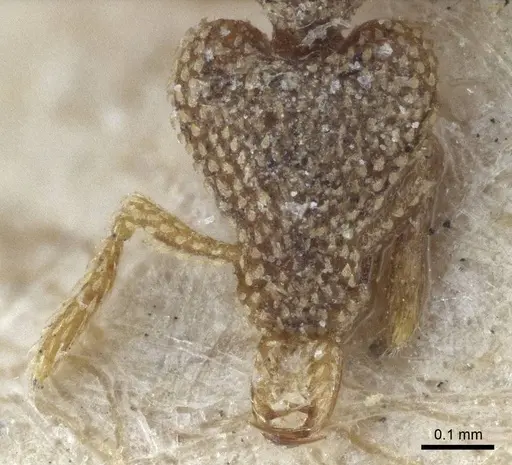
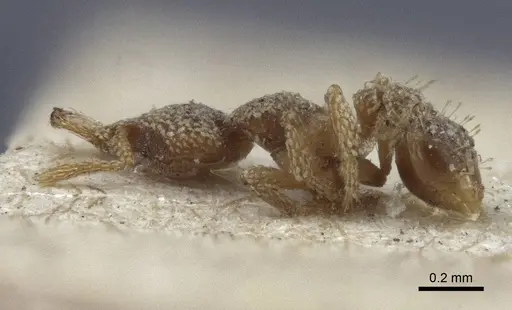
Strumigenys horvathi is a tiny predatory ant native to New Guinea and surrounding regions. Workers measure just 2.0-2.8mm in length, making them among the smaller ant species you'll encounter. They have a distinctive appearance with short, stout mandibles and a body covered in dense, scale-like hairs that give them a somewhat fuzzy look. Their coloration ranges from yellowish ferruginous to medium brown, with the gaster often slightly darker than the rest of the body [1]. These ants belong to the Dacetini tribe, a group known for their specialized trap-jaw mandibles used to capture small prey [1]. The queen is unusual, she has very reduced (degenerate) mandibles and fine, hair-like pilosity that differs dramatically from the workers, leading researchers to suspect she may be a temporary social parasite in the nests of other Strumigenys species [2].
Quick Summary
- Difficulty: Expert
- Origin & Habitat: New Guinea region including Papua New Guinea and Indonesia. Workers are found in leaf litter, under bark of rotting logs, and in small soil cavities under wood chips buried in leaf litter [3][4][5][6].
- Colony Type: Single-queen colonies (monogyne). One documented colony had 50-75 workers with a queen and abundant brood [6]. Another large colony had over 150 workers [5].
- Colony: Monogyne
- Queen: Temporary parasitic
- Size & Growth:
- Queen: 2.4mm [1], directly measured
- Worker: 2.0-2.8mm [1], directly measured from multiple populations
- Colony: Up to 150+ workers [5][6], from colony observations
- Growth: Slow, estimated based on small colony sizes and specialized predatory lifestyle
- Development: Unknown, no direct development data exists for this species. Related Strumigenys species typically take 2-4 months from egg to worker at tropical temperatures. (Development timeline is unconfirmed for this specific species. Expect slower growth than common tropical ants due to specialized predatory diet and small colony sizes.)
- Antkeeping:
- Temperature: Keep at 24-28°C, these are tropical ants from lowland New Guinea. A gentle gradient allowing warmer and cooler areas is recommended. Avoid temperatures below 22°C.
- Humidity: High humidity is essential, they naturally live in rotting wood and leaf litter in humid tropical forests. Keep nest substrate consistently moist but not waterlogged. Provide a water reservoir.
- Diapause: No, as a tropical species from New Guinea, they do not require hibernation. Maintain warm conditions year-round.
- Nesting: These ants nest in rotting wood, under bark, and in soil cavities within leaf litter. In captivity, they do well in naturalistic setups with rotting wood pieces, or in Y-tong/plaster nests with high humidity. They need tight, humid chambers scaled to their tiny size.
- Behavior: Strumigenys horvathi is a specialized predator that likely hunts small arthropods like springtails and mites. Like other Dacetini ants, they have trap-jaw mandibles designed for snapping shut on prey. Workers forage individually in leaf litter and under bark. They are tiny, only 2-3mm, so escape prevention must be excellent. They are not aggressive toward humans and cannot sting. Their small size and specialized diet make them a challenging species for advanced antkeepers.
- Common Issues: escape prevention is critical, they are tiny and can squeeze through the smallest gaps, specialized diet makes them difficult to feed, they need live small prey like springtails, slow colony growth requires patience, colonies may take months to reach 50 workers, high humidity requirements can lead to mold problems if ventilation is poor, wild-caught colonies may have parasites that kill them in captivity
Housing and Nest Setup
Strumigenys horvathi requires a setup that mimics their natural habitat in rotting wood and leaf litter. A naturalistic terrarium with a layer of moist soil, pieces of rotting wood, and leaf litter works well. The substrate should be kept consistently moist but never waterlogged. You can also use a Y-tong or plaster nest with a water reservoir, these materials hold humidity well, which is critical for this species. Because they are tiny (only 2-3mm), any gaps in the setup must be sealed with fine mesh or cotton wool. They do best in small, tight chambers that match their minute size. Avoid large, open spaces in the nest area. [1]
Feeding and Diet
This is a specialized predatory ant. In the wild, they hunt small invertebrates in leaf litter and under bark. In captivity, their primary food should be live springtails, these are ideal size and nutritional value. You can also try other tiny live prey like micro-arthropods, small mites, and fruit fly larvae. Sugar sources are unlikely to be accepted, Strumigenys are not typical honeydew or sugar-feeding ants. Some keepers report success with tiny pieces of mealworm or other small insects, but live prey is always best. Feed them every 2-3 days, removing any uneaten prey after 24 hours to prevent mold. [1]
Temperature and Humidity
Keep these tropical ants warm year-round. Aim for 24-28°C in the nest area, with a slight gradient so workers can choose their preferred temperature. Room temperature around 24°C is suitable if you don't use additional heating. High humidity is essential, think humid tropical forest floor. The nest substrate or water reservoir should maintain high humidity levels. Use a hygrometer to monitor, aiming for 70-85% relative humidity in the nest area. Avoid both drying out the nest and allowing stagnant, mold-prone conditions, some ventilation is needed while maintaining humidity. [1]
Colony Structure and Founding
Colonies in the wild have been found with a single queen and 50-150 workers [6][5]. The queen is unusual, she has very reduced mandibles and different body pilosity compared to workers, leading researchers to suspect she may be a temporary social parasite [2]. This means she might invade and take over nests of other Strumigenys species rather than founding a colony independently. In captivity, starting with a queen-right colony (if available) is recommended. If you find a queen, she may need to be introduced to an established colony of a related species, this is advanced and experimental. Founding behavior in captivity has not been documented.
Behavior and Temperament
Workers forage individually through leaf litter and under bark, hunting small prey. Like other Dacetini ants, they have specialized mandibles that can snap shut rapidly to capture prey. They are not aggressive toward humans and pose no danger, they are too small to sting effectively. Their small size means they are excellent escape artists, so escape prevention must be a top priority. They are not territorial or aggressive toward other colonies. Workers are active during the day, matching observations of foraging workers in daylight hours in the wild [3].
Seasonal Care
As a tropical species from New Guinea, Strumigenys horvathi does not require hibernation or diapause. Maintain warm, humid conditions year-round. There is no documented seasonal slowdown in their native habitat. Do not expose them to temperatures below 20°C for extended periods. If your room temperature drops in winter, you may need to use a small heating mat or heating cable to maintain appropriate temperatures. Keep the humidity stable as well, sudden drops in moisture can stress the colony. [1]
Frequently Asked Questions
How long does it take for Strumigenys horvathi to produce first workers?
The exact egg-to-worker timeline is unknown for this species. Based on related Strumigenys species, expect 2-4 months at tropical temperatures (26-28°C). Their specialized predatory lifestyle and small colony sizes suggest slower development than typical ants.
What do Strumigenys horvathi ants eat?
They are specialized predators that need live small prey. Feed them live springtails as a primary food source. Other tiny live prey like micro-arthropods, small mites, and fruit fly larvae may also be accepted. Sugar sources are unlikely to be accepted, they are not honeydew or sugar-feeding ants.
Can I keep Strumigenys horvathi in a test tube?
A test tube setup can work for a founding colony, but these ants need high humidity and a naturalistic environment to thrive long-term. A test tube with a water reservoir can work for a small colony, but a naturalistic setup with moist substrate and rotting wood is better. Regardless of setup, escape prevention must be excellent due to their tiny size.
Are Strumigenys horvathi good for beginners?
No, this is an expert-level species. Their tiny size, specialized predatory diet, high humidity requirements, and potential parasitic queen behavior make them challenging. They are much harder to keep than common beginner species like Lasius or Camponotus. Only experienced antkeepers should attempt this species.
How big do Strumigenys horvathi colonies get?
Based on field observations, colonies reach 50-150 workers [5][6]. They do not form large supercolonies, expect modest colony sizes even at maturity. This is typical for Strumigenys species, which maintain smaller colonies compared to many other ants.
Do Strumigenys horvathi need hibernation?
No, they are tropical ants from New Guinea and do not require hibernation. Keep them warm year-round at 24-28°C. Do not expose them to cool temperatures or attempt to cool them down in winter.
Why are my Strumigenys horvathi dying?
Common causes include: too low humidity (they need consistently moist conditions), wrong food (they need live prey, not sugar or dead insects), escape (they are tiny and will escape through any gap), temperature too cool (they need warmth), and stress from wild-caught colonies (may have parasites). Check each of these factors and adjust accordingly.
When should I move my colony to a formicarium?
Move them when the test tube or founding setup becomes too crowded. For this species, that may be around 30-50 workers. However, a naturalistic setup often works better than a standard formicarium due to their need for high humidity and small prey storage. A Y-tong or plaster nest with a water reservoir is a good intermediate option.
Can I keep multiple queens together?
This has not been documented and is not recommended. Field observations show single-queen colonies [6]. The queen's unusual morphology suggests she may be a temporary social parasite, so combining unrelated queens could be problematic. Keep one queen per colony.
References

This caresheet is licensed under CC BY-SA 4.0 .
CASENT0102667
View on AntWeb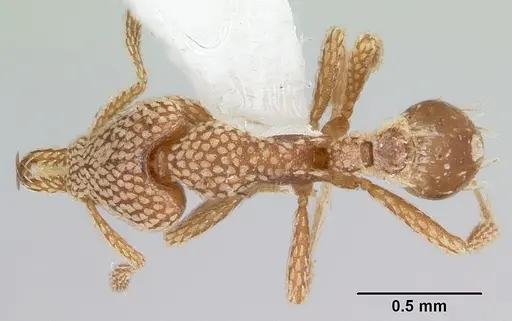
CASENT0435043
View on AntWeb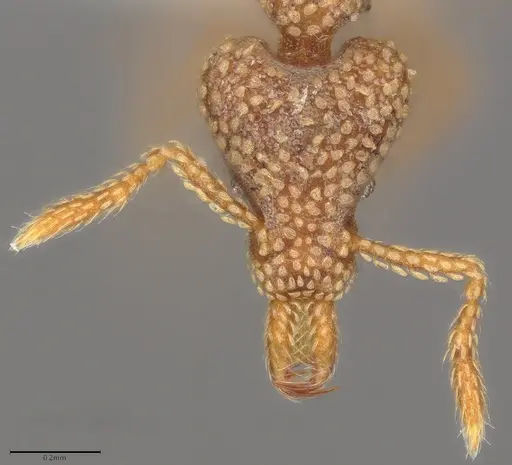
CASENT0909314
View on AntWeb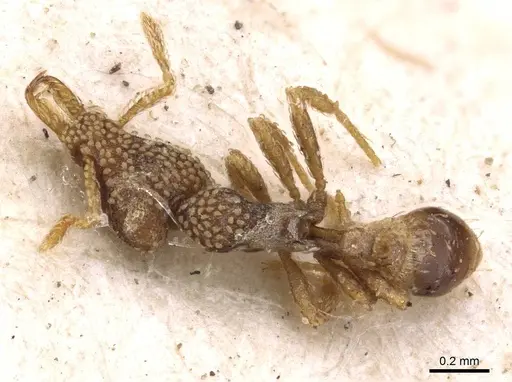
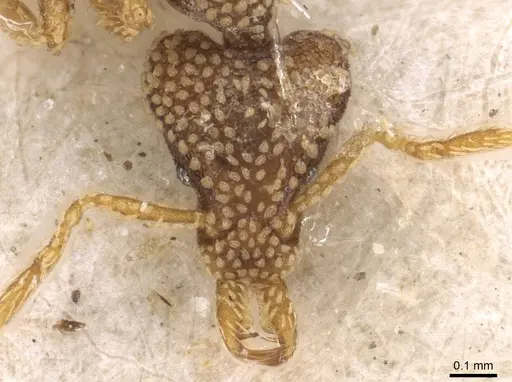
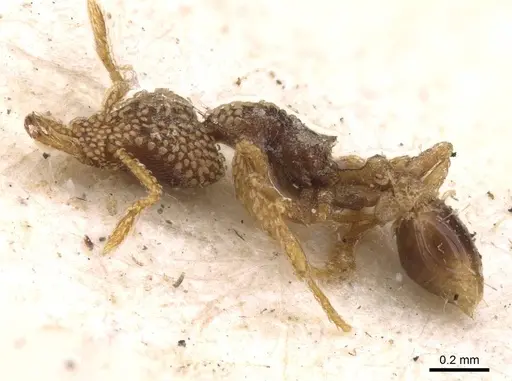
CASENT0916680
View on AntWeb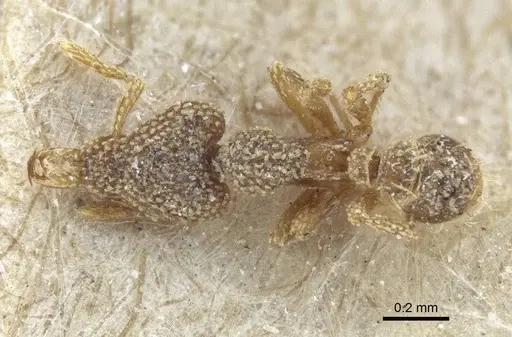
Literature
Loading...Loading products...