

Strumigenys hirsuta
- Scientific Name
- Strumigenys hirsuta
- Tribe
- Attini
- Subfamily
- Myrmicinae
- Author
- Tang <i>et al.</i>, 2019
- Distribution
- Found in 2 countries
Strumigenys hirsuta Overview
Strumigenys hirsuta is an ant species of the genus Strumigenys. It is primarily documented in 2 countries , including China, Hong Kong. Detailed taxonomic data and occurrence records can be further explored via authoritative databases such as AntWeb or the Global Biodiversity Information Facility (GBIF).
Strumigenys hirsuta
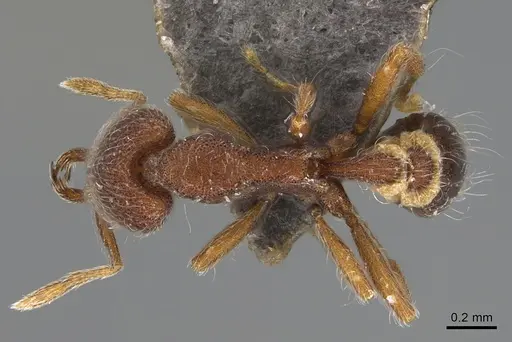
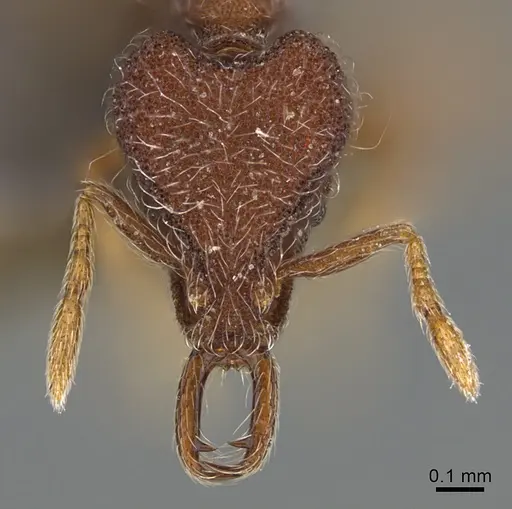
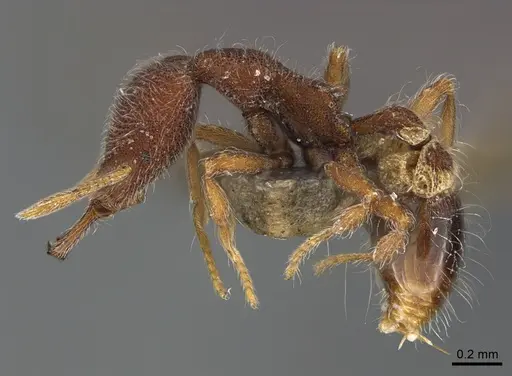
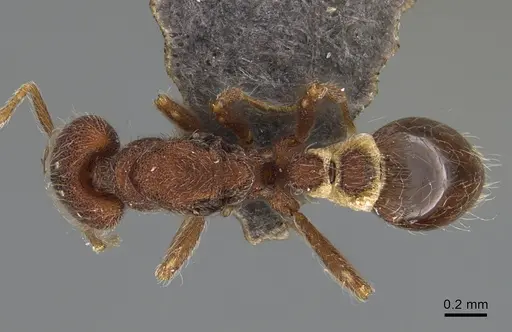
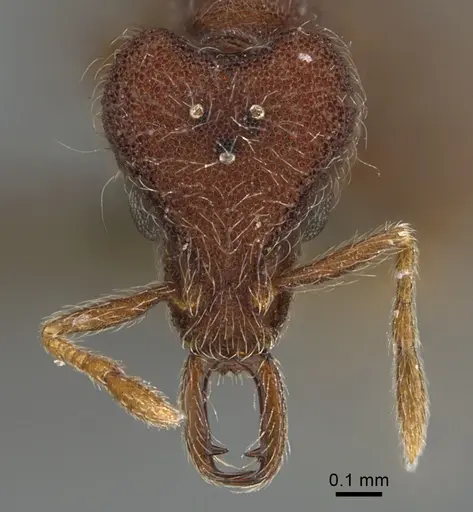
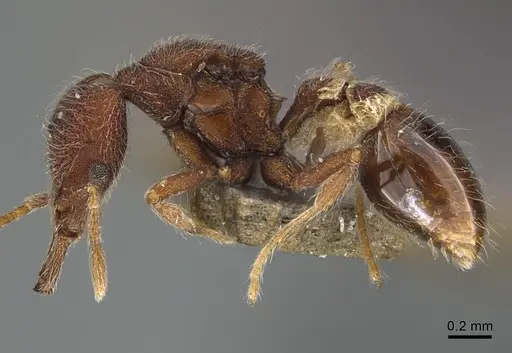
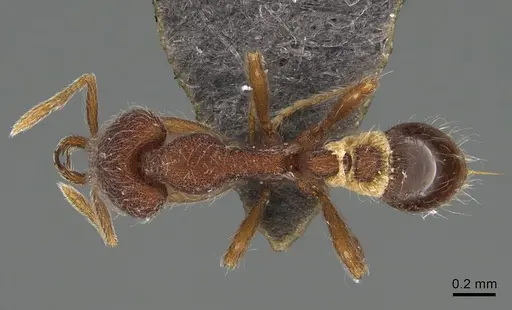
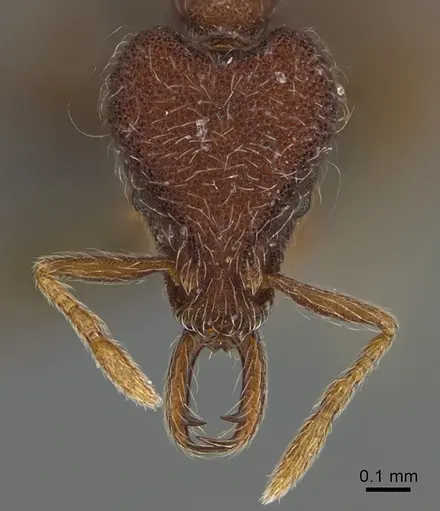
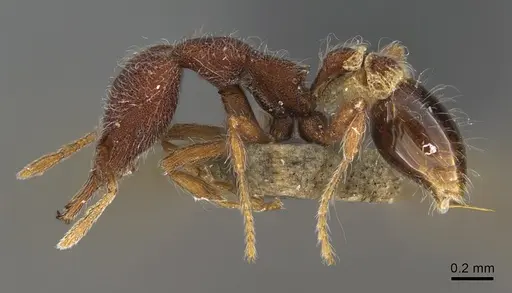
Strumigenys hirsuta is a tiny predatory ant species native to Hong Kong and southern China, recently described in 2019. Workers measure just 2.9-3.1mm in total length, making them one of the smaller ant species you'll encounter [1]. They belong to the caniophanes species group within Strumigenys, characterized by their unusually long, slender mandibles adapted for capturing small prey. The species gets its name 'hirsuta' (meaning hairy) from the multiple standing and convoluted hairs covering most of its body [1]. These ants have a distinctive appearance with a densely reticulate-punctate head and mesosoma, and notably short antennal scapes (SI 61-63) compared to related species [1].
These ants are predators, specializing in hunting tiny soil arthropods like springtails and mites. They inhabit disturbed secondary forests and forest remnants across Hong Kong, from sea level up to 459m elevation [1][2]. The species was thought to be endemic to Hong Kong, but specimens have since been found in Hainan province, suggesting their range extends further into southern China [2][3]. Queens are slightly larger at 3.6mm and were caught in malaise traps during June, indicating nuptial flights occur in early summer [1].
Quick Summary
- Difficulty: Medium
- Origin & Habitat: Hong Kong and southern China (Guangdong, Hainan). Found in disturbed secondary forests and forest remnants at elevations from 1-459m [1][2][3].
- Colony Type: Likely monogyne (single queen colonies) based on typical Strumigenys behavior. Colony size is small, likely under 200 workers based on related species.
- Colony: Monogyne
- Founding: Claustral
- Size & Growth:
- Queen: 3.6mm total length (HL 0.78mm, HW 0.59mm) [1]
- Worker: 2.9-3.1mm total length (HL 0.71-0.74mm, HW 0.53-0.55mm) [1]
- Colony: Likely under 200 workers based on typical Strumigenys colony sizes
- Growth: Slow, Strumigenys are slow-growing ants that produce few workers at a time
- Development: Estimated 8-12 weeks at optimal temperature based on genus-level data for related species (Development is slow, colonies remain small even when established. Temperature dependency is not specifically studied for this species.)
- Antkeeping:
- Temperature: Keep at 22-26°C. These are warm-climate ants from subtropical Hong Kong. A gentle gradient with a heating cable on one side of the nest works well [1].
- Humidity: High humidity required, aim for 70-85%. These forest floor ants need moist substrate. Keep the nest substrate consistently damp but not waterlogged.
- Diapause: Likely minimal or none. As a subtropical species from Hong Kong, they may not require a true hibernation but may slow down slightly in cooler months.
- Nesting: Y-tong (AAC) nests or plaster nests work well. They prefer tight chambers scaled to their tiny size. Naturalistic setups with moist soil and leaf litter mimic their natural forest floor habitat.
- Behavior: Strumigenys are specialized predators using their long trap-jaw mandibles to capture tiny prey. They are not aggressive toward larger threats and will typically flee or hide. Escape prevention is critical due to their very small size, they can squeeze through tiny gaps. Workers are active foragers on the nest surface, hunting for springtails, mites, and other micro-arthropods. They are not sugar feeders, protein is their primary food source.
- Common Issues: escape prevention is critical, their tiny size means they can squeeze through standard barrier gaps, slow growth can frustrate keepers expecting rapid colony development, protein-only diet means you must maintain a constant supply of live prey, high humidity requirements can lead to mold issues if ventilation is poor, wild-caught colonies may carry parasites that can devastate captive colonies
Housing and Nest Setup
Strumigenys hirsuta requires careful housing due to their tiny size. Y-tong (AAC) nests work exceptionally well because they provide tight chambers that prevent escapes while allowing you to easily monitor the colony [1]. Plaster or acrylic nests are also suitable options. The key is chambers sized appropriately for such small ants, oversized chambers can stress them. For the outworld, use a shallow container with excellent escape prevention. Because workers are only 2.9-3.1mm, standard barrier methods may not work. Apply Fluon or similar escape barriers to all edges, and ensure any ventilation holes are covered with fine mesh (at least 0.5mm or smaller). A naturalistic setup with a layer of moist soil and leaf litter on the outworld gives them hunting opportunities and helps maintain humidity.
Feeding and Diet
Strumigenys hirsuta is an obligate predator and will NOT accept sugar water, honey, or other carbohydrates. Their primary food source is live tiny arthropods. In captivity, they do best with springtails (Collembola) as a staple, these are the perfect size and nutritional balance [1]. Other accepted prey includes: booklice (psocids), fruit flies, tiny mealworms, and other small insects. You can also offer isopods (roly-polys) and millipedes, but these are harder to subdue. Feed small prey items 2-3 times per week, adjusting based on colony size and consumption. Remove uneaten prey after 48 hours to prevent mold. A well-fed colony will have workers with distended abdomens. Do not attempt to feed them larger prey, their specialized mandibles are designed for tiny prey, not large insects.
Temperature and Humidity
These subtropical ants from Hong Kong need warm, humid conditions. Maintain temperatures between 22-26°C (72-79°F) for optimal colony health and brood development [1]. A heating cable on one side of the nest creates a temperature gradient, allowing ants to self-regulate. Place the heating cable on TOP of the nest, not underneath, to prevent drying out the substrate. Humidity should remain high at 70-85%. The nest substrate should feel consistently moist but never waterlogged. Check regularly and rehydrate when the surface begins drying. In dry environments, you may need to mist the outworld occasionally or use a water reservoir. Good ventilation is essential to prevent mold, but avoid excessive airflow that dries the nest.
Colony Development and Growth
Strumigenys colonies grow slowly compared to many common ant species. A newly mated queen will seal herself in a small chamber and raise her first nanitic workers alone, living off her stored fat reserves (claustral founding) [1]. The first workers may take 2-3 months to emerge, and the colony will remain small, typically under 200 workers even at maturity. Queens measure 3.6mm while workers are only 2.9-3.1mm, so the size difference is noticeable but not extreme. Nuptial flights occur in June based on malaise trap captures in Hong Kong [1]. If you're establishing a colony from a wild-caught queen, expect slow growth and be patient. Do not overfeed, excess prey can mold and harm the colony. Once established, maintain consistent care conditions rather than making frequent changes.
Behavior and Temperament
Strumigenys hirsuta is a calm, non-aggressive species that avoids confrontation. When threatened, workers will flee and hide rather than fight. They are active hunters, patrolling the nest and outworld in search of tiny prey. Their most notable behavior is their specialized hunting technique, they use their long, slender mandibles to quickly snap shut on small arthropods like springtails [1]. Workers are not territorial or defensive of the nest entrance. They do not tend aphids or collect honeydew. Due to their tiny size, they have poor climbing ability on smooth surfaces, but they can still escape through remarkably small gaps. Always use excellent escape prevention. They are not dangerous to humans and cannot sting.
Frequently Asked Questions
Can I keep Strumigenys hirsuta in a test tube?
Test tubes can work for founding colonies but are not ideal long-term. The small chamber size is actually beneficial for their tiny size, but test tubes dry out quickly and make feeding difficult. A Y-tong (AAC) nest or small plaster nest is a better choice for established colonies. If using test tubes, ensure excellent escape prevention and monitor humidity closely.
What do Strumigenys hirsuta ants eat?
They are obligate predators that eat only live tiny arthropods. Their primary food should be springtails (Collembola). Other accepted prey includes booklice, fruit flies, tiny mealworms, and other small insects. They will NOT eat sugar water, honey, fruits, or seeds. Protein is their only food source.
How long does it take for Strumigenys hirsuta to produce first workers?
Based on typical Strumigenys development, expect 8-12 weeks from egg to first worker at optimal temperature (22-26°C). Development is slow, and colonies remain small even when established. Patience is essential with this species.
Are Strumigenys hirsuta good for beginners?
No, this species is not recommended for beginners. Their tiny size makes escape prevention difficult, they require a constant supply of live prey (not easy to maintain), and they need high humidity. They are also slow-growing, which can be frustrating. Experience with ant keeping first is strongly recommended.
How big do Strumigenys hirsuta colonies get?
Colony size remains small, likely under 200 workers at maturity based on typical Strumigenys colony sizes. This is a small-colony species that will never produce massive numbers of workers.
Do Strumigenys hirsuta need hibernation?
Likely no true hibernation required. As a subtropical species from Hong Kong, they may slow down slightly in cooler months but do not need a cold diapause period. Maintain temperatures year-round if possible.
Why are my Strumigenys hirsuta dying?
Common causes include: escape (check for tiny gaps), starvation (are you feeding enough live prey?), low humidity (substrate should be moist), mold (improve ventilation), or parasites from wild-caught colonies. Review each parameter and make incremental adjustments.
When should I move Strumigenys hirsuta to a formicarium?
Wait until the colony has at least 15-20 workers before moving to a formicarium. Founding colonies do well in test tubes or small setups. Moving too early stresses the colony. Once established, Y-tong or plaster nests work well.
Can I keep multiple Strumigenys hirsuta queens together?
Not recommended. While colony structure is likely monogyne, combining unrelated queens has not been studied for this species. It's best to keep one queen per colony.
References

This caresheet is licensed under CC BY-SA 4.0 .
Literature
Loading...Loading products...