

Strumigenys gemella
- Scientific Name
- Strumigenys gemella
- Tribe
- Attini
- Subfamily
- Myrmicinae
- Author
- Kempf, 1975
- Distribution
- Found in 1 countries
Strumigenys gemella Overview
Strumigenys gemella is an ant species of the genus Strumigenys. It is primarily documented in 1 countries , including Colombia. Detailed taxonomic data and occurrence records can be further explored via authoritative databases such as AntWeb or the Global Biodiversity Information Facility (GBIF).
Strumigenys gemella
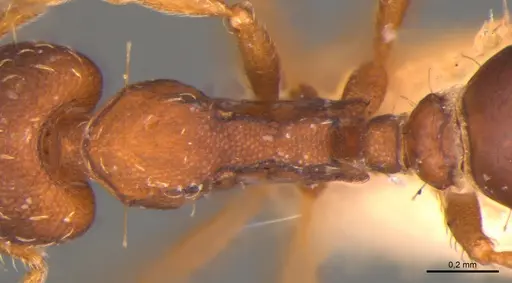
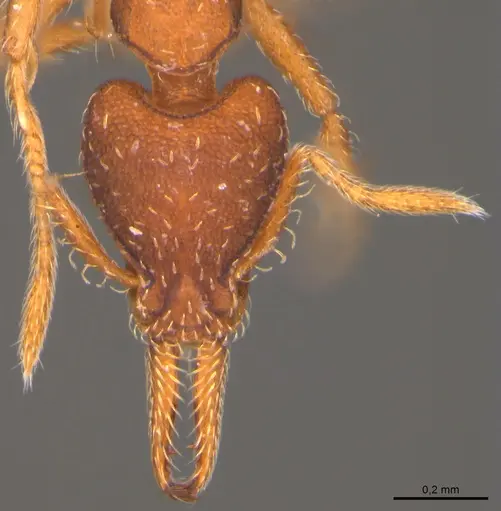
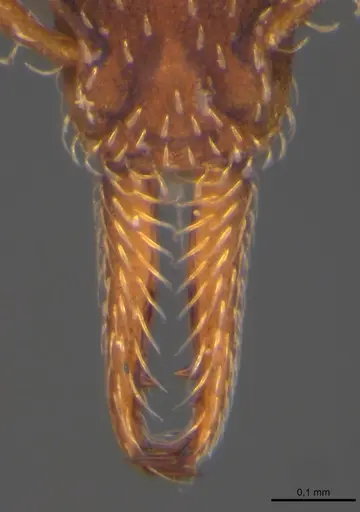
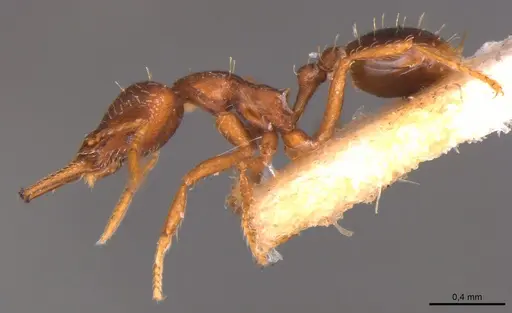
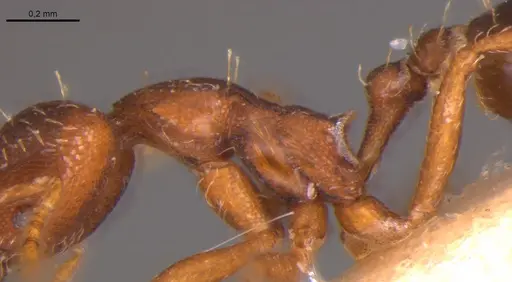
Strumigenys gemella is a tiny predatory ant measuring just 2.6-2.8mm in total length. Workers have the characteristic elongated mandibles typical of the Dacetini tribe, with three preapical teeth and specialized spongiform tissues on the gaster. This species belongs to the gundlachi complex within the Strumigenys gundlachi group, and is closely related to Strumigenys laevipleura. The head has two pairs of filiform hairs on the dorsal surface, and the antennae have six segments [1].
This ant is known only from the cloud forests of Colombia's western Andes, specifically the Pichinde Valley southwest of Cali at 1570m elevation, as well as Quindío and Risaralda departments [2][1]. They nest in rotting wood within primary rain forest habitats [3]. Like other Strumigenys, they are specialized predators of tiny arthropods, using their trap-jaw mandibles to capture springtails and other micro-prey. The biology of this species remains largely unstudied, making specific care requirements uncertain.
Quick Summary
- Difficulty: Hard
- Origin & Habitat: Cloud forests of Colombia's western Andes (Valle del Cauca, Quindío, Risaralda) at 1570m elevation, nesting in rotting wood within primary rain forest [2][1][3].
- Colony Type: Unknown colony structure. Based on genus patterns, likely single-queen colonies with small worker populations.
- Size & Growth:
- Queen: Undescribed, estimated 3-4mm based on genus patterns
- Worker: 2.6-2.8mm
- Colony: Unknown, likely under 100 workers based on typical Strumigenys colony sizes
- Growth: Unknown, likely slow based on genus patterns
- Development: Unknown, estimated 6-10 weeks based on related Dacetini species at optimal temperature (No specific development data exists for this species. Estimates based on typical Dacetini development patterns.)
- Antkeeping:
- Temperature: Unknown, start around 22-25°C and observe colony activity. As a Colombian cloud forest species, they likely prefer warm, stable conditions with moderate humidity [2].
- Humidity: High humidity required, think damp forest floor. Keep the nest substrate consistently moist but not waterlogged. Provide a gradient with slightly drier areas available.
- Diapause: Unknown, as a tropical species from highland Colombia, they may not require true hibernation but may have reduced activity during cooler periods.
- Nesting: Natural nesting in rotting wood suggests Y-tong or plaster nests work well. The tiny colony size means small nest chambers are appropriate. Provide damp substrate.
- Behavior: Very small predatory ants with specialized trap-jaw mandibles. They hunt springtails and other tiny arthropods. Workers are likely docile toward colony members but will defend against intruders. Escape prevention is critical due to their tiny 2.6-2.8mm size, they can squeeze through extremely small gaps. Activity level unknown but likely moderate.
- Common Issues: escape prevention is critical due to tiny 2.6-2.8mm size, they squeeze through the tiniest gaps, no specific development data exists, growth may be unpredictable, humidity requirements are uncertain, start with high humidity and adjust based on colony health, prey acceptance is unknown, may require live springtails or similar micro-prey, very small colony size means losses have greater impact on colony survival
Housing and Nest Setup
Strumigenys gemella is an extremely small ant requiring carefully designed housing. Use a Y-tong (AAC) nest or plaster nest with very small chambers scaled to their tiny 2.6-2.8mm size. The natural nesting preference in rotting wood suggests a damp, naturalistic setup with small cavities works well [3]. Escape prevention must be excellent, these tiny ants can squeeze through gaps that larger species cannot. Use fine mesh on any ventilation holes and ensure all connections are sealed. A small outworld connected to the nest allows for feeding while containing the colony.
Feeding and Diet
Like other Strumigenys species, S. gemella is a specialized predator of tiny arthropods. Their elongated mandibles with trap-jaw mechanism are designed for capturing small prey like springtails, tiny beetles, and other micro-arthropods [1]. In captivity, live springtails should be the primary food source. Other small live prey such as fruit fly larvae, tiny isopods, or psyllids may be accepted. Sugar sources are unlikely to be accepted, these are obligate predators. Feed small amounts of live prey every few days, removing uneaten prey to prevent mold. Do not expect them to accept honey or sugar water.
Temperature and Care
As a species from Colombia's cloud forests at 1570m elevation, Strumigenys gemella likely prefers warm, humid conditions with stable temperatures [2]. Start around 22-25°C and monitor colony behavior, if workers become sluggish, slightly increase temperature, if they avoid the heated area, reduce it. High humidity is essential, aim for 70-85% relative humidity within the nest. Use a water reservoir or regular misting to maintain moisture in the substrate. Avoid both drying out the nest and allowing stagnant, mold-promoting conditions. Adequate ventilation while maintaining humidity is key.
Colony Dynamics and Growth
The colony structure of Strumigenys gemella has not been documented in scientific literature. Based on typical Strumigenys patterns, colonies likely start with a single claustral queen who seals herself in and raises the first workers alone on stored fat reserves. Colony size is unknown but likely remains small, probably under 100 workers even at maturity. Growth is likely slow compared to larger ant species. The first workers (nanitics) will be smaller than mature workers. Be patient with this species, small colonies take time to develop, and losses have significant impact on overall colony survival.
Handling and Temperament
Strumigenys gemella workers are tiny and docile toward humans, they cannot sting and pose no danger. Their primary defense is escape rather than aggression. However, their small size makes them expert escape artists. When handling the nest or connecting tubes, work over a white surface to spot any escaped workers. These ants are not aggressive and will not defend territory aggressively. They are best observed rather than handled directly. Their fascinating trap-jaw mandible behavior can be observed when hunting live prey.
Frequently Asked Questions
How long does it take for Strumigenys gemella to produce first workers?
The exact development timeline is unknown for this species. Based on typical Dacetini development patterns, expect 6-10 weeks from egg to first worker at optimal temperature (around 22-25°C). Growth is likely slow, and colonies will remain small even after reaching maturity.
What do Strumigenys gemella ants eat?
Strumigenys gemella is a specialized predator that requires live tiny arthropods. Feed live springtails as a primary food source. Other small live prey such as fruit fly larvae, tiny isopods, or psyllids may be accepted. They are unlikely to accept sugar sources, honey, or dead prey, they need the movement of live prey to trigger their hunting response.
Can I keep Strumigenys gemella in a test tube setup?
A test tube setup can work for founding colonies, but due to their tiny 2.6-2.8mm size and need for high humidity, a small Y-tong or plaster nest with a water reservoir is more practical for long-term housing. If using test tubes, ensure excellent escape prevention with fine mesh barriers.
How big do Strumigenys gemella colonies get?
Colony size is unknown but likely remains small, probably under 100 workers at maturity based on typical Strumigenys colony sizes. This is a tiny ant species with specialized predatory habits, and large colonies are not typical for this genus.
Are Strumigenys gemella good for beginners?
No, this species is not recommended for beginners. Their care requirements are poorly documented, they require specialized live prey (springtails), their tiny size makes escape prevention challenging, and colony growth is likely slow. They are best suited for experienced antkeepers who can provide the specific conditions this species likely needs.
Do Strumigenys gemella need hibernation?
Hibernation requirements are unknown for this species. As a tropical cloud forest species from Colombia, they likely do not require true hibernation. However, they may have reduced activity during cooler periods. Monitor your colony and reduce feeding if activity decreases significantly.
Why are my Strumigenys gemella dying?
Potential causes include: incorrect humidity (too dry or too wet), lack of appropriate live prey, temperature stress, escape of workers, or disease. Start by ensuring high humidity, providing live springtails, and checking for escape routes. The biology of this species is poorly understood, so careful observation and adjustment of conditions is essential.
When should I move Strumigenys gemella to a formicarium?
Move to a proper nest (Y-tong or plaster) when the colony reaches 10-20 workers and the test tube setup becomes difficult to maintain. Ensure the new nest provides appropriate humidity and small chambers scaled to their tiny size. Always have escape prevention ready when transferring.
Can I keep multiple Strumigenys gemella queens together?
This has not been documented. Based on typical Strumigenys patterns, single-queen colonies are most likely. Combining unrelated queens is not recommended unless you have specific evidence that this species accepts multiple queens.
References

This caresheet is licensed under CC BY-SA 4.0 .
MZSP89416
View on AntWeb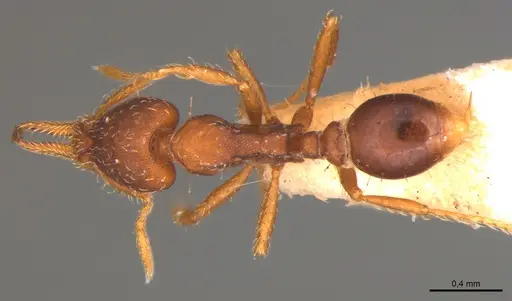
Literature
Loading...Loading products...