

Strumigenys frivola
- Scientific Name
- Strumigenys frivola
- Tribe
- Attini
- Subfamily
- Myrmicinae
- Author
- Bolton, 2000
- Distribution
- Found in 1 countries
Strumigenys frivola Overview
Strumigenys frivola is an ant species of the genus Strumigenys. It is primarily documented in 1 countries , including Fiji. Detailed taxonomic data and occurrence records can be further explored via authoritative databases such as AntWeb or the Global Biodiversity Information Facility (GBIF).
Strumigenys frivola
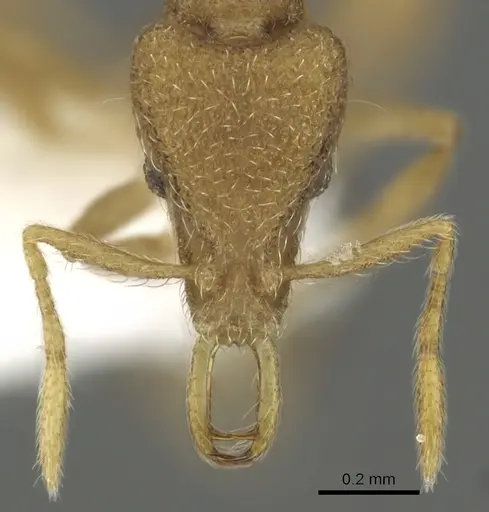
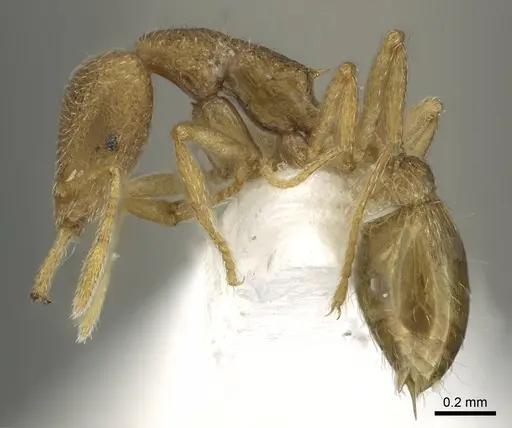
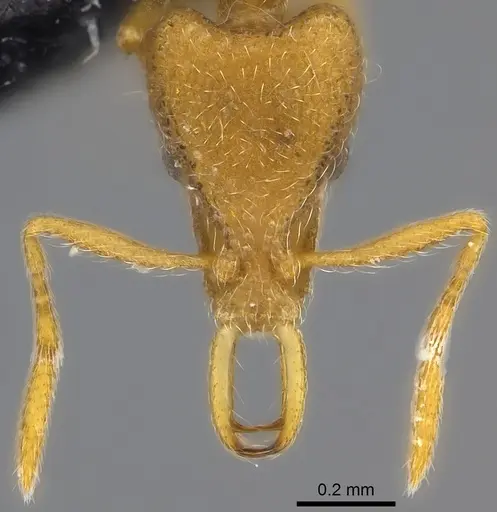
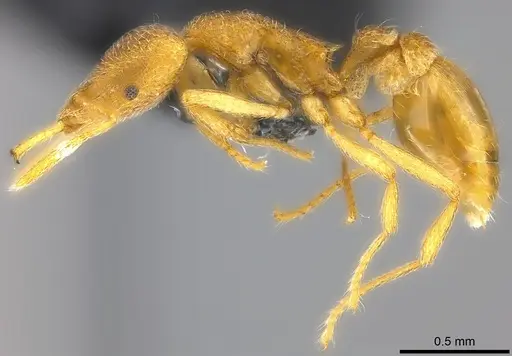
Strumigenys frivola is a tiny trap-jaw ant endemic to Fiji, measuring just 2.5mm in total length [1][2]. Workers are an opaque yellow-brown color with distinctive punctate sculpture and short recumbent pilosity covering their head, most of the mesosoma, and both waist segments [3][1]. The species has notably long mandibles and conspicuous basigastral costulae (groove-like markings on the gaster) that are longer than the postpetiole disc [3][1]. The propodeum lacks lamellae, which helps distinguish it from similar species [3][1]. This ant belongs to the Dacetini tribe, known for their specialized trap-jaw mandibles capable of snapping shut at extreme speeds to capture prey.
This species is apparently quite rare, known only from the type locality at Nadarivatu on Viti Levu at 850m elevation, a nest collection from nearby Mt. Tomanivi, and a fogging sample at the Monasavu Dam area [3][1][2]. It is a lowland forest species endemic to Fiji [4]. The closest relatives may be other Fijian endemics like Strumigenys ekasura and Strumigenys panaulax, though its exact taxonomic placement remains uncertain [5].
Quick Summary
- Difficulty: Expert
- Origin & Habitat: Endemic to Fiji, specifically found only on Viti Levu island in lowland forest habitats [6][7][4]. The type locality at Nadarivatu sits at 850m elevation in the mountainous interior of Viti Levu [2].
- Colony Type: Unknown. Colony structure has not been documented in the scientific literature. Based on typical Strumigenys patterns, colonies likely contain a single queen (monogyne) and remain relatively small.
- Size & Growth:
- Queen: Undescribed, queen size not documented in scientific literature
- Worker: 2.5mm total length, with head width 0.43-0.44mm [1][2]
- Colony: Unknown, only a few specimens have ever been collected [3][1]
- Growth: Unknown, no captive breeding data exists
- Development: Unknown, no development data available for this species. Based on related Strumigenys species, expect 6-10 weeks at optimal temperature. (No direct data exists. Development times inferred from genus-level patterns for Strumigenys.)
- Antkeeping:
- Temperature: Keep at 24-28°C, these are tropical ants from Fiji and require warm conditions. A gentle gradient allowing workers to self-regulate is ideal.
- Humidity: High humidity required, think damp forest floor. Keep nest substrate consistently moist but not waterlogged. Fiji's climate is humid tropical.
- Diapause: No, this is a tropical species from an island with no cold season. They do not require hibernation or winter rest.
- Nesting: In nature they likely nest in rotting wood, leaf litter, or soil in lowland forest. In captivity, a naturalistic setup with moist substrate or a well-humidified acrylic/plaster nest works well.
- Behavior: Strumigenys are specialized predators with trap-jaw mandibles designed to capture small prey like springtails and other micro-arthropods. They are likely slow-moving but capable of extremely fast strikes when prey is detected. Workers are small (2.5mm) meaning escape prevention must be excellent, they can squeeze through tiny gaps. Temperament is likely docile toward colony members but predatory toward live prey. As a Fijian endemic with very limited range, this species has never been kept in captivity to our knowledge.
- Common Issues: extreme rarity makes obtaining this species nearly impossible, no captive breeding data exists, keeping success is entirely speculative, tiny size means excellent escape prevention is essential, specialized diet may be difficult to provide in captivity, as a tropical species, temperature and humidity must be carefully maintained
Identification and Appearance
Strumigenys frivola workers are tiny at just 2.5mm total length, making them one of the smaller ant species you could keep [1][2]. They are an opaque yellow-brown color with distinctive punctate (tiny pit-like) sculpture covering their body [3][1]. Short recumbent (lying flat) hairs cover the head, most of the mesosoma (middle body section), and both waist segments (petiole and postpetiole) [3][1]. The most distinctive features are the long mandibles and the conspicuous basigastral costulae, groove-like markings on the first gastral segment that are notably longer than the postpetiole disc [3][1]. The propodeum (rear portion of the mesosoma) lacks lamellae (flattened ridges), which helps distinguish it from similar species [3][1]. The apicoscrobal hair (near the scrobe) and pronotal humeral hair are short and flagellate (hair-like) rather than simple [1]. Only the humeral hairs on the pronotum stand erect, other similar species have additional erect hairs on the pronotal dorsum [1].
Distribution and Rarity
This species is endemic to Fiji, found only on the island of Viti Levu [6][7]. It is apparently quite rare, only a handful of specimens have ever been collected in the wild [3][1]. The original type specimens came from Nadarivatu Reserve at 850m elevation, collected in July 1987 from trees and logs using pyrethrum fogging [2]. Additional specimens were collected from a nest at nearby Mt. Tomanivi and from a fogging sample at the Monasavu Dam area [3][1][2]. All known locations are in the mountainous interior of Viti Levu at moderate elevations. This extremely limited distribution makes the species a poor candidate for acquisition, even if legal to obtain, virtually no specimens exist in antkeeping collections.
Trap-Jaw Biology and Hunting
Strumigenys belongs to the tribe Dacetini, commonly called trap-jaw ants due to their specialized mandibles [5]. These ants have elongated mandibles with snap-trap mechanisms capable of closing at extreme speeds, among the fastest animal movements known. They use this to capture small prey, primarily springtails (Collembola) and other micro-arthropods [5]. The long mandibles with inner teeth allow them to securely grasp and immobilize prey too large for their tiny body size. In captivity, you would need to provide a diet of live springtails, tiny isopods, or other small arthropods. Sugar sources are unlikely to be accepted, these are obligate predators. This specialized diet makes them challenging to keep even for experienced antkeepers.
Housing and Care
Since no captive care data exists for this species, recommendations must be inferred from related Strumigenys and general antkeeping principles. Use a well-humidified nest, either a naturalistic setup with moist substrate or a plaster/acrylic formicarium with a water reservoir. Keep temperatures in the 24-28°C range, consistent with Fiji's tropical climate. Humidity should be high, think damp forest floor conditions. Escape prevention is critical due to their tiny 2.5mm size, use fine mesh and tight-fitting barriers. Feeding would require live small prey items like springtails, which are their natural diet. This is a species for expert keepers only, and realistically, one that is essentially unavailable to the antkeeping hobby due to its extreme rarity and restricted range.
Conservation and Legal Considerations
Strumigenys frivola is endemic to Fiji and known from only a handful of specimens [3][1]. As an island endemic with a very restricted range, it may face conservation concerns in the wild, though its exact conservation status has not been evaluated. Importantly, this species has never been documented in the antkeeping hobby, there are no captive colonies. Any acquisition would require specimens collected from the wild in Fiji, which raises significant ethical and potentially legal concerns. Fiji likely has its own wildlife protection regulations. This species should be considered a museum piece and observation subject in scientific literature rather than a candidate for captive keeping.
Frequently Asked Questions
Can I keep Strumigenys frivola ants in captivity?
This is not recommended and likely not possible. The species is extremely rare, only a handful of specimens have ever been collected in the wild from Fiji [3][1]. There is no captive breeding history, no care information exists, and obtaining specimens would require collection from the wild in a protected area. This is a species for scientific study rather than antkeeping.
What do Strumigenys frivola ants eat?
Based on typical Strumigenys biology, they are specialized predators that hunt small arthropods like springtails using their trap-jaw mandibles [5]. They are unlikely to accept sugar sources. In captivity, you would need to provide a constant supply of live springtails or other tiny live prey, which is extremely challenging to maintain long-term.
How big do Strumigenys frivola colonies get?
Unknown, colony size has never been documented. Based on the tiny size of workers (2.5mm) and the few specimens ever collected, colonies are likely small, possibly under 100 workers [3][1]. Related Strumigenys species typically maintain modest colony sizes.
What temperature do Strumigenys frivola ants need?
As a tropical species from Fiji, keep them warm at 24-28°C. Fiji has a humid tropical climate with year-round warmth, so these ants do not tolerate cool temperatures. A heating gradient allowing workers to self-regulate is ideal.
Are Strumigenys frivola good for beginners?
No, this species is absolutely not suitable for beginners or even intermediate antkeepers. It has never been kept in captivity, no care information exists, it is extremely rare in the wild, and has highly specialized dietary requirements. This is an expert-only species at best, and realistically one that should not be targeted by antkeepers.
Where does Strumigenys frivola live?
This species is endemic to Fiji, found only on the island of Viti Levu in lowland forest habitats [6][7][4]. All known specimens come from the mountainous interior around Nadarivatu, Mt. Tomanivi, and Monasavu Dam area at elevations between 850m and higher [3][1][2].
Do Strumigenys frivola ants need hibernation?
No, this is a tropical species from Fiji, which has no cold season. They do not require diapause or hibernation. Keep them warm year-round at 24-28°C.
How do I identify Strumigenys frivola?
Workers are tiny (2.5mm) with an opaque yellow-brown color and distinctive punctate sculpture [3][1]. Key identifying features include long mandibles, conspicuous basigastral costulae longer than the postpetiole, and propodeum lacking lamellae [3][1]. Only the humeral hairs stand erect on the pronotum, other similar species have additional erect hairs [1].
Can I find Strumigenys frivola in the United States?
No. This is a Fijian endemic species found only on Viti Levu island in Fiji [6][7]. It has never been documented in North America or anywhere outside its limited range in Fiji. It is not available in the antkeeping hobby.
References

This caresheet is licensed under CC BY-SA 4.0 .
CASENT0013150
View on AntWeb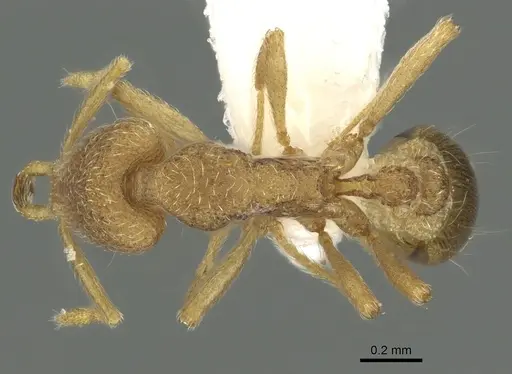
CASENT0186989
View on AntWeb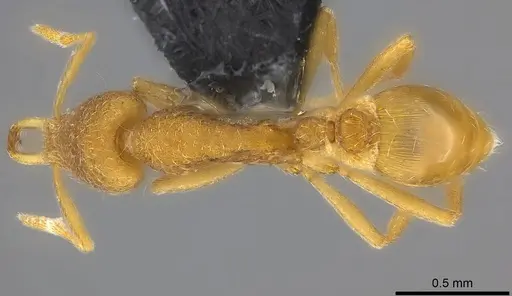
Literature
Loading...Loading products...