

Strumigenys friedae
- Scientific Name
- Strumigenys friedae
- Tribe
- Attini
- Subfamily
- Myrmicinae
- Author
- Forel, 1915
- Distribution
- Found in 1 countries
Strumigenys friedae Overview
Strumigenys friedae is an ant species of the genus Strumigenys. It is primarily documented in 1 countries , including Australia. Detailed taxonomic data and occurrence records can be further explored via authoritative databases such as AntWeb or the Global Biodiversity Information Facility (GBIF).
Strumigenys friedae
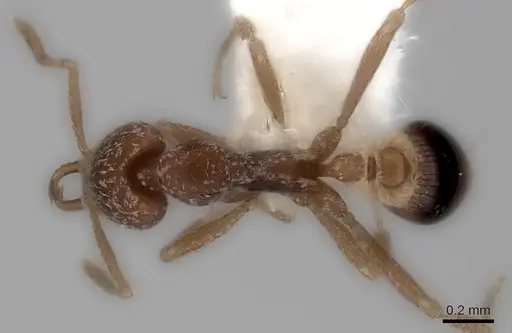
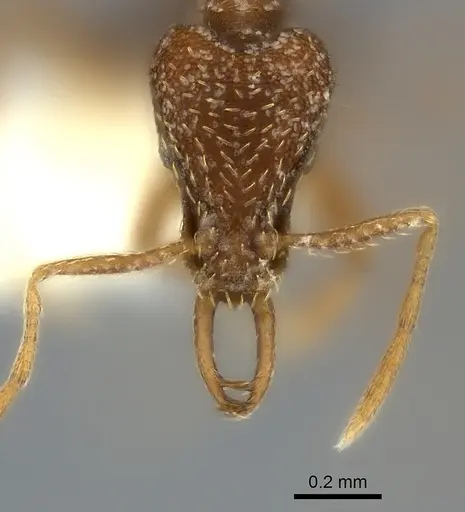
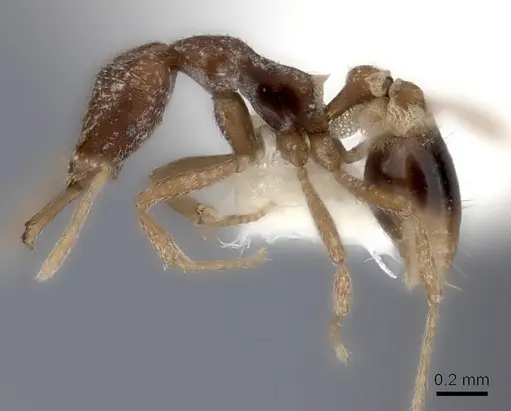
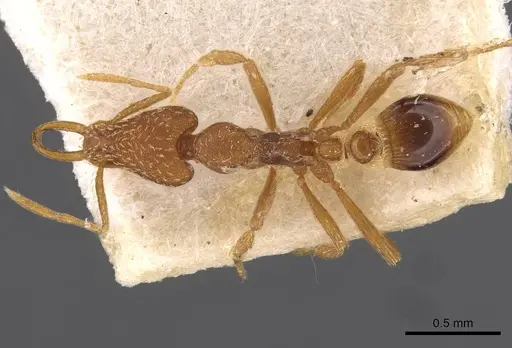
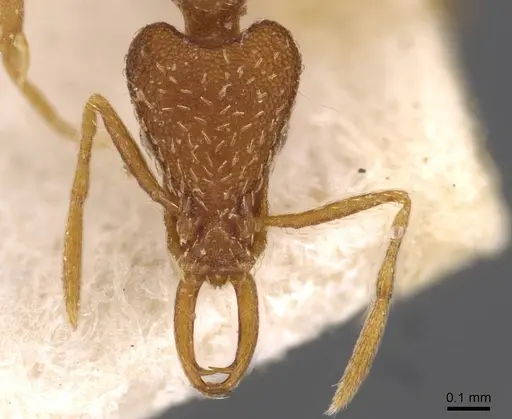
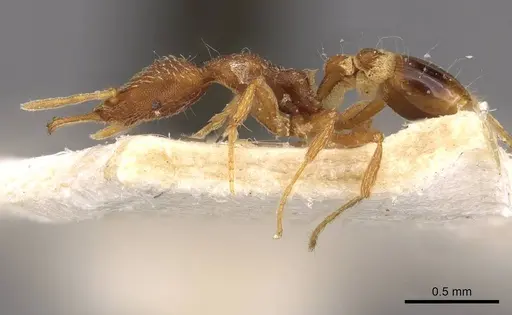
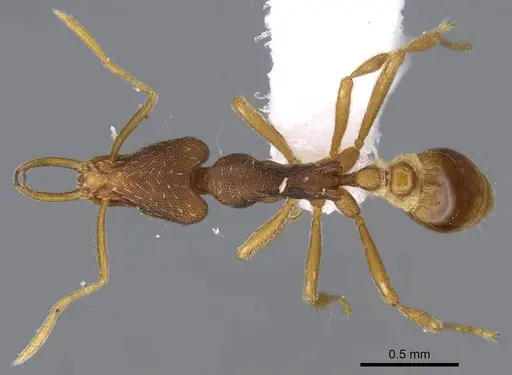
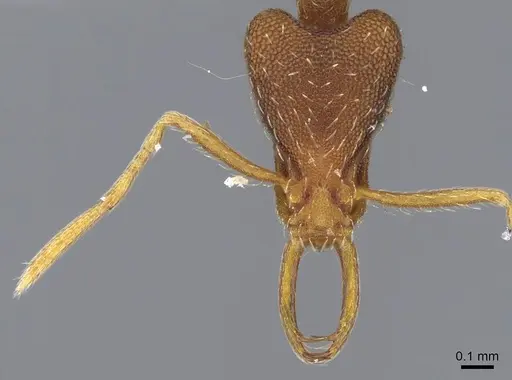
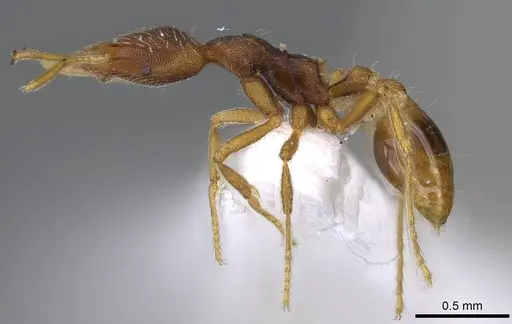
Strumigenys friedae is a tiny trap-jaw ant species native to northern Australia's humid tropical regions. These ants are part of the cryptic functional group, they're small, slow-moving, and spend most of their time hidden in leaf litter, under stones, and in rotting wood [1]. Workers measure just 2-3mm and have the characteristic trap-jaw mandibles that give Strumigenys their common name. Their pale coloration and small size make them easy to overlook in the wild, but their unique hunting mechanism makes them fascinating to watch in captivity.
What makes Strumigenys special is their snap-jaw hunting strategy. They don't chase prey like typical ants, instead, they wait in ambush and use their specialized mandibles to strike at incredible speed. This species is part of the Torresian biogeographic region, meaning it's adapted to the warm, humid conditions of northern Australia and nearby areas [1]. They're specialized predators that hunt tiny soil arthropods like springtails and mites.
Quick Summary
- Difficulty: Medium/Hard
- Origin & Habitat: Northern Australia (Torresian region), humid tropical forests, leaf litter, under stones, and rotting wood [1]
- Colony Type: Likely single-queen colonies (monogyne), though colony structure is not well documented for this specific species
- Colony: Monogyne
- Founding: Claustral
- Size & Growth:
- Queen: Estimated 3-4mm, typical for Strumigenys genus
- Worker: 2-3mm [1]
- Colony: Likely small colonies, Strumigenys typically have under 100 workers
- Growth: Slow, specialized predators tend to grow slowly
- Development: Estimated 8-12 weeks at optimal temperature, based on typical Strumigenys development patterns (Development is likely slow due to their specialized predatory lifestyle and small colony size)
- Antkeeping:
- Temperature: Keep at 24-28°C, they come from warm tropical habitats and need consistent warmth
- Humidity: High humidity (70-85%), these are leaf-litter ants that need moist substrate conditions
- Diapause: Unlikely, as tropical ants, they probably don't require a true diapause but may slow down during cooler periods
- Nesting: Prefer naturalistic setups with moist substrate, small chambers, and plenty of hiding spaces. Y-tong nests or plaster nests with small chambers work well. They need tight-fitting chambers scaled to their tiny size.
- Behavior: These ants are completely non-aggressive and will flee rather than fight. Their trap-jaw mechanism is for hunting tiny prey, not defending against threats. They're slow-moving and cryptic by nature. Escape prevention is critical, at 2-3mm, they can squeeze through remarkably small gaps. They forage individually rather than in groups, hunting springtails and other micro-arthropods in the substrate.
- Common Issues: escape prevention is critical, their tiny size means they can slip through standard barrier setups, they require live micro-prey (springtails, tiny mites) which can be difficult to maintain, slow growth and small colony sizes can frustrate beginners, sensitive to drying out, must maintain consistent humidity, wild-caught colonies may carry parasites that can devastate captive colonies
Housing and Nest Setup
Strumigenys friedae needs a setup that recreates their natural leaf-litter microhabitat. A naturalistic terrarium-style setup works best, use a moist substrate layer (coco fiber, peat, or a mix) about 2-3cm deep. Add leaf litter, small pieces of rotting wood, and moss on top to create hiding spots and foraging areas. The substrate should stay consistently moist but not waterlogged.
For the nest chamber itself, Y-tong (AAC) nests with small, tight chambers work well. Plaster nests are another good option as they hold humidity well. Whatever setup you choose, ensure the chambers are appropriately sized, these are tiny ants, so passages and chambers should be small. A small water reservoir connected to the nest helps maintain humidity without flooding.
Escape prevention cannot be emphasized enough. These ants are incredibly small and can squeeze through gaps that seem impossible. Use fluon on test tube rims, ensure all connections are tight, and consider using fine mesh (at least 0.5mm) on any ventilation. Even a tiny gap is an escape route for these determined little ants. [1]
Feeding and Diet
Strumigenys friedae is a specialized predator that requires live micro-prey. Their trap-jaw mandibles are designed to catch tiny, fast-moving arthropods, primarily springtails and tiny mites. This is not a species you can feed just sugar water or protein scraps.
Your primary food source should be live springtails. You can culture your own springtail colony to ensure a constant supply. Other acceptable prey includes tiny house mites, booklice (psocids), and fruit fly babies. Some keepers report success with tiny pieces of mealworm or other small insects, but live prey is always preferred.
Feed small prey items every 2-3 days, offering just enough for the colony to consume within a day. Remove any uneaten prey to prevent mold. Sugar sources are generally not accepted, these are obligate predators. Some colonies may occasionally accept a drop of honey or sugar water, but don't rely on it.
Temperature and Humidity
As tropical ants from northern Australia, Strumigenys friedae needs warm, humid conditions. Keep the temperature in the range of 24-28°C. A heating cable on one side of the setup can create a gentle gradient, but ensure there's a cooler area too so the ants can regulate their temperature. Avoid temperatures below 22°C or above 30°C.
Humidity is critical. These ants come from humid forest floor environments and will quickly decline in dry conditions. Aim for 70-85% humidity in the nest area. You can achieve this by keeping the substrate moist, using a water reservoir, and covering the setup to prevent evaporation. Misting the setup occasionally helps, but avoid creating standing water.
Monitor your colony regularly. If workers are clustering together and seem sluggish, they may be too cold. If they're avoiding the nest area and spending time on the walls, the nest may be too dry. [1]
Behavior and Observation
Watching Strumigenys friedae hunt is the highlight of keeping this species. Unlike typical ants that chase and overwhelm prey, these ants are ambush hunters. A forager will locate a springtail, then wait motionless until the prey is within striking range, then SNAP! Their mandibles can close in milliseconds.
They're not aggressive toward humans and have no functional stinger. If threatened, they'll simply flee or play dead. This makes them completely safe to handle, though there's no reason to handle such small, delicate ants.
Colony activity is relatively low compared to many ants. You won't see massive foraging raids or dramatic territorial behavior. Instead, you'll see patient, methodical hunting. This calm demeanor makes them interesting observation ants, but they're not the species to choose if you want an active, visible colony.
Colony Growth and Development
Strumigenys colonies grow slowly. A newly founded colony might take 6-12 months to reach just 20-30 workers. This slow growth is normal for the genus, they're not trying to build massive colonies quickly. Instead, they invest heavily in each individual.
The first workers (nanitics) will be smaller than mature workers and may have slightly different proportions. As the colony grows, subsequent workers will be larger and more robust. A mature colony might reach 50-100 workers, though some species can grow larger.
Be patient with these ants. The slow growth isn't a sign something is wrong, it's just their strategy. Overfeeding won't speed things up and may actually cause problems by fouling the nest. Consistent care and appropriate prey are what they need.
Frequently Asked Questions
How long does it take for Strumigenys friedae to have first workers?
Expect first workers (nanitics) in about 8-12 weeks after the queen lays eggs, assuming optimal conditions around 26°C. This is a slow process compared to many ants, so be patient. The queen will raise the first brood alone in her sealed chamber.
Can I keep Strumigenys friedae in a test tube?
Test tubes can work for founding colonies, but you'll need to add a small hunting area with springtails. The tube must be kept humid and warm. Most keepers transfer to a small naturalistic setup once the colony reaches 10+ workers.
What do Strumigenys friedae eat?
They eat live micro-prey, primarily springtails and tiny mites. This is an obligate predator that requires live food. You cannot feed them just protein scraps or sugar water. Culturing your own springtails is highly recommended.
Are Strumigenys friedae good for beginners?
They're not ideal for complete beginners due to their specific humidity and dietary requirements. However, experienced antkeepers who can provide live springtails and maintain proper humidity can succeed with them. They're more challenging than typical ants like Lasius or Camponotus.
How big do Strumigenys friedae colonies get?
Colonies typically reach 50-100 workers at maturity. They never form the large colonies seen in many other ant species. This small colony size is normal for the genus.
Do Strumigenys friedae need hibernation?
No, they don't require hibernation. As tropical ants from northern Australia, they need year-round warm temperatures (24-28°C). They may slow down slightly during cooler periods but won't enter true diapause.
Why are my Strumigenys friedae dying?
Common causes include: drying out (maintain humidity), lack of live prey (they need springtails), temperatures too cold or too hot, escape/stress from handling, or parasites from wild-caught colonies. Check each of these factors and adjust accordingly.
When should I move Strumigenys friedae to a formicarium?
There's no rush, these ants prefer small spaces and can stay in test tubes or small setups for a long time. Consider moving when the colony reaches 20-30 workers and you want better observation opportunities. A small Y-tong or plaster nest works well.
Can I keep multiple Strumigenys friedae queens together?
This is not recommended. While colony structure isn't well documented for this species, Strumigenys are typically monogyne (single queen). Combining unrelated queens typically results in fighting.
References

This caresheet is licensed under CC BY-SA 4.0 .
Literature
Loading...Loading products...