

Strumigenys eurycera
- Scientific Name
- Strumigenys eurycera
- Tribe
- Attini
- Subfamily
- Myrmicinae
- Author
- Emery, 1897
- Distribution
- Found in 2 countries
Strumigenys eurycera Overview
Strumigenys eurycera is an ant species of the genus Strumigenys. It is primarily documented in 2 countries , including Papua New Guinea, Solomon Islands. Detailed taxonomic data and occurrence records can be further explored via authoritative databases such as AntWeb or the Global Biodiversity Information Facility (GBIF).
Strumigenys eurycera
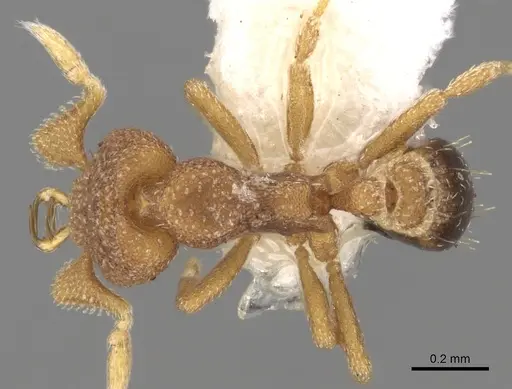
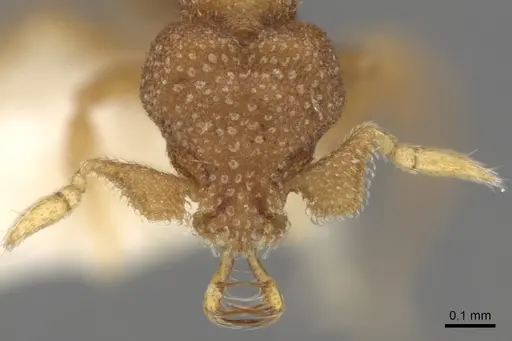
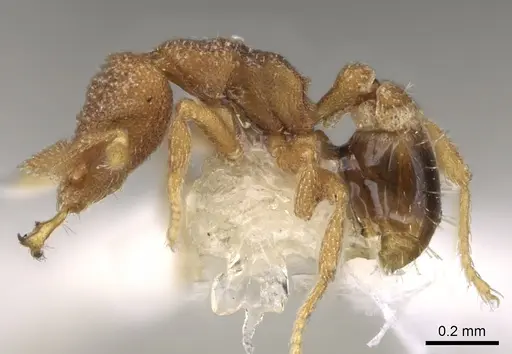
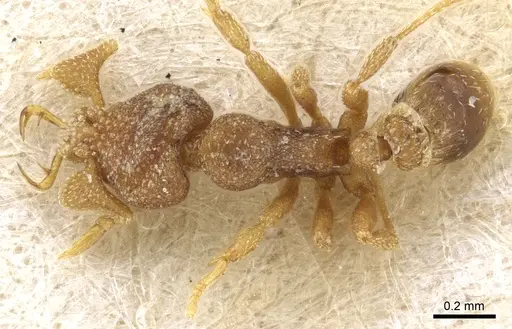
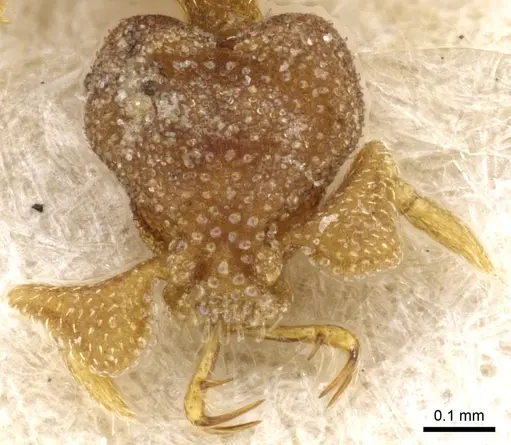
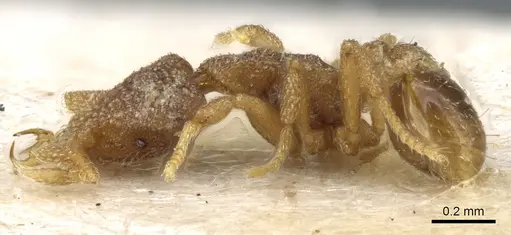
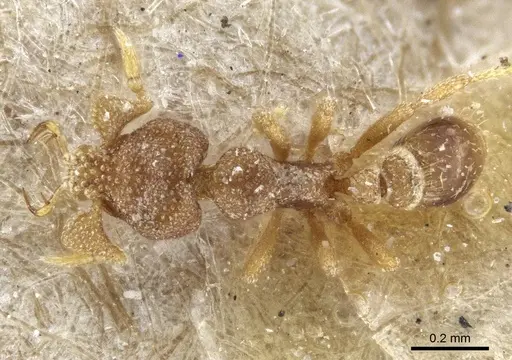
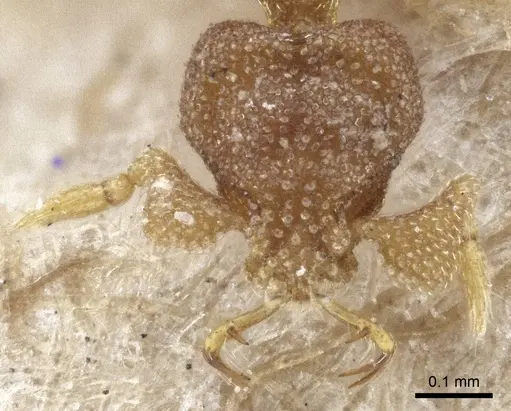
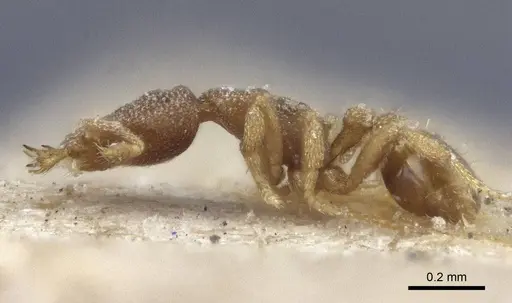
Strumigenys eurycera is a tiny predatory ant measuring just 1.7-2.2mm in total length, belonging to the Myrmicinae subfamily and Attini tribe. Workers have a distinctive feature that makes them immediately recognizable: the leading edge of the scape (antenna) is grossly expanded into a lobe, a character not found in any other species in the region. These ants are native to the Australasian and Indomalayan regions, specifically found in New Guinea, the Solomon Islands, and Indonesia [1][2]. Very few specimens have been collected, with the limited habitat data indicating they were found in lowland forests [2]. This species belongs to the eurycera-group, which includes three other newly described species known only from New Guinea and neighboring islands [3].
Quick Summary
- Difficulty: Expert
- Origin & Habitat: Native to New Guinea, the Solomon Islands (Guadalcanal, Makira), and Indonesia. Found in lowland forest habitats [2][1].
- Colony Type: Colony structure is unconfirmed. Based on related Strumigenys species, likely monogyne (single queen) colonies. No data on ergatoid replacement reproductives for this specific species.
- Size & Growth:
- Queen: Unconfirmed, no queen measurements documented
- Worker: 1.7-2.2mm total length, head width 0.42-0.48mm
- Colony: Unknown, no colony size data available. Related species typically have small colonies of under 100 workers
- Growth: Unknown, no development data available
- Development: Unconfirmed, no direct measurements exist. Based on related Strumigenys species, likely 6-10 weeks at tropical temperatures (Development timeline is unconfirmed for this species specifically)
- Antkeeping:
- Temperature: Keep at 24-28°C, these are lowland tropical ants that require warm, stable conditions. A heating cable on one side of the nest creates an appropriate gradient.
- Humidity: Keep substrate consistently moist but not waterlogged. Lowland forest floor conditions mean high humidity is important, think damp leaf litter environment.
- Diapause: Unlikely, as a lowland tropical species, they probably do not require a diapause period. However, slight seasonal slowing may occur.
- Nesting: In nature they likely nest in rotting wood, leaf litter, or soil. In captivity, a small test tube setup or Y-tong nest with tight chambers works well. The tiny size of these ants (under 2.5mm) requires very small chambers and narrow passages.
- Behavior: Strumigenys are specialist predators, primarily hunting springtails (Collembola) using their specialized trap-jaw mandibles. They are not aggressive toward larger threats and will typically flee rather than engage. Their tiny size makes them vulnerable, escape prevention is critical because they can squeeze through extremely small gaps. They are slow-moving compared to many ants and rely on ambush-style hunting.
- Common Issues: tiny size means escapes are likely without fine mesh barriers and tight-fitting lids, specialized diet makes them difficult to feed, they require live springtails or other micro-arthropods, very small colony sizes mean any losses have a big impact on the colony, lack of biological data makes captive care largely experimental, wild-caught colonies may have parasites or fail to adapt to captive conditions
Identification and Recognition
Strumigenys eurycera workers are unmistakable due to their grossly expanded scape (antenna) lobe on the leading edge, no other species in the region shares this feature. Workers measure just 1.7-2.2mm in total length, making them among the smaller ant species. The head width is 0.42-0.48mm, and the scape length is 0.24-0.34mm. Specimens from Kai Besar tend to be larger than those from Sulawesi or Papua New Guinea, but the diagnostic features remain stable across their range. This species belongs to the eurycera-group, which contains a few other newly described species known only from New Guinea and neighboring islands [3].
Distribution and Habitat
This species is known from a limited range in the Australasian and Indomalayan regions. It has been recorded from New Guinea, the Solomon Islands (Guadalcanal and Makira), and Indonesia [1][2]. The first Solomon Islands record dates to 2000 [1]. The few specimens with associated habitat data were collected in lowland forests [2]. This distribution pattern suggests they are adapted to tropical lowland environments with high humidity.
Feeding and Diet
Strumigenys ants are specialist predators, primarily hunting springtails (Collembola) and other tiny soil arthropods. They use their specialized trap-jaw mandibles to capture prey with incredible speed. In captivity, you must provide live springtails as a primary food source, this is non-negotiable for keeping this species successfully. Other micro-arthropods like minute soil mites may be accepted experimentally, but springtails should form the bulk of their diet. Sugar sources are typically not accepted by predatory Strumigenys species. Feed prey every 2-3 days, removing any uneaten prey to prevent mold issues.
Temperature and Care
As lowland tropical forest ants, Strumigenys eurycera requires warm and humid conditions. Keep the nest area at 24-28°C, stable temperatures in this range support normal colony activity. A heating cable placed on one side of the nest creates a gentle temperature gradient, allowing ants to regulate their position. Avoid temperature fluctuations or drafts. Humidity should be high, the substrate should feel consistently moist but never waterlogged. These ants are sensitive to drying out. Use small water reservoirs in test tube setups and monitor moisture levels regularly.
Nesting and Housing
In the wild, Strumigenys typically nest in rotting wood, leaf litter, or soil in forest environments. For captivity, a small test tube setup works well for founding colonies and small established colonies. The tiny size of S. eurycera (under 2.2mm) requires tight-fitting connections and very small chambers, standard antkeeping equipment may have gaps too large to contain them. Use fine mesh barriers and ensure all openings are sealed. A Y-tong (AAC) nest with narrow chambers can work for established colonies. Keep nesting areas humid and dark, mimicking the protected microhabitats they occupy in nature.
Challenges and Expert-Level Care
This species is rated Expert difficulty because it represents a significant challenge even for experienced antkeepers. The primary difficulties include: extremely limited biological data means most care must be inferred from related species, their specialized diet requires a constant supply of live springtails, their tiny size makes escape prevention critical and difficult, and wild-caught colonies may fail to adapt to captive conditions. If you acquire a colony, expect experimental care, be prepared to adjust temperature, humidity, and feeding based on colony behavior. Do not release this species in any location outside its native range as it could become invasive. This species is not recommended for beginners.
Frequently Asked Questions
How long does it take for Strumigenys eurycera to produce first workers?
The egg-to-worker timeline is unconfirmed for this species specifically. Based on related Strumigenys species, expect approximately 6-10 weeks at optimal tropical temperatures (24-28°C). However, this is an estimate as no direct development data exists for S. eurycera.
What do Strumigenys eurycera ants eat?
Strumigenys eurycera is a specialized predator that primarily hunts springtails (Collembola) and other tiny soil arthropods. They will not accept sugar water or standard ant feeds. You must provide a constant source of live springtails. Other micro-arthropods may be accepted experimentally.
Can I keep Strumigenys eurycera in a test tube setup?
Yes, a test tube setup can work for this species. However, their extremely small size (1.7-2.2mm) means you must use excellent escape prevention, standard test tube setups may have gaps too large. Use fine mesh barriers and ensure all connections are tight. The tube should be kept humid and dark.
Are Strumigenys eurycera good for beginners?
No, this species is not recommended for beginners. It is rated Expert difficulty due to: very limited biological data available, specialized dietary requirements (live springtails), extremely tiny size making escape prevention difficult, and the challenges of establishing wild-caught colonies in captivity.
Do Strumigenys eurycera need hibernation?
Unlikely. As a lowland tropical species from New Guinea and the Solomon Islands, they probably do not require a diapause or hibernation period. Keep them at warm tropical temperatures (24-28°C) year-round. Some seasonal slowing may occur naturally.
How big do Strumigenys eurycera colonies get?
Colony size is unknown for this specific species. Based on related Strumigenys species, colonies are likely small, probably under 100 workers at maturity. They are not large colony builders like some other ant species.
Where is Strumigenys eurycera found?
This species is native to the Australasian and Indomalayan regions. It has been recorded from New Guinea, the Solomon Islands (Guadalcanal and Makira), and Indonesia. It was first recorded from the Solomon Islands in 2000 [1].
Why is my Strumigenys eurycera colony dying?
Common causes include: inability to provide live springtail prey (they will starve without appropriate food), too low humidity causing desiccation, temperatures outside their 24-28°C range, escape through tiny gaps due to their minute size, or stress from wild-caught origins. Ensure you have a established springtail culture before acquiring this species.
References

This caresheet is licensed under CC BY-SA 4.0 .
Literature
Loading...Loading products...