

Strumigenys dyseides
- Scientific Name
- Strumigenys dyseides
- Tribe
- Attini
- Subfamily
- Myrmicinae
- Author
- Bolton, 2000
- Distribution
- Found in 3 countries
Strumigenys dyseides Overview
Strumigenys dyseides is an ant species of the genus Strumigenys. It is primarily documented in 3 countries , including Colombia, French Guiana, Guyana. Detailed taxonomic data and occurrence records can be further explored via authoritative databases such as AntWeb or the Global Biodiversity Information Facility (GBIF).
Strumigenys dyseides
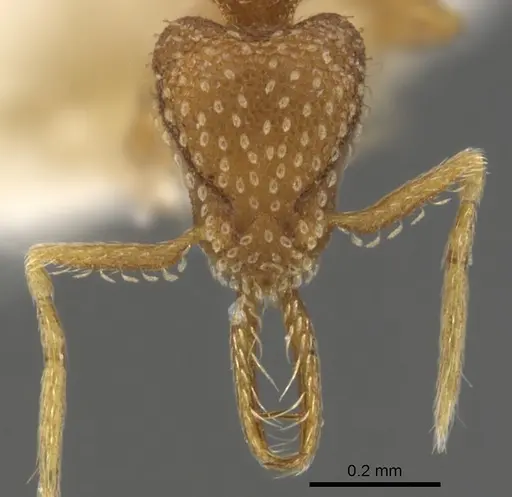
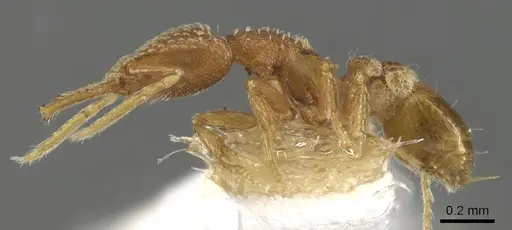
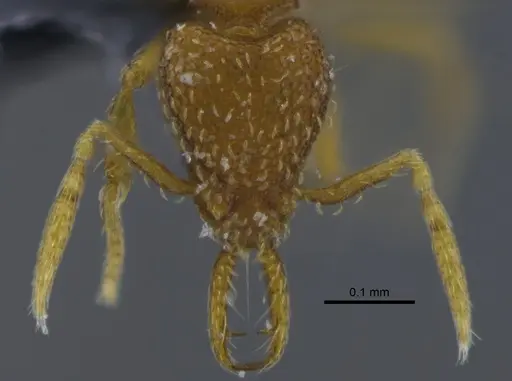
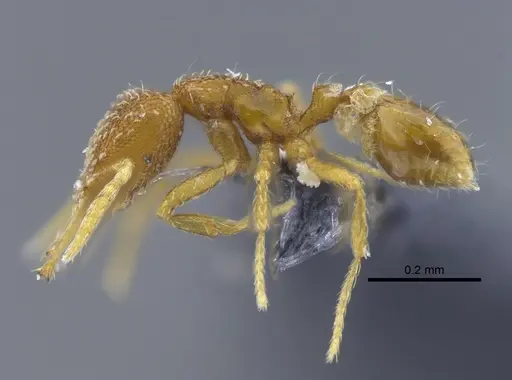
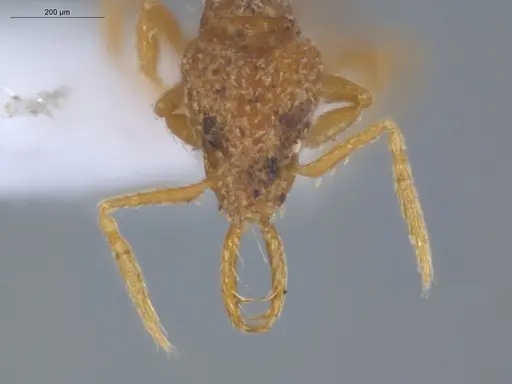
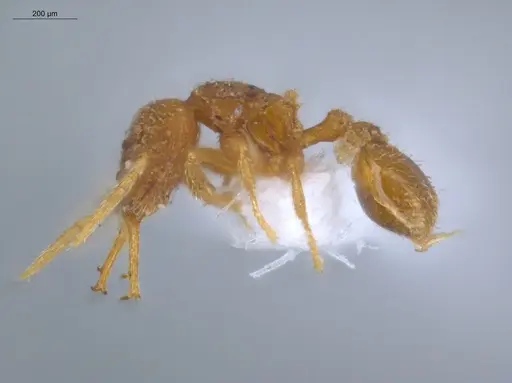
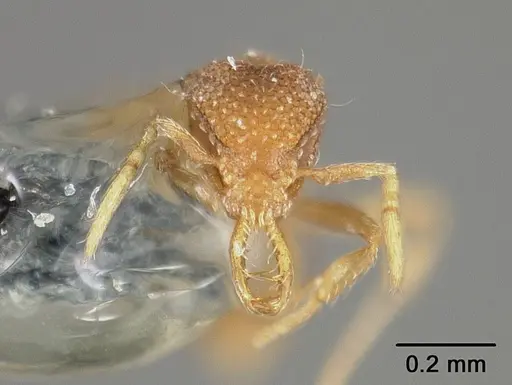
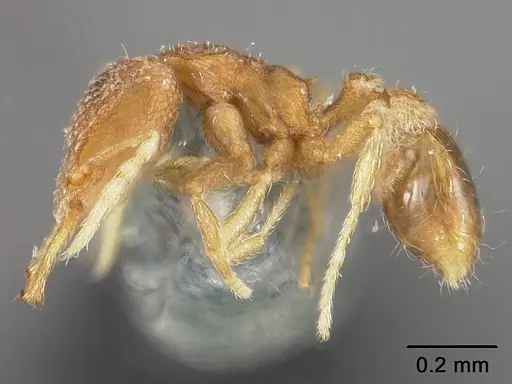
Strumigenys dyseides is a remarkably tiny ant, measuring just 1.8mm in total length [1]. These ants belong to the dacetine tribe (Attini), which are specialized predators known for their unusually long, slender mandibles that they use to capture small prey [2]. Workers have a smooth and shining postpetiole disc, and the first gastral tergite is covered in sparse, extremely fine flagellate hairs [1]. The species is a member of the Strumigenys silvestrii group and can be identified by its unique combination of morphological features, including the absence of standing hairs on the mesonotum and the curved, spoon-shaped hairs along the upper scrobe margin [1].
These ants inhabit forest leaf-litter in the Neotropical region, with confirmed records from Colombia (Putumayo and Arauca departments), French Guiana, and Argentina [3][1][4]. Like other dacetine ants, S. dyseides is a specialist predator that plays an important role in the leaf-litter ant community as part of the specialist predators guild [5]. Their small size and cryptic lifestyle make them challenging to observe in the wild but fascinating to keep in captivity.
Quick Summary
- Difficulty: Hard
- Origin & Habitat: Neotropical region, found in Colombia (Putumayo, Arauca), French Guiana, and Argentina. Inhabits forest leaf-litter in both primary rainforest and disturbed areas [4][3][6].
- Colony Type: Likely monogyne (single queen) based on typical Strumigenys colony structure. Colonies are small, typically under 100 workers.
- Colony: Monogyne
- Founding: Claustral
- Size & Growth:
- Queen: Approximately 2-3mm (estimated based on worker size of 1.8mm)
- Worker: 1.8mm total length [1]
- Colony: Small colonies, likely under 100 workers based on typical dacetine colony sizes
- Growth: Slow, dacetine ants develop slowly due to their specialized predatory lifestyle
- Development: Estimated 8-12 weeks at tropical temperatures (25-28°C) based on typical dacetine development patterns (Development is likely slow given their small size and specialized diet. First workers (nanitics) will be very tiny.)
- Antkeeping:
- Temperature: Keep at 24-28°C, these are tropical forest ants that need warm, stable conditions. A gentle heating gradient allows them to regulate temperature.
- Humidity: High humidity is essential, think damp rainforest leaf-litter. Keep substrate consistently moist but not waterlogged. These ants desiccate quickly due to their tiny size.
- Diapause: No true diapause required, being tropical, they need year-round warm conditions. However, reducing temperatures slightly during winter months (to around 22°C) may slow colony activity and is generally safe.
- Nesting: Use small, tight chambers scaled to their tiny size. Y-tong (AAC) nests or small acrylic setups work well. Provide a moisture source connected to the nest. They prefer dark, confined spaces similar to their natural leaf-litter microhabitat.
- Behavior: These ants are extremely small and slow-moving, but they are specialized predators. Their long mandibles are designed for striking at tiny prey (primarily springtails and other micro-arthropods). They are not aggressive toward humans and cannot sting. Escape prevention is critical due to their minute size, they can squeeze through remarkably small gaps. Workers are cryptic and spend most of their time hidden in the nest or moving slowly through foraging areas.
- Common Issues: tiny size makes escape prevention difficult, use fine mesh and tight-fitting barriers, specialized diet means they may refuse standard ant foods, live prey is essential, slow growth tests keeper patience, colonies take months to develop, high humidity requirements can lead to mold problems if ventilation is poor, wild-caught colonies may contain parasites that can devastate the colony
Housing and Nest Setup
Strumigenys dyseides requires careful housing due to their extremely small size. Use nests with small, tight chambers, Y-tong (AAC) nests or small acrylic formicaria work well. The nest chambers should be appropriately scaled, these tiny ants feel stressed in overly large spaces. Provide a water tube or moisture reservoir connected to the nest area to maintain humidity. Place the nest in a dark location or cover it to simulate the dark, humid leaf-litter environment they naturally inhabit. The outworld should also be small and easy for them to navigate. Use fine mesh for any ventilation, these ants can escape through gaps that seem impossibly small. A layer of moist substrate (like coco peat or a soil mix) in the foraging area helps maintain humidity and provides a more natural environment for these forest-dwelling ants [6][4].
Feeding and Diet
As dacetine ants, S. dyseides are specialized predators that require live prey. Their primary food source in the wild consists of tiny arthropods, especially springtails (collembola) and other micro-invertebrates found in leaf-litter [5]. In captivity, you must provide a steady supply of appropriately-sized live prey. Springtails are the ideal food and should be cultured as a permanent colony. Other small live prey like fruit flies, pinhead crickets, and tiny mealworms may be accepted, but springtails should form the bulk of their diet. These ants have long, slender mandibles designed for precision striking, they are not equipped to tackle large prey or process sugary foods. Do not offer honey water or fruit, as they are unlikely to accept it. Feed every 2-3 days, offering only what the colony can consume within a day. Remove uneaten prey to prevent mold issues.
Temperature and Humidity
These tropical ants require warm, humid conditions year-round. Maintain temperatures between 24-28°C in the nest area. A slight temperature gradient (with one side of the foraging area slightly warmer) allows the colony to regulate their own temperature. Avoid temperatures below 22°C for extended periods, as this can weaken the colony and slow development. Humidity is critical, aim for 70-85% relative humidity in the nest area. The substrate should remain consistently moist but never waterlogged. Because of their tiny size, these ants are prone to desiccation and will die quickly in dry conditions. Use a moisture reservoir connected to the nest, and consider misting the outworld occasionally. However, balance humidity with adequate ventilation to prevent mold growth, which can be deadly to small colonies.
Colony Development
Strumigenys colonies grow slowly, and S. dyseides is no exception. A newly mated queen will seal herself in a small chamber and lay eggs, raising her first workers (nanitics) on her stored fat reserves. The first workers will be very tiny, even smaller than the workers you might eventually see in established colonies. From egg to first worker likely takes 8-12 weeks at optimal temperatures (around 26-28°C), but could take longer if temperatures are lower. Colonies remain small even when established, expect maximum sizes of perhaps 50-100 workers. This slow growth and small colony size means these ants require patient keepers who understand that visible progress comes slowly. Do not be tempted to expand the nest too early, small, established colonies in appropriately-sized nests outperform stressed colonies in oversized setups.
Behavior and Temperament
These are cryptic, non-aggressive ants that spend most of their time hidden within the nest structure. Workers move slowly and deliberately, making them fascinating to observe when they do venture out to hunt. Their long mandibles are their primary weapon, they use a strike-and-grab technique to capture tiny prey. Unlike many ants, they do not form raiding columns or exhibit swarming behavior. They are not capable of stinging and pose no danger to humans. The main challenge for keepers is their escape risk, despite their slow movement, their tiny size allows them to slip through remarkably small openings. Always use fluon on nest rims and fine mesh on any ventilation. When stressed, workers may retreat deep into the nest and become even less visible, which is normal behavior for these cryptic ants. [2]
Frequently Asked Questions
How long does it take for Strumigenys dyseides to produce first workers?
Expect 8-12 weeks from egg to first worker at optimal temperatures (26-28°C). Development is slow, and the first workers (nanitics) will be very tiny. Patience is essential with this species.
What do Strumigenys dyseides ants eat?
They are specialized predators that require live prey. Springtails should be their primary food, culture a permanent springtail colony to ensure a steady supply. They may accept other tiny live prey like fruit flies, but will not accept sugar sources or processed foods.
Can I keep Strumigenys dyseides in a test tube setup?
Yes, test tubes can work for founding colonies, but you must use a very small water reservoir and ensure excellent escape prevention. These tiny ants are prone to escaping through minute gaps. Consider moving to a small acrylic or Y-tong nest once the colony reaches 10-15 workers.
Are Strumigenys dyseides good for beginners?
No, this species is not recommended for beginners. Their specialized diet (live prey only), high humidity requirements, tiny size making escape prevention difficult, and slow growth all require experienced keepers who understand the needs of dacetine ants.
How big do Strumigenys dyseides colonies get?
Colonies remain small, typically reaching only 50-100 workers at maturity. This is typical for dacetine ants, which are not colony-sized like many common ant species.
Do Strumigenys dyseides need hibernation?
No, they do not require hibernation. As tropical ants from the Neotropical region, they need year-round warm temperatures (24-28°C). You may slightly reduce temperatures in winter to around 22°C, but this is not necessary and should be done gradually.
Why are my Strumigenys dyseides dying?
Common causes include: too low humidity (they desiccate quickly), lack of live prey (they will starve without springtails or other tiny live food), temperatures below 22°C, escape through tiny gaps, and mold problems from excessive moisture. Check each of these factors when troubleshooting.
When should I move my colony to a formicarium?
Move to a small formicarium or Y-tong nest when the colony reaches 15-20 workers and the test tube is becoming crowded. Do not use a large formicarium, these tiny ants thrive in appropriately scaled, tight spaces.
Can I keep multiple queens together?
This is not recommended. Unlike some ants that can form multi-queen colonies, Strumigenys are typically single-queen species. Combining unrelated queens has not been documented and likely results in fighting.
References

This caresheet is licensed under CC BY-SA 4.0 .
CASENT0900479
View on AntWeb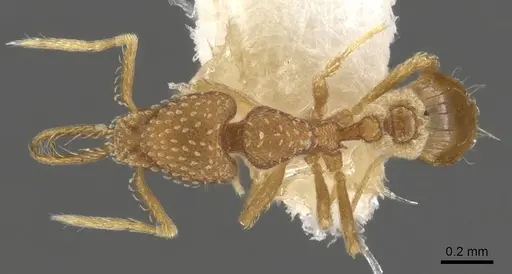
CBUMAGENT41685
View on AntWeb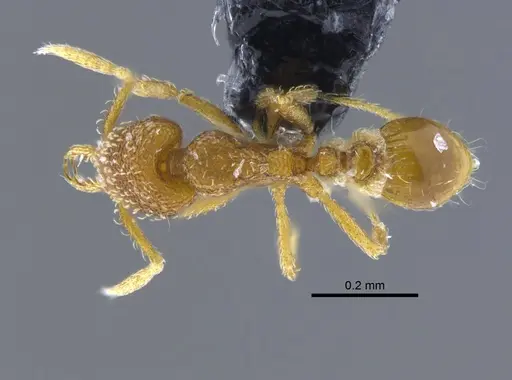
ECOFOG-IT14-0786-67
View on AntWeb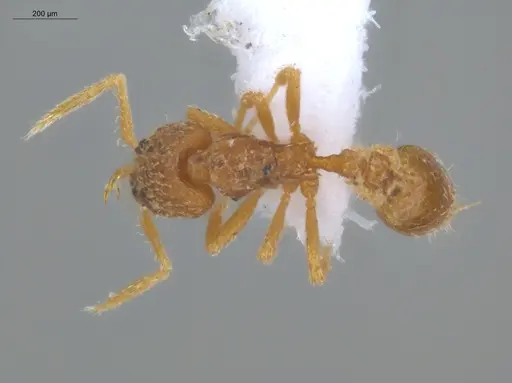
USNMENT00441509
View on AntWeb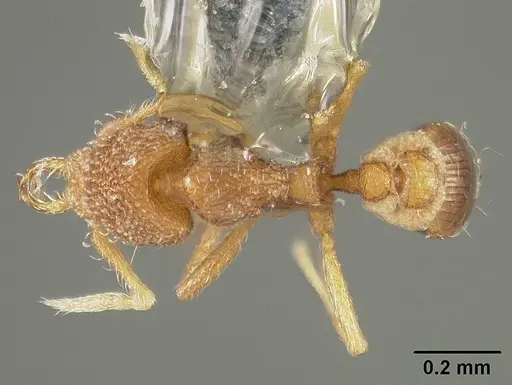
Literature
Loading...Loading products...