

Strumigenys doriae
- Scientific Name
- Strumigenys doriae
- Tribe
- Attini
- Subfamily
- Myrmicinae
- Author
- Emery, 1887
- Distribution
- Found in 3 countries
Strumigenys doriae Overview
Strumigenys doriae is an ant species of the genus Strumigenys. It is primarily documented in 3 countries , including Malaysia, Thailand, Viet Nam. Detailed taxonomic data and occurrence records can be further explored via authoritative databases such as AntWeb or the Global Biodiversity Information Facility (GBIF).
Strumigenys doriae
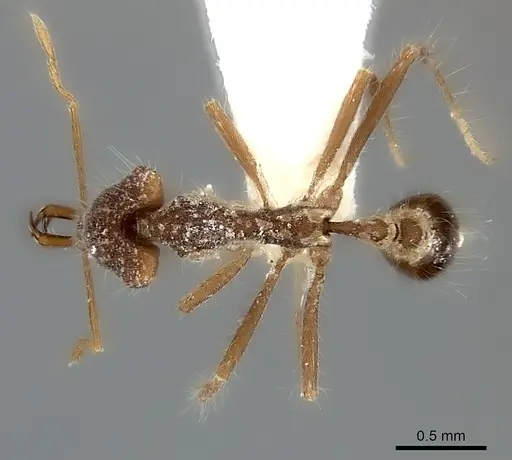
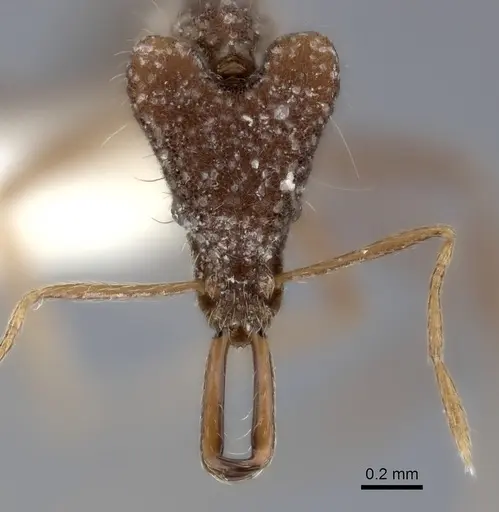
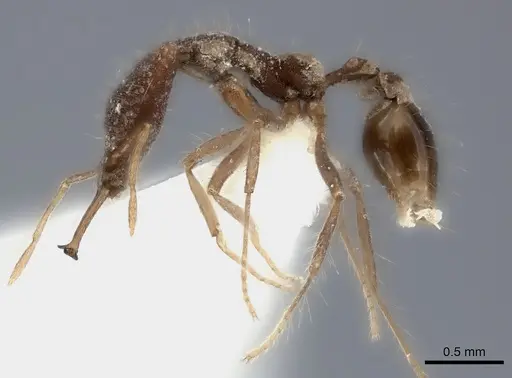
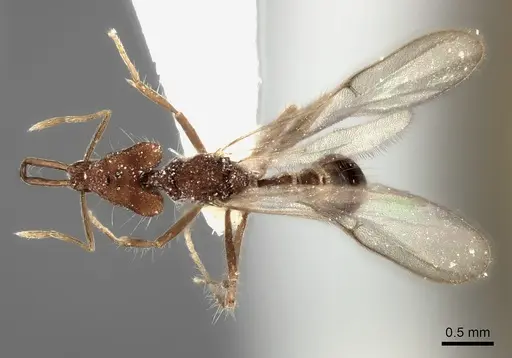
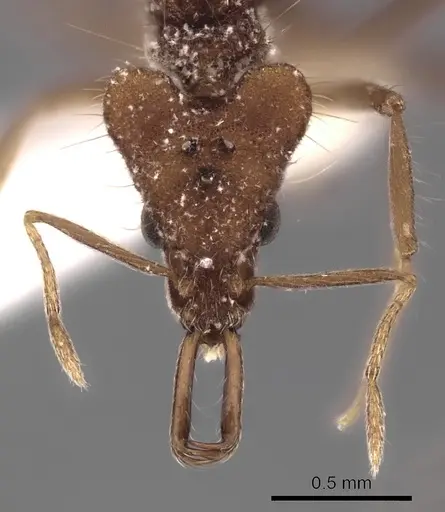
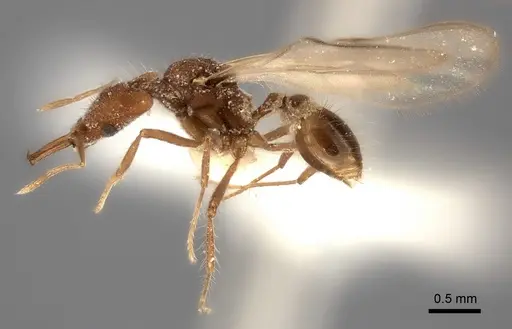
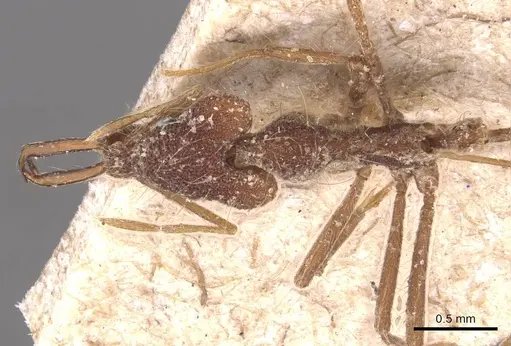
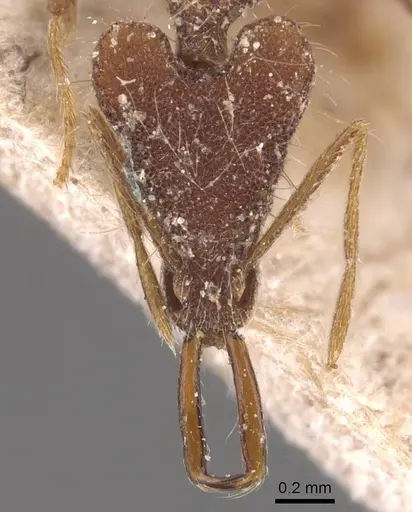
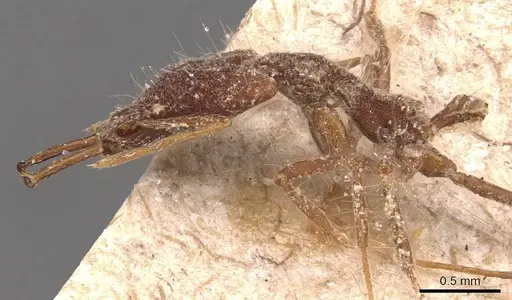
Strumigenys doriae is a small predatory ant measuring 3.5-3.9mm in worker length, belonging to the doriae complex within the Strumigenys doriae group. Workers have distinctive long, thin erect hairs covering their body, with a ferrugineous (rusty brown) coloration and darker head that is densely punctate [1]. The mandibles are notably long and cylindrical, resembling a miniature version of Odontomachus trap-jaw ants, without teeth on the internal margin except for the bifid apex [1]. This species is widespread across the Oriental region, found in China (Yunnan), Indonesia (Borneo, Java, Sumatra, Maluku Islands), Malaysia, the Philippines, and Thailand [2].
These ants are specialized predators that hunt springtails and other tiny soil arthropods, using their trap-jaw mandibles to capture prey with remarkable speed. They inhabit forest leaf litter in both savanna and rainforest environments, preferring humid, shaded microhabitats similar to their native tropical and subtropical forests [3].
Quick Summary
- Difficulty: Medium
- Origin & Habitat: Oriental realm, China (Yunnan), Indonesia (Borneo, Java, Sumatra, Maluku Islands), Malaysia, Philippines, Thailand. Found in forest leaf litter at elevations 370-1300m, in both savanna and rainforest habitats [2][3].
- Colony Type: Colony structure is unconfirmed. Based on typical Strumigenys patterns, likely single-queen (monogyne) colonies with small colony size.
- Size & Growth:
- Queen: Estimated 5-6mm based on genus patterns (not directly documented)
- Worker: 3.5-3.9mm
- Colony: Likely small, under 500 workers based on typical Strumigenys colony sizes
- Growth: Moderate, inferred from related species
- Development: Estimated 6-10 weeks at optimal temperature based on related Strumigenys species (Development time is estimated as this species has not been directly studied. Tropical species typically develop faster than temperate species.)
- Antkeeping:
- Temperature: Keep at 24-28°C, these are tropical forest ants that prefer warm, stable conditions
- Humidity: High humidity required, aim for 70-80%. Keep the substrate consistently moist but not waterlogged, mimicking damp forest floor conditions
- Diapause: No, as a tropical species, they do not require hibernation. Maintain year-round warm conditions
- Nesting: Use a naturalistic setup with moist substrate (soil/peat mix) or a plaster/acrylic nest with high humidity. They prefer tight chambers and narrow passages scaled to their small size. Keep the nest area dark and humid.
- Behavior: Strumigenys doriae is a specialized predator on springtails and other micro-arthropods. They are not aggressive toward humans but can deliver a sting if handled (Myrmicinae have functional stingers). Workers forage individually in leaf litter, using their trap-jaw mandibles to capture prey. Due to their very small size (under 4mm), escape prevention is critical, they can squeeze through standard test tube barriers. They are shy and reclusive, spending most of their time in the nest or hunting in the substrate.
- Common Issues: escape prevention is critical due to tiny size, use fine mesh barriers and tight-fitting lids, colonies are small and slow-growing, avoid overfeeding which can lead to mold, high humidity is essential, dry conditions will kill the colony, wild-caught colonies may have parasites that can decimate the colony in captivity, specialized diet means they may refuse standard ant foods, live springtails are essential
Housing and Nest Setup
Strumigenys doriae requires high-humidity housing due to their forest floor origin. A naturalistic setup with a soil/peat mixture works well, use a shallow container with 2-3cm of moist substrate. Alternatively, a plaster nest or acrylic nest with a water reservoir maintains humidity well. The nest should be kept dark, these ants prefer dim conditions and will be more active when the setup is covered. Avoid tall, open spaces, they prefer tight chambers and narrow passages scaled to their 3.5-4mm size. A small outworld for feeding is sufficient, they don't need much space. Cover ventilation holes with fine mesh (at least 0.3mm) to prevent escapes.
Feeding and Diet
Strumigenys doriae is a specialized predator that primarily hunts springtails (Collembola), this is their natural prey in the wild. Live springtails should be the primary food source. They will likely reject standard ant foods like honey or protein mixes. Offer small live prey items: springtails, tiny soil mites, and other micro-arthropods. Feed every 2-3 days, removing uneaten prey to prevent mold. A small water sponge or moist cotton ball provides drinking water. Do not overfeed, excess prey decays quickly in humid setups and causes mold problems that can kill the colony.
Temperature and Humidity
Maintain temperatures of 24-28°C year-round, these are tropical ants that do not tolerate cool conditions. A heating cable on one side of the nest creates a gentle gradient, but ensure the colony can move away from heat if needed. Humidity is critical: aim for 70-80% relative humidity. The substrate should feel consistently moist but never waterlogged. Use a moisture-retaining substrate like peat or coco fiber mixed with perlite. Check regularly, tropical setups dry out faster than expected. Mist lightly if needed, but avoid direct spraying on the colony. A water reservoir in plaster nests helps maintain humidity.
Behavior and Colony Dynamics
This species is shy and not aggressive. Workers forage individually through leaf litter and substrate, hunting springtails with their trap-jaw mandibles. Colonies remain small, likely under a few hundred workers even at maturity. Queens are likely claustral founders, sealing themselves in a chamber to raise the first workers on stored fat reserves. The first workers (nanitics) will be smaller than normal workers. This species does not require hibernation, maintain warm conditions year-round. They are not suitable for observation-focused setups as they prefer dark, humid conditions and spend most of their time hidden in the substrate.
Escape Prevention
Due to their very small size (under 4mm), escape prevention must be excellent. Standard test tube barriers are often insufficient. Use fine mesh (0.3mm or smaller) on all ventilation holes. Ensure all connections between nest and outworld are sealed with fluon or similar barriers. Check for gaps daily, especially in the first few weeks after establishing the colony. These ants can squeeze through gaps that seem impossibly small.
Frequently Asked Questions
Can I keep Strumigenys doriae in a test tube?
Test tubes are not ideal for this species. They require high humidity and a naturalistic setup with moist substrate to hunt live prey. A small plastic container with moist soil/peat or a plaster nest works much better. If you must use a test tube, use a very small one with a water reservoir and cover it to keep it dark, but expect limited success.
What do Strumigenys doriae ants eat?
They are specialized predators that need live springtails as their primary food. They will not accept standard ant foods like honey, sugar water, or dead insects. Offer small live springtails every 2-3 days. Other tiny live prey like soil mites may also be accepted. If they refuse springtails, the colony will likely fail, this is not a species for beginners who want easy feeding options.
How long until first workers appear in Strumigenys doriae?
Estimated 6-10 weeks from egg to first worker at optimal temperature (24-28°C). This is an estimate based on related Strumigenys species, the exact timeline has not been documented for this specific species. Queen likely seals herself in (claustral founding) and raises the first brood alone.
Are Strumigenys doriae good for beginners?
No, this species is not recommended for beginners. They require specialized care: high humidity, dark conditions, and live springtail prey. They are also tiny, making escape prevention challenging. They are better suited for antkeepers with experience keeping tropical, predatory ant species.
How big do Strumigenys doriae colonies get?
Colony size is estimated at under 500 workers at maturity. This is typical for Strumigenys, they remain small colonies compared to many other ant species. Growth is moderate, and colonies likely take 1-2 years to reach moderate size.
Do Strumigenys doriae need hibernation?
No, they do not need hibernation. As tropical forest ants from Southeast Asia, they require year-round warm temperatures (24-28°C). Cooler temperatures will slow their metabolism and could kill the colony. Maintain consistent warmth throughout the year.
Why is my Strumigenys doriae colony dying?
Common causes include: dry conditions (they need 70-80% humidity), wrong food (they need live springtails, not sugar or dead insects), escapes due to inadequate barriers, mold from overfeeding, or parasites from wild-caught colonies. Check humidity first, then verify they are accepting live prey. Wild-caught colonies often carry parasites that require treatment.
When should I move Strumigenys doriae to a formicarium?
Wait until the colony has at least 20-30 workers before moving to a larger setup. For founding colonies, keep them in a small, humid container with moist substrate. Only upgrade when the test tube or founding setup becomes crowded. They prefer naturalistic setups with soil rather than artificial formicariums.
Can I keep multiple Strumigenys doriae queens together?
Combining unrelated queens has not been documented for this species. Based on typical Strumigenys behavior, they are likely single-queen colonies. Do not attempt to combine queens, they will likely fight and kill each other. If you have multiple founding queens, house them separately.
References

This caresheet is licensed under CC BY-SA 4.0 .
Literature
Loading...Loading products...