

Strumigenys diabola
- Scientific Name
- Strumigenys diabola
- Tribe
- Attini
- Subfamily
- Myrmicinae
- Author
- Bolton, 2000
- Distribution
- Found in 2 countries
Strumigenys diabola Overview
Strumigenys diabola is an ant species of the genus Strumigenys. It is primarily documented in 2 countries , including Brazil, French Guiana. Detailed taxonomic data and occurrence records can be further explored via authoritative databases such as AntWeb or the Global Biodiversity Information Facility (GBIF).
Strumigenys diabola
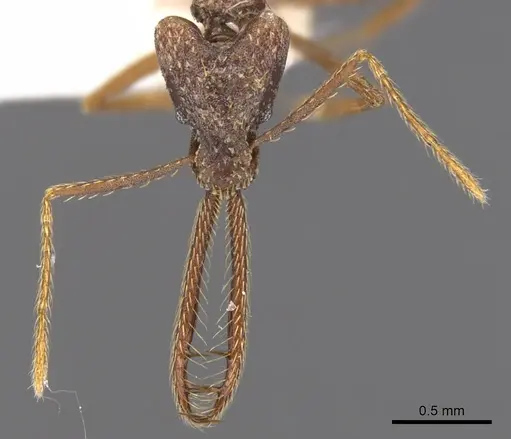
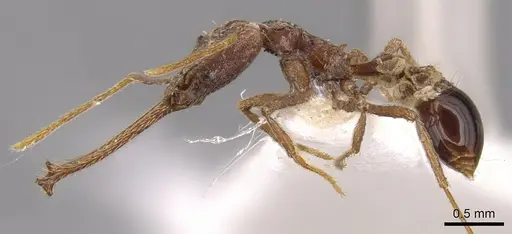
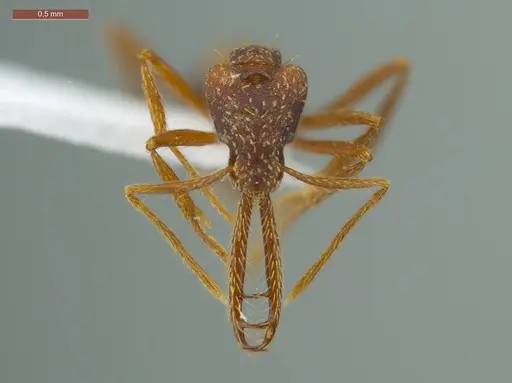
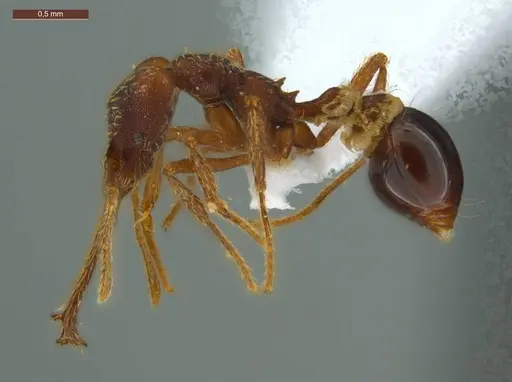
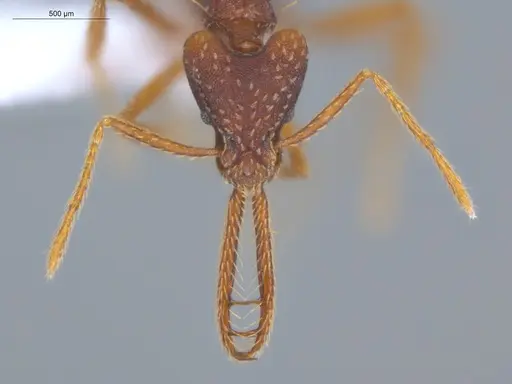
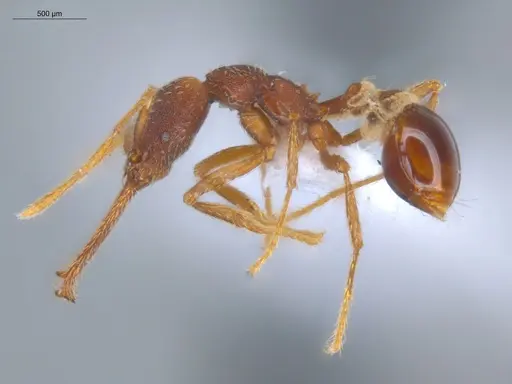
Strumigenys diabola is a tiny predatory ant species native to the Amazon rainforest of Brazil and French Guiana. Workers measure just 4.2mm in total length, with an unusually elongated head and extraordinarily long, slender mandibles that give this species a distinctive appearance [1]. These trap-jaw ants belong to the Strumigenys mandibularis group and are closely related to S. cordovensis, from which they can be distinguished by their enormously elongated mandibles, longer narrower petiole node, and smaller femoral gland bullae. The species was described in 2000 by Barry Bolton from specimens collected in the Brazilian Amazon near Manaus [1].
Like other Strumigenys species, this ant is a specialized predator that hunts springtails and other tiny soil-dwelling arthropods using its elongated mandibles as a trap mechanism. Nothing is directly documented about this species' biology, but Strumigenys are known to be cryptic leaf-litter ants that forage in the dark, humid microhabitats of rainforest floors [2][3]. Their extremely long mandibles are designed to capture fast-moving prey with lightning-fast strikes.
Quick Summary
- Difficulty: Expert
- Origin & Habitat: Amazon rainforest of Brazil (Amazonas state, near Manaus) and French Guiana. Found in leaf-litter of pristine tropical rainforest, particularly plateau forest areas [2][3].
- Colony Type: Colony structure is unconfirmed. Based on genus patterns, likely single-queen (monogyne) colonies with small worker populations.
- Size & Growth:
- Queen: Undescribed, estimated 5-6mm based on worker size and genus patterns
- Worker: 4.2mm total length, HL 0.88-0.92mm, HW 0.69-0.73mm
- Colony: Unknown, likely under 100 workers based on typical Strumigenys colony sizes
- Growth: Slow, inferred from related species
- Development: Unknown, estimated 8-12 weeks based on related tropical Strumigenys species (No direct development data exists for this species. Estimates based on genus-level patterns for tropical leaf-litter ants.)
- Antkeeping:
- Temperature: Keep warm at 24-27°C. These are tropical rainforest ants that need consistent warmth. Use a heating cable on one side of the nest to create a gentle gradient if room temperature is below this range.
- Humidity: Very high humidity required, think damp rainforest floor. Keep the nest substrate consistently moist but not waterlogged. Provide a water reservoir and ensure condensation forms regularly on the nest walls.
- Diapause: No, this is a tropical species that does not require hibernation. Maintain warm temperatures year-round.
- Nesting: These tiny ants prefer tight, humid chambers. A Y-tong (AAC) nest or plaster nest works well. The key is maintaining high humidity while allowing some ventilation to prevent mold. Provide a small outworld for foraging.
- Behavior: These are extremely shy, cryptic ants that spend most of their time hidden in the leaf-litter layer. They are not aggressive and will flee from disturbance. Their elongated mandibles are specialized for capturing springtails, they do not use them defensively. Foraging occurs slowly through the substrate. Escape prevention is critical due to their tiny size, they can squeeze through remarkably small gaps. Use fine mesh and tight-fitting lids.
- Common Issues: escape prevention is critical, they are tiny and will find any gap, high humidity requirements can lead to mold if ventilation is poor, slow growth means colonies develop very gradually, specialized diet makes feeding challenging, they need live springtails, wild-caught colonies may have parasites that are difficult to treat
Housing and Nest Setup
Strumigenys diabola requires a setup that maintains high humidity while providing security for these tiny ants. A Y-tong (AAC) nest or plaster nest works well, both hold humidity well and provide the dark, tight chambers these cryptic ants prefer. The nest chambers should be relatively small and narrow, scaled to their tiny size. Use a test tube setup for founding colonies, with the queen in a small test tube connected to a foraging area. Regardless of nest type, you must use excellent escape prevention, these ants are incredibly small and will escape through any gap larger than a few millimeters. Apply Fluon to the edges of the nest and use fine mesh (at least 0.5mm or smaller) on any ventilation holes. Keep the nest area dark or dimly lit, as these leaf-litter ants prefer subdued conditions.
Feeding and Diet
Strumigenys species are specialized predators that primarily hunt springtails (Collembola) and other tiny soil-dwelling arthropods. Their extremely elongated mandibles are a trap-jaw mechanism designed to capture these fast-moving prey. In captivity, you must provide live springtails as the primary food source, this is non-negotiable for keeping this species successfully. Other tiny live prey like booklice (psocids), minute soil mites, and fruit fly larvae may be accepted experimentally, but springtails should form the core of their diet. Sugar sources are generally not accepted by Strumigenys, they are obligate predators. Feed small prey items every 2-3 days, removing any uneaten prey to prevent mold. The prey must be tiny, springtails are ideal because they're approximately the right size for these minute ants.
Temperature and Humidity
As a tropical species from the Amazon rainforest, Strumigenys diabola requires warm, humid conditions. Maintain temperatures between 24-27°C consistently, these ants have no tolerance for cool conditions. Use a heating cable placed on top of the nest (never under it, as direct heat can dry out the substrate) if your room temperature falls below this range. Humidity is critical, aim for 80-90% relative humidity inside the nest. The substrate should feel consistently damp but never waterlogged. Use a water reservoir connected to the nest to maintain humidity through evaporation. Check condensation on nest walls as a visual indicator, you should see droplets regularly. Poor humidity will quickly kill these rainforest ants.
Colony Founding and Growth
Nothing is directly documented about the founding behavior of Strumigenys diabola. Based on genus patterns, the queen likely seals herself in a small chamber (claustral founding) and raises the first workers alone using stored fat reserves. The first workers (nanitics) will be very small and will begin foraging for springtails once they emerge. Growth is slow, expect the first workers to appear several months after the queen lays eggs, and the colony will remain small even when established. Strumigenys colonies typically max out at under 100 workers, so do not expect large colonies. Patience is essential with this species, a mature colony may take 2-3 years to develop from a single queen.
Behavior and Temperament
Strumigenys diabola is an extremely shy and cryptic species. Workers spend most of their time hidden in the nest or moving slowly through leaf-litter and substrate. They are not aggressive and will not defend the nest aggressively, their response to disturbance is to flee and hide rather than to attack. Their elongated mandibles are specialized hunting tools, not weapons, they use them to trap and capture springtails with a lightning-fast snap. Foraging is slow and deliberate. These ants are not suitable for watching active, visible colonies, they are a 'watch the nest and wait' species. They are not suitable for beginners due to their specialized diet and humidity requirements.
Frequently Asked Questions
How long does it take for Strumigenys diabola to produce first workers?
The exact timeline is unknown, but based on related Strumigenys species, expect 8-12 weeks from egg to worker at optimal temperature (24-27°C). The first workers will be nanitics, very small and not yet full-sized.
What do Strumigenys diabola ants eat?
They are specialized predators that require live springtails (Collembola) as their primary food. This is the most critical aspect of their care, without springtails, the colony will not survive. Other tiny live prey may be accepted experimentally.
How big do Strumigenys diabola colonies get?
Colony size is unknown but likely remains small, probably under 100 workers. Strumigenys species are not large colony ants, and this species appears to be at the smaller end of the genus.
Can I keep Strumigenys diabola in a test tube?
Yes, test tubes work well for founding colonies. Use a small test tube with a water reservoir (cotton ball at one end). Ensure excellent escape prevention, these tiny ants will escape through remarkably small gaps. Transfer to a proper nest (Y-tong or plaster) once the colony reaches 10-15 workers.
Do Strumigenys diabola need hibernation?
No. As a tropical Amazon species, they do not require hibernation or any cool period. Keep them warm (24-27°C) year-round. Temperature drops below 20°C can be harmful.
Are Strumigenys diabola good for beginners?
No. This is an expert-level species due to their specialized diet (requiring live springtails), very high humidity needs, tiny size making escape prevention challenging, and slow growth. They are not recommended for anyone without experience with difficult tropical species.
Why are my Strumigenys diabola dying?
Common causes include: low humidity (they need 80-90%), too cool temperatures (below 24°C), lack of live springtail prey, escape through tiny gaps, and mold from poor ventilation. Review all aspects of their care and ensure conditions match their rainforest requirements.
What humidity do Strumigenys diabola need?
Very high humidity, aim for 80-90% inside the nest. The substrate should be consistently damp but not waterlogged. Condensation should be visible on nest walls regularly. Use a water reservoir and consider a humidifier in the room if needed.
When should I move Strumigenys diabola to a formicarium?
Move to a proper nest (Y-tong, plaster, or naturalistic setup) once the colony reaches 10-15 workers and the test tube is becoming cramped. Ensure the new setup can maintain high humidity. They prefer small, tight chambers, do not give them excessive space.
References

This caresheet is licensed under CC BY-SA 4.0 .
ANTWEB1032466
View on AntWeb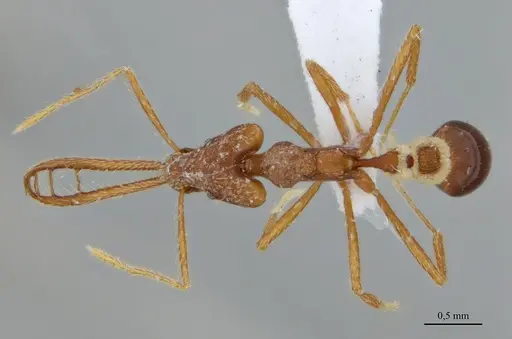
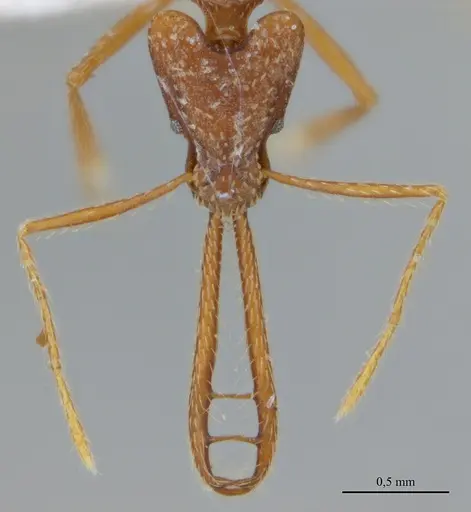
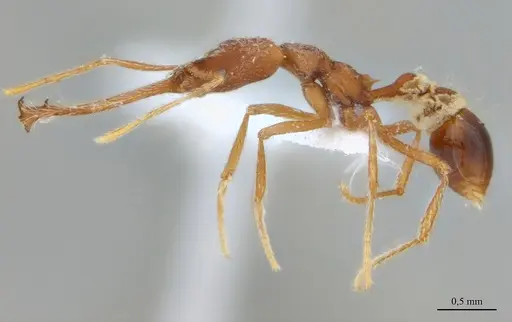
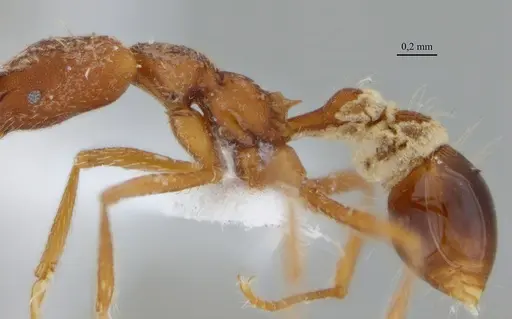
CASENT0900432
View on AntWeb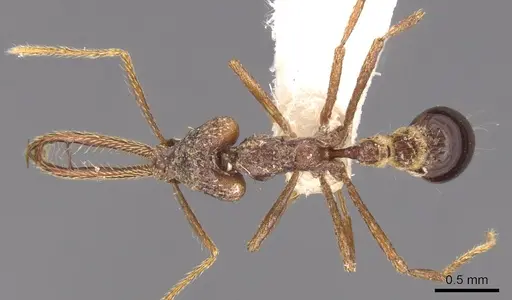
ECOFOG-IT14-0819-32
View on AntWeb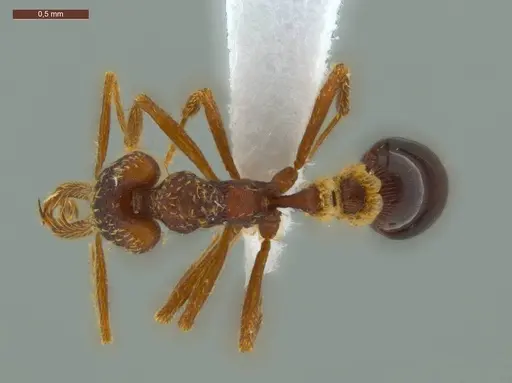
ECOFOG-KR17-0023-19
View on AntWeb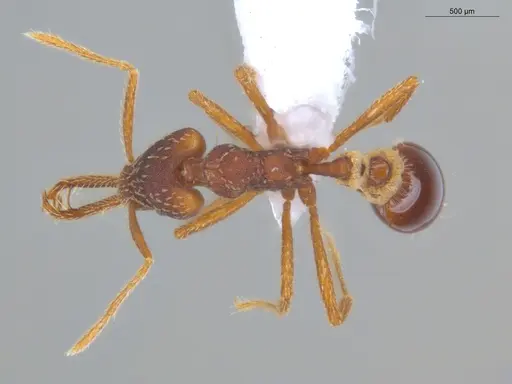
Literature
Loading...Loading products...