

Strumigenys decollata
- Scientific Name
- Strumigenys decollata
- Tribe
- Attini
- Subfamily
- Myrmicinae
- Author
- Mann, 1919
- Distribution
- Found in 1 countries
Strumigenys decollata Overview
Strumigenys decollata is an ant species of the genus Strumigenys. It is primarily documented in 1 countries , including Solomon Islands. Detailed taxonomic data and occurrence records can be further explored via authoritative databases such as AntWeb or the Global Biodiversity Information Facility (GBIF).
Strumigenys decollata
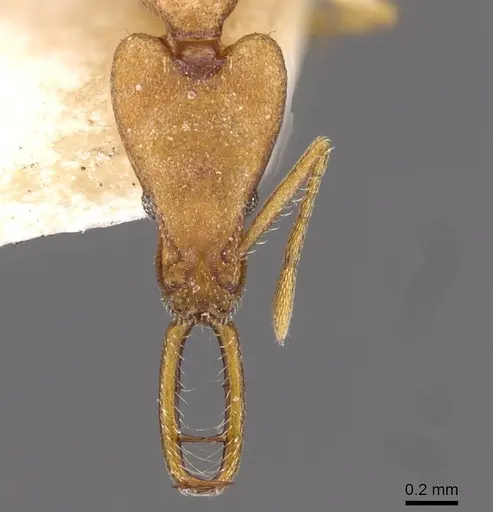
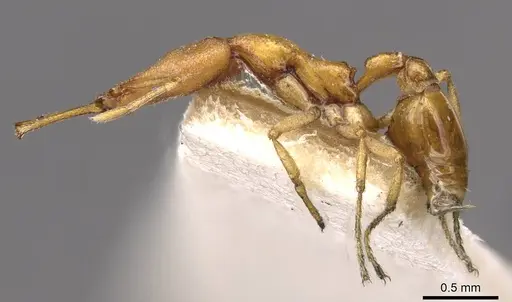
Strumigenys decollata is a tiny predatory ant species native to the Solomon Islands in the Oceania region [1]. Workers measure approximately 4.2mm in total length, making them small but not among the tiniest of the genus. They belong to the decollata species group and are closely related to Strumigenys praecollata, from which they can be distinguished by their differently shaped petiole nodes and contrasting cephalic sculptures. This species was first recorded from the Solomon Islands in 1919 and has been found on Makira, Guadalcanal, and Ysabel islands [1].
The biology of this species remains completely unstudied in scientific literature. However, like other Strumigenys species, they are predatory ants with specialized trap-jaw mandibles designed for capturing small prey. They likely inhabit forest floor microhabitats in the Solomon Islands, which provides warm, humid conditions year-round. Their small size and specialized hunting strategy make them fascinating but challenging species to keep.
Quick Summary
- Difficulty: Hard
- Origin & Habitat: Solomon Islands (Makira, Guadalcanal, Ysabel) in the Oceania region. They likely inhabit forest floor environments in this tropical island chain [1].
- Colony Type: Unknown, colony structure has not been documented for this species. Most Strumigenys species are monogyne (single queen), but this has not been confirmed for S. decollata.
- Size & Growth:
- Queen: Undescribed, queen caste has not been documented in scientific literature
- Worker: 4.2mm total length (TL), with HL 1.14mm and HW 0.69mm
- Colony: Unknown, no colony size data exists for this species
- Growth: Unknown, no development data available
- Development: Unknown, no direct observations of colony development exist. Based on typical Strumigenys patterns, expect 6-10 weeks at warm temperatures, but this is an estimate. (No species-specific development data exists. Related Strumigenys species typically develop slowly due to their specialized predatory lifestyle.)
- Antkeeping:
- Temperature: Warm conditions expected, Solomon Islands are tropical with year-round warmth. Aim for 24-28°C as a starting point, based on typical Strumigenys preferences and their natural tropical habitat.
- Humidity: High humidity required, forest floor species from a tropical island environment. Keep nest substrate consistently moist but not waterlogged. Provide a humidity gradient so ants can choose their preferred zone.
- Diapause: Unlikely, being a tropical species from the Solomon Islands, they probably do not require a diapause period. Maintain warm temperatures year-round.
- Nesting: Likely prefers humid nest chambers. Based on typical Strumigenys husbandry, a small acrylic or Y-tong nest with tight chambers scaled to their tiny size would work well. Provide connections to a humid outworld.
- Behavior: Strumigenys are specialized predators with trap-jaw mandibles designed to capture small arthropods. They are typically slow-moving but can strike with incredible speed when prey is detected. Workers forage individually rather than in groups. They are not aggressive toward humans and cannot sting, their primary defense is escape. Due to their tiny size (4.2mm), escape prevention is critical, they can slip through standard test tube setups and require fine mesh barriers.
- Common Issues: completely unstudied biology means all care is based on genus-level estimates, species-specific needs may differ, tiny size makes escape prevention challenging, standard barriers may not contain them, slow colony growth is typical for specialized predators, patience is essential, no documented colony structure means queen number and behavior are unknown, humidity requirements are inferred but not confirmed for this specific species
Species Overview and Identification
Strumigenys decollata is a member of the ant tribe Attini (fungus-growing ants), though Strumigenys themselves are predatory and do not cultivate fungus. This species was originally described by William Mann in 1919 from specimens collected in the Solomon Islands. The species belongs to the decollata group and is most closely related to Strumigenys praecollata, from which it can be distinguished by the differently shaped petiole nodes and contrasting head sculptures. Workers measure approximately 4.2mm in total length, making them a small but not minute species within the genus. The species has been recorded from Ysabel, Makira, and Guadalcanal islands in the Solomon Islands [1]. Unfortunately, the complete biology of this species, including colony structure, development, and behavior, remains completely unstudied in scientific literature.
Housing and Nest Setup
Due to their tiny worker size (4.2mm), Strumigenys decollata requires excellent escape prevention. Use test tubes with cotton plugs or small acrylic nests with chambers appropriately scaled to their size. Standard mesh barriers may not contain them, consider using fine mesh (0.5mm or smaller) on any ventilation openings. Provide a humid outworld connected to the nest, as these forest floor species require moisture. A small water tube for drinking should be available, though they get most moisture from prey. The nest material should retain humidity well, acrylic or Y-tong nests work better than plaster for maintaining the moisture gradient they need.
Feeding and Diet
Like all Strumigenys species, S. decollata is a specialized predator. Their trap-jaw mandibles are designed to capture small soft-bodied prey. In captivity, they should be fed small live prey such as springtails, fruit flies, and other micro-arthropods. They are unlikely to accept sugar water or honey, Strumigenys are carnivorous predators, not sugar-seekers. Feed small prey items every 2-3 days, adjusting based on consumption rate. Remove uneaten prey to prevent mold. Because they are so small, prey should be appropriately sized, items much larger than their head will be ignored.
Temperature and Humidity Requirements
As a tropical species from the Solomon Islands, Strumigenys decollata requires warm and humid conditions. Maintain temperatures in the range of 24-28°C, avoiding drops below 22°C. A heating cable on one side of the nest can create a temperature gradient. Humidity should be high, aim for 70-80% relative humidity within the nest. The substrate should remain consistently moist but never waterlogged. Provide a humidity gradient so workers can self-regulate by moving between wetter and drier areas. Poor humidity will quickly stress these forest floor species.
Behavior and Colony Dynamics
Strumigenys are solitary foragers, workers hunt alone rather than in groups or raids. They use their specialized trap-jaw mandibles to capture prey items, striking with remarkable speed when small arthropods wander within range. Colonies are likely small to moderate in size, as is typical for the genus. Workers are not aggressive and will flee rather than confront threats. The colony structure (single queen vs multiple queens) remains unknown. Given their tropical origin, they likely do not enter dormancy and remain active year-round with proper heating.
Challenges and Common Problems
The primary challenge with Strumigenys decollata is the complete lack of species-specific biological data. All care recommendations are based on genus-level patterns and may not perfectly match this species' actual needs. Their tiny size makes escape a constant risk, inspect all barriers regularly. Slow growth is typical for specialized predators, so patience is essential. Wild-caught colonies may carry parasites that can devastate small colonies. If acquiring this species, quarantine and observe new colonies carefully before introducing them to established setups. Do not combine with other ant species.
Frequently Asked Questions
How long does it take for Strumigenys decollata to produce first workers?
The egg-to-worker timeline is completely unknown for this species. Based on typical Strumigenys development patterns, expect approximately 6-10 weeks at optimal warm temperatures (around 26°C), but this is an estimate rather than confirmed data.
What do Strumigenys decollata ants eat?
Like all Strumigenys species, they are specialized predators that hunt small arthropods. Feed them small live prey such as springtails, fruit flies, and micro-arthropods. They are unlikely to accept sugar sources. Prey should be appropriately sized for their 4.2mm workers.
Can I keep Strumigenys decollata in a test tube?
Test tubes can work but escape prevention must be excellent due to their tiny size. Standard cotton plugs may need to be supplemented with fine mesh. Monitor closely for escapes and be prepared to upgrade to a small acrylic nest if needed.
What temperature do Strumigenys decollata need?
Keep them warm at 24-28°C. As a tropical Solomon Islands species, they do not tolerate cool temperatures. A slight temperature gradient allows workers to self-regulate.
Are Strumigenys decollata good for beginners?
No. This is an expert-level species due to: completely unstudied biology requiring guesswork, tiny size making escape likely, specialized dietary needs (live prey only), and high humidity requirements. They are not recommended for beginners.
Do Strumigenys decollata need hibernation?
No. Being a tropical species from the Solomon Islands, they do not require hibernation or diapause. Maintain warm temperatures year-round.
How big do Strumigenys decollata colonies get?
Colony size is unknown, no data exists for this species. Based on typical Strumigenys patterns, colonies are likely small to moderate, probably under a few hundred workers.
Why are my Strumigenys decollata dying?
Common causes include: low humidity (they need 70-80%), temperatures below 22°C, escape through barriers, starvation (they need live prey), and stress from improper handling. Review all environmental parameters and ensure prey is being captured.
Can I keep multiple queens together?
Colony structure is unconfirmed for this species. Combining unrelated queens is not recommended as no data exists about their queen tolerance. Most Strumigenys are single-queen species.
When should I move Strumigenys decollata to a formicarium?
Wait until the colony reaches at least 20-30 workers and is actively foraging. Test tube colonies can be maintained long-term if humidity is managed. Move to a small formicarium only when the test tube becomes overcrowded.
Is Strumigenys decollata aggressive?
No, Strumigenys are not aggressive toward humans. Workers are small, solitary predators that flee from threats. They pose no danger to keepers.
References

This caresheet is licensed under CC BY-SA 4.0 .
CASENT0909306
View on AntWeb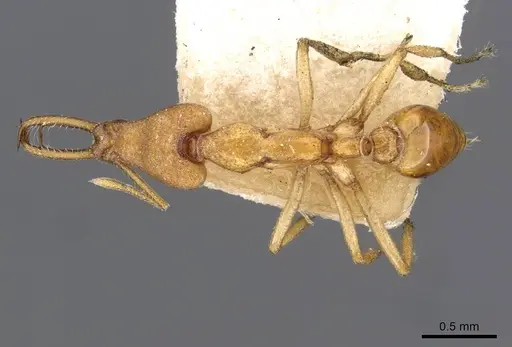
Literature
Loading...Loading products...