

Strumigenys chernovi
- Scientific Name
- Strumigenys chernovi
- Tribe
- Attini
- Subfamily
- Myrmicinae
- Author
- Dlussky, 1993
- Distribution
- Found in 1 countries
Strumigenys chernovi Overview
Strumigenys chernovi is an ant species of the genus Strumigenys. It is primarily documented in 1 countries , including Fiji. Detailed taxonomic data and occurrence records can be further explored via authoritative databases such as AntWeb or the Global Biodiversity Information Facility (GBIF).
Strumigenys chernovi
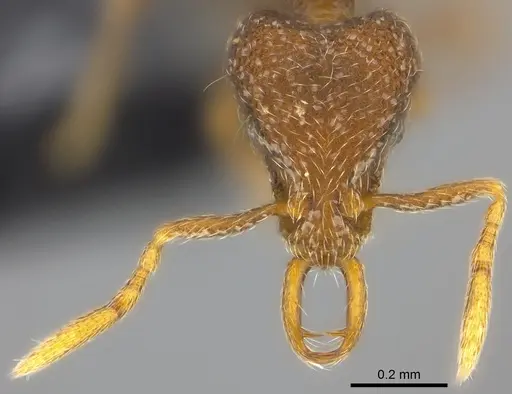
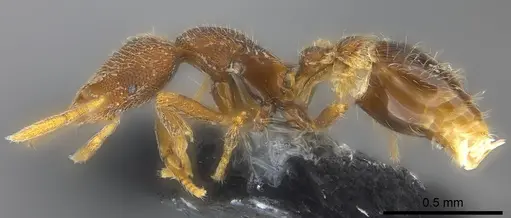
Strumigenys chernovi is a tiny trap-jaw ant endemic to the Fiji Islands. Workers measure just 2.0-2.4mm, making them among the smaller ants you'll encounter [1]. They have a distinctive reddish-brown coloration with long, slender mandibles and unusually long hairs (filiform to flagellate) projecting from their head, pronotum, and hind basitarsus [1][2]. The most striking feature is the contrast between their densely sculptured promesonotum and the glassy smooth propodeal dorsum, along with very long basigastral costulae extending nearly halfway down their first gastral segment [1]. This species belongs to the smythiesii complex within the Strumigenys godeffroyi group and is found across most major Fijian islands [3][2].
Quick Summary
- Difficulty: Hard
- Origin & Habitat: Endemic to Fiji Islands, found in lowland forest habitats on islands including Gau, Koro, Ovalau, Vanua Levu, and Viti Levu [4][3]. Absent from Kadavu and Taveuni [3].
- Colony Type: Colony structure is unconfirmed. Based on typical Strumigenys patterns, likely single-queen (monogyne) colonies with relatively small worker populations.
- Size & Growth:
- Queen: Undescribed in detail, workers are 2.0-2.4mm [1][2], queens would be slightly larger
- Worker: 2.0-2.4mm [1][2]
- Colony: Likely small, Strumigenys colonies typically reach a few hundred workers at most
- Growth: Slow, small species with limited colony sizes develop gradually
- Development: Unknown, likely 6-10 weeks based on typical Strumigenys patterns (No specific development data exists for this species. Small tropical ants typically develop faster than temperate species.)
- Antkeeping:
- Temperature: Keep at 24-28°C, these are tropical lowland forest ants from Fiji requiring warm conditions [4]. A gentle gradient is beneficial.
- Humidity: High humidity required, think damp forest floor. Keep substrate consistently moist but not waterlogged. These tiny ants desiccate quickly in dry conditions.
- Diapause: Unlikely, as a tropical species from near-equatorial Fiji, they probably do not require a diapause period. Maintain warm conditions year-round.
- Nesting: Use small, tight chambers scaled to their tiny 2mm size. Y-tong (AAC) nests or small acrylic setups work well. They prefer dark, humid nesting areas.
- Behavior: These are extremely small, shy ants with trap-jaw mandibles specialized for hunting springtails. They are not aggressive and will likely flee from threats rather than engage. Their tiny size means escape prevention is absolutely critical, they can squeeze through remarkably small gaps. They are predatory, using their snap-jaw mechanism to capture small prey.
- Common Issues: escape prevention is critical, at 2mm, they can squeeze through standard mesh and tiny gaps in equipment, specialized diet, they require live springtails or micro-prey, making them difficult to feed, desiccation risk, small size means they dry out quickly in dry or warm conditions, slow growth, small colony sizes mean keepers may lose patience with their slow development, humidity management, they need high humidity but also ventilation to prevent mold
Housing and Escape Prevention
Housing Strumigenys chernovi presents unique challenges due to their extremely small size at just 2.0-2.4mm [1]. Standard ant keeping equipment often has gaps that these ants can slip through with ease. Use Y-tong (AAC) nests with tight-fitting connections or small acrylic formicariums with all seams sealed. Apply fluon or similar barrier solutions to all edges. The outworld should also be carefully sealed, even tiny gaps around tubing connections can allow escapes. Because they are so small, even brief escape incidents can result in lost colonies. Consider using test tube setups with cotton plugs replaced by tightly fitting barriers. The nesting area should be dark, these ants prefer concealed spaces typical of their forest floor habitat in Fiji [4].
Feeding and Diet
Strumigenys are specialized predatory ants with trap-jaw mandibles designed for hunting tiny arthropods. In captivity, their primary food should be live springtails, these are the natural prey of Strumigenys in the wild and provide proper nutrition [5]. Other small live prey such as booklice, psocopterans, and tiny isopods may be accepted. Do not rely on sugar sources, these ants are predators, not sugar-seekers. Feed small prey items multiple times per week, removing any uneaten prey after 24-48 hours to prevent mold. The key challenge is establishing a reliable springtail culture or obtaining regular supplies of small live prey. Some keepers report success with fruit fly cultures as alternative prey, but springtails remain the ideal food source.
Temperature and Humidity
As a lowland forest species endemic to Fiji, Strumigenys chernovi requires warm and humid conditions [4]. Maintain temperatures in the range of 24-28°C, avoiding drops below 22°C. A heating cable on one side of the nest can create a gentle gradient, but avoid direct heat that could dry out the colony. Humidity should be high, think damp forest floor conditions. Keep the nesting substrate consistently moist but not waterlogged. The nest should have a water tube or moisture reservoir to maintain humidity. In dry environments, consider enclosing the nest setup to retain moisture. However, ensure some ventilation to prevent mold buildup. These tiny ants are particularly vulnerable to desiccation due to their small size.
Behavior and Temperament
Strumigenys chernovi is a shy, non-aggressive species that prefers to avoid confrontation. Their trap-jaw mandibles are specialized for capturing tiny springtail prey, not for defending against larger threats [5]. When threatened, they will likely flee rather than engage. Workers are slow-moving and spend most of their time foraging in the leaf litter layer. Colonies are likely small and discreet. Activity levels will increase with warmer temperatures and higher humidity. These ants do not form large colonies, expect worker populations to remain modest, likely under a few hundred individuals even in mature colonies. Their small size and cryptic behavior make them fascinating but challenging to observe.
Colony Establishment
Establishing a colony of Strumigenys chernovi requires patience. If acquiring a queen or colony, provide a small, humid nesting chamber. The queen (if claustral) will seal herself in and raise the first brood alone. First workers (nanitics) will be tiny and may take weeks to appear. Growth is slow, small colony sizes mean each generation adds only a modest number of workers. Do not disturb the queen during founding. Once workers emerge, they will begin foraging for small prey. Colonies should be fed small live prey regularly. Avoid combining with other ant species or introducing wild-caught insects that could carry parasites. Given their rarity in the wild (frequency of only 0.006-0.013 in litter samples [6]), these ants are not commonly available in the ant keeping hobby.
Frequently Asked Questions
How long does it take for Strumigenys chernovi to produce first workers?
The exact timeline is unconfirmed, but based on typical Strumigenys patterns and their small size, expect 6-10 weeks from egg to first worker at optimal temperature (24-28°C). Growth is slow, so patience is essential.
What do Strumigenys chernovi ants eat?
They are specialized predators requiring live springtails or similar tiny micro-arthropods. Their trap-jaw mandibles are designed for catching small prey, not for sugar sources. Establish a springtail culture or source regular supplies of small live prey.
Are Strumigenys chernovi good for beginners?
No, this species is rated as difficult. Their tiny 2mm size makes escape prevention challenging, they require specialized live prey (springtails), and they need high humidity with warm temperatures. They are not recommended for beginners.
How big do Strumigenys chernovi colonies get?
Colony size is likely modest, Strumigenys colonies typically reach a few hundred workers at most. This species appears rare in the wild (frequency 0.006 in litter samples [6]), suggesting naturally small colonies.
Do Strumigenys chernovi need hibernation?
No, as a tropical species from near-equatorial Fiji, they do not require diapause. Maintain warm (24-28°C) and humid conditions year-round.
Can I keep Strumigenys chernovi in a test tube?
Yes, a test tube setup can work for founding colonies and small colonies. Ensure the cotton is packed tightly or use a barrier, as their tiny 2mm size allows them to squeeze through standard cotton fibers. Keep the tube humid and dark.
Why are my Strumigenys chernovi dying?
Common causes include: desiccation (too dry or too warm), escape through tiny gaps, starvation (not enough live prey), mold from excess moisture, or stress from disturbance. Ensure high humidity, excellent escape prevention, and regular feedings of live springtails.
Where is Strumigenys chernovi found in the wild?
This is an endemic species found only in the Fiji Islands. It occurs in lowland forest habitats on most major islands including Viti Levu, Vanua Levu, Gau, Koro, and Ovalau. It is absent from Kadavu and Taveuni [3][4].
References

This caresheet is licensed under CC BY-SA 4.0 .
CASENT0184914
View on AntWeb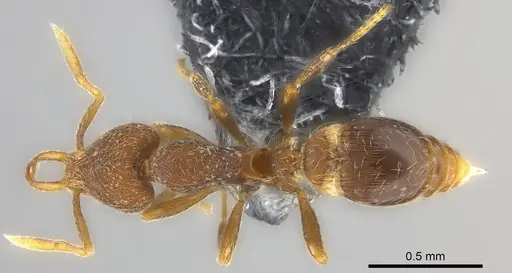
Literature
Loading...Loading products...