

Strumigenys augustandrewi
- Scientific Name
- Strumigenys augustandrewi
- Tribe
- Attini
- Subfamily
- Myrmicinae
- Author
- Longino, 2006
- Distribution
- Found in 1 countries
Strumigenys augustandrewi Overview
Strumigenys augustandrewi is an ant species of the genus Strumigenys. It is primarily documented in 1 countries , including Costa Rica. Detailed taxonomic data and occurrence records can be further explored via authoritative databases such as AntWeb or the Global Biodiversity Information Facility (GBIF).
Strumigenys augustandrewi
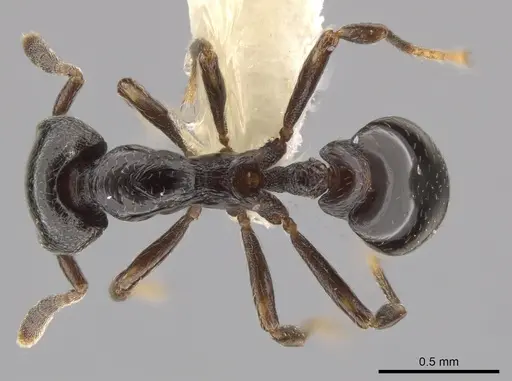
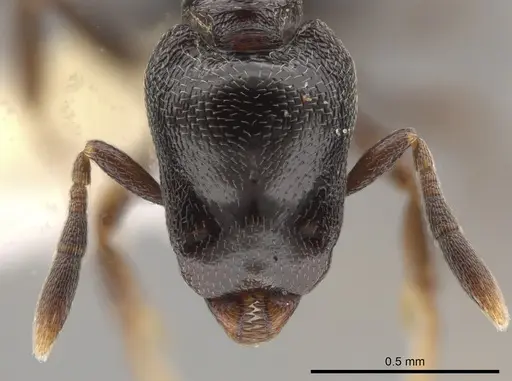
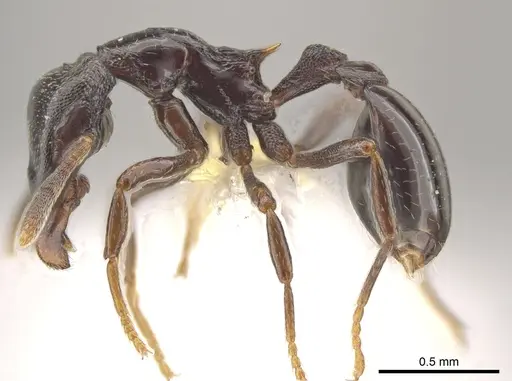
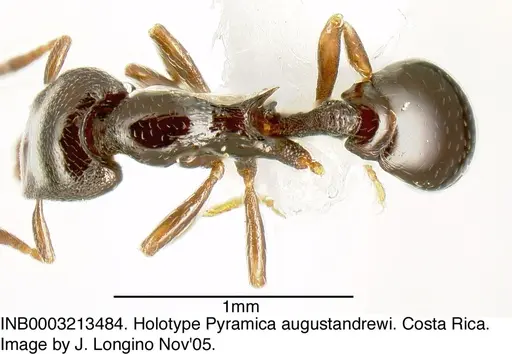
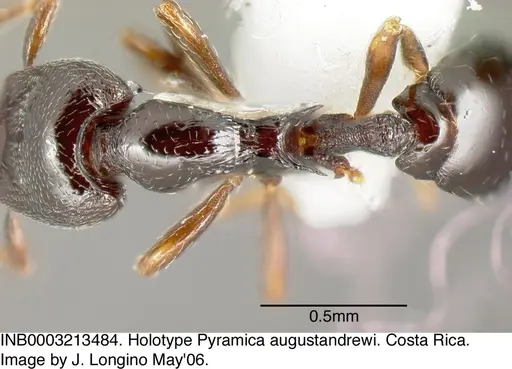
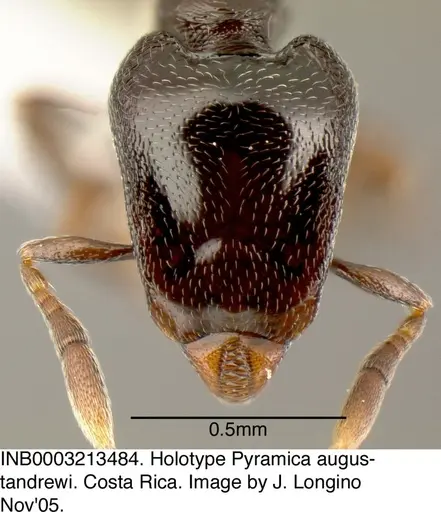
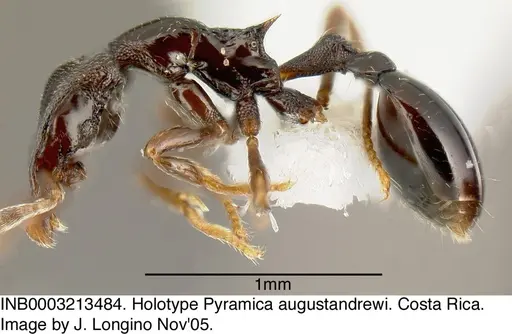
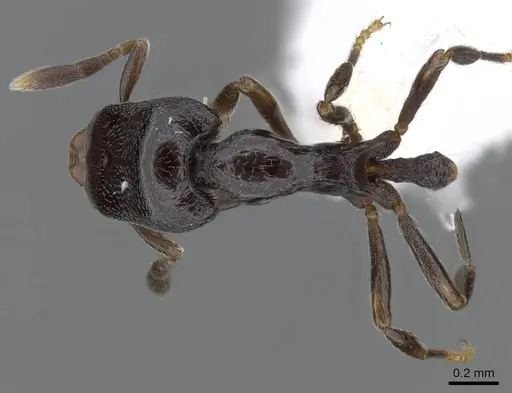
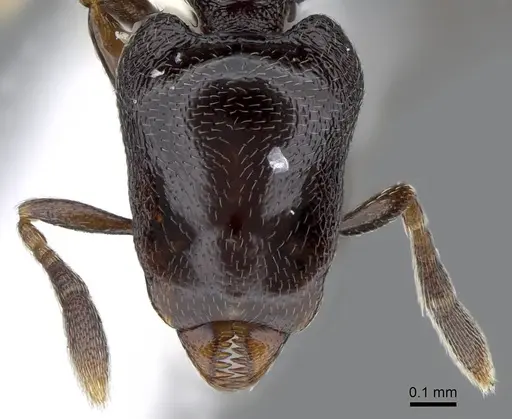
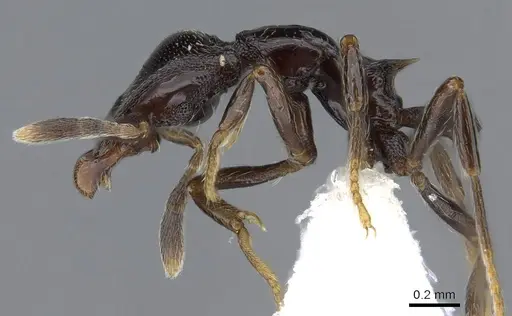
Strumigenys augustandrewi is a tiny predatory ant native to the cloud forests of Costa Rica. Workers measure just 0.6mm in head width, making them among the smaller ants in the genus [1]. They have distinctive downward-curving mandibles that function as trap-jaws, capable of snapping shut at incredible speeds to capture prey [1]. The head is convex rather than flattened, and the body lacks the spongiform tissue found on many related species. This species belongs to the longinoi group within the excisa species group and is known only from mature cloud forest floor litter samples at elevations between 1100-1500m [1][2].
These ants are specialized predators that hunt small micro-arthropods, particularly springtails, using their trap-jaw mandibles. They occur in very limited, specific rainforest preserves in Costa Rica's Heredia Province [2]. This species is rarely kept in captivity due to its restricted distribution and specialized care requirements.
Quick Summary
- Difficulty: Expert
- Origin & Habitat: Costa Rica (Heredia Province), mature cloud forest at 1100-1500m elevation, found in sifted leaf litter from the forest floor [1][2]
- Colony Type: Colony structure is unconfirmed, only worker caste has been documented. Likely single-queen (monogyne) based on typical Strumigenys patterns.
- Size & Growth:
- Queen: Undescribed, queen caste unknown [1]
- Worker: Head width 0.6mm, total body approximately 2-3mm [1]
- Colony: Unknown, only four workers have ever been documented [1]
- Growth: Unknown, likely slow based on typical Strumigenys patterns
- Development: Unknown, estimated 8-12 weeks based on related Strumigenys species at optimal temperature (No development data exists for this species. Estimates based on genus-level patterns for small Myrmicinae in cloud forest habitats.)
- Antkeeping:
- Temperature: Cool to moderate: 18-22°C. As a cloud forest species, they prefer stable, cool conditions without temperature fluctuations [1].
- Humidity: High: 70-85%. These ants come from constantly damp forest floor litter and need consistently moist substrate.
- Diapause: Likely yes, cloud forest species from tropical highlands typically experience seasonal temperature changes. A cool period of reduced activity around 15-18°C for 2-3 months is likely beneficial.
- Nesting: Naturalistic setup with very small chambers. In captivity they do well in small acrylic nests or test tube setups with fine substrate. They need tight chambers scaled to their tiny size.
- Behavior: These are cryptic, slow-moving ants that spend most of their time hunting in leaf litter. They are not aggressive and rely on their trap-jaw mandibles to capture small prey. Workers are docile and rarely sting. Escape prevention is critical due to their very small size, they can squeeze through standard barrier setups. They are ground-dwelling and do not climb well.
- Common Issues: very small size means escapes are likely without fine mesh barriers, specialized diet makes them difficult to feed, need constant supply of tiny live prey, high humidity requirements can lead to mold problems if ventilation is poor, slow growth and rare species mean colonies are difficult to establish, cloud forest origin means they are sensitive to temperature fluctuations and dry air
Housing and Enclosure
Strumigenys augustandrewi requires careful enclosure setup due to their minute size. Use small acrylic nests or test tube setups with chambers scaled to their tiny dimensions, typical Strumigenys work well with chambers around 2-3mm in height. Because they are only 0.6mm wide, they can escape through standard barrier setups. Apply fluon or use fine mesh (at least 0.3mm) on all openings. A naturalistic setup with a thin layer of damp forest floor substrate works well, they naturally occur in sifted leaf litter, so a mix of soil, sand, and decaying leaf matter mimics their natural environment. Keep the setup compact with minimal open space. [1][2]
Feeding and Diet
As predatory trap-jaw ants, Strumigenys augustandrewi requires a constant supply of tiny live prey. Their primary food source in the wild consists of springtails and other micro-arthropods found in forest floor litter. In captivity, offer live springtails (Folsomia candida or similar), tiny isopods, and micro-arthropods. They are unlikely to accept sugar water or honey, Strumigenys are obligate predators. Feed small prey items 2-3 times per week, removing any uneaten prey after 24 hours to prevent mold. Do not attempt to keep this species unless you can reliably provide live micro-prey. [1]
Temperature and Humidity
This species requires cool, stable conditions matching its cloud forest origin. Maintain temperatures between 18-22°C, avoid any temperatures above 25°C. Use a heating cable only on one side of the enclosure to create a gentle gradient, allowing ants to self-regulate. Humidity should be high at 70-85%. The substrate should feel consistently damp but never waterlogged. Mist lightly every few days and use a water reservoir in the nest to maintain moisture. Good ventilation is essential to prevent mold while maintaining humidity. [1][2]
Behavior and Temperament
Strumigenys augustandrewi are cryptic, non-aggressive ants that avoid confrontation. Workers are slow-moving and spend most of their time hunting in the substrate rather than out in the open. They use their trap-jaw mandibles to capture prey, when triggered, the mandibles snap shut at extremely high speeds. They do not defend their nests aggressively and are not known to sting. Due to their tiny size and ground-dwelling nature, they are poor climbers and unlikely to escape from smooth-walled enclosures if proper barriers are applied. [1]
Colony Establishment
This is one of the most challenging species to keep because only four workers have ever been documented in scientific collections [1]. No queens have been described, and wild colonies have never been observed. If available, colony establishment would likely follow typical Strumigenys patterns: a claustral queen would seal herself in a small chamber and raise the first workers (nanitics) on prey she captures nearby. Growth would be slow, with colonies remaining very small. This species is not recommended for beginners and is best left to expert antkeepers with specialized micro-prey culturing setups.
Frequently Asked Questions
How big do Strumigenys augustandrewi colonies get?
Unknown, only four workers have ever been documented. Based on related Strumigenys species, colonies likely remain small, possibly under 100 workers.
What do Strumigenys augustandrewi eat?
They are obligate predators that require live tiny prey, primarily springtails and other micro-arthropods. They do not accept sugar sources or dead prey reliably.
Can I keep Strumigenys augustandrewi in a test tube?
Yes, a test tube setup can work, but the chambers must be very small and the water reservoir carefully managed to avoid flooding such tiny ants. A naturalistic setup with damp substrate is more appropriate.
Are Strumigenys augustandrewi good for beginners?
No, this is an expert-level species. Their tiny size, specialized predatory diet, high humidity needs, and extremely rare availability make them unsuitable for beginners.
What temperature do Strumigenys augustandrewi need?
Keep them cool at 18-22°C. As a cloud forest species, they are sensitive to heat and should never be kept above 25°C.
Do Strumigenys augustandrewi need hibernation?
Likely yes, a cool period around 15-18°C for 2-3 months during the winter months would likely benefit the colony, mimicking natural seasonal cycles.
Why are my Strumigenys augustandrewi dying?
Common causes include: temperature too high (over 25°C), humidity too low, lack of live prey, or escapes due to inadequate barriers. Their tiny size makes them vulnerable to multiple stressors.
How long until first workers in Strumigenys augustandrewi?
Unknown for this species. Based on related Strumigenys, expect 8-12 weeks from egg to worker at optimal temperature (around 20°C).
Where does Strumigenys augustandrewi live in the wild?
Only known from mature cloud forests in Costa Rica's Heredia Province at 1100-1500m elevation, found in sifted leaf litter from the forest floor.
References

This caresheet is licensed under CC BY-SA 4.0 .
Literature
Loading...Loading products...