

Strumigenys abditivata
- Scientific Name
- Strumigenys abditivata
- Tribe
- Attini
- Subfamily
- Myrmicinae
- Author
- Bolton, 2000
- Distribution
- Found in 1 countries
Strumigenys abditivata Overview
Strumigenys abditivata is an ant species of the genus Strumigenys. It is primarily documented in 1 countries , including Brazil. Detailed taxonomic data and occurrence records can be further explored via authoritative databases such as AntWeb or the Global Biodiversity Information Facility (GBIF).
Strumigenys abditivata
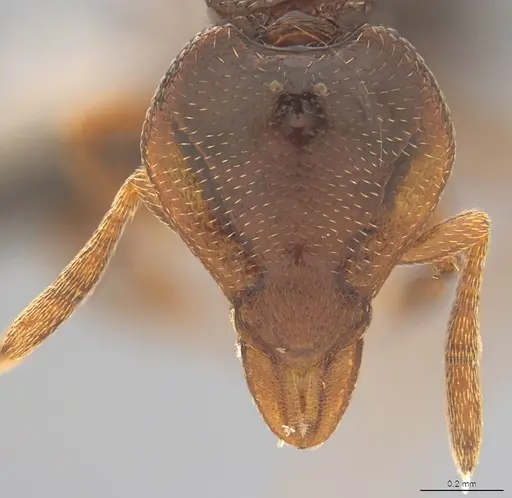
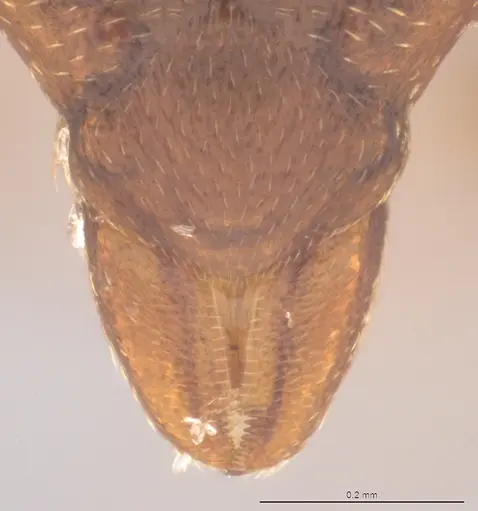
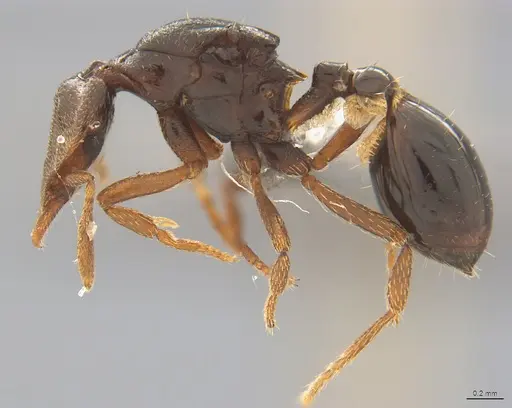
Strumigenys abditivata is a tiny predatory ant native to the Atlantic Forest regions of southern Brazil. Workers measure just 2.7-2.8mm, making them one of the smaller ant species kept in captivity . They belong to the Dacetini tribe (sometimes classified within Attini), a group of specialized predators that hunt springtails using their distinctive trap-jaw mandibles. The species is immediately recognizable by its extremely long mandibular basal lamella and finely sculptured mandibles, which set it apart from related species in the splendens group [1]. In the wild, these ants live in forest floor habitats among decomposing leaf litter, where they hunt tiny arthropods in the humid micro-environment of the forest floor [2].
Quick Summary
- Difficulty: Expert
- Origin & Habitat: Southern Brazil (Paraná, Santa Catarina), Atlantic Forest biome at elevations around 1000m. Found in forest habitat among leaf litter and rotting wood [2][3].
- Colony Type: Likely monogyne (single queen) based on typical genus patterns. Colony size is small, Strumigenys species typically reach only dozens to a few hundred workers. Founding behavior is unconfirmed but likely claustral like related species.
- Colony: Monogyne
- Founding: Claustral
- Size & Growth:
- Queen: Unconfirmed, likely 3-4mm based on worker size and genus patterns
- Worker: 2.7-2.8mm
- Colony: Likely under 200 workers based on typical Strumigenys colony sizes
- Growth: Slow, Dacetini are slow-growing ants that invest heavily in each individual prey item
- Development: Estimated 8-12 weeks at optimal temperature based on related Dacetini species (Development is slow, each larva requires many springtails to develop. Temperature around 24-26°C likely optimal for development.)
- Antkeeping:
- Temperature: Keep at 24-26°C, these are tropical forest floor ants that need warmth and humidity [2]. A gentle gradient allows workers to self-regulate.
- Humidity: High humidity is critical, think damp forest floor. Keep the nest substrate consistently moist but not waterlogged. Leaf litter species need 70-85% humidity.
- Diapause: Unlikely, as a tropical/subtropical species from southern Brazil, they probably do not require a true diapause. May show reduced activity in cooler months.
- Nesting: Y-tong (AAC) nests or naturalistic setups with fine substrate work well. They prefer tight, humid chambers scaled to their tiny size. Avoid drying out the nest.
- Behavior: These are shy, slow-moving ants that spend most of their time hunting among leaf litter. They are not aggressive and will flee from disturbance. Their trap-jaw mandibles are used to catch tiny springtails, they do not pose any threat to humans. Escape prevention is critical due to their very small size, they can squeeze through standard test tube barriers. They are quiet colony inhabitants that do not produce strong odors.
- Common Issues: escape prevention is critical, they are tiny and can slip through standard barriers, slow growth frustrates beginners, colonies may take months to produce first workers, requires live springtail cultures, cannot survive on sugar alone, high humidity is essential, drying out kills colonies quickly, wild-caught colonies may arrive with parasites that cause colony collapse
Housing and Setup
Strumigenys abditivata requires a setup that recreates the humid forest floor conditions of their native habitat. A Y-tong (AAC) nest works well because it maintains humidity while allowing you to observe the colony. Alternatively, a naturalistic setup with a shallow layer of moist soil/leaf litter mixture allows them to hunt naturally. The key is maintaining high humidity without flooding, use a water reservoir connected to the nest and check that the substrate stays damp but does not have standing water. Because they are tiny, use fine mesh on any ventilation holes and apply Fluon or other barrier solutions to all openings. A small outworld (foraging area) connected to the nest works, but ensure the connection tube has a barrier that these small ants cannot bypass [2].
Feeding and Diet
This is the most critical aspect of keeping Strumigenys abditivata. As Dacetini ants, they are specialized predators that primarily hunt springtails (Collembola). In captivity, you must maintain a culture of live springtails to feed your colony. Springtail cultures are easy to maintain, they breed in damp soil and feed on mold. Offer small springtails (2-3mm) several times per week. The number of springtails offered should scale with colony size, a founding queen needs only a few, but a colony of 50+ workers may consume dozens per week. Some keepers report that Strumigenys will occasionally accept other tiny prey like booklice (psocids) or minute isopods, but springtails should form the core of their diet. Sugar water is generally NOT accepted, these are strict predators [4].
Temperature and Humidity
Strumigenys abditivata comes from the Atlantic Forest of southern Brazil, a warm and humid environment. Keep the nest at 24-26°C for optimal colony development. Temperatures below 20°C will slow activity and may prevent brood development. A small heating cable on one side of the nest can create a gradient, but ensure the nest does not dry out. Humidity is perhaps more important than temperature, aim for 75-85% relative humidity inside the nest. The substrate should feel damp to the touch. If you see condensation on the nest walls, that's ideal. Mist the outworld occasionally but avoid directly misting the nest as it can flood small chambers. A water tube connected to the nest helps maintain humidity through evaporation [2].
Colony Development
Strumigenys colonies grow slowly compared to many common ant species. A newly mated queen will take 8-12 weeks to produce her first workers (nanitics) at optimal temperature. The first workers are tiny and may be difficult to see. Growth is limited by the number of springtails available, each larva requires many individual prey items to develop. A healthy colony may reach 50 workers within 6-12 months if fed well, but reaching larger sizes takes years. Unlike fast-growing ants that can consume large prey items, Strumigenys must hunt many tiny springtails, which limits their growth rate. Be patient, these are long-lived ants that can live for many years once established. Do not disturb the queen during founding, she needs peace to raise her first brood. [4]
Behavior and Temperament
Strumigenys abditivata is a peaceful, non-aggressive ant that should be kept as a observation species. Workers are slow-moving and spend most of their time hunting through the substrate. They do not defend their nest aggressively and will retreat from threats rather than attack. Their trap-jaw mandibles are designed for catching tiny springtails, not for biting humans, they pose no danger to keepers. The main behavioral concern is their small size makes them excellent escape artists. Standard test tube barriers may not work, use fine mesh (at least 0.5mm) and apply barrier solutions to all potential escape points. They are fascinating to watch as they hunt, using their mandibles to snap shut on springtails with remarkable speed. A well-established colony will produce alates (reproductives) after several years, though this is rare in captivity. [4]
Frequently Asked Questions
How long does it take for Strumigenys abditivata to produce first workers?
Expect 8-12 weeks at optimal temperature (24-26°C). This is slow compared to many ants, the queen raises each larva individually and they require many springtails to develop. Do not disturb the founding queen during this time.
What do Strumigenys abditivata ants eat?
They are strict predators that need live springtails. Establish a springtail culture before acquiring these ants. Offer small springtails (2-3mm) several times per week. They do not eat sugar, honey, or other typical ant foods, springtails are essential for their survival.
Can I keep Strumigenys abditivata in a test tube?
A test tube can work for a founding queen, but you must maintain high humidity. Place the test tube in a humid setup like a plastic container with damp substrate. For established colonies, a Y-tong or naturalistic nest is better. Regardless of nest type, excellent escape prevention is mandatory due to their tiny size.
Are Strumigenys abditivata ants dangerous?
No, they are completely harmless to humans. Their trap-jaw mandibles are designed for catching tiny springtails, not for biting people. They are shy and will flee rather than defend themselves.
Do Strumigenys abditivata ants need hibernation?
No, they come from southern Brazil (subtropical Atlantic Forest) and do not require a true diapause. They may show slightly reduced activity in cooler months, but keeping them at room temperature (20-24°C) year-round is fine. Avoid temperatures below 18°C.
Why are my Strumigenys abditivata dying?
The most common causes are: 1) Dried out, they need constant humidity,2) Not enough springtails, they will starve without live prey,3) Escaped, check all barriers are fine enough,4) Parasites from wild collection. Ensure humidity is high, springtail supply is constant, and escape prevention is excellent.
How big do Strumigenys abditivata colonies get?
Likely under 200 workers. Strumigenys are not large colony ants, they remain small even when established. A healthy colony may reach 50-100 workers after 1-2 years with good feeding. They are long-lived but slow-growing.
Is Strumigenys abditivata good for beginners?
No, this is an expert-level species. They require live springtail cultures, constant high humidity, excellent escape prevention, and extreme patience for their slow growth. Beginners should start with easier species like Lasius or Tetramorium before attempting Strumigenys.
When should I move my colony to a formicarium?
Wait until the colony has at least 20-30 workers and is actively foraging in the outworld. Moving too early can stress the colony. A Y-tong nest works well for their humidity needs. Ensure the new setup maintains the damp conditions they require.
Can I keep multiple queens together?
This has not been documented for this species. Based on typical Strumigenys behavior, single-queen colonies are most likely. Do not attempt to combine unrelated queens, they will likely fight.
References

This caresheet is licensed under CC BY-SA 4.0 .
CASENT0900192
View on AntWeb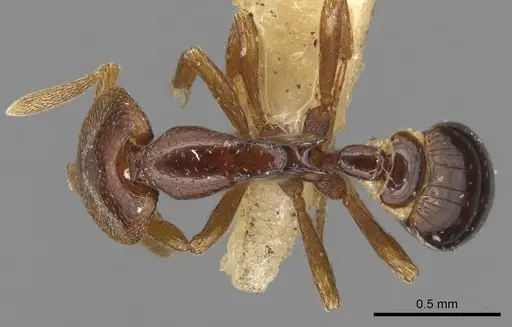
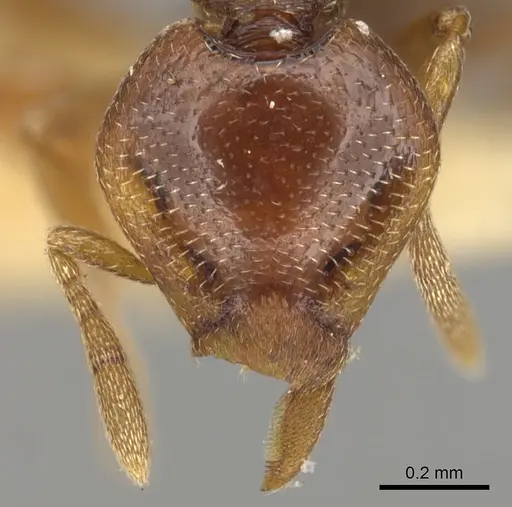
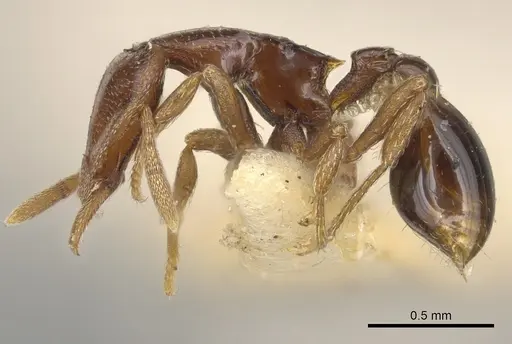
CASENT4036188
View on AntWeb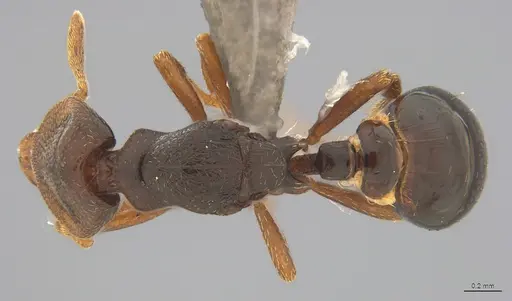
Literature
Loading...Loading products...