

Stigmacros spinosa
- Scientific Name
- Stigmacros spinosa
- Tribe
- Melophorini
- Subfamily
- Formicinae
- Author
- McAreavey, 1957
- Distribution
- Found in 1 countries
Stigmacros spinosa Overview
Stigmacros spinosa is an ant species of the genus Stigmacros. It is primarily documented in 1 countries , including Australia. Detailed taxonomic data and occurrence records can be further explored via authoritative databases such as AntWeb or the Global Biodiversity Information Facility (GBIF).
Stigmacros spinosa
Stigmacros spinosa is a small ant species native to Australia, belonging to the subfamily Formicinae and tribe Melophorini. Workers are variable in appearance, with color morphs ranging from yellow to reddish-brown depending on their location [1]. The species shows significant variation across its range, with Western Australian populations potentially representing distinct species [1]. As with other Formicinae ants, they do not have a functional stinger but can spray formic acid as a defense. This is a poorly studied Australian species that remains largely undocumented in terms of captive care requirements.
Quick Summary
- Difficulty: Unknown
- Origin & Habitat: Australia, found across the Australasian region, with documented populations in Western Australia (near Shark Bay, Eucla, and Kambalda) and New South Wales [1]. Natural habitat preferences are unconfirmed.
- Colony Type: Colony structure is unconfirmed. Based on typical Melophorini patterns, likely single-queen colonies.
- Size & Growth:
- Queen: Unknown, not documented in available literature
- Worker: Unknown, size measurements not provided in available research
- Colony: Unknown, colony size data not available
- Growth: Unknown
- Development: Unconfirmed, no development data available for this species (Development timeline is unconfirmed. Based on related Formicinae, expect 6-10 weeks at optimal temperature.)
- Antkeeping:
- Temperature: Unconfirmed. Based on Australian distribution, likely tolerates warm conditions. Start around 22-26°C and observe colony activity.
- Humidity: Unconfirmed. Australian ants typically prefer drier conditions. Provide moderate humidity with some dry areas in the nest.
- Diapause: Unknown, no specific data on overwintering requirements. Australian species may have reduced activity periods.
- Nesting: Natural nesting behavior is unconfirmed. Based on Melophorini preferences, likely nests in soil or under stones. Test tubes and Y-tong nests work well for small Formicinae.
- Behavior: Behavior is unconfirmed. As a Formicinae, they will spray formic acid when threatened. Escape prevention should be moderate, they are small ants but not among the tiniest. Activity levels likely moderate.
- Common Issues: lack of documented care information makes proper husbandry challenging, color variation across populations may indicate multiple similar species, wild-caught colonies may have parasites not well-documented for this species, temperature and humidity requirements are not confirmed for captive care, slow growth due to unknown development requirements
Appearance and Identification
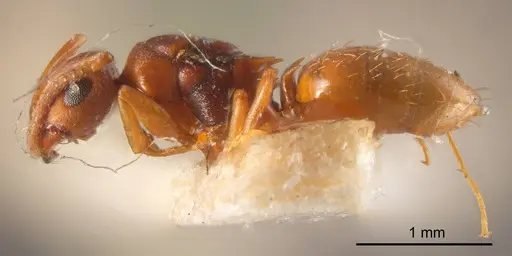
Stigmacros spinosa workers display notable color variation across their range. Western Australian populations show distinct color morphs: yellow workers near Shark Bay (more angular in appearance), reddish-brown workers near Eucla, and intermediate forms 60km south of Kambalda [1]. None of these Western Australian forms precisely matches the holotype collected from New South Wales, suggesting WA material may include more than one species [1]. As a Formicinae member, they have the typical triangular head shape and lack a functional stinger, instead relying on formic acid spray for defense.
Distribution and Habitat
This species is found across the Australasian region, specifically in Australia. Documented populations exist in Western Australia (Eurardy Station near Shark Bay, Eucla, and Kambalda region) as well as New South Wales [1]. The significant variation across this range suggests potential cryptic species may be present. Natural microhabitat preferences remain unconfirmed, though related Melophorini often nest in soil or under ground cover in arid to semi-arid regions.
Care and Husbandry
Due to the limited scientific data available, captive care recommendations for Stigmacros spinosa are estimates based on typical Formicinae and Melophorini requirements. Provide a test tube setup for founding colonies, transitioning to a Y-tong or plaster nest as the colony grows. Temperature should be in the range of 22-26°C initially, adjusting based on colony behavior and activity levels. Humidity should be moderate, aim for a gradient from slightly damp to dry areas within the nest. As Formicinae, they will accept sugar sources (honey, sugar water) and protein (small insects). Escape prevention is recommended despite their moderate size.
Defense and Behavior
Like all Formicinae ants, Stigmacros spinosa lacks a functional stinger. Their primary defense mechanism is spraying formic acid, which they produce in their poison gland. When handling or observing these ants, be aware that they may spray when threatened or disturbed. They are not considered aggressive but will defend their nest if provoked. Activity patterns are not well-documented, but related species are typically moderate foragers.
Frequently Asked Questions
How do I identify Stigmacros spinosa ants?
Identification is challenging due to significant color variation across populations. Workers can range from yellow to reddish-brown depending on their geographic origin [1]. Western Australian populations may represent different species entirely [1]. Positive identification typically requires examination of specimen morphology by an ant taxonomist.
What do Stigmacros spinosa ants eat?
Diet is unconfirmed for this specific species. Based on typical Formicinae and Melophorini behavior, they likely accept sugar sources (honey, sugar water) and small protein items (insect fragments). Start with offering both and observe acceptance.
What temperature do Stigmacros spinosa ants need?
Temperature requirements are unconfirmed. Based on their Australian distribution, start around 22-26°C and monitor colony activity. Adjust based on how the colony responds.
Do Stigmacros spinosa ants need hibernation?
Diapause requirements are unknown. Australian species may have reduced activity periods during cooler months, but specific overwintering needs for this species have not been documented.
How long does it take for Stigmacros spinosa to develop from egg to worker?
Development timeline is unconfirmed. Based on typical Formicinae development patterns, expect approximately 6-10 weeks from egg to first worker at optimal temperature.
Are Stigmacros spinosa ants good for beginners?
Difficulty level is unknown due to limited documentation. This species is not commonly kept in captivity and has limited availability. The lack of established care protocols makes it challenging even for experienced antkeepers.
How big do Stigmacros spinosa colonies get?
Maximum colony size is unknown. Related Melophorini species typically form colonies of several hundred to a few thousand workers.
Can I keep multiple Stigmacros spinosa queens together?
Colony structure is unconfirmed. Based on typical Melophorini patterns, they likely form single-queen colonies. Combining unrelated queens is not recommended without documented evidence of polygyny.
What type of nest should I use for Stigmacros spinosa?
Natural nesting behavior is unconfirmed. For captive care, start with a test tube setup for founding colonies. As the colony grows, a Y-tong (acrylic) or plaster nest with narrow chambers scaled to their small size would be appropriate.
References

This caresheet is licensed under CC BY-SA 4.0 .
ANTWEB1008354
View on AntWeb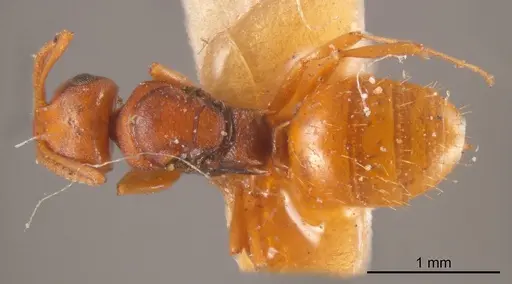
Literature
Loading...Loading products...