

Stigmacros pilosella
- Scientific Name
- Stigmacros pilosella
- Tribe
- Melophorini
- Subfamily
- Formicinae
- Author
- Viehmeyer, 1925
- Distribution
- Found in 1 countries
Stigmacros pilosella Overview
Stigmacros pilosella is an ant species of the genus Stigmacros. It is primarily documented in 1 countries , including Australia. Detailed taxonomic data and occurrence records can be further explored via authoritative databases such as AntWeb or the Global Biodiversity Information Facility (GBIF).
Stigmacros pilosella
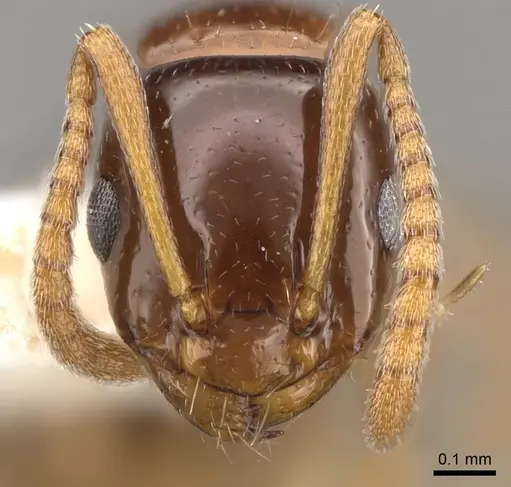
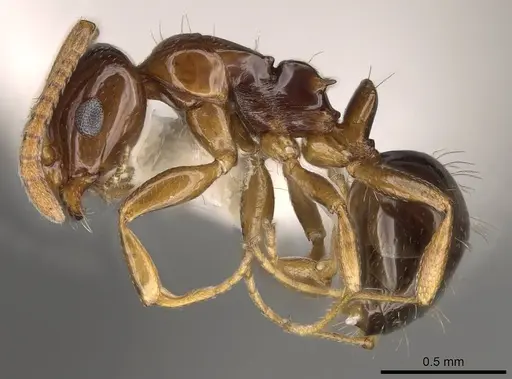
Stigmacros pilosella is a small reddish-brown ant species native to Australia, specifically found in the wheatbelt and goldfields regions of Western Australia, with populations also occurring in New South Wales [1]. Workers are characterized by having erect setae (bristles) on the mesosoma (the middle body section) and both non-marginal and marginal setae on the gastral tergites (the abdominal segments). The propodeum (the rear portion of the thorax) is oblique, similar to that of S. epinotalis [1]. These ants are typically found in leaf litter, making them a ground-dwelling species that prefers moist, shaded microhabitats [1][2]. As members of the subfamily Formicinae, they defend themselves by spraying formic acid rather than using a stinger.
Quick Summary
- Difficulty: Medium
- Origin & Habitat: Native to Australia, specifically the wheatbelt and goldfields regions of Western Australia, with populations also in New South Wales. Found in leaf litter in temperate to semi-arid areas [1][2].
- Colony Type: Likely single-queen colonies based on typical Melophorini patterns, though colony structure is not well documented for this species.
- Colony: Monogyne
- Founding: Claustral
- Size & Growth:
- Queen: Unconfirmed, no specific measurements available
- Worker: Unconfirmed, Stigmacros species are typically small ants (2-4mm) based on genus patterns
- Colony: Unknown, no colony size data available
- Growth: Unknown
- Development: Estimated 6-10 weeks based on typical Formicinae development at warm temperatures (Development timeline is not directly studied for this species, estimates based on related Melophorini and Formicinae patterns)
- Antkeeping:
- Temperature: Aim for 22-26°C, these are Australian ants adapted to temperate conditions with some warmth. A gentle heat gradient allows them to regulate their temperature
- Humidity: Keep the nest substrate consistently moist but not waterlogged. Since they live in leaf litter, they prefer damp conditions with some drier areas available for escaping excess moisture
- Diapause: Likely requires a mild winter rest period (diapause) given their temperate Australian distribution. Reduce temperatures to around 10-15°C for 2-3 months during winter
- Nesting: Y-tong (AAC) nests or naturalistic setups with moist substrate work well. These ants are small and prefer tight chambers. Provide leaf litter or small debris in the outworld to mimic their natural litter environment
- Behavior: These are small, ground-dwelling ants that prefer to forage through moist substrate and leaf litter. They are not aggressive and will flee rather than engage in confrontation. As Formicinae, they may spray formic acid when threatened. Their small size means they can squeeze through small gaps, excellent escape prevention is essential.
- Common Issues: escape prevention is critical due to their tiny size, use fine mesh and tight-fitting lids, humidity management is tricky, too wet causes mold, too dry causes desiccation, slow growth and lack of documented care means beginners may struggle with husbandry, winter diapause requirements are not well understood, may cause colony losses if not provided, limited availability makes this species difficult to acquire for most keepers
Housing and Nest Setup
Stigmacros pilosella is a small litter-dwelling ant that requires careful housing setup. Y-tong (AAC) nests work well because they provide tight chambers scaled to their tiny size and allow you to easily maintain humidity. Alternatively, a naturalistic setup with a moist soil substrate and leaf litter on top mimics their natural environment. The key is providing a moisture gradient, one side of the nest should be damper while the other is slightly drier, allowing ants to self-regulate their humidity needs. Use a test tube setup for founding colonies, transitioning to a proper nest once the colony reaches 20-30 workers. Because they are so small, even minor gaps in housing can lead to escapes, check all connections and use fine mesh on any ventilation holes. [1]
Feeding and Diet
Like most Formicinae ants, Stigmacros pilosella likely has an omnivorous diet. They probably consume honeydew from aphids and scale insects, as well as small insects and arthropods found in leaf litter. In captivity, offer a mix of sugar sources (honey water, sugar water) and protein (small fruit flies, pinhead crickets, mealworms). Since they are small ants, prey items should be appropriately sized, tiny insects and arthropods are more appropriate than large feeder insects. Offer sugar water constantly and protein prey 2-3 times per week. Remove uneaten prey after 24 hours to prevent mold. Their small size means they cannot tackle large prey items, focus on micro-prey like springtails, fruit flies, and small mealworm pieces.
Temperature and Seasonal Care
Stigmacros pilosella comes from temperate Australia, specifically the wheatbelt and goldfields regions. This suggests they prefer warm but not extreme temperatures, aim for 22-26°C during the active season. A heating cable on one side of the nest can create a temperature gradient, but ensure the other side remains cooler so ants can escape overheating. During winter, they likely require a mild diapause period. Reduce temperatures to 10-15°C for 2-3 months, mimicking the cooler Australian winter. Do not feed during diapause but ensure some moisture is available. Sudden temperature drops should be avoided, transition gradually over 1-2 weeks. If your room temperature stays above 18°C year-round, a formal diapause may not be necessary, but watch for signs of stress or reduced activity. [1]
Colony Founding and Growth
The founding behavior of Stigmacros pilosella has not been directly documented, but based on typical Formicinae patterns, the queen likely seals herself in a small chamber (claustral founding) and raises the first workers alone on stored fat reserves. Expect the first nanitic (first) workers to emerge smaller than normal workers. Development from egg to worker likely takes 6-10 weeks at optimal temperatures, though this is an estimate based on related species rather than documented data for this specific species. Colonies probably grow slowly at first, then accelerate once the first workers are established. Maximum colony size is unknown but likely under 500 workers based on typical Stigmacros patterns. Be patient, small litter-dwelling ants often take longer to establish than larger, faster-growing species.
Handling and Temperament
These are small, docile ants that are not aggressive toward keepers. As Formicinae, they possess formic acid for defense and may spray it when threatened, though this is a minor irritant rather than a serious concern. They are not known to bite. When working with them, move slowly and avoid disturbing the nest excessively. Their small size makes them fragile, avoid handling workers directly. If you need to move them, coax them into a test tube or use gentle brushing rather than grabbing. They are not a stinging species, making them relatively safe for keepers of all ages. However, their small size and tendency to live in litter means they may be overlooked or accidentally crushed if not housed carefully.
Frequently Asked Questions
How long does it take for Stigmacros pilosella to produce first workers?
The exact timeline is unconfirmed, but based on typical Formicinae development, expect 6-10 weeks from egg to first worker at optimal temperatures (22-26°C). The first workers (nanitics) will likely be smaller than mature workers. Patience is key, small litter-dwelling ants often develop more slowly than larger species.
What do Stigmacros pilosella ants eat?
They are omnivorous, likely feeding on honeydew, small insects, and arthropods in the wild. In captivity, offer sugar water or honey water as a constant carbohydrate source, and small protein prey like fruit flies, pinhead crickets, or small mealworm pieces 2-3 times per week. Prey should be appropriately sized for their tiny mouthparts.
Can I keep Stigmacros pilosella in a test tube?
Yes, test tubes work well for founding colonies. Use a small test tube with a water reservoir sealed with cotton, providing humidity. Ensure the tube is in darkness and undisturbed during the founding stage. Once the colony reaches 20-30 workers, consider transitioning to a Y-tong or naturalistic setup with proper humidity control.
Do Stigmacros pilosella need hibernation?
Likely yes, they come from temperate Australia and probably need a mild winter rest. Reduce temperatures to 10-15°C for 2-3 months during winter. Do not feed during this period but maintain light moisture. If kept at room temperature year-round (above 18°C), they may not need formal diapause, but watch for signs of stress.
Are Stigmacros pilosella good for beginners?
Probably not ideal for beginners. This species is poorly documented in captivity, and their small size and specific humidity requirements can be challenging. They also have limited availability in the antkeeping hobby. Beginners may want to start with more documented species like Lasius or Camponotus before attempting Stigmacros.
How big do Stigmacros pilosella colonies get?
Colony size is not well documented, but based on typical Stigmacros patterns, colonies likely reach several hundred workers at maximum. They are small litter-dwelling ants, so colonies probably stay moderate in size compared to larger ant species.
Why are my Stigmacros pilosella escaping?
Their small size means they can squeeze through tiny gaps. Use excellent escape prevention: tight-fitting lids, fine mesh on any ventilation, and check all connections regularly. Even a millimeter gap is enough for them to escape. Consider using fluon or similar barriers on smooth surfaces.
What temperature do Stigmacros pilosella need?
Aim for 22-26°C during the active season. They prefer warm but stable temperatures without major fluctuations. A heating cable on one side of the nest can create a gradient, but ensure cooler areas are available so ants can thermoregulate.
Can I keep multiple queens together?
Not recommended. There is no documented evidence for multi-queen colonies in this species, and combining unrelated queens typically leads to fighting. If you obtain multiple foundress queens, house them separately until you can confirm successful founding.
References

This caresheet is licensed under CC BY-SA 4.0 .
CASENT0281495
View on AntWeb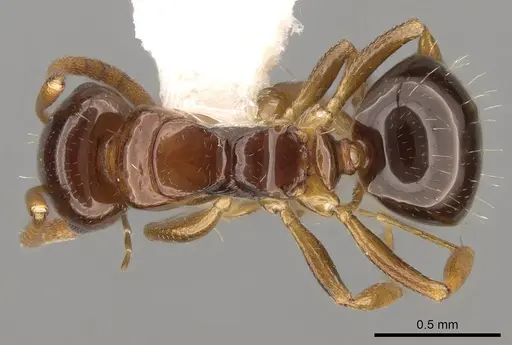
Literature
Loading...Loading products...