

Stigmacros nitida
- Scientific Name
- Stigmacros nitida
- Tribe
- Melophorini
- Subfamily
- Formicinae
- Author
- McAreavey, 1957
- Distribution
- Found in 1 countries
Stigmacros nitida Overview
Stigmacros nitida is an ant species of the genus Stigmacros. It is primarily documented in 1 countries , including Australia. Detailed taxonomic data and occurrence records can be further explored via authoritative databases such as AntWeb or the Global Biodiversity Information Facility (GBIF).
Stigmacros nitida
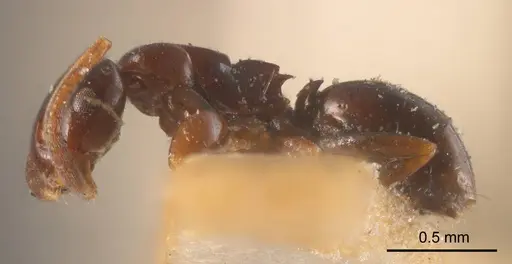
Stigmacros nitida is a small ant species native to the eucalypt forests of south-eastern Australia. Workers are tiny ants, typically measuring 2-4mm, with a glossy appearance that gives them their scientific name 'nitida' (meaning shiny or polished). The genus Stigmacros belongs to the subfamily Formicinae, meaning they lack a functional stinger and instead defend themselves by spraying formic acid. These ants are cold-climate specialists, found in cooler regions of Australia where they inhabit ground-level microhabitats in forested areas [1].
The limited research data shows these ants are primarily ground-dwelling, with most foragers captured in ground traps rather than elevated tree traps [1]. This suggests they spend most of their time on the forest floor, likely nesting in soil or under stones where conditions remain cool and moist. Their small colony size and cold-adapted nature make them a fascinating but challenging species for antkeepers interested in Australian native ants.
Quick Summary
- Difficulty: Medium
- Origin & Habitat: South-eastern Australia, eucalypt forest environments. They inhabit cool, shaded forest floor microhabitats where temperatures remain moderate throughout the year [1].
- Colony Type: Colony structure is not well documented in scientific literature. Based on related Formicine ants, they likely form small colonies with a single queen (monogyne), though this requires confirmation.
- Size & Growth:
- Queen: Estimated 5-7mm based on genus-level morphology, not directly measured for this species
- Worker: Estimated 2-4mm based on genus descriptions, not directly measured for this species
- Colony: Likely small colonies of 50-200 workers based on the low abundance (16 individuals) captured in field surveys [1]
- Growth: Unknown, likely moderate based on typical Formicine development patterns
- Development: Estimated 6-10 weeks at optimal temperature based on related Formicine species (Development timeline is not directly studied for this species, estimates based on genus-level patterns)
- Antkeeping:
- Temperature: Keep cool compared to most ants, aim for 18-22°C. As cold-climate specialists, they will not tolerate high temperatures well. Room temperature is often suitable, but avoid placing nests near heat sources or in warm rooms [1].
- Humidity: Moderate humidity of 50-70%. They prefer forest floor conditions, substrate should be slightly moist but not waterlogged. Allow some drying between waterings.
- Diapause: Likely yes, cold-climate specialists from southern Australia typically require a winter rest period. Provide 2-3 months at 10-15°C during Australian winter (June-August in the northern hemisphere).
- Nesting: Prefer cool, dark nesting sites. Test tubes work well for founding colonies. For established colonies, a Y-tong or plaster nest with good moisture retention suits their needs. Avoid overheating the nest area.
- Behavior: Generally peaceful and non-aggressive. As Formicine ants, they may spray formic acid when threatened but this is a mild defense. Workers are small and slow-moving, foraging primarily on the ground surface. They likely feed on honeydew from aphids and scale insects, plus small insects. Escape prevention is important due to their tiny size, use fine mesh barriers. They are not known to be escape artists but their small size means they can slip through small gaps.
- Common Issues: cold intolerance, high temperatures above 25°C can stress or kill colonies, small colony size means losses have bigger impact, start with multiple queens if possible, limited data means care is based on genus inference rather than species-specific research, escape risk due to tiny worker size requires fine mesh barriers, slow growth may frustrate beginners expecting rapid colony development
Temperature and Care
, [1]
Housing and Nesting
,
Feeding and Diet
,
Seasonal Care and Overwintering
,
Behavior and Temperament
,
Frequently Asked Questions
How long does it take for Stigmacros nitida to raise first workers?
The exact timeline is not documented, but based on related Formicine ants, expect 6-10 weeks from egg to first worker (nanitic) at optimal temperature (18-22°C). The queen will seal herself in and not leave the nest during this time, living off her stored fat reserves.
What temperature is best for Stigmacros nitida?
Keep them cool at 18-22°C. This species is a cold-climate specialist and does not tolerate heat well, avoid temperatures above 25°C. Room temperature is often ideal, but keep them away from heaters and direct sunlight [1].
How big do Stigmacros nitida colonies get?
Based on limited field data showing only 16 individuals captured in surveys, colonies are likely small, probably 50-200 workers at maturity. This is a small-colony species compared to many common antkeepers' species [1].
Do Stigmacros nitida need hibernation?
Likely yes. As cold-climate specialists from southern Australia, they probably require a winter rest period of 2-3 months at 10-15°C. This simulates their natural seasonal cycle and supports colony health.
Can I keep multiple Stigmacros nitida queens together?
This has not been documented. Based on related Formicine ants, they likely form single-queen colonies. Unless you have specific evidence of multi-queen tolerance, it is safest to house each queen separately to avoid conflict.
What do Stigmacros nitida eat?
They likely feed on honeydew and small invertebrates in the wild. In captivity, offer sugar water or honey as a constant energy source, plus small protein prey like fruit flies, pinhead crickets, or tiny mealworms. Prey must be small due to their tiny worker size.
Are Stigmacros nitida good for beginners?
They are moderate difficulty. Their cold-temperature requirements are unusual and may require more attention than typical species. However, their peaceful nature and small colony size make them manageable for keepers willing to provide cool conditions.
Why are my Stigmacros nitida dying?
The most common causes are overheating (temperatures above 25°C), excessive humidity causing mold, or stress from disturbance. Ensure temperatures stay below 25°C, provide moderate humidity without waterlogging, and minimize nest inspections during the founding stage.
When should I move Stigmacros nitida to a formicarium?
Wait until the colony has at least 20-30 workers before moving from a test tube setup. Moving too early can stress the colony. Ensure the formicarium maintains cool, dark conditions and provides appropriate moisture levels.
References

This caresheet is licensed under CC BY-SA 4.0 .
ANTWEB1008347
View on AntWeb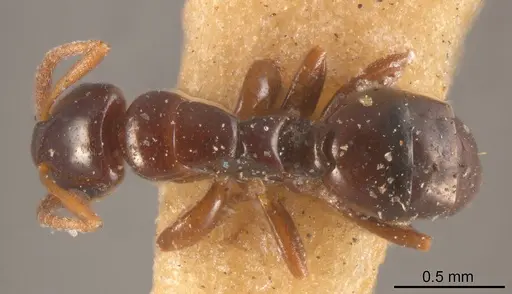
Literature
Loading...Loading products...