

Stictoponera treta
- Scientific Name
- Stictoponera treta
- Tribe
- Ectatommini
- Subfamily
- Ectatomminae
- Author
- Lattke, 2004
- Distribution
- Found in 1 countries
Stictoponera treta Overview
Stictoponera treta is an ant species of the genus Stictoponera. It is primarily documented in 1 countries , including China. Detailed taxonomic data and occurrence records can be further explored via authoritative databases such as AntWeb or the Global Biodiversity Information Facility (GBIF).
Stictoponera treta
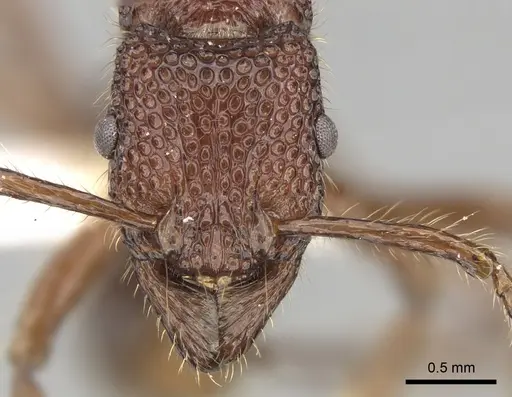
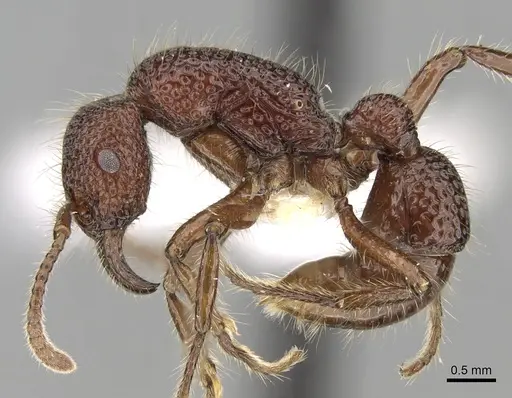
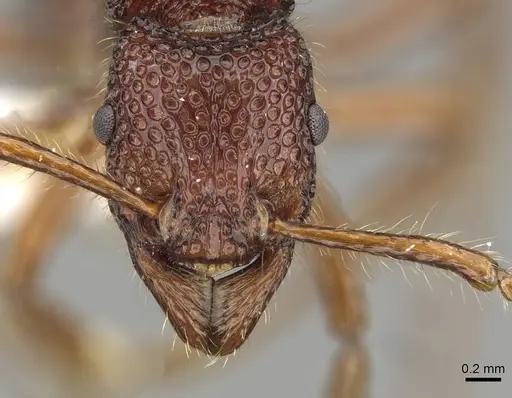
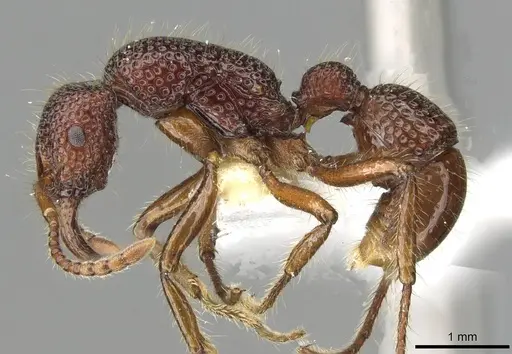
Stictoponera treta is a small to medium-sized ant species belonging to the subfamily Ectatomminae. Workers measure approximately 1.4mm in head length and 2mm in Weber's length, with a ferruginous brown coloration across the head, mesosoma, petiole, and gaster, while the mandibles, antennae, and legs are a lighter ferruginous shade. The species displays a distinctive foveolate (pitted) cuticle texture, which gives it a perforated appearance, the species name 'treta' derives from the Greek word for 'perforated'. The subpetiolar process projects forward as a sharply pointed triangular lobe, and the species lacks occipital lobes, helping distinguish it from similar species like S. binghamii. This species was originally described as Stictoponera treta in 2004 and later transferred to Stictoponera in 2022.
Quick Summary
- Difficulty: Unknown, likely Medium to Hard
- Origin & Habitat: Native to Southeast Asia, with confirmed records from Borneo (Sabah, Malaysia) and Yunnan Province, China. This represents the northernmost extent of its distribution [1]. Found in leaf litter at elevations between 645-865m in rain forest, secondary forest, limestone forest, and even rubber plantations [1]. The Yunnan specimens show slight morphological differences (more rectangular ventral process of petiole) compared to Borneo material, which researchers consider intraspecific variation [1].
- Colony Type: Unknown, queen and male remain undescribed. Based on related Ectatomminae species, likely forms small colonies with single queens, but this is unconfirmed.
- Size & Growth:
- Queen: Unknown, queen has not been described
- Worker: HL 1.43mm, HW 1.18mm, WL 2.08mm
- Colony: Unknown, no colony size data available
- Growth: Unknown, no development data exists for this species
- Development: Unknown, no direct data, likely 6-10 weeks based on related Ectatomminae patterns (Development timeline unconfirmed for this species. Related Ectatomminae ants typically take 6-10 weeks from egg to worker at optimal temperatures.)
- Antkeeping:
- Temperature: Based on its tropical/subtropical distribution in Borneo and southern China, aim for warm conditions around 24-28°C. No specific thermal studies exist for this species [1].
- Humidity: Based on leaf-litter habitat in rainforests, this species requires high humidity, keep the nest substrate consistently moist but not waterlogged. Think damp forest floor conditions.
- Diapause: Unknown, no data on overwintering requirements. The Yunnan population exists at similar latitudes to Borneo, suggesting limited cold tolerance. Proceed with caution if attempting hibernation.
- Nesting: In nature, they inhabit leaf litter and likely nest in small cavities in rotting wood, under stones, or in soil. In captivity, a naturalistic setup with moist substrate or a Y-tong/plaster nest with high humidity works well. Given their small size, provide appropriately scaled chambers.
- Behavior: Behavior is unstudied, but as an Ectatomminae member, they are predatory ants with functional stingers [2]. The stinger morphology study confirms they belong to a predatory lineage [2]. They are likely to be defensive when disturbed and may sting. Their small size and ground-nesting habits mean escape prevention is important, use fine mesh barriers. Activity level is unknown but likely moderate, with workers foraging in leaf litter for small prey.
- Common Issues: no biological data exists, keepers are essentially pioneering captive husbandry with no established protocols, queen and male unknown, cannot establish colonies from caught queens, wild colony capture is the only option, humidity requirements unclear, rainforest species may fail in dry conditions, predatory diet needs, likely requires live small prey, making them harder to feed than generalist species, escape risk due to small size, workers are only about 2mm and can slip through tiny gaps
Discovery and Taxonomy
Stictoponera treta was first described by John Lattke in 2004 as Stictoponera treta, based on worker specimens collected from Sabah in Malaysian Borneo. The type locality is 7km north of Tembunen at 700m elevation. In 2022,a comprehensive phylogenetic study reclassified this species into the genus Stictoponera based on molecular analysis. The species name 'treta' comes from the Greek word 'tretos' meaning perforated, referring to the distinctive foveolate (pitted) texture of the cuticle that gives these ants their characteristic appearance. The species was subsequently recorded from Yunnan Province, China in 2015,representing a significant range extension and the northernmost known population [1].
Distribution and Habitat
This species has a disjusted distribution across Southeast Asia. The primary population exists in Borneo, specifically in Sabah, Malaysia, where the type specimens were collected. A separate population was discovered in Yunnan Province, China, marking the first record for both the province and the country [1]. The Yunnan specimens were collected at elevations between 645-865m from various forest types including primary rain forest, secondary forest, limestone forest, and even rubber plantations [1]. This elevational range and habitat flexibility suggests the species can adapt to different forest conditions. The Borneo and Yunnan populations show slight morphological differences in the petiolar structure, with Yunnan material having a more rectangular ventral process compared to the more triangular shape in Borneo specimens, researchers interpret this as intraspecific variation rather than separate species [1].
Identification and Morphology
Workers of Stictoponera treta are small ants measuring approximately 1.4mm in head length and 2mm in Weber's length. The head is subquadrate (roughly square), widest toward the front, with convex lateral margins and a concave posterior margin. The cuticle is densely foveolate (pitted), giving a perforated appearance. The occipital lobes are absent, but the occipital lamella is well-developed and convex. The scape (first antenna segment) is mostly smooth with scattered piligerous punctae. In lateral view, the pronotum has a convex dorsal margin, the mesometanotum is mostly flat, and the propodeum has a convex dorsal margin with a concave declivity. The subpetiolar process is distinctive, it projects forward as a sharply pointed triangular lobe. The body coloration is uniformly ferruginous brown on the head, mesosoma, petiole, and gaster, with slightly lighter ferruginous mandibles, antennae, and legs. The species can be distinguished from similar species S. paso by its larger size, and from S. binghamii by its larger size and absence of occipital lobes.
Predatory Biology and Defense
Stictoponera treta belongs to the subfamily Ectatomminae, which comprises predatory ants with functional stingers. Research on stinger evolution confirms this species is part of a predatory lineage based on regime shift analysis for critical buckling loading [2]. The stinger itself is relatively small, with a total surface area of 0.09mm² and volume of 0.00032mm³ [2]. In common with other Ectatomminae, these ants are capable of stinging when threatened. The stinger morphology shows variable characteristics across the subfamily, with some lineages exhibiting ventrally curved stingers with protuberant articular processes [2]. While specific hunting behavior is unstudied for this species, related Ectatomminae typically hunt small arthropods in leaf litter. As a keeper, you should expect defensive behavior and potential stinging, handle gently and provide escape-proof housing.
Keeping Considerations
This is one of the least-known ant species in captivity, with essentially no established husbandry protocols. The complete absence of biological data means keepers are essentially pioneering captive care for this species. Queen and male castes remain undescribed, meaning colonies cannot be established through captured queens, the only option is to locate and carefully collect wild colonies from leaf litter. Based on its natural habitat in Southeast Asian rainforests, provide warm temperatures around 24-28°C and high humidity. The species has been found in various forest types including primary rainforest, secondary forest, and even rubber plantations at elevations up to 865m [1], suggesting some adaptability but preference for moist conditions. As a predatory species, they will likely require live small prey such as springtails, fruit flies, or other micro-arthropods. Given their small size (workers around 2mm), excellent escape prevention with fine mesh is essential. This species is recommended only for experienced antkeepers willing to experiment and document their findings.
Frequently Asked Questions
How long do Stictoponera treta workers live?
The worker lifespan is unknown, no biological studies have been conducted on this species. Related Ectatomminae species typically have workers living several months to over a year.
What do Stictoponera treta ants eat?
Diet is unconfirmed for this species, but based on being a predatory Ectatomminae member, they almost certainly require live small arthropods. Related species hunt micro-prey in leaf litter. Offer small live prey like springtails, fruit flies, and tiny crickets. Sugar acceptance is unknown, do not rely on honey or sugar water until acceptance is confirmed.
Can I keep Stictoponera treta in a test tube?
A test tube setup can work for founding colonies or small groups, but given their humidity requirements and small size, a naturalistic setup with moist substrate or a plaster/Y-tong nest with high humidity is likely better. Ensure excellent escape prevention regardless of setup.
Do Stictoponera treta ants sting?
Yes, they have a functional stinger as confirmed by morphological study of the stinger structure [2]. They belong to a predatory lineage within Ectatomminae known for stinging behavior. Treat them as capable of stinging if handled roughly or if the colony feels threatened.
How big do Stictoponera treta colonies get?
Colony size is unknown, no colony size data exists for this species. Based on related Ectatomminae, colonies are likely small to moderate, probably under a few hundred workers. The queen has not been described, so colony founding dynamics are completely unknown.
Are Stictoponera treta good for beginners?
No, this species is not recommended for beginners. Essentially no biological data exists, queen and male castes are undescribed, and no established captive protocols exist. This is a species for experienced keepers willing to experiment and document their findings.
Do Stictoponera treta need hibernation?
Diapause requirements are unknown. The species occurs in tropical Borneo and subtropical Yunnan, China, at similar latitudes where temperatures remain warm year-round. Do not assume hibernation is needed, start with room temperature conditions and observe colony behavior.
When will Stictoponera treta have first workers?
Development timeline is completely unknown, no studies exist on egg-to-worker development for this species. Related Ectatomminae typically require 6-10 weeks at optimal temperatures, but this is a rough estimate only.
Why are my Stictoponera treta dying?
Without established protocols, mortality causes are speculative. Likely issues include: incorrect humidity (too dry), incorrect temperature (too cold), inadequate prey, or stress from collection. Document your conditions carefully and adjust gradually. This species may be sensitive to husbandry errors.
Can I find Stictoponera treta in the wild?
They have been found in Borneo (Sabah, Malaysia) and Yunnan Province, China, in leaf litter at elevations 645-865m [1]. If you live in these regions, Winkler extractions of leaf litter soil samples could potentially locate colonies. However, they are small and easily overlooked.
References

This caresheet is licensed under CC BY-SA 4.0 .
CASENT0281847
View on AntWeb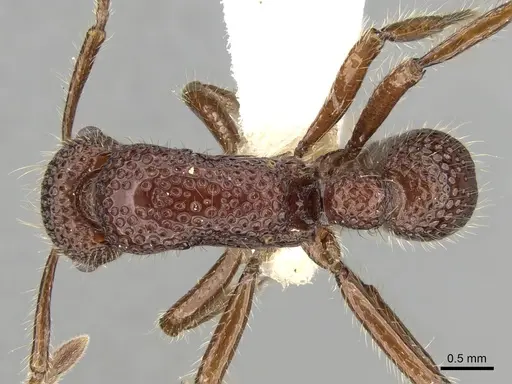
CASENT0911170
View on AntWeb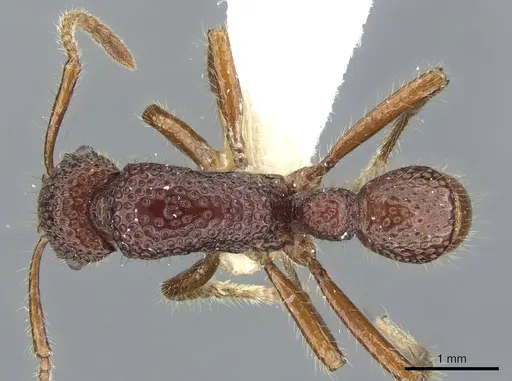
Literature
Loading...Loading products...