

Stictoponera macretes
- Scientific Name
- Stictoponera macretes
- Tribe
- Ectatommini
- Subfamily
- Ectatomminae
- Author
- Brown, 1958
- Distribution
- Found in 1 countries
Stictoponera macretes Overview
Stictoponera macretes is an ant species of the genus Stictoponera. It is primarily documented in 1 countries , including Papua New Guinea. Detailed taxonomic data and occurrence records can be further explored via authoritative databases such as AntWeb or the Global Biodiversity Information Facility (GBIF).
Stictoponera macretes
Stictoponera macretes is a medium-sized ant species native to Papua New Guinea, formerly classified as Stictoponera macretes until 2022 . Workers measure approximately 1.2-1.28mm in head length with a brown body and rust-colored mandibles, antennae, and legs . This species belongs to the subfamily Ectatomminae (poneromorph ants) and is closely related to Stictoponera niuguinensis, sharing features like the lack of an occipital lobe and distinctive surface sculpturing . In their natural habitat, these ants nest in rotten logs within rainforest environments at elevations around 500 meters [1].
These ants are part of the Ectatommini tribe, which includes predatory species with well-developed stingers. S. macretes shows the typical morphological features of this group, including striated and foveolate (pitted) surface sculpturing on various body parts. The species was originally described by Brown in 1958 with specimens collected from the Bisianumu area near Sogeri in Papua New Guinea [1].
Quick Summary
- Difficulty: Expert
- Origin & Habitat: Papua New Guinea, found in rotten logs in rainforest environments at approximately 500 meters elevation [1]
- Colony Type: Colony structure is unconfirmed. Based on related Ectatomminae species, likely single-queen (monogyne) colonies, but this requires verification.
- Size & Growth:
- Queen: 1.28-1.29mm head length
- Worker: 1.20-1.28mm head length,1.72-1.84mm Weber's length
- Colony: Unknown, no colony size data available
- Growth: Unknown, no development timing data available for this species
- Development: Unknown, no direct measurements available. Based on related Ectatomminae species, estimate 6-10 weeks at optimal temperature. (Development timeline is unconfirmed for this species. Related Ectatomminae typically show moderate development speeds.)
- Antkeeping:
- Temperature: Keep at 24-28°C, these are tropical rainforest ants requiring warm, stable conditions. A gentle thermal gradient allows ants to regulate their temperature.
- Humidity: High humidity required, rainforest species that naturally inhabit damp, rotting wood. Keep nest substrate consistently moist but not waterlogged.
- Diapause: Unknown, no documented hibernation or winter dormancy period for this species. As a tropical species, they likely do not require diapause.
- Nesting: Natural nesting occurs in rotten logs. In captivity, a naturalistic setup with damp rotting wood or a well-humidified acrylic/plaster nest works well. They need tight, humid chambers scaled to their medium size.
- Behavior: These are predatory poneromorph ants with well-developed stingers. They likely hunt small invertebrates and may tend aphids for honeydew. Workers are moderately active and forage through leaf litter and rotting wood. Escape prevention is important, use standard barriers. Their sting is functional and should be considered when handling.
- Common Issues: limited availability, this species is rarely available in the antkeeping hobby, no established care protocols, keepers must develop husbandry through experimentation, humidity control is critical, improper moisture leads to colony failure, predatory feeding requirements, need live small prey items, tropical temperature needs, room temperature may be insufficient
Natural History and Distribution
Stictoponera macretes is endemic to Papua New Guinea, specifically known from the Bisianumu area near Sogeri at approximately 500 meters elevation [1]. The species was originally described by William L. Brown Jr. in 1958 under the genus Gnamptogenys and was recently transferred to Stictoponera following phylogenetic research in 2022 .
These ants inhabit tropical rainforest environments where they nest in rotting logs and decaying wood material . The rainforest habitat provides consistently warm temperatures, high humidity, and abundant prey items in the form of small invertebrates found in leaf litter and decaying organic matter. The species has been collected between March 15-20,1955,suggesting potential seasonal activity patterns, though more detailed phenology data is not available.
The genus Stictoponera contains approximately 40 species distributed primarily in Australasian and Southeast Asian regions. Members of this genus are predatory ants that play important roles in rainforest ecosystems as predators of small arthropods.
Identification and Morphology
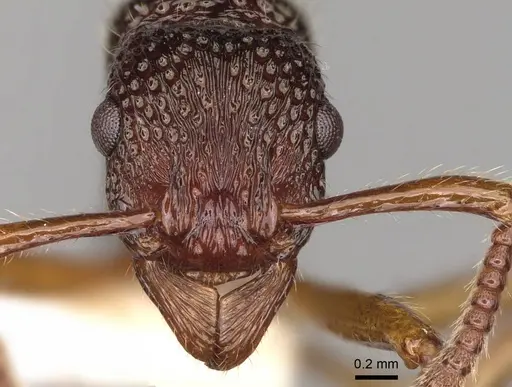
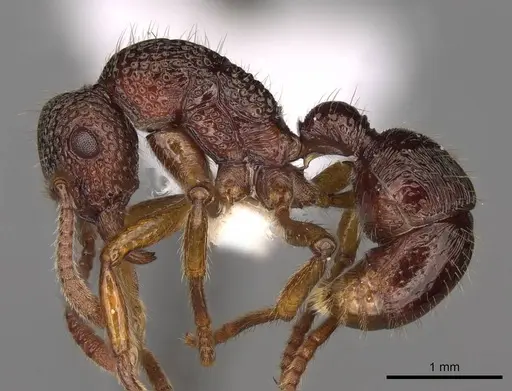
Workers of Stictoponera macretes measure approximately 1.2-1.28mm in head length and 1.72-1.84mm in Weber's length, making them medium-sized ants within the Ectatomminae subfamily . The body is primarily brown, while the mandibles, antennae, and legs are ferruginous (rust-colored) .
Key identification features include the lack of an occipital lobe, a prominent and convex occipital lamella (a ridge-like structure at the back of the head), and distinctive surface sculpturing. The head and mesosoma feature a combination of foveolae (small pits) and strigae (groove-like striations). The postpetiole (the segment behind the petiole) has transverse striations on the anterior face that curve and become longitudinal toward the posterior .
Queens are slightly larger than workers, measuring 1.28-1.29mm in head length and 1.98-2.06mm in Weber's length, with similar coloration but more developed thoracic structures for flight . Males are smaller at 0.89mm head length and possess the reproductive characteristics typical of the genus.
Housing and Nesting Preferences
In their natural habitat, S. macretes nests in rotting logs within tropical rainforest . This indicates a preference for humid, dark environments with access to decaying wood. For captive care, a naturalistic setup using damp rotting wood or a well-humidified acrylic or plaster formicarium works best.
The nest should maintain high humidity consistently, the substrate should feel damp to the touch but not have standing water. Provide a water reservoir or moisture gradient allowing the ants to choose their preferred humidity zone. Because they naturally nest in wood, adding small pieces of rotting wood or bark to the setup can encourage natural behaviors.
The outworld should be escape-proof using standard barriers like fluon. While not among the smallest ants, they are still capable of squeezing through small gaps, so ensure all connections and edges are sealed.
Feeding and Diet
As members of the Ectatomminae subfamily, Stictoponera species are predatory ants that hunt small invertebrates. In captivity, offer small live prey such as fruit flies, pinhead crickets, small mealworms, and other appropriately-sized arthropods. The prey should be small enough for the ants to subdue, roughly matching the size of their prey in the wild.
Beyond predation, many Ectatomminae species supplement their diet with honeydew from aphids or scale insects. You can offer sugar water or honey as an occasional supplement, though protein from prey items should form the primary food source.
Feed small prey items 2-3 times per week, adjusting based on colony size and consumption. Remove any uneaten prey after 24-48 hours to prevent mold issues. A well-fed colony will have workers with distended abdomens, indicating they have access to adequate nutrition.
Temperature and Care
Stictoponera macretes originates from tropical Papua New Guinea and requires warm temperatures to thrive. Maintain nest temperatures between 24-28°C, which aligns with their natural rainforest habitat. Temperature affects both colony activity and brood development, cooler temperatures slow development while excessive heat can be lethal.
A heating cable or mat placed on one side of the nest can create a thermal gradient, allowing ants to regulate their temperature by moving between warmer and cooler areas. Always ensure there is adequate ventilation to prevent mold growth while maintaining humidity.
As a tropical species, they do not require hibernation or diapause. Maintaining consistent year-round temperatures is important for colony health and continued brood production. Avoid temperature fluctuations and drafts that could stress the colony.
Behavior and Temperament
Stictoponera macretes is a predatory ant species with a well-developed stinger inherited from the Poneromorph lineage. Workers are likely moderately aggressive when defending the nest or capturing prey. When keeping this species, avoid handling directly and use gentle techniques when moving colonies or cleaning enclosures.
The sting of Ectatomminae ants is functional and can cause mild to moderate pain if stung. While not considered dangerous to healthy humans, individuals with insect venom allergies should take precautions. The stinger is primarily used for subduing prey and defending the colony rather than for aggressive territorial behavior.
Foraging workers will explore their environment and hunt small prey. They likely use chemical trails to recruit nestmates to food sources, similar to other Ectatomminae species. Provide a foraging area with appropriate substrate and hiding spots to encourage natural foraging behaviors.
Frequently Asked Questions
How long does it take for Stictoponera macretes to develop from egg to worker?
The exact development timeline has not been documented for this species. Based on related Ectatomminae ants, estimate approximately 6-10 weeks from egg to first worker at optimal temperatures (24-28°C). This is an educated estimate rather than confirmed data.
What do Stictoponera macretes ants eat?
These are predatory ants that hunt small invertebrates. In captivity, feed them small live prey such as fruit flies, pinhead crickets, small mealworms, and other tiny arthropods. They may also accept sugar water or honey as a supplemental energy source.
Can I keep Stictoponera macretes in a test tube?
Test tubes can work for founding colonies, but this species prefers higher humidity than typical test tube setups provide. A naturalistic setup with damp rotting wood or a humidified acrylic nest is more suitable for long-term colony health.
Do Stictoponera macretes ants sting?
Yes, as members of the Ectatomminae subfamily (poneromorph ants), they possess a functional stinger. The sting can cause mild to moderate pain but is not considered dangerous to healthy individuals.
Are Stictoponera macretes good for beginners?
No. This species is rated as Expert difficulty due to limited availability in the antkeeping hobby, specific humidity and temperature requirements, predatory feeding needs, and the lack of established care protocols. Experienced antkeepers are best suited for this species.
How big do Stictoponera macretes colonies get?
Colony size data is not available for this species. Based on related Ectatomminae, colonies likely reach several hundred workers over time, but this is an estimate rather than confirmed data.
Do Stictoponera macretes need hibernation?
No, this is a tropical species from Papua New Guinea that does not require hibernation or diapause. Maintain consistent warm temperatures year-round for optimal colony health.
What temperature do Stictoponera macretes need?
Keep them at 24-28°C. These tropical rainforest ants require warm, stable conditions. A thermal gradient allowing movement between temperatures is ideal.
Why is my Stictoponera macretes colony dying?
Common causes include incorrect humidity (too dry or too wet), temperatures outside their optimal range, inadequate prey nutrition, or stress from handling. Ensure proper humidity, appropriate temperatures, and provide varied small live prey.
Where can I get Stictoponera macretes ants?
This species is rarely available in the antkeeping hobby. You may need to connect with specialized dealers or fellow antkeepers who work with rare Australasian species. Check antkeeping forums and specialty vendors.

This caresheet is licensed under CC BY-SA 4.0 .
CASENT0281529
View on AntWeb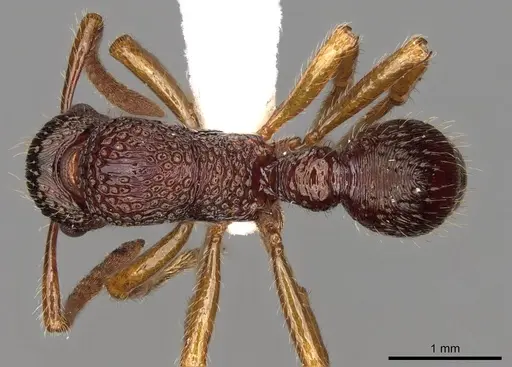
Literature
Loading...Loading products...