

Stenamma stictosomum
- Scientific Name
- Stenamma stictosomum
- Tribe
- Stenammini
- Subfamily
- Myrmicinae
- Author
- Branstetter, 2013
- Distribution
- Found in 1 countries
Stenamma stictosomum Overview
Stenamma stictosomum is an ant species of the genus Stenamma. It is primarily documented in 1 countries , including Mexico. Detailed taxonomic data and occurrence records can be further explored via authoritative databases such as AntWeb or the Global Biodiversity Information Facility (GBIF).
Stenamma stictosomum
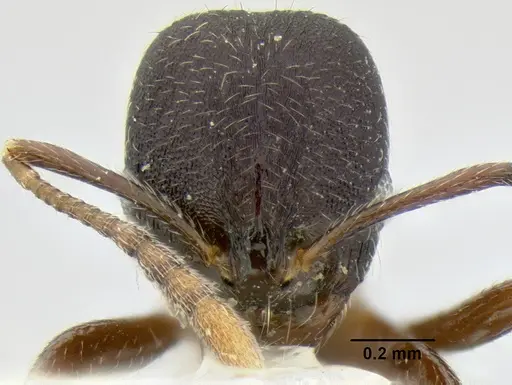
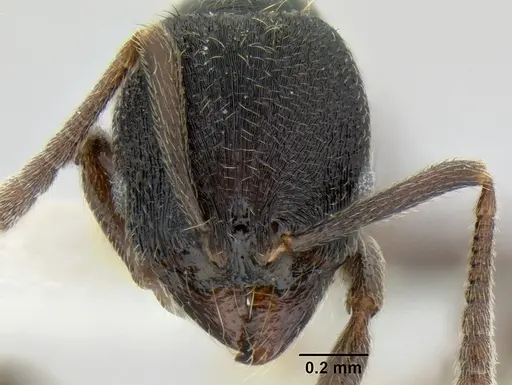
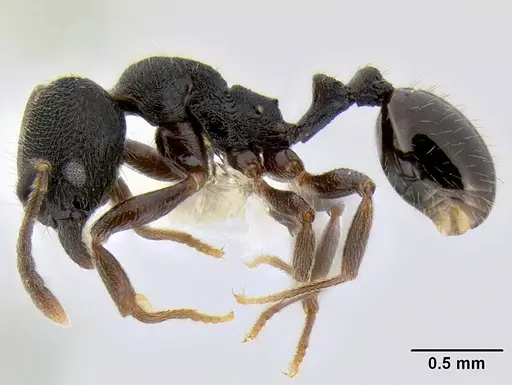
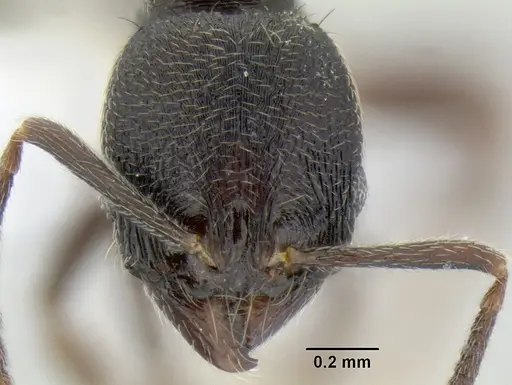
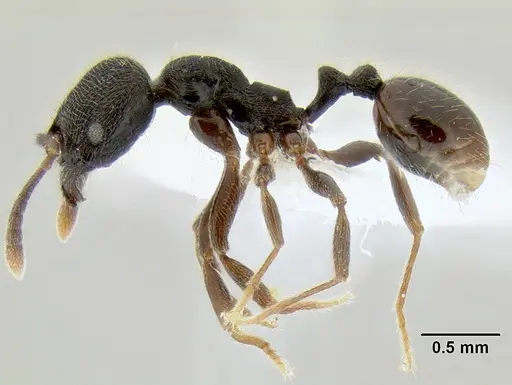
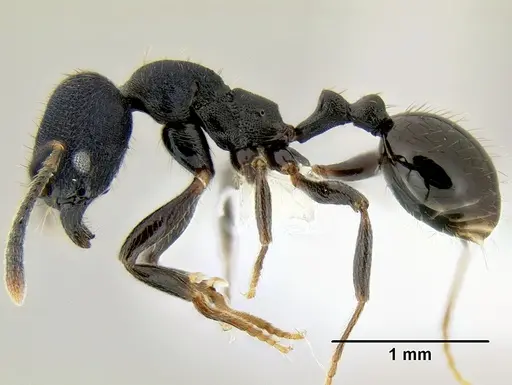
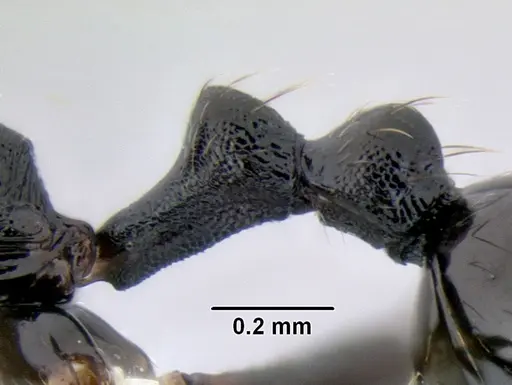
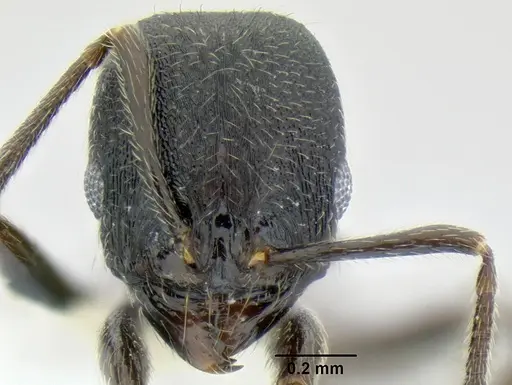
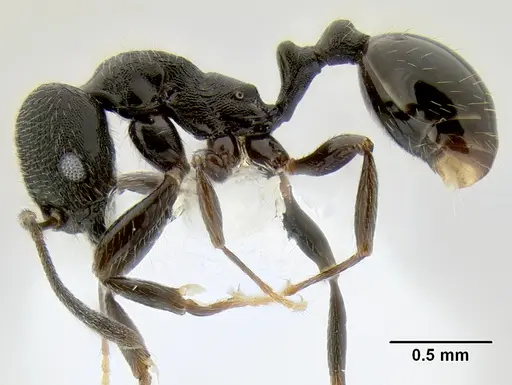
Stenamma stictosomum is a small to medium-sized ant species native to the cloud forests of Mexico and Guatemala, found at elevations between 1450-1750 meters [1]. Workers measure 0.65-0.78mm in head width and have a distinctive dark brown to black body with coarse punctate sculpture that can sometimes show a bluish glare [1]. The species is characterized by relatively large eyes (0.15-0.18mm) with 8-9 ommatidia, reduced propodeal spines appearing as small tubercles, and sparse stout setae on the gaster [1]. This ant gets its scientific name 'stictosomum' (meaning 'punctured body') from the distinctive heavily pitted sculpturing across its face and mesosoma [2].
What makes S. stictosomum particularly interesting is its arboreal lifestyle, unlike most Stenamma species that are ground-nesting leaf litter foragers, this species has been found on orchids and collected via beating samples from vegetation, suggesting it may nest or forage in trees [2]. This explains why it appears rare despite being geographically widespread across the Atlantic slope of Mexico through Guatemala to Honduras [1]. The combination of cloud forest habitat and potential arboreal nesting makes this a specialized species with specific care requirements.
Quick Summary
- Difficulty: Expert
- Origin & Habitat: Cloud forests of Mexico (Oaxaca, Hidalgo, San Luis Potosí, Veracruz) to Guatemala at 1450-1750m elevation [1][2]. Found in wet forest habitats, collected from sifted leaf litter and epiphytic orchids [1].
- Colony Type: Unknown colony structure, only worker caste has been documented [2]. No queen specimens have been collected or described.
- Size & Growth:
- Queen: Unknown, queen caste has not been documented [2]
- Worker: 0.65-0.78mm HW (HL 0.73-0.88mm) [1]
- Colony: Unknown, no colony size data available
- Growth: Unknown, no development data available
- Development: Unknown, development has not been studied (No data available on egg-to-worker timeline. Related Stenamma species typically take 6-10 weeks at optimal temperatures, but this is a rough estimate for this unstudied species.)
- Antkeeping:
- Temperature: Keep around 20-24°C based on cloud forest habitat preferences, these ants are adapted to cool, stable mountain conditions [1]. Avoid temperatures above 26°C.
- Humidity: High humidity required, cloud forest environment suggests 70-85% humidity. Provide consistently moist substrate without waterlogging.
- Diapause: Unknown, no data on overwintering requirements. Given the high-elevation cloud forest habitat, a slight cooling period during simulated winter may be beneficial but is not confirmed.
- Nesting: Likely prefers naturalistic setups with moisture-retaining substrate. The arboreal findings suggest they may benefit from vertical spaces or cork bark arrangements. Given their small size and rarity, a test tube setup with access to a humid outworld would be a good starting point.
- Behavior: Not well-documented due to the species' rarity. Based on related Stenamma species, they are likely moderate foragers that search through leaf litter and vegetation. Their relatively large eyes suggest visual orientation may be important. Small size means escape prevention is critical, they can squeeze through tiny gaps. Temperament is unknown but Stenamma species are generally not aggressive.
- Common Issues: this species is extremely rare in the antkeeping hobby, finding a colony may be nearly impossible, no established care protocols exist, keepers must experiment based on related species, high humidity requirements make mold prevention challenging, small worker size requires excellent escape prevention with fine mesh barriers, cloud forest habitat means they may not tolerate warm or dry conditions
Discovery and Rarity
Stenamma stictosomum was only described in 2013 by Michael Branstetter during his comprehensive revision of the Middle American Stenamma clade [1]. The species is known from remarkably few specimens, just 10 workers from 7 different localities [2]. Most specimens come from sifted leaf litter samples in cloud forests, but one specimen was discovered in quarantine in Brownsville, Texas, found on orchids being shipped from either Oaxaca or San Luis Potosí in Mexico [2]. This arboreal discovery via beating sample and orchid interception suggests the species nests in or on vegetation rather than just in ground leaf litter, which would explain why it appears so rare despite having a relatively wide distribution [2]. The significant morphological variation among populations suggests S. stictosomum may actually be a complex of multiple similar species, but more specimens are needed to properly assess this [2].
Identification and Distinguishing Features
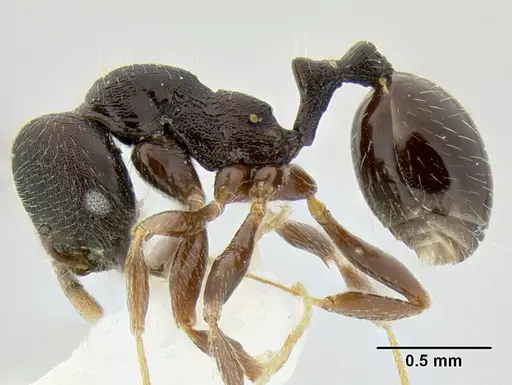
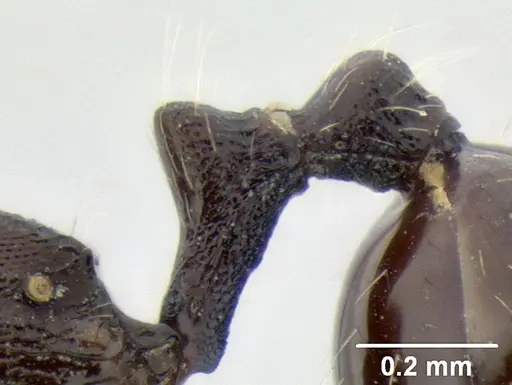
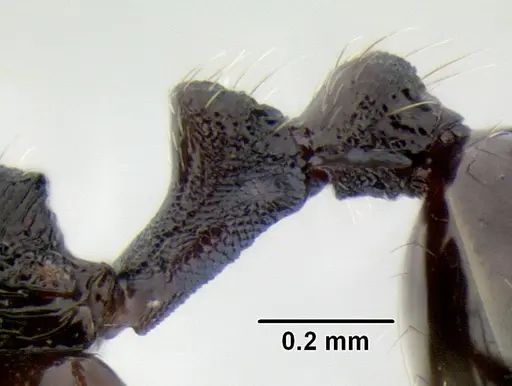
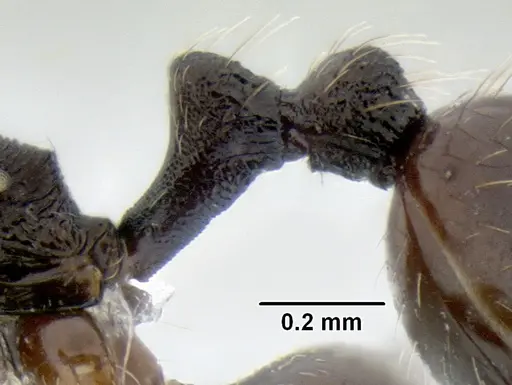
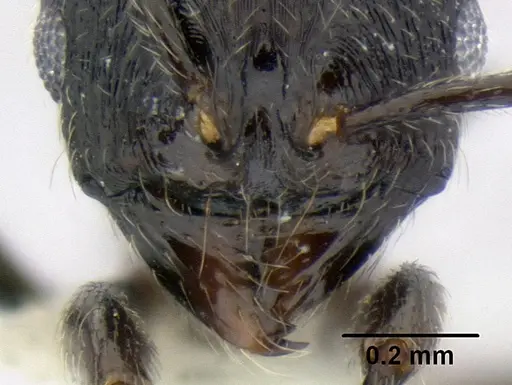
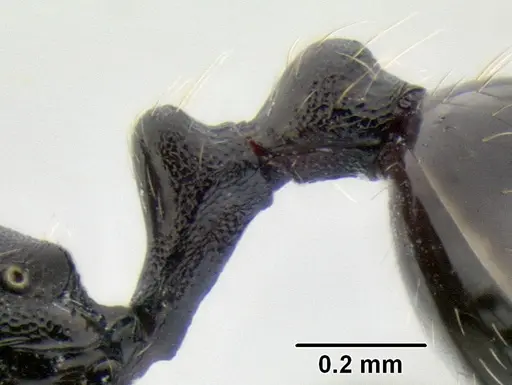
Identifying Stenamma stictosomum requires attention to several key features. The body is mostly black to dark brown, sometimes with a bluish sheen on specimens with coarse punctate sculpture [1]. The most distinctive features include relatively large oval eyes (EL 0.15-0.18,REL 20-25) with 8-9 ommatidia, and heavily sculptured head and mesosoma that can appear densely punctate, densely carinulate (with parallel lines), or a mix of both [1]. The anterior clypeal margin has a broad notch with two blunt inner teeth (best seen with mandibles open), and the mandible has a sinuous basal margin without a deep notch [1]. The propodeal spines are reduced to sharp angles or small tubercles (PSL 0.09-0.11), which is unusual among Stenamma species [1]. The gaster has sparse, stout, semi-erect setae. This species is most similar to Stenamma vexator, another rare Middle American species [2].
Habitat and Natural History
S. stictosomum is a cloud forest specialist found at higher elevations (1450-1750m) across the Atlantic slope of Central America [1][2]. The cloud forest environment is characterized by constant high humidity, cool temperatures, and dense vegetation. The discovery of workers on orchids and in beating samples (collecting insects from vegetation by beating branches over a net) strongly suggests this species is at least partially arboreal, either nesting in epiphytic material or foraging in the canopy [2]. This is unusual for the genus Stenamma, which typically contains ground-nesting species that forage in leaf litter. The combination of being rare in collections despite a wide distribution, combined with the arboreal evidence, suggests this species may live high in the forest canopy where it is rarely encountered by collectors [2].
Care Recommendations
Since Stenamma stictosomum has never been kept in captivity (as far as documented), all care recommendations must be considered experimental estimates based on the species' natural habitat and what works for related Stenamma species. Provide a warm, humid environment, aim for temperatures around 20-24°C and humidity of 70-85% [1]. A naturalistic setup with moist substrate would be most appropriate, possibly with cork bark or vertical elements to accommodate potential arboreal tendencies. Given their small worker size (under 1mm), escape prevention is critical, use fine mesh and tightly sealed enclosures. Feed small protein sources like fruit flies, springtails, or other micro-prey. Sugar water or honey can be offered occasionally but acceptance is uncertain. Start with a test tube setup in a humid environment and observe colony behavior before moving to a formicarium. This species should only be attempted by experienced keepers willing to experiment and document their findings.
Research Gaps and What We Don't Know
Remarkably little is known about Stenamma stictosomum despite its relatively recent description. The queen caste has never been documented, we don't know queen size, color, or whether they have ergatoid (wingless) forms [2]. Colony structure is completely unknown, we don't know if colonies have one queen or multiple, or how founding occurs. Development timeline, nuptial flight timing, and worker lifespans are all unstudied. Even basic behaviors like foraging patterns, defense mechanisms, and communication are undocumented. This species represents a genuine frontier in antkeeping knowledge. Any successful captive breeding would be a significant contribution to our understanding of this mysterious cloud forest ant. Keepers who obtain this species should meticulously document their observations to help build husbandry protocols for future enthusiasts.
Frequently Asked Questions
Is Stenamma stictosomum available for purchase in the antkeeping hobby?
No, this species is extremely rare and has never been documented in commercial ant trade. It is known only from a handful of wild specimens collected in Mexico and Guatemala [2].
How do I identify Stenamma stictosomum workers?
Look for small workers (0.65-0.78mm head width) with dark brown to black body color, relatively large eyes, and distinctive coarse punctate or carinulate sculpture on the head and mesosoma. The propodeal spines are reduced to small tubercles, and the gaster has sparse stout setae [1].
What temperature should I keep Stenamma stictosomum at?
Based on their cloud forest habitat at 1450-1750m elevation, aim for cool to moderate temperatures around 20-24°C. Avoid temperatures above 26°C, these ants are adapted to cool, stable mountain conditions [1].
Do Stenamma stictosomum ants sting?
Stenamma belongs to the subfamily Myrmicinae, which includes many stinging species, but the genus Stenamma is not known for painful stings. The sting is likely present but functional, these ants are too small to deliver significant pain to humans.
What do Stenamma stictosomum eat?
Not documented, but related Stenamma species are generalist foragers that consume small insects, honeydew, and nectar. Given their small size, offer small live prey like fruit flies, springtails, or pinhead crickets. Sugar water or honey may be accepted.
How big do Stenamma stictosomum colonies get?
Unknown, colony size has never been documented. Based on related species, colonies likely reach several hundred workers at most, but this is purely speculative.
Do Stenamma stictosomum need hibernation or diapause?
Unknown, no data exists on overwintering requirements. The high-elevation cloud forest habitat suggests they may benefit from a slight cooling period during simulated winter, but this is unconfirmed.
Can I keep Stenamma stictosomum in a test tube setup?
A test tube setup would be appropriate for founding colonies given their small size and the need for high humidity. However, since this species may be arboreal, providing some vertical space or climbing material would be beneficial.
Why is Stenamma stictosomum so rarely collected?
The species appears rare because it likely nests and forages arboreally in the cloud forest canopy, high above the leaf litter where most ant collectors sample [2]. The few specimens known have come from orchid inspections and beating samples from vegetation.
Is Stenamma stictosomum a good species for beginners?
No, this species is rated Expert difficulty due to its extreme rarity in the hobby, completely unestablished care protocols, and specific humidity and temperature requirements. It should only be attempted by highly experienced keepers willing to experiment and document their findings.
References

This caresheet is licensed under CC BY-SA 4.0 .
CASENT0126245
View on AntWeb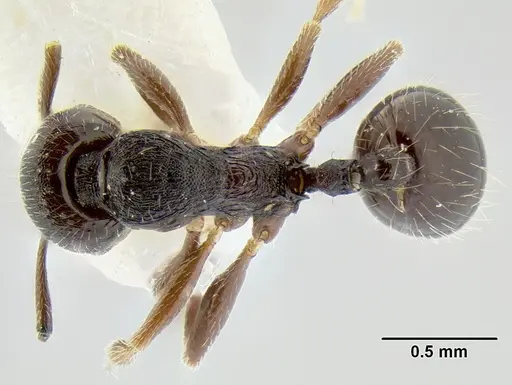
CASENT0126246
View on AntWeb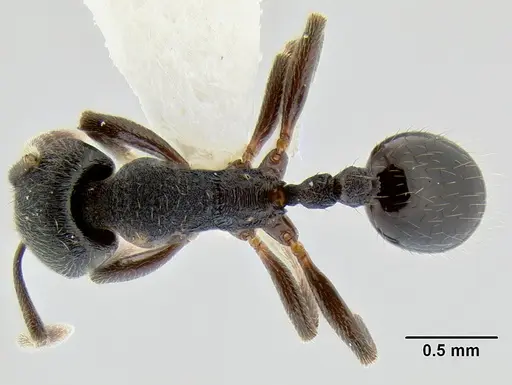
CASENT0604636
View on AntWeb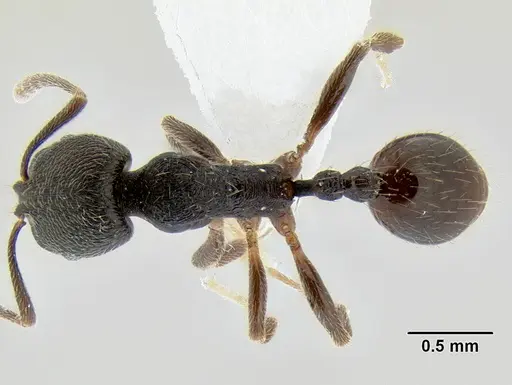
CASENT0604647
View on AntWeb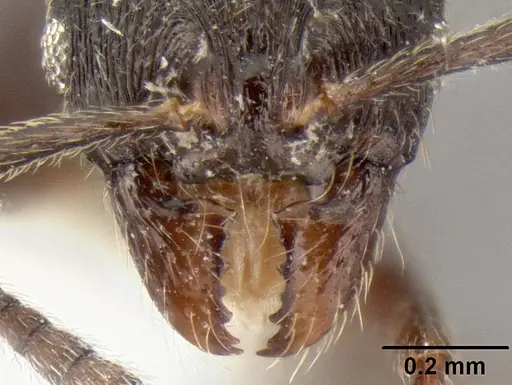
CASENT0605499
View on AntWeb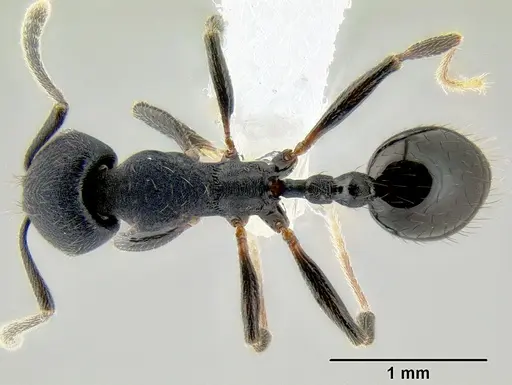
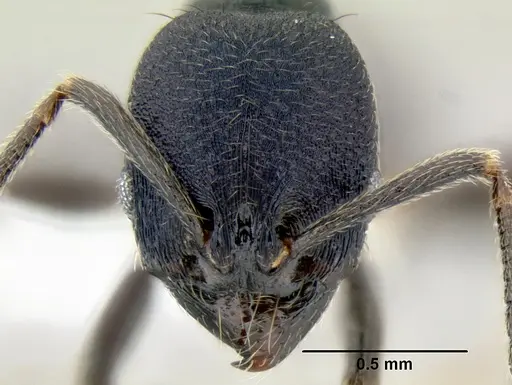
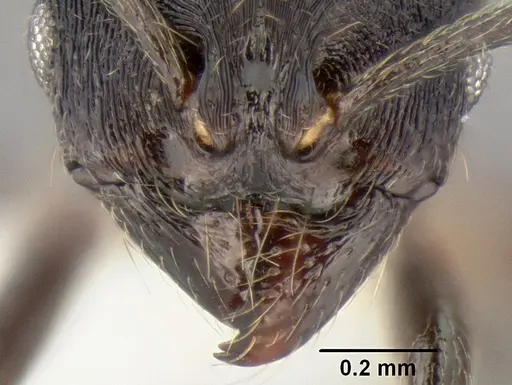
CASENT0606221
View on AntWeb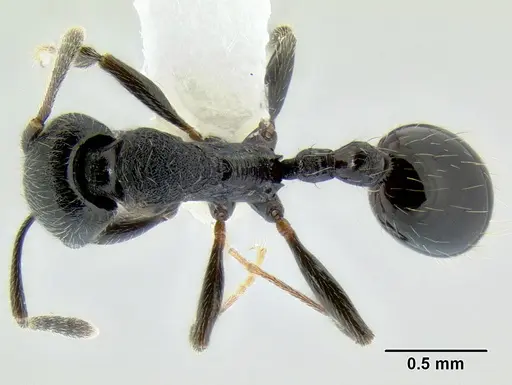
Literature
Loading...Loading products...