

Stenamma foveolocephalum
- Scientific Name
- Stenamma foveolocephalum
- Tribe
- Stenammini
- Subfamily
- Myrmicinae
- Author
- Smith, 1930
- Distribution
- Found in 1 countries
Stenamma foveolocephalum Overview
Stenamma foveolocephalum is an ant species of the genus Stenamma. It is primarily documented in 1 countries , including United States of America. Detailed taxonomic data and occurrence records can be further explored via authoritative databases such as AntWeb or the Global Biodiversity Information Facility (GBIF).
Stenamma foveolocephalum
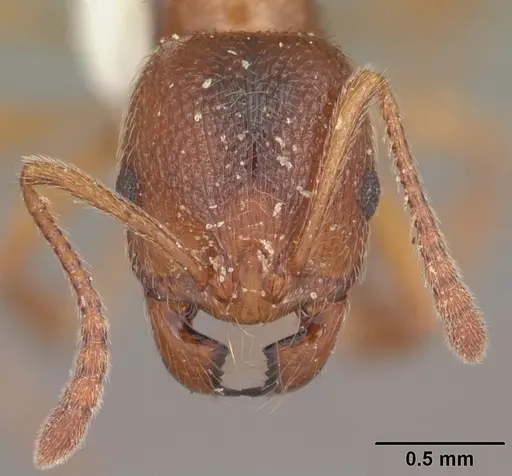
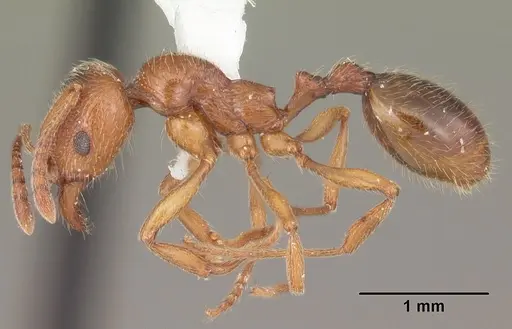
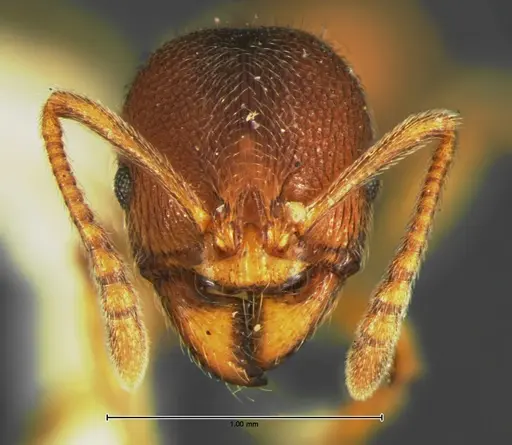
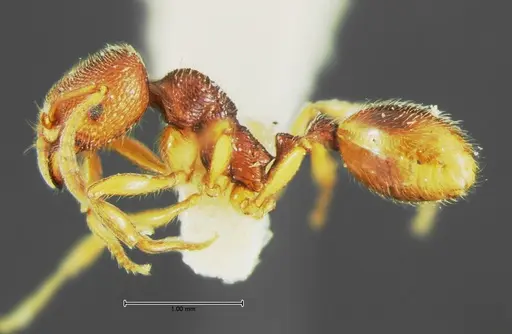
Stenamma foveolocephalum is a small, rare ant species native to the southeastern United States. Workers measure 3.6-4mm and have distinctive large eyes for a Stenamma species, with 6-10 ommatidia in their greatest diameter. Their body is dark reddish brown with a lighter-colored gaster, and they feature characteristic reticulate-foveolate sculpturing on the head and transverse rugulae on the epinotum. This species is known from just a handful of localities across Mississippi, Alabama, Florida, and North Carolina, making it one of the rarer North American ants [1][2].
What makes this species unusual is its winter-active lifestyle, unlike most ants, S. foveolocephalum forages above ground primarily during cooler months, likely to avoid competition and predators. It prefers disturbed, sparsely vegetated sandy habitats like power line cuts and roadside berms, where it builds simple nests with chambers located within 15cm of the surface [3][4]. This cool-weather specialization makes it a fascinating but challenging species to keep.
Quick Summary
- Difficulty: Expert
- Origin & Habitat: Southeastern United States (Mississippi, Alabama, Florida, North Carolina). Found in sparsely vegetated sandy soil in disturbed areas like sand scrub, open pine scrub, power line cuts, and roadside berms [2][4].
- Colony Type: Colony structure is unconfirmed. Based on related Stenamma species, likely single-queen colonies, but this has not been directly studied.
- Size & Growth:
- Queen: Unknown, queen caste has not been described in scientific literature
- Worker: 3.6-4mm [2][5]
- Colony: Unknown, colonies are rarely encountered and poorly studied
- Growth: Unknown, likely slow based on related species patterns
- Development: Unconfirmed, no direct development data exists for this species. Based on typical Stenamma patterns, estimate 6-10 weeks at optimal temperature. (Development timeline is unconfirmed. Related Stenamma species typically have moderate development rates.)
- Antkeeping:
- Temperature: This is a cool-weather species active in winter. Keep colonies at room temperature (18-22°C) with a slight gradient. Avoid overheating, they are adapted to cooler conditions. In summer, ensure they have access to cooler areas.
- Humidity: Moderate humidity. Keep nest substrate lightly moist but not waterlogged. These ants naturally nest in sandy soil that dries relatively quickly, so avoid excessive moisture.
- Diapause: Yes, this species is winter-active and likely requires a winter rest period. Reduce temperature to around 10-15°C for 2-3 months during winter months to simulate natural conditions [3].
- Nesting: In nature, they nest in sandy soil within 15cm of the surface with small chamber systems. In captivity, use a naturalistic setup with sandy substrate or a Y-tong/plaster nest with appropriate moisture retention. Provide a shallow depth as they naturally nest close to the surface [4].
- Behavior: This species is unusual among ants in that it forages above ground primarily during winter months, especially at night. Workers are likely generalist foragers, scavenging for small insects and honeydew. They are not aggressive and will flee rather than fight when disturbed. Their large eyes may be an adaptation for low-light foraging. Escape risk is moderate, their small size (under 4mm) means they can slip through small gaps, so use appropriate barriers [3].
- Common Issues: winter activity pattern conflicts with typical antkeeping schedules, you may need to adjust feeding and care to winter months, rare species with limited availability, wild colonies are protected and should not be collected, cool-temperature requirements mean they cannot be kept in warm rooms year-round, small size requires fine mesh barriers to prevent escapes, specific habitat requirements (sandy soil) may be difficult to replicate in captivity
Housing and Nest Setup
Stenamma foveolocephalum requires careful attention to substrate. In the wild, they nest in sparsely vegetated sandy soil with chambers located within 15cm of the surface [2]. For captivity, create a naturalistic setup with a sandy substrate mix that holds some moisture but drains well. A depth of 5-10cm is sufficient given their shallow natural nesting. Alternatively, a Y-tong or plaster nest with appropriate moisture levels can work, though you may need to add a thin layer of sandy soil on top. The key is replicating their natural sandy, well-drained nesting chambers. Avoid deep, compact soil setups, these ants prefer shallow, simple nest structures.
Temperature and Seasonal Care
This species is a cool-weather specialist. Unlike most ants that are active in summer, S. foveolocephalum forages above ground primarily during winter months [3]. This means your care schedule should flip the typical antkeeping calendar. Keep colonies at 18-22°C during their active season (roughly October through March in the Northern Hemisphere). During summer, reduce temperature to around 15-18°C and reduce feeding. They may become less active or go into a semi-dormant state during warmer months. A heating cable is not recommended, instead, ensure the room stays cool. If your home tends to be warm in summer, consider using a cooling setup or moving them to a cooler location.
Feeding and Diet
Based on related Stenamma species and their winter-active foraging pattern, these ants are likely generalist scavengers that collect small insects, honeydew, and nectar. Offer small live prey like fruit flies, pinhead crickets, and small mealworms. Sugar sources like honey water or sugar water should be available, though acceptance may vary. Feed sparingly during summer when they are less active, and increase feeding frequency during their winter active period. Remove uneaten prey promptly to prevent mold. Given their small size, prey items should be appropriately sized, no larger than their head width.
Behavior and Observation
The most fascinating aspect of this species is its reversed seasonal activity. Workers are primarily nocturnal and active during cooler months, likely to avoid competition with more aggressive ant species [3]. Their large eyes are an adaptation for low-light conditions. In captivity, you may notice increased activity in the evening and night, especially during winter months. They are not aggressive and will typically flee when threatened. Observation is best done with a red light during their active hours to avoid disturbing them. Their nest entrances in the wild resemble those of fire ants, with a small pile of sand granules arranged in a rough circle around the entrance hole [4].
Legal and Ethical Considerations
This is a rare species with a limited distribution in the southeastern United States. Wild colonies should not be collected, they are protected in many areas and their populations are small and localized [1][6]. If you obtain this species, it should only be from captive-bred colonies from specialized breeders. Never release captive colonies into the wild, especially in non-native areas. This species is not established in the antkeeping hobby and represents a significant conservation responsibility. Only experienced antkeepers should attempt to keep this species.
Frequently Asked Questions
Is Stenamma foveolocephalum a good species for beginners?
No. This is an expert-level species due to its unusual winter-active lifestyle, specific temperature requirements, and rarity. Most antkeepers are accustomed to summer-active species, and the reversed calendar of this species requires significant adjustment to care routines. Additionally, captive-bred colonies are essentially unavailable, making acquisition difficult.
How do I care for a winter-active ant species?
Flip your typical antkeeping schedule. These ants are most active from roughly October through March. Keep them at 18-22°C during their active season and reduce to 15-18°C in summer. Feed more frequently during winter and less during summer. Expect reduced activity in warm months, this is normal, not a sign of illness.
What do Stenamma foveolocephalum ants eat?
Based on related species, they likely accept small live prey like fruit flies and small insects, plus sugar sources like honey water. Feed small prey items appropriate to their 3.6-4mm size. Increase feeding during their winter active period and reduce in summer.
Do Stenamma foveolocephalum ants sting?
Stenamma species are in the subfamily Myrmicinae, which includes many stinging ants. However, Stenamma ants are not known for aggressive behavior and are not considered dangerous. They will likely flee rather than defend when threatened.
How long does it take for Stenamma foveolocephalum to develop from egg to worker?
The development timeline is unconfirmed for this specific species. Based on typical Stenamma patterns, estimate 6-10 weeks from egg to first worker at optimal temperature. However, no direct scientific data exists on their development.
Can I keep multiple Stenamma foveolocephalum queens together?
The colony structure of this species has not been studied. Based on related Stenamma species, they likely form single-queen colonies. Combining unrelated queens is not recommended as it has not been documented and could result in aggression.
Where does Stenamma foveolocephalum live in the wild?
This species is found only in the southeastern United States (Mississippi, Alabama, Florida, and North Carolina) in sparsely vegetated sandy habitats like sand scrub, power line cuts, and roadside berms [1][2]. It is considered rare and has been found in just a few localities.
Why is Stenamma foveolocephalum active in winter?
This species has evolved to be winter-active likely to avoid competition with more aggressive ant species that dominate during summer months [3]. Their large eyes are an adaptation for low-light conditions. This makes them unique among North American ants.
What size colony do Stenamma foveolocephalum colonies reach?
Colony size is unknown, this is a rarely encountered species with no documented colony sizes. Based on related Stenamma species, colonies are likely small to moderate, possibly reaching a few hundred workers at most.
Do I need to hibernate Stenamma foveolocephalum?
Yes, they require a winter rest period. Unlike typical ants where hibernation is optional, this species is naturally winter-active, so maintaining warm conditions year-round would be unnatural. Reduce temperature to 10-15°C for 2-3 months during winter to simulate their natural cycle.
References

This caresheet is licensed under CC BY-SA 4.0 .
CASENT0104515
View on AntWeb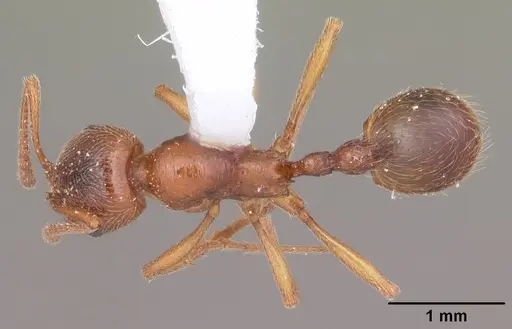
CASENT0105665
View on AntWeb
Literature
Loading...Loading products...