

Stenamma cusuco
- Scientific Name
- Stenamma cusuco
- Tribe
- Stenammini
- Subfamily
- Myrmicinae
- Author
- Branstetter, 2013
- Distribution
- Found in 1 countries
Stenamma cusuco Overview
Stenamma cusuco is an ant species of the genus Stenamma. It is primarily documented in 1 countries , including Honduras. Detailed taxonomic data and occurrence records can be further explored via authoritative databases such as AntWeb or the Global Biodiversity Information Facility (GBIF).
Stenamma cusuco
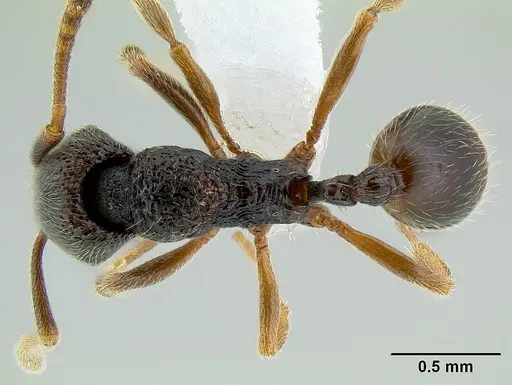
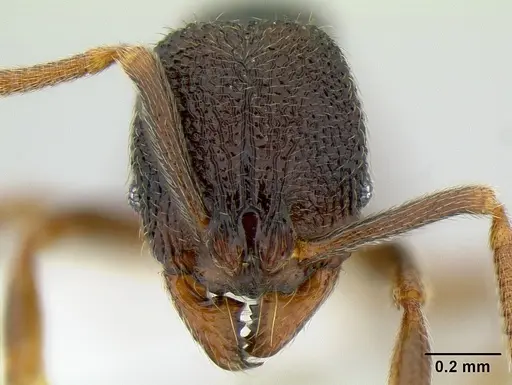
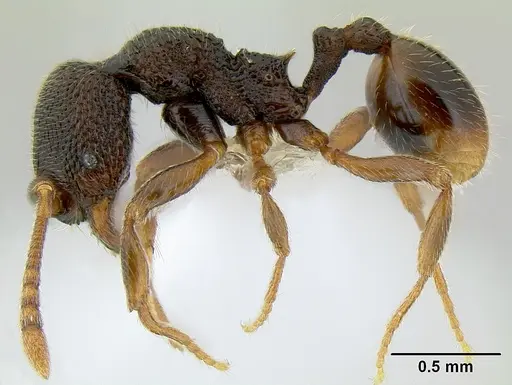
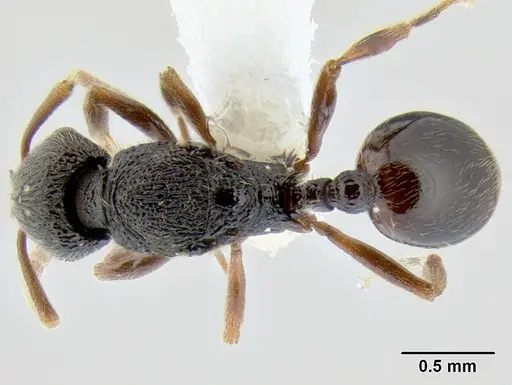
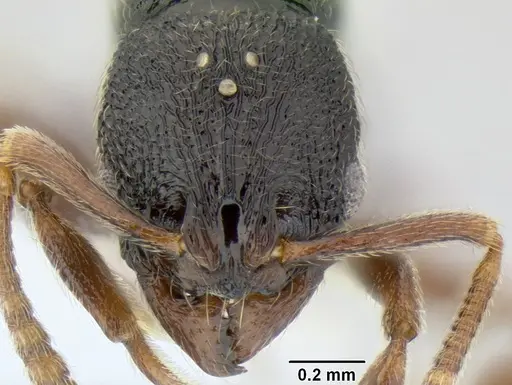
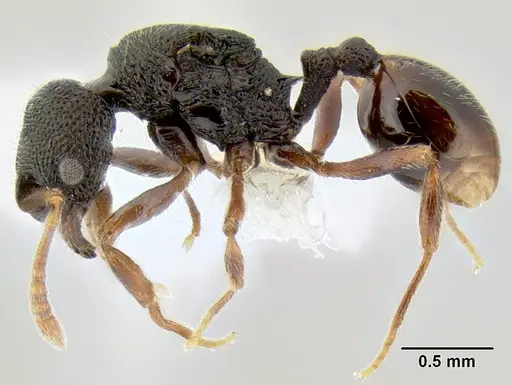
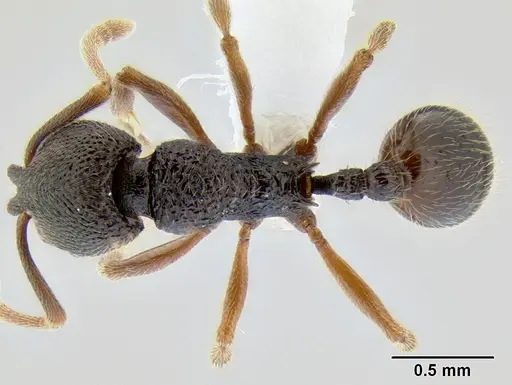
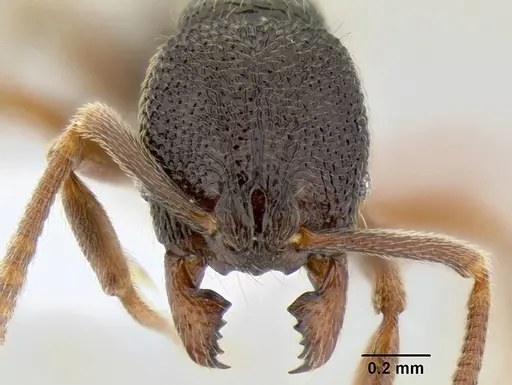
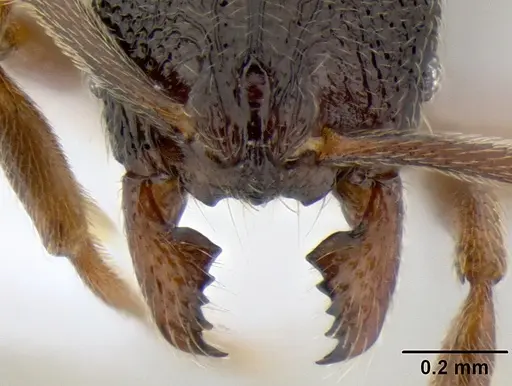
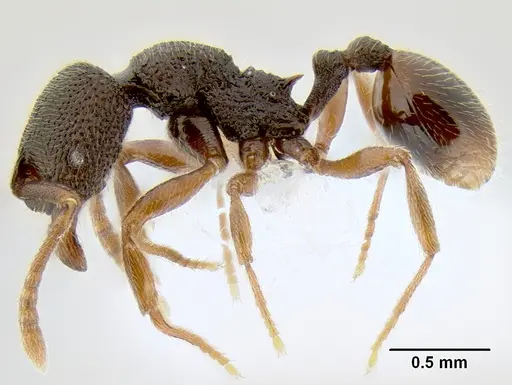
Stenamma cusuco is a small- to medium-sized ant species native only to Parque Nacional Cusuco in Honduras, where it lives at elevations of 1200-1400 meters in montane wet forests [1][2]. Workers measure 0.74-0.80mm in head length and have a distinctive red-black coloration with brown patches on the gaster [2]. This species is immediately recognizable by its unique clypeal structure, three projecting teeth on the face (two sharp outer teeth and a blunt central tooth formed by a projecting median lobe), a feature not found in any other Stenamma species [1][2]. The expanded frontal lobes completely cover the antennal sockets when viewed from the front, another distinguishing trait [1].
This is one of the newest ant species described (2013), and almost nothing is known about its biology in the wild. The unusual clypeal structure suggests it may have a specialized diet, but no prey items have been documented yet [1]. Based on its habitat in montane cloud forest leaf litter, it likely forages on the forest floor in damp, shaded conditions. This species represents a truly enigmatic ant, even males have never been collected [3].
Quick Summary
- Difficulty: Expert
- Origin & Habitat: Parque Nacional Cusuco, Cortés, Honduras, montane wet forest at 1200-1400m elevation in mesophyll forest [1][2]
- Colony Type: Unconfirmed colony structure, this species is known only from a handful of specimens collected in leaf litter [1]
- Size & Growth:
- Queen: 0.78mm head length (single specimen measured) [2]
- Worker: 0.74-0.80mm head length [2]
- Colony: Unknown, likely small based on genus patterns
- Growth: Unknown
- Development: Unconfirmed, likely 6-10 weeks based on typical Stenamma development (No direct development data exists for this species. Estimates based on genus-level patterns for similar montane forest Stenamma species.)
- Antkeeping:
- Temperature: Cool conditions expected, montane forest habitat suggests 18-22°C range. Start conservative and observe colony activity.
- Humidity: High humidity required, think damp cloud forest floor. Keep substrate consistently moist but not waterlogged.
- Diapause: Likely yes, montane tropical species may have reduced activity during cooler/wetter seasons. More research needed.
- Nesting: Naturalistic setup with deep substrate or plaster nest works well. They inhabit leaf litter in nature, so provide plenty of ground-level cover and damp conditions.
- Behavior: Behavior is unstudied in captivity. Based on genus patterns, they are likely cryptic foragers that hunt small prey in leaf litter. Escape risk is moderate, workers are small but not tiny. Exercise standard escape prevention. Temperament is unknown but Stenamma species are generally non-aggressive and secretive.
- Common Issues: very limited availability, almost never available in the antkeeping hobby, no captive husbandry information exists, all care is experimental, wild-caught colonies may carry parasites that are difficult to treat, slow growth and small colony sizes make them high-risk for beginners, the unique clypeal structure suggests specialized diet needs we cannot yet determine
Discovery and Taxonomy
Stenamma cusuco was only described in 2013 by Michael Branstetter as part of a comprehensive revision of the Middle American Stenamma clade [1]. The species is known only from the type locality in Parque Nacional Cusuco, a protected cloud forest in northern Honduras. The species name 'cusuco' directly references this protected area [3]. The type series consists of workers and queens collected from sifted leaf litter samples during the LLAMA (Leaf Litter Ant Morphospecies and Molecular Analysis) project [2]. What makes this species particularly interesting taxonomically is its unique clypeal structure, the three-toothed arrangement is unlike any other known Stenamma species, suggesting it may occupy a unique ecological niche [1].
Natural Habitat
This species inhabits montane wet forest at elevations between 1200 and 1400 meters [1][2]. At this altitude in Honduras, the forest experiences cool temperatures year-round with high humidity and frequent cloud cover. The mesophyll (broadleaf) forest floor provides a thick layer of decomposing leaves where these ants likely hunt for prey. The specimens were collected by sifting through leaf litter, a standard technique for collecting tiny forest-floor ants [2]. This habitat suggests the species is adapted to cool, consistently moist conditions with minimal temperature fluctuation.
Unique Physical Features
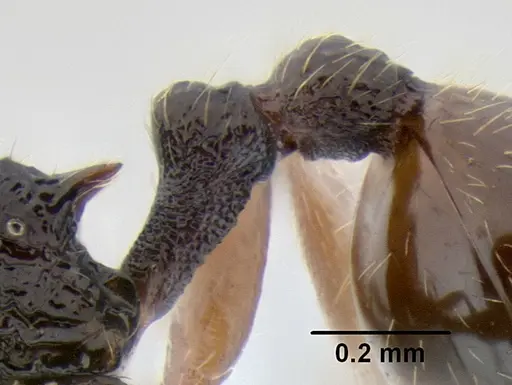
Stenamma cusuco has several distinctive physical traits that set it apart from other Stenamma species. The most notable is the clypeus (the shield-like plate above the mandibles) which has three projecting teeth: two well-defined sharp outer teeth and a blunt central tooth formed by a strongly projecting median lobe [1][2]. Additionally, when you look at the ant from the front, the frontal lobes are so expanded that they completely cover the antennal socket openings, a trait shared with few other species [1]. Workers are small to medium-sized (head length 0.74-0.80mm) with a red-black coloration and moderate-length propodeal spines [2]. Queens are similar in appearance but larger (head length 0.78mm) with the standard queen modifications [2].
Housing and Setup
Since this species has never been kept in captivity, all recommendations are educated guesses based on its natural habitat and genus patterns. A naturalistic setup with deep, moist substrate (like a mix of soil and coco fiber) would best replicate its leaf litter environment. Plaster nests can work well if kept consistently damp. Given its montane origin, keep temperatures cool, aim for room temperature around 18-22°C, avoiding any heating unless the colony shows clear signs of cold distress. High humidity is essential, the substrate should feel damp but not have standing water. Provide plenty of hiding structures like cork bark or leaf litter on the surface. Test tube setups may work for founding colonies but will likely need transition to larger setups as the colony grows.
Feeding and Diet
The diet of Stenamma cusuco is completely unstudied, but the unique clypeal structure suggests possible diet specialization [1][2]. Within the genus Stenamma, most species are generalist predators that hunt small invertebrates in leaf litter. The unusual three-toothed clypeus might be an adaptation for capturing specific prey types, but without field observations, this remains speculative. For captive care, offer small live prey items like springtails, fruit flies, and other tiny arthropods. Sugar sources (honey water, sugar water) may or may not be accepted, offer occasionally but do not rely on them. Given the uncertainty about their dietary needs, offering a variety of small prey items is the best approach until acceptance patterns are learned through trial and error.
Challenges and Considerations
Stenamma cusuco represents one of the most challenging ant species to keep because virtually no captive husbandry information exists. This is not a species for beginners, the lack of any established care protocols means all aspects of keeping are experimental. Availability is extremely limited since the species is only known from a small number of specimens in one protected area of Honduras. Wild-caught colonies may carry parasites or pathogens that are difficult to identify and treat in such small, poorly-studied species. Growth rates are likely slow, and colonies may remain small. Anyone attempting to keep this species should be prepared for a steep learning curve and should document their observations carefully to contribute to our understanding of this enigmatic ant.
Frequently Asked Questions
Is Stenamma cusuco available for purchase?
Almost no, this is one of the rarest species in the antkeeping hobby. It is known only from a single protected forest in Honduras and has never been collected in large numbers. Even scientific collections are extremely limited.
How do I keep Stenamma cusuco?
No established care protocols exist. Based on its montane forest habitat, provide cool temperatures (18-22°C), high humidity, and moist substrate. Offer small live prey. This is an experimental species, expect a steep learning curve.
What does Stenamma cusuco look like?
Workers are small (0.74-0.80mm head length) with a distinctive red-black color. The most recognizable feature is the three-toothed clypeus on the face, two sharp outer teeth and a blunt central tooth. The frontal lobes are so expanded they cover the antennal sockets when viewed from above.
Where does Stenamma cusuco live?
Only from Parque Nacional Cusuco in Honduras, at elevations of 1200-1400 meters in montane wet cloud forest. It has never been found anywhere else in the world.
What do Stenamma cusuco eat?
Unknown. The unique clypeal structure suggests possible diet specialization, but no prey items have ever been documented. Based on genus patterns, they likely hunt small invertebrates in leaf litter.
How big do Stenamma cusuco colonies get?
Unknown. Based on typical Stenamma litter-dwelling behavior, colonies likely remain small, probably under 500 workers. No large colony specimens have ever been collected.
Do Stenamma cusuco ants sting?
Stenamma belongs to the subfamily Myrmicinae, which includes many species with functional stingers. However, Stenamma species are generally non-aggressive and secretive. No specific information exists for this species regarding stinging behavior.
Is Stenamma cusuco good for beginners?
No. This is an expert-level species due to the complete lack of captive husbandry information, extremely limited availability, and likely specialized requirements. Do not attempt this species unless you are experienced with difficult, data-deficient species.
Does Stenamma cusuco need hibernation?
Unclear. As a montane tropical species from 1200-1400m elevation, it likely experiences seasonal temperature variations but not true hibernation. It may have reduced activity during cooler periods. More research is needed.
How long does it take for Stenamma cusuco to develop from egg to worker?
No development data exists for this species. Based on typical Stenamma patterns, expect 6-10 weeks at optimal temperature. This is purely an estimate with low confidence.
References

This caresheet is licensed under CC BY-SA 4.0 .
Literature
Loading...Loading products...