

Solenopsis pawaensis
- Scientific Name
- Solenopsis pawaensis
- Tribe
- Solenopsidini
- Subfamily
- Myrmicinae
- Author
- Mann, 1919
- Distribution
- Found in 1 countries
Solenopsis pawaensis Overview
Solenopsis pawaensis is an ant species of the genus Solenopsis. It is primarily documented in 1 countries , including Solomon Islands. Detailed taxonomic data and occurrence records can be further explored via authoritative databases such as AntWeb or the Global Biodiversity Information Facility (GBIF).
Solenopsis pawaensis
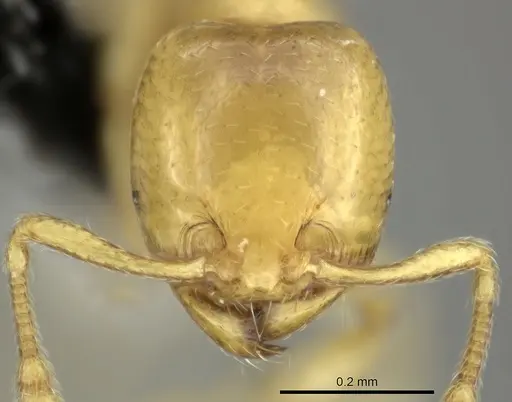
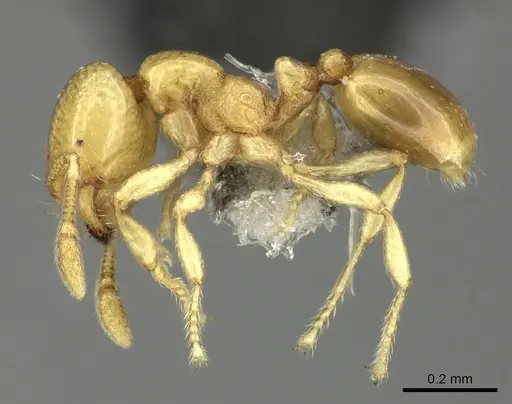
Solenopsis pawaensis is a small ant species native to the Solomon Islands archipelago in the Pacific Ocean. Workers are tiny, measuring just 2-4mm, with the characteristic two-segmented petiole and 10-segmented antennae typical of the Solenopsis genus. The species was first described in 1919 from specimens collected on Ugi Island and has since been recorded across several islands including Makira, Guadalcanal, and Isabel [1][2].
This species remains poorly studied in the scientific literature, with limited information available beyond its geographic distribution. As a tropical island species, it likely inhabits forest edges and disturbed areas where it builds nests in soil or under stones. The Solomon Islands provide a warm, humid tropical environment year-round, suggesting this species prefers similar conditions in captivity.
Quick Summary
- Difficulty: Medium
- Origin & Habitat: Solomon Islands (Ugi Island, Isabel Island, Makira, Guadalcanal), tropical Pacific archipelago. Found in forest edges and likely disturbed areas with suitable nesting sites [1][2].
- Colony Type: Unconfirmed colony structure, likely single-queen (monogyne) based on typical Solenopsis patterns, but this has not been directly documented for this species.
- Size & Growth:
- Queen: Unknown, not described in original literature [2]. Estimated 5-7mm based on related tropical Solenopsis species.
- Worker: 2-4mm based on original description [2].
- Colony: Unknown, no colony size data available for this species.
- Growth: Unconfirmed, likely moderate growth rate typical of tropical Solenopsis species.
- Development: Estimated 4-6 weeks at tropical temperatures (25-28°C) based on genus patterns for related species. (Development time is estimated from related tropical fire ant species. Direct observations for this specific species are unavailable.)
- Antkeeping:
- Temperature: Keep at 24-28°C. As a tropical Solomon Islands species, it requires warm conditions year-round. A heating cable on one side of the nest can provide a gentle temperature gradient.
- Humidity: High humidity preferred, aim for 70-80% relative humidity. Keep the nest substrate consistently moist but not waterlogged. Mist occasionally and provide a water tube.
- Diapause: No, this is a tropical species that does not experience cold winters. No hibernation period is required.
- Nesting: In captivity, standard test tubes and small formicaria work well. Provide moist substrate (soil or sand mix) for nesting chambers. Y-tong nests or acrylic nests with soil chambers are suitable.
- Behavior: Active foragers that likely scavenge for small insects and tend honeydew-producing insects. As a tiny Solenopsis species, workers are aggressive when threatened and may deliver a mild sting. Escape prevention is important due to their small size, use tight-fitting lids and fine mesh barriers. They are likely polydomous (maintaining multiple nest sites) like many tropical Solenopsis species.
- Common Issues: limited availability, this species is rarely available in the antkeeping hobby due to its restricted range, no established captive breeding protocols, care requirements are estimated from genus patterns, small size makes escape prevention critical, they can squeeze through tiny gaps, humidity must be maintained, dry conditions will stress the colony, tropical requirements mean no winter cooling, keep warm year-round
Temperature and Care
Solenopsis pawaensis requires warm, stable temperatures typical of tropical ants. Keep the nest area at 24-28°C (75-82°F) year-round. A heating cable placed on one side of the nest creates a gentle temperature gradient that allows ants to regulate their own temperature by moving between warmer and cooler areas. Avoid temperatures below 22°C as this species is adapted to constant tropical warmth. Room temperature in most homes may be too cool, consider using a small heat mat or heating cable, especially in cooler climates. Place the heating element on top of the nest rather than underneath to avoid drying out the substrate too quickly. [1]
Feeding and Diet
Like other Solenopsis species, this ant is an opportunistic omnivore. Offer small protein sources such as fruit flies, small crickets, mealworm pieces, and other tiny insects. They will also accept sugar sources, a drop of honey or sugar water should be offered occasionally. In the wild, they likely forage for small arthropods and tend honeydew-producing insects (aphids, scale insects). Feed small prey items 2-3 times per week, adjusting based on colony size and consumption. Remove uneaten prey after 24 hours to prevent mold. Sugar water can be provided on a cotton ball or through a feeder, replaced every few days.
Nesting Preferences
In the wild, Solenopsis pawaensis likely nests in soil or under stones in forest edges and disturbed areas. For captive care, provide a moist nesting chamber with soil or a soil-sand mixture. Test tubes with a water reservoir work well for founding colonies, fill the tube about one-third with water blocked by a cotton plug, then add the queen and let her choose a spot. For established colonies, small acrylic nests with soil chambers or Y-tong style nests work well. The nest should have chambers scaled appropriately for their tiny 2-4mm workers, narrow passages and small chambers help them feel secure.
Humidity Requirements
As a species from the humid Solomon Islands, this ant requires higher humidity than temperate species. Maintain 70-80% relative humidity in the setup. Keep the nest substrate consistently moist but not waterlogged, the substrate should feel damp to the touch. A water tube in the outworld provides drinking water. Mist the nest occasionally, but avoid excessive moisture that causes condensation pooling. Good ventilation helps prevent mold while maintaining humidity. If you see condensation constantly pooling on nest walls, reduce misting frequency. [1]
Behavior and Temperament
Workers are small but active foragers. They are likely aggressive when defending the nest and may deliver a mild sting, typical of Solenopsis species. The sting is not dangerous to healthy humans but can be irritating. They are probably polydomous in the wild, maintaining multiple connected nest sites. In captivity, they will explore the outworld actively in search of food. Escape prevention is critical due to their tiny 2-4mm size, use tight-fitting lids, fluon barriers, and fine mesh on any ventilation. They are faster than their small size suggests and can slip through surprisingly small gaps.
Frequently Asked Questions
How long does it take for Solenopsis pawaensis to produce first workers?
Estimated 4-6 weeks at optimal tropical temperatures (25-28°C). This is based on development times of related tropical Solenopsis species, as specific data for S. pawaensis is not available. The first workers (nanitics) will be smaller than mature workers.
What do Solenopsis pawaensis ants eat?
They are omnivores that accept small insects (fruit flies, tiny crickets, mealworm pieces) and sugar sources (honey, sugar water). Feed protein 2-3 times per week and provide a constant sugar source. Remove uneaten prey after 24 hours.
Can I keep Solenopsis pawaensis in a test tube?
Yes, test tubes work well for founding colonies. Use a test tube with a water reservoir (cotton-stoppered) and keep it humid. Once the colony reaches 20-30 workers, consider moving to a small formicarium with soil chambers.
Do Solenopsis pawaensis need hibernation?
No. This is a tropical species from the Solomon Islands and does not require hibernation. Keep them warm year-round at 24-28°C.
Are Solenopsis pawaensis good for beginners?
This species is rated as medium difficulty. While not the easiest species, experienced antkeepers should be able to establish colonies. The main challenges are maintaining tropical humidity and temperature, and their small size requires good escape prevention.
How big do Solenopsis pawaensis colonies get?
Colony size is unknown for this specific species. Based on related tropical Solenopsis species, colonies likely reach several hundred workers at maturity.
Why is my Solenopsis pawaensis colony dying?
Common causes include: temperatures below 22°C (too cold), dry conditions (humidity below 60%), poor escape prevention leading to escapes, and mold from over-wetting. Check that temperature and humidity are within proper ranges.
When should I move Solenopsis pawaensis to a formicarium?
Move from test tube to a formicarium when the colony reaches roughly 20-40 workers and the test tube is becoming crowded. Ensure the new setup has appropriately sized chambers for their tiny workers.
What temperature is ideal for Solenopsis pawaensis?
Keep them at 24-28°C (75-82°F). This tropical species requires warm conditions year-round. A slight gradient allowing them to move between warmer and cooler areas is beneficial.
References

This caresheet is licensed under CC BY-SA 4.0 .
CASENT0199658
View on AntWeb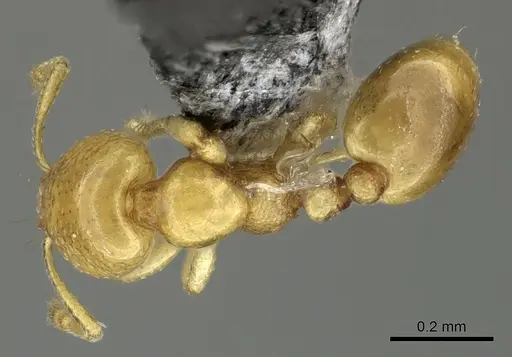
Literature
Loading...Loading products...