

Solenopsis megergates
- Scientific Name
- Solenopsis megergates
- Tribe
- Solenopsidini
- Subfamily
- Myrmicinae
- Author
- Trager, 1991
- Distribution
- Found in 1 countries
Solenopsis megergates Overview
Solenopsis megergates is an ant species of the genus Solenopsis. It is primarily documented in 1 countries , including Brazil. Detailed taxonomic data and occurrence records can be further explored via authoritative databases such as AntWeb or the Global Biodiversity Information Facility (GBIF).
Solenopsis megergates
Solenopsis megergates is the largest fire ant species in the world, with major workers reaching sizes that dwarf all other Solenopsis species [1]. Queens are equally impressive at 7.4-8.9mm, making them among the largest in the saevissima species group [1]. These ants are native to southern Brazil (Paraná, Santa Catarina, and Rio Grande do Sul), with their range extending into Argentina and Paraguay [1][2]. They feature a distinctive red-brown coloration on the head, mesosoma, and legs, with dark brown markings on the abdomen [1]. This species is morphologically distinctive with broad, cordate heads and unique male characteristics, the only males in the species group lacking sculpture on the lateral faces of the scutellum [1].
Quick Summary
- Difficulty: Expert
- Origin & Habitat: Native to southern Brazil (Paraná, Santa Catarina, Rio Grande do Sul), with populations in Argentina and Paraguay [1]. Found in subtropical to temperate regions of the Neotropics, typically in open or disturbed areas like the gas station where the type specimen was collected [2].
- Colony Type: Socially polymorphic, colonies can have either a single queen (monogyne) or multiple queens (polygyne) [3][4]. The species carries the Sb supergene variant that controls social organization, acquired through introgression from S. invicta [5][6].
- Colony: Optionally polygyne
- Founding: Claustral
- Size & Growth:
- Queen: 7.4-8.9mm [1], among the largest fire ant queens in the saevissima group
- Worker: Major workers are the largest of any fire ant species [4][1]. Workers polymorphic with major and minor castes.
- Colony: Unknown for this species, estimated moderate to large based on related species patterns
- Growth: Moderate, inferred from related Solenopsis species
- Development: Estimated 5-8 weeks at optimal temperature (inferred from related Solenopsis species) (No direct development data available for this species, estimates based on typical fire ant development patterns)
- Antkeeping:
- Temperature: Keep at 24-28°C, typical for Neotropical fire ants. Provide a temperature gradient allowing workers to self-regulate.
- Humidity: Moderate to high humidity (60-80%). Fire ants prefer moist substrate but avoid waterlogging.
- Diapause: Unknown, southern Brazilian populations may experience reduced activity in cooler months but true diapause is unconfirmed for this species
- Nesting: In captivity, standard formicaria with moist substrate work well. Fire ants typically create underground nests with chambers. Y-tong (AAC) nests or naturalistic setups with deep substrate are suitable.
- Behavior: Fire ants are defensive and will sting when threatened. They have a painful sting similar to other Solenopsis species. Workers are aggressive foragers and will readily defend the colony. Major workers can deliver more potent stings due to their larger size. Escape prevention is important, use fluon on edges and ensure secure lids.
- Common Issues: limited availability, this species is extremely rare in the antkeeping hobby, no captive breeding data available, wild-caught colonies may be the only option, aggressive temperament requires careful handling and secure housing, Wolbachia infection is universal in wild colonies (100%), may affect colony health in captivity, stings can cause significant pain, handle with caution
Appearance and Identification
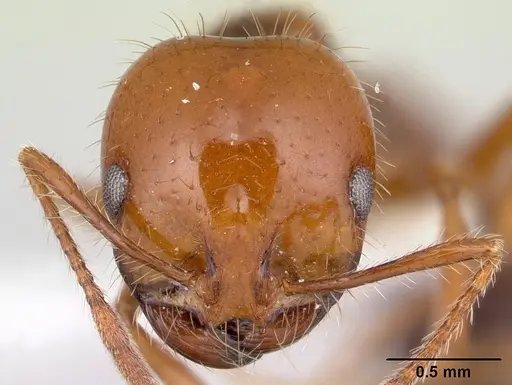
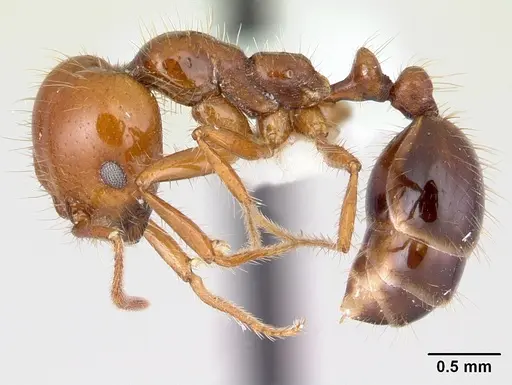
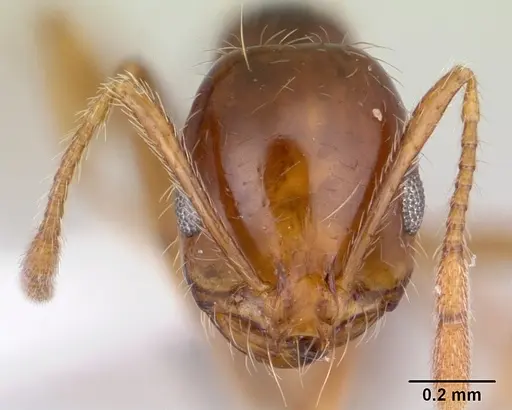
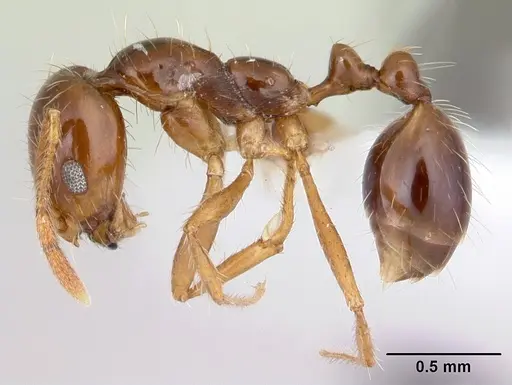
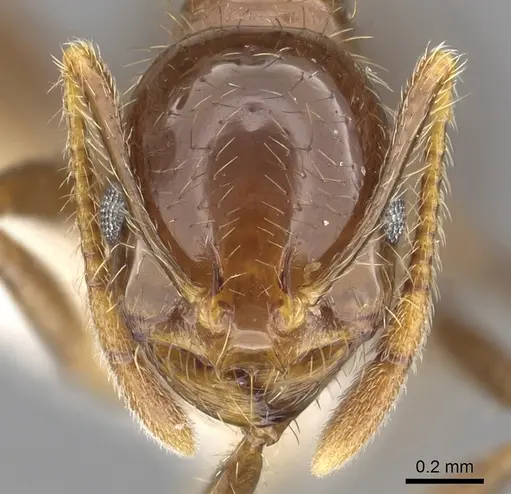
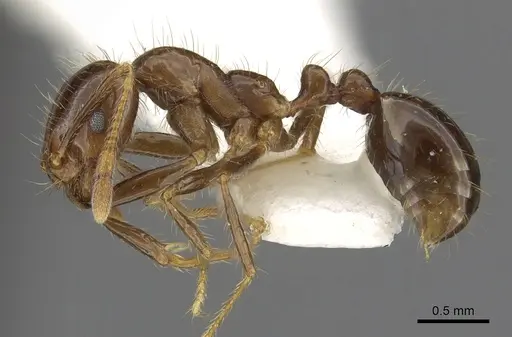
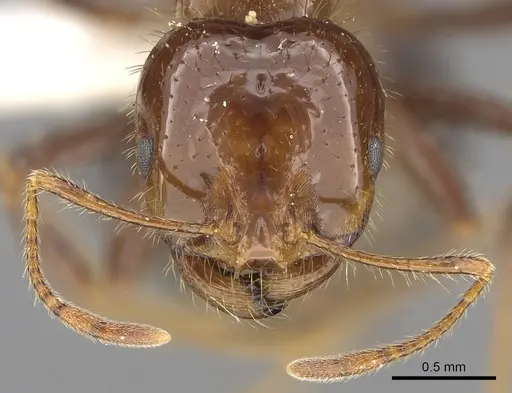
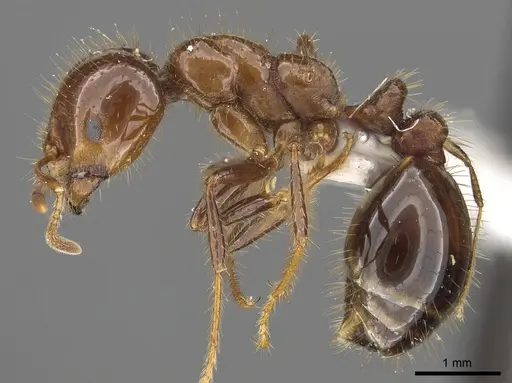
Solenopsis megergates is the largest fire ant species in the world, a distinction it holds over all other Solenopsis species [4][1]. Workers are polymorphic, with major workers significantly larger than minors. The head is broad and cordate (heart-shaped), with small piligerous foveolae (tiny pits where hairs emerge) approximately 0.01mm in diameter [1]. The median frontal streak is absent or faint, and the largest major workers have a median ocellus (third eye) present [1]. Coloration is red-brown on the head, mesosoma, legs, and the first abdominal segment's markings, while the rest of the abdomen is dark brown [1]. Queens are equally impressive at 7.4-8.9mm, with heads slightly broader than long and large, prominent ocelli [1]. Males are distinct from all other species in the group by lacking sculpture on the lateral faces of the scutellum [1].
Distribution and Range
This species is known only from the three southern Brazilian states of Paraná, Santa Catarina, and Rio Grande do Sul [1]. The type locality is Curitiba, Paraná, Brazil [1]. The range extends into Argentina and Paraguay [2]. Notably, the entire range of S. megergates is completely encompassed by the range of S. invicta (the red imported fire ant), with which it shares significant gene flow [6]. This sympatric relationship has led to two independent introgression events where S. megergates acquired the Sb supergene variant from S. invicta/macdonaghi [5]. The species has been found in various habitats including the type specimen collected at a gas station, indicating tolerance for disturbed areas [2].
Social Structure and Genetics
Solenopsis megergates is socially polymorphic, meaning colonies can have either a single queen (monogyne) or multiple queens (polygyne) [3][4]. This polymorphism is controlled by the Sb supergene variant, a region of the genome that determines social organization in fire ants [5][6]. The species acquired this supergene through two independent introgression events from S. invicta/macdonaghi, one relatively recent and one more ancient [5]. One S. megergates Sb male shows a highly similar haplotype to three S. invicta/macdonaghi males collected within 5.2km, indicating very recent gene flow [5]. All wild colonies tested (100%) are infected with Wolbachia bacteria, a common endosymbiont in fire ants that may influence colony health and genetics [7][8].
Temperature and Care
As a Neotropical species from southern Brazil, S. megergates prefers warm temperatures in the range of 24-28°C. This aligns with typical care for fire ants in the saevissima group. Provide a temperature gradient so workers can self-regulate by moving between warmer and cooler areas of the nest. Heating cables or mats placed on one side of the nest can create this gradient. Avoid temperatures below 20°C for extended periods, as this species is not adapted to cold. Maintain moderate to high humidity (60-80%) in the nest substrate, fire ants prefer moist conditions but standing water should be avoided. Use test tubes with water reservoirs or formicaria with built-in hydration systems.
Feeding and Diet
Like other fire ants, S. megergates is an omnivore with a strong preference for protein sources. Feed a varied diet including live insects ( crickets, mealworms, roaches), dead insects, and occasionally small amounts of protein-rich foods. Sugar sources are also accepted, offer sugar water, honey, or diluted maple syrup. Fire ants are aggressive foragers and will readily exploit food sources. Feed every 2-3 days for established colonies, removing uneaten prey after 24 hours to prevent mold. Provide a constant sugar source alongside regular protein feedings.
Behavior and Defense
Fire ants are known for their defensive behavior and painful stings. S. megergates is no exception, due to their large size, major workers can deliver particularly potent stings. When threatened, workers swarm out of the nest in defense, stinging repeatedly. The sting causes a burning sensation followed by a pustule (white blister), similar to other Solenopsis species. Handle with extreme caution, use protective gear when working with the colony. Escape prevention is critical: apply fluon or similar barriers to all edges, use tightly fitting lids, and ensure any gaps larger than 1mm are sealed. Fire ants are excellent climbers and will exploit any weakness in housing.
Colony Founding
Founding behavior has not been directly documented for this species, but based on typical Solenopsis patterns, it is likely claustral. After mating, the queen seals herself in a small underground chamber and lives entirely on her stored fat reserves while raising the first brood. She does not leave to forage during this period. The first workers (nanitics) are typically smaller than mature workers and emerge after several weeks. Once the first workers hatch, the queen resumes egg-laying and the colony begins to grow. Expect 6-10 weeks from founding to first workers, depending on temperature.
Frequently Asked Questions
How long does it take for Solenopsis megergates to develop from egg to worker?
Exact development time is unknown for this species. Based on related fire ant species, estimate 5-8 weeks at optimal temperature (around 26°C). Factors like temperature, humidity, and nutrition can significantly affect development speed.
Are Solenopsis megergates good for beginners?
No. This is an expert-level species due to several factors: limited availability (extremely rare in the hobby), aggressive temperament with painful stings, and lack of captive breeding data. Related species like S. invicta are more commonly kept and better understood.
Do Solenopsis megergates ants sting?
Yes, absolutely. They are fire ants and will sting defensively when threatened. The sting is painful and can cause a white pustule. Major workers, being the largest of any fire ant, may deliver more potent stings. Handle with extreme caution.
What do Solenopsis megergates eat?
Like other fire ants, they are omnivores. Feed live insects (crickets, mealworms) as a primary protein source, along with sugar water, honey, or maple syrup. They are aggressive foragers and will readily accept most food offerings.
Can I keep multiple queens together in a Solenopsis megergates colony?
This species is socially polymorphic, it can form both single-queen (monogyne) and multi-queen (polygyne) colonies in the wild. However, combining unrelated foundress queens is not recommended as it has not been studied and may result in aggression.
What temperature do Solenopsis megergates need?
Keep them at 24-28°C, typical for Neotropical fire ants. Provide a temperature gradient so ants can self-regulate. Avoid temperatures below 20°C for extended periods.
How big do Solenopsis megergates colonies get?
Colony size is not well documented for this rare species. Based on related fire ants, expect colonies to reach hundreds to possibly low thousands of workers. They are not known for forming supercolonies.
Where is Solenopsis megergates found?
Only in southern Brazil (Paraná, Santa Catarina, Rio Grande do Sul), with populations in Argentina and Paraguay. The type locality is Curitiba, Paraná, Brazil.
Why is Solenopsis megergates so rare in the antkeeping hobby?
This species has an extremely limited natural range in southern South America and is much less common than related species like S. invicta. Additionally, almost nothing is known about its biology in captivity, making successful husbandry challenging.
Do Solenopsis megergates need hibernation?
Diapause requirements are unconfirmed for this species. Southern Brazilian populations experience mild winters, so true hibernation may not be necessary. However, reducing temperatures slightly during winter months may be beneficial.
What makes Solenopsis megergates special compared to other fire ants?
They are the largest fire ant species in the world, both workers and queens are bigger than any other Solenopsis [4][1]. They also have unique genetics, carrying the Sb supergene acquired through introgression from S. invicta [5].
Is Solenopsis megergates invasive anywhere?
No. While their range overlaps with the invasive S. invicta, S. megergates itself is not known to be invasive. It remains confined to its native southern South American range.
References

This caresheet is licensed under CC BY-SA 4.0 .
CASENT0178141
View on AntWeb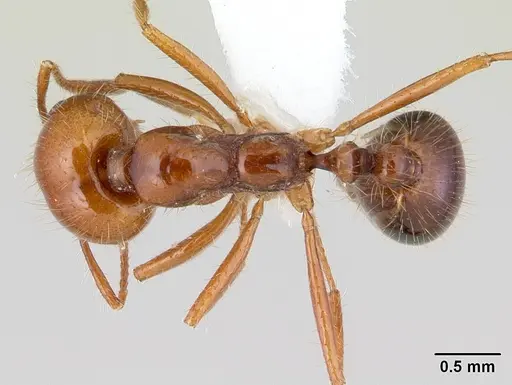
CASENT0178142
View on AntWeb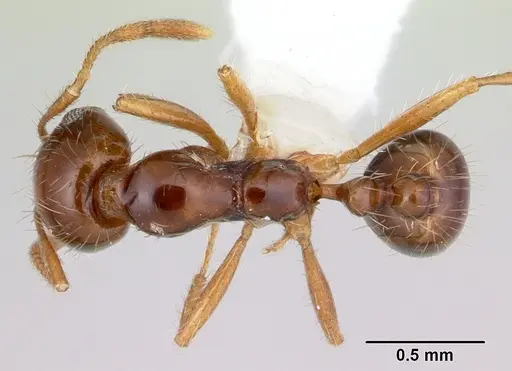
CASENT0902357
View on AntWeb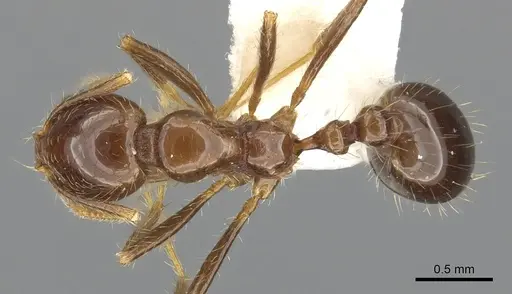
CASENT0902358
View on AntWeb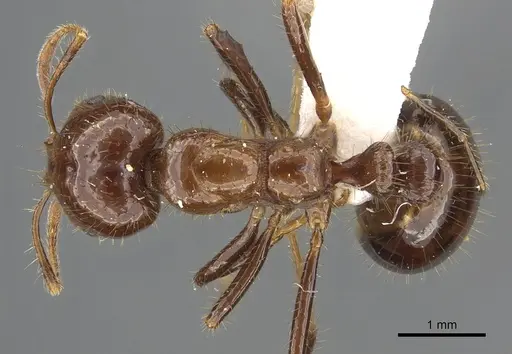
Literature
Loading...Loading products...