

Solenopsis interrupta
- Scientific Name
- Solenopsis interrupta
- Tribe
- Solenopsidini
- Subfamily
- Myrmicinae
- Author
- Santschi, 1916
- Distribution
- Found in 2 countries
Solenopsis interrupta Overview
Solenopsis interrupta is an ant species of the genus Solenopsis. It is primarily documented in 2 countries , including Argentina, Bolivia, Plurinational State of. Detailed taxonomic data and occurrence records can be further explored via authoritative databases such as AntWeb or the Global Biodiversity Information Facility (GBIF).
Solenopsis interrupta
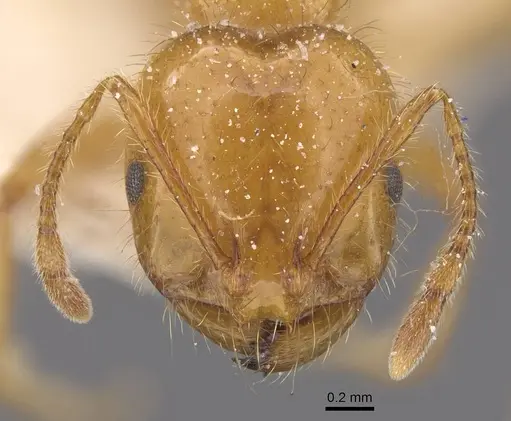
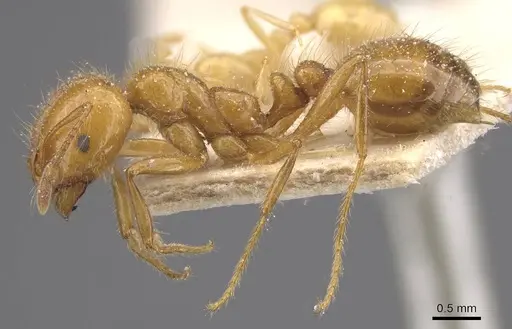
Solenopsis interrupta is a polymorphic fire ant species native to the warm grasslands of Argentina and Bolivia, where it thrives in the Caldenal district and surrounding regions of the Neotropical zone [1][2]. Workers show dramatic size variation, with majors developing strongly cordate (heart-shaped) heads while minors have more elliptical head profiles, this polymorphism allows different workers to specialize in tasks like brood care, foraging, or colony defense [2]. The species has distinctive coloring: a large reddish-yellow spot on the first gaster segment contrasts with an otherwise dark brown to black abdomen, while the head, thorax, legs, and antennae are reddish-yellow [2]. This is one of the most painful stinging ants in South America, researchers report the sting is 'excruciatingly painful' and far more intense than other fire ant species [3].
What makes S. interrupta scientifically fascinating is its magnetic navigation system, researchers discovered biogenic magnetite particles in the head and antennae, organized in a way that likely helps these ants navigate using Earth's magnetic field [4][5]. The antennae contain about 31% of the body's magnetic material while the head holds another 27%, with the two showing coordinated orientation that suggests they work together as a biological compass [4]. This species also hosts at least 13 different species of Pseudacteon decapitating flies, parasitoids that develop inside worker ants, eventually decapitating them, making it one of the most heavily parasitized fire ant species in South America [6].
Quick Summary
- Difficulty: Medium
- Origin & Habitat: Native to central-northern Argentina (Córdoba, Mendoza provinces) extending northward into Bolivia [2]. Found in the Caldenal district and surrounding Neotropical grasslands, typically in warm, dry to moderately humid areas [1]. This is a tropical climate specialist species adapted to temperate-to-warm conditions [7].
- Colony Type: Single-queen colonies (monogyne), molecular studies place this species in a divergent clade separate from the socially polymorphic fire ants [8][9]. Ergatoid (wingless) replacement queens have not been documented for this species.
- Colony: Monogyne
- Founding: Claustral
- Size & Growth:
- Queen: Approximately 6-8 mm (estimated based on related S. saevissima group species)
- Worker: 0.81-1.67 mm head length, polymorphic majors to 1.67 mm [2]
- Colony: Likely 100-500 workers based on related species in the saevissima group
- Growth: Moderate, typical fire ant development
- Development: 6-8 weeks (estimated from S. invicta and S. saevissima data) (Development time inferred from related species in the saevissima group. Queens seal themselves in during claustral founding and live off stored fat reserves until first workers emerge.)
- Antkeeping:
- Temperature: Keep nest at 24-28°C, these are warm-climate fire ants adapted to Argentine grasslands. A gentle gradient allows workers to regulate their temperature. Avoid temperatures below 20°C for extended periods.
- Humidity: Moderate humidity around 50-60%. Fire ants prefer drier conditions than many tropical ants. Allow substrate to dry partially between water additions.
- Diapause: Yes, a winter rest period is recommended. Reduce temperature to 15-18°C for 2-3 months during winter months (November-February in the Southern Hemisphere, or simulate winter during your local winter).
- Nesting: Y-tong (AAC) nests work well for fire ants, or a naturalistic setup with dry substrate. They prefer compact chambers over open spaces. Provide a water test tube as a humidity source but avoid overly wet conditions.
- Behavior: Fire ants are defensive and will vigorously defend their nest. Workers are aggressive toward intruders and can swarm quickly. The sting is exceptionally painful, this species has one of the most painful stings among South American fire ants [3]. Escape prevention is critical due to their small size and ability to squeeze through tiny gaps. They are active foragers that will recruit aggressively to food sources. Colony movement is common, they readily relocate if conditions become unfavorable.
- Common Issues: sting pain, this species has an excruciatingly painful sting far stronger than other fire ants, making handling risky, escape prevention is critical, tiny workers squeeze through standard barriers, use fluon and fine mesh, parasite susceptibility, wild colonies can carry Thelohania solenopsae microsporidian that kills colonies in captivity, overheating danger, fire ants are vulnerable to desiccation, avoid dry, hot conditions, colony stress from relocation, fire ants may abandon brood if moved too frequently during establishment
Housing and Nest Setup
Solenopsis interrupta does well in Y-tong (acrylic) nests which provide the dry, compact conditions these fire ants prefer. The chambers should be appropriately sized to the worker caste, major workers need slightly larger spaces while minors do fine in tight passages. A naturalistic setup with a dry substrate layer also works well. Fire ants are accomplished escape artists despite their small size, apply fluon (insect barrier) to all edges and use tight-fitting lids. A water test tube connected to the nest provides drinking water and helps maintain moderate humidity without making the entire nest damp. Keep the nest area dark or dimly lit, fire ants prefer darker nesting sites and will often relocate brood if exposed to bright light. The outworld should include a foraging area with easy access to protein and sugar foods. [2][3]
Feeding and Diet
Fire ants are omnivorous and will accept a wide range of foods. Protein sources like small crickets, mealworms, and other small insects should be offered regularly, twice weekly for growing colonies. They also consume sugar sources including honey water, sugar water, and honey. In the wild, these ants are generalist foragers that exploit various food resources including honeydew from aphids and small arthropods. Workers recruit aggressively to food sources using pheromone trails. Remove uneaten protein within 24-48 hours to prevent mold. A constant sugar water or honey supply is recommended once the colony reaches 20+ workers. Young colonies (founding queens) do not need feeding, they raise their first workers entirely on stored fat reserves. [3]
Temperature and Seasonal Care
Maintain nest temperatures between 24-28°C for optimal brood development. These Argentine fire ants are adapted to warm conditions and will become sluggish below 20°C. A small heating cable or mat on one side of the nest creates a temperature gradient allowing workers to self-regulate. During winter (or a simulated winter period), reduce temperatures to 15-18°C for 2-3 months, this diapause period helps maintain colony health and may trigger reproductive behavior in spring. Avoid keeping them at room temperature year-round without a seasonal cycle, as this can stress colonies long-term. High temperatures above 32°C can be dangerous and cause desiccation. The species has been found at elevations up to 2,280m in Argentina, suggesting some tolerance for cooler conditions at higher altitudes [10].
Defense and Sting Management
This is NOT a beginner-friendly species when it comes to handling. S. interrupta has one of the most painful stings of any South American ant, researchers specifically note it causes 'excruciating pain' far exceeding other fire ant species [3]. The sting delivers alkaloid venom (pympyramidins similar to other Solenopsis) that causes intense burning sensation. When disturbed, workers rapidly swarm and will sting repeatedly. Always use caution when opening the nest or transferring colonies. Work in a well-lit area so you can see approaching workers. Consider using protective gloves and avoid working over the colony. If stung, wash the area with soap and water, those with insect venom allergies should seek medical attention. The potent sting also serves as effective predator deterrence in captivity, ensure the formicarium is secure from curious pets.
Health and Common Problems
Wild-caught S. interrupta colonies may carry the microsporidian parasite Thelohania solenopsae, which can devastate captive colonies [11]. Quarantine new colonies for several weeks and monitor for signs of infection like sluggish behavior or unusual mortality. Fire ants are also targeted by at least 13 species of Pseudacteon decapitating flies in their native range, while these parasitoids are not established in most collections, they represent a natural threat [6]. The main captive mortality causes are typically: escape (tiny workers find any gap), desiccation from too-dry conditions, and stress from excessive disturbance during founding. Colonies that suddenly decline often have underlying parasite issues. Regular observation and maintaining proper humidity levels helps prevent most problems.
Unique Biology: Magnetic Navigation
S. interrupta has a remarkable biological compass system. Researchers discovered magnetite (Fe₃O₄) particles biomineralized in the head and antennae, organized in a way that allows the ant to sense Earth's magnetic field [4][5]. About 58% of the body's magnetic material is concentrated in the head and antennae combined, these parts show angular dependence in resonance experiments, meaning they respond to magnetic field orientation [4]. The antennae contain roughly 31% of magnetic material while the head holds 27%, and they work together as a coordinated sensory system [4]. This likely helps foragers navigate back to the nest after long foraging trips, a useful adaptation for ants in open grassland habitats. The magnetic material content also varies seasonally, dropping significantly during dry months [12]. This is one of the most well-documented cases of magnetoreception in ants.
Frequently Asked Questions
How long does it take for Solenopsis interrupta eggs to develop into workers?
Based on related species in the saevissima group, expect approximately 6-8 weeks from egg to first worker at optimal temperatures (around 26°C). Development is faster in warmer conditions and slower if temperatures drop.
What temperature do Solenopsis interrupta ants need?
Keep the nest at 24-28°C. These Argentine fire ants prefer warm conditions and become inactive below 20°C. A temperature gradient with a slight warm area allows self-regulation.
Do Solenopsis interrupta ants need hibernation?
Yes, a winter rest period is recommended. Reduce temperatures to 15-18°C for 2-3 months during winter. This mimics their natural seasonal cycle in the Argentine grasslands and helps maintain colony health.
How big do Solenopsis interrupta colonies get?
Based on related species in the saevissima group, colonies likely reach 100-500 workers. They are single-queen (monogyne) colonies, which typically stay smaller than the supercolonies formed by polygynous fire ant species.
Can I keep multiple Solenopsis interrupta queens together?
No, this species is monogyne (single-queen). Molecular studies place it in a divergent clade separate from socially polymorphic fire ants. Multiple unrelated queens will fight until only one remains.
What do Solenopsis interrupta ants eat?
They are omnivorous. Offer protein (small insects like crickets, mealworms) twice weekly and provide constant access to sugar sources (honey water, sugar water). They will also collect honeydew if aphids are available.
Is Solenopsis interrupta good for beginners?
No, this is not recommended for beginners. The extremely painful sting poses handling risks, and their small size makes escape prevention challenging. Related species like S. invicta are better choices for those new to fire ant keeping.
What type of nest is best for Solenopsis interrupta?
Y-tong (AAC) or acrylic nests work well. Fire ants prefer drier conditions than many ants, keep humidity moderate (50-60%) and allow substrate to partially dry between water additions. Compact chambers suit their small size.
Where is Solenopsis interrupta native to?
Central-northern Argentina (Córdoba, Mendoza provinces) northward into Bolivia. They inhabit the Caldenal district and surrounding Neotropical grassland regions [1][2].
Why do Solenopsis interrupta ants have magnetic material in their heads?
The magnetite particles in their heads and antennae likely form a biological compass used for navigation. Studies show the magnetic material is organized and shows angular dependence, meaning it responds to magnetic field orientation, helping foragers navigate back to the nest [4][5].
References

This caresheet is licensed under CC BY-SA 4.0 .
CASENT0913900
View on AntWeb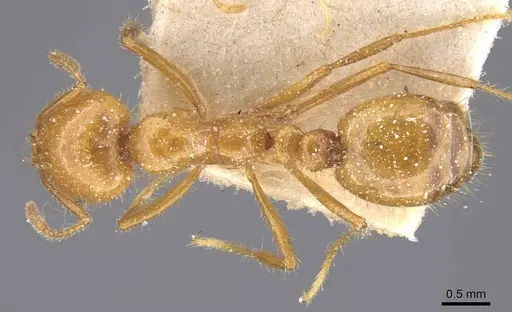
Literature
Loading...Loading products...