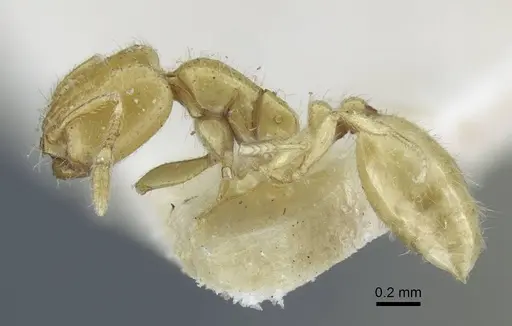
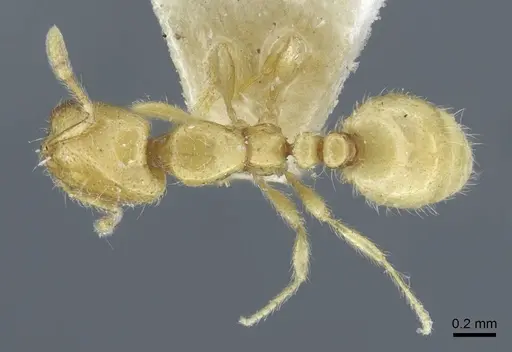
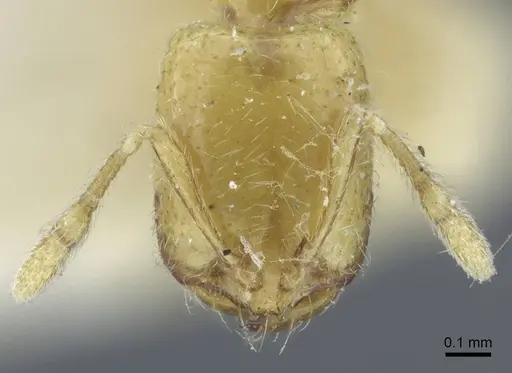
Solenopsis ilinei - "Iline's Thief Ant"
Solenopsis ilinei is a fascinating species of 'thief ant' within the broader Solenopsis genus, which also includes the notorious 'fire ants'. While fire ants are known for their painful stings and large, aggressive colonies, S. ilinei, like many other smaller Solenopsis species, is a tiny, monomorphic ant. These ants typically form smaller colonies and are often found living a 'lestobiotic' lifestyle, meaning they nest within the walls of other, larger ant species' nests, discreetly pilfering their food and brood. Their small size allows them to move unnoticed, making them masters of stealth in the ant world. The worker caste is monomorphic, meaning all workers are roughly the same size and shape, unlike some larger Solenopsis species that exhibit polymorphism with different worker sizes. While specific details on the physical characteristics of S. ilinei are scarce, Solenopsis workers in general are characterized by having ten-segmented antennae with a two-segmented antennal club.
- Difficulty: Medium
- Origin & Habitat: Palaearctic Region: Azerbaijan, Georgia, Ukraine, Russian Federation; Neotropical Region: Brazil in Mostly subterranean, often within the nests of other ant species or under stones in thick leaf litter..
- Colony Type: Monogyne or Polygyne (data for specific species 'ilinei' not explicitly stated, but common in genus), claustral founding.
- Size & Growth:
- Queen: Not specified
- Worker: Not specified
- Colony: Small (hundreds). Medium growth.
- Antkeeping:
- Temperature: Maintain a temperature range between 24-28°C. While many ants can tolerate fluctuations, consistency within this range is optimal for brood development and overall colony health. Some Solenopsis species prefer warmer temperatures for foraging, up to 31.65°C..
- Humidity: Aim for a humidity range of 60-80%. Solenopsis species often nest in the soil, which naturally provides a consistent moisture level..
- Diapause: Not required. Not specified at Not specified.
- Nesting: Due to their 'thief ant' nature and small size, a plaster or acrylic formicarium with small chambers and good humidity retention is ideal. Test tube setups are excellent for founding colonies. They are known to nest in soil, so a naturalistic setup with fine substrate can also work..
- Behavior: Medium (towards prey, potentially defensive towards handler if nest is disturbed) aggressiveness.
- Common Issues: Escapes due to small size, Mold in nest due to high humidity, Colony stalling if not fed appropriately, Mites if hygiene is not maintained.
Keeping Solenopsis ilinei, like many thief ants, presents a unique challenge that makes them a rewarding project for experienced antkeepers. Their extremely small size means you'll need a formicarium with tiny, secure openings to prevent escapes. Fine mesh or even just a very tight-fitting lid on your outworld will be crucial, as these little guys can squeeze through incredibly small gaps. Consider a plaster or acrylic nest with very small chambers, or even a specialized thief ant setup, to ensure they feel secure and don't abscond.
Their 'thief ant' lifestyle means their dietary preferences might lean heavily towards brood and liquids, mimicking their natural pilfering habits. While they are omnivores, providing a good variety of protein, such as small pre-killed insects or even crushed insect parts, and various sugar sources like honey water, will be essential. Observe their feeding habits closely; some species within the Solenopsis genus are known to dry and store insect pieces, so they might not consume all protein immediately.
Humidity is key for these ants, as they naturally inhabit soil environments. Maintaining consistent moisture in their nest is paramount to their health and the development of their brood. Consider using a nest material that retains humidity well, like plaster, or a setup with a water reservoir that allows for a stable moisture gradient. Fluctuations in humidity can stress the colony and lead to issues like mold or a decline in brood development.
While specific information on the sting of Solenopsis ilinei is limited, other Solenopsis species, particularly the 'fire ants,' are known for their painful stings. Even though thief ants are much smaller, it's wise to handle them with care. Avoid disturbing their nest unnecessarily, and always use tools rather than your bare hands when interacting with the colony or outworld. This precaution helps prevent stings and reduces stress on the ants.
Due to their small size and often cryptic nesting habits, observing the full dynamics of a Solenopsis ilinei colony can be challenging but incredibly rewarding. Patience is a virtue when keeping these ants. You might not see large numbers of foragers constantly, but with proper care and observation, you can witness the intricate life cycle of these fascinating, tiny masters of subterranean thievery.
Frequently Asked Questions
What kind of nest is best for Solenopsis ilinei?
For Solenopsis ilinei, given their minute size and 'thief ant' tendencies, a plaster or acrylic formicarium with very small chambers is highly recommended. These materials help maintain the high humidity they prefer and the small chamber size prevents them from feeling too exposed. Ensure any ventilation holes are incredibly tiny to prevent escapes. A test tube setup is ideal for their founding stage, providing a secure and humid environment to kickstart your colony.
What do Solenopsis ilinei eat?
Solenopsis ilinei are omnivores, just like many other ant species. They'll thrive on a varied diet. For protein, offer small, pre-killed insects such as fruit flies, small crickets, or parts of mealworms. They also need sugary liquids, so honey water or sugar water is a must. Don't be surprised if they take tiny pieces of protein back to their brood, as this is typical 'thief ant' behavior. Observing their consumption will help you fine-tune their feeding schedule.
How fast do Solenopsis ilinei colonies grow?
Solenopsis ilinei colonies generally exhibit a medium growth rate. They won't explode in numbers like some larger, more aggressive fire ant species, but with consistent warmth and a steady food supply, you'll see a healthy increase in their worker count over time. Initial growth might seem slow, but once they establish a good worker force, the colony will expand more noticeably. Expect to see your colony grow into the hundreds, possibly thousands, of individuals over a few months to a year.
Do Solenopsis ilinei sting?
Yes, while not as famously potent as their 'fire ant' relatives, Solenopsis species are known to sting. It's always a good practice to handle your Solenopsis ilinei colony with caution and use tools for any interactions within the outworld or nest. While their sting might be less impactful due to their small size, it's best to avoid direct contact to prevent any discomfort or stress to the ants.
Do Solenopsis ilinei need diapause?
Based on available information and the general care for many tropical and subtropical Solenopsis species, Solenopsis ilinei typically does not require a diapause period. Maintaining consistent temperatures and humidity year-round should be sufficient for their continuous development and activity. Attempting a cold diapause could be detrimental to their health.
What temperature and humidity do Solenopsis ilinei prefer?
For optimal health and brood development, aim to keep your Solenopsis ilinei colony at temperatures between 24-28°C (75-82°F). Some Solenopsis species enjoy warmer spots for foraging, up to around 31-32°C. For humidity, they thrive in a range of 60-80%, reflecting their natural subterranean habitats. Consistent moisture is crucial, so a good nest setup and regular checks are vital.
Are Solenopsis ilinei good for beginner antkeepers?
Solenopsis ilinei can be a bit challenging due to their tiny size and potential for escapes, making them a 'medium' difficulty species. They are better suited for antkeepers who have some experience with other ant species, particularly those that require careful escape prevention and humidity management. However, for those up for the challenge, they offer a fascinating glimpse into the world of 'thief ants'.
How can I prevent mold in my Solenopsis ilinei nest?
Preventing mold is crucial for Solenopsis ilinei, especially with their preference for higher humidity. The key is good ventilation combined with controlled moisture. Avoid overfeeding, and always remove any uneaten food promptly. Ensure your nest material doesn't become waterlogged, and consider a nest design that allows for some airflow without drying out too quickly. Regular spot cleaning of the outworld is also important.
Why are they called 'thief ants'?
Solenopsis ilinei, like many smaller Solenopsis species, are known as 'thief ants' because of their unique behavior in the wild. They often establish their nests within the walls or close proximity to the nests of larger ant species, then sneak in to steal their food, and most notably, their brood (eggs, larvae, and pupae). Their tiny size allows them to go largely unnoticed by the host colony, making them incredibly effective pilferers.
Can Solenopsis ilinei live with multiple queens (polygyny)?
While specific information for Solenopsis ilinei regarding polygyny isn't explicitly detailed, some species within the broader Solenopsis genus, like Solenopsis invicta and Solenopsis geminata, can be both monogyne (single queen) or polygyne (multiple queens). If you acquire a colony with multiple queens, observe their behavior carefully, as not all queen combinations are stable. If they appear to be coexisting peacefully, then a polygynous setup is certainly possible, potentially leading to faster colony growth.