

Solenopsis franki
- Scientific Name
- Solenopsis franki
- Tribe
- Solenopsidini
- Subfamily
- Myrmicinae
- Author
- Forel, 1908
- Distribution
- Found in 1 countries
Solenopsis franki Overview
Solenopsis franki is an ant species of the genus Solenopsis. It is primarily documented in 1 countries , including Colombia. Detailed taxonomic data and occurrence records can be further explored via authoritative databases such as AntWeb or the Global Biodiversity Information Facility (GBIF).
Solenopsis franki - "Frank's Thief Ant"
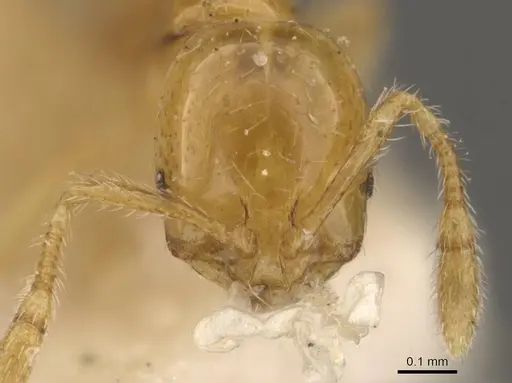
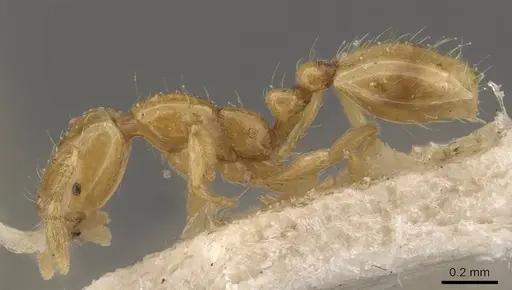
Solenopsis franki is a fascinating, tiny ant species, often referred to as a 'thief ant' due to its subterranean lifestyle and tendency to pilfer resources from other ant colonies. These ants are a uniform golden-yellow color. Their workers are quite small, ranging from 1.47 to 1.68 mm in length, with heads that are longer than they are wide and a nearly rectangular shape. The queen, though still small, is noticeably larger than the workers and shares the same golden-yellow hue. A striking feature of the queen is her three clear but very tiny ocelli. They are a member of the molesta species complex.
- Difficulty: Medium
- Origin & Habitat: South America (specifically Brazil and Colombia) in Dry forests, coffee plantations (leaf litter), wet rainforests (dark clay soils), subterranean.
- Colony Type: Monogyne, temporary parasitic founding.
- Size & Growth:
- Queen: 3.0mm+
- Worker: 1.47-1.68mm
- Colony: Small (hundreds). Slow growth.
- Antkeeping:
- Temperature: Maintain temperatures between 24-30°C (75-86°F) for optimal development and activity, ensuring a thermal gradient if possible. While workers alone may not show strong humidity preferences, brood-tending workers prefer saturated atmospheres (near 100% RH) due to the brood's susceptibility to desiccation, suggesting the need for a humid environment within the nest..
- Humidity: Maintain humidity levels around 70-90% within the nest, with brood areas potentially closer to 100% relative humidity..
- Diapause: Not required. Not specified at Not specified.
- Nesting: Given their natural subterranean habits and classification as thief ants, a plaster or acrylic formicarium with multiple chambers and a substrate that allows for burrowing is suitable. They are known to nest under rocks in the wild. Ensuring an escape-proof setup is crucial due to their small size..
- Behavior: Low (towards handler, but can be aggressive towards other ants as a thief ant) aggressiveness.
- Common Issues: Escapes due to small size, Difficulty in parasitic founding, Humidity fluctuations impacting brood, Mold in nest from uneaten food.
Keeping Solenopsis franki, often called Frank's Thief Ant, presents unique challenges due to their specialized 'thief ant' behavior. These ants are naturally inclined to raid the nests of other, larger ant species for food and brood, which means their dietary needs in a captive environment can be a bit different from typical ant species. Providing a consistent and varied diet of small insects and sugary solutions is essential to meet their nutritional requirements, even though they may not forage openly as much as other species. You might find them more active when food sources are scarce, so careful observation of their foraging habits is key to successful long-term care.
Their tiny size, with workers only reaching about 1.5 mm, makes them masters of escape. When setting up a formicarium for Solenopsis franki, extreme vigilance is required to ensure it's completely escape-proof. Any small crack or unsealed opening can quickly become an exit point for an entire colony. Consider using fluon barriers or other effective containment methods to prevent these nimble ants from exploring beyond their intended habitat. Double-checking all seals and connections will save you a lot of hassle in the long run.
The queen of Solenopsis franki is known to be a temporary social parasite, meaning she invades the nest of another ant species to establish her colony. This founding type makes initial colony establishment particularly tricky for antkeepers. Successfully introducing a parasitic queen to a host colony or mimicking the conditions for her to found without a host can be a delicate process. Researching specific host species or successful founding methods for parasitic Solenopsis species is highly recommended to give your queen the best chance at establishing a thriving colony.
Humidity is a critical factor, especially for the brood. While worker ants themselves can tolerate a range of humidity, the larvae and pupae are much more susceptible to desiccation. This means providing a humid gradient within the nest is vital, with areas that can reach near 100% relative humidity where the queen and brood will likely congregate. Regularly monitoring and maintaining these humidity levels will be crucial for the health and development of the colony. Without proper humidity, the brood can quickly dry out, leading to colony decline.
Unlike some larger, more aggressive Solenopsis species (often called 'fire ants' like Solenopsis invicta), Solenopsis franki is generally quite shy and less overtly aggressive towards handlers or other ants, although they can sting if provoked. Their primary defense mechanism often involves retreating and hiding rather than direct confrontation. However, like other Solenopsis, their sting can cause a burning sensation, so handling them directly is still ill-advised. Observing their behavior without disturbing the nest excessively will help keep both the ants and the antkeeper safe and stress-free.

This caresheet is licensed under CC BY-SA 4.0 .
CASENT0217934
View on AntWeb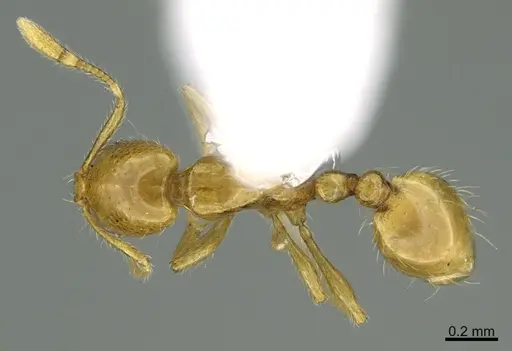
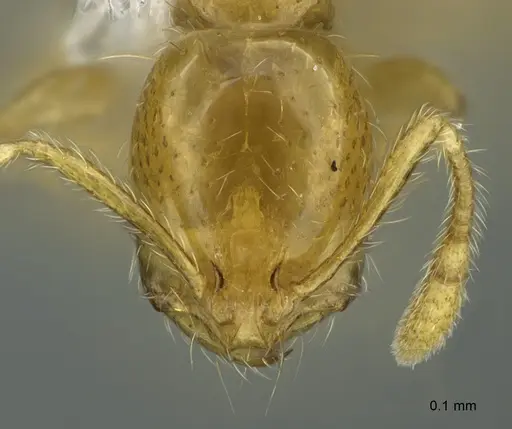
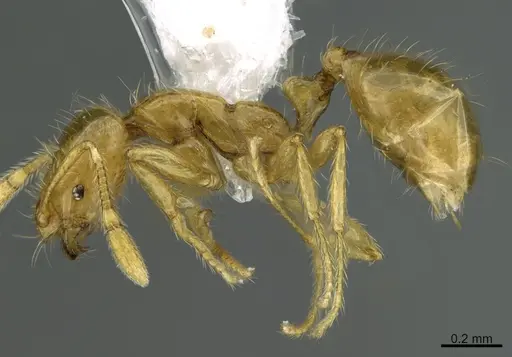
CASENT0908831
View on AntWeb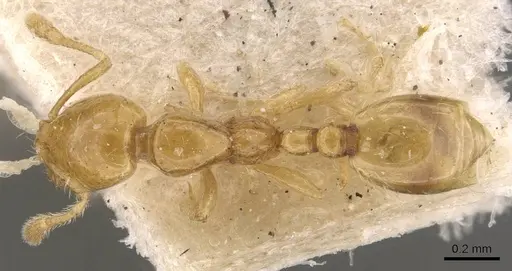
Literature
Loading...Loading products...