

Simopone silens
- Scientific Name
- Simopone silens
- Subfamily
- Dorylinae
- Author
- Bolton & Fisher, 2012
- Distribution
- Found in 1 countries
Simopone silens Overview
Simopone silens is an ant species of the genus Simopone. It is primarily documented in 1 countries , including Madagascar. Detailed taxonomic data and occurrence records can be further explored via authoritative databases such as AntWeb or the Global Biodiversity Information Facility (GBIF).
Simopone silens
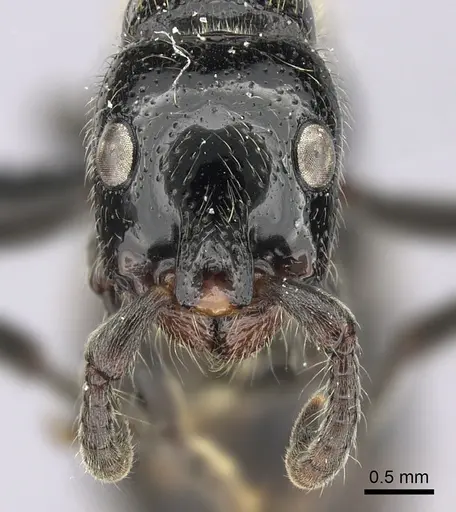
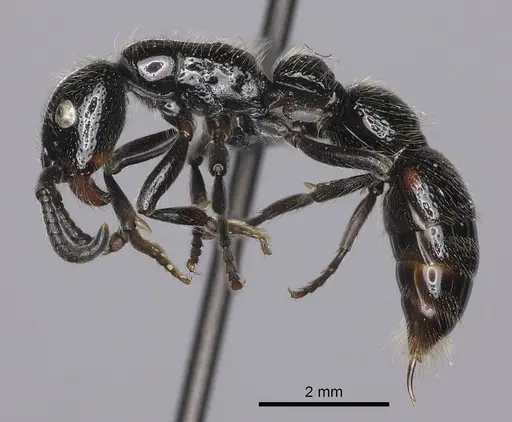
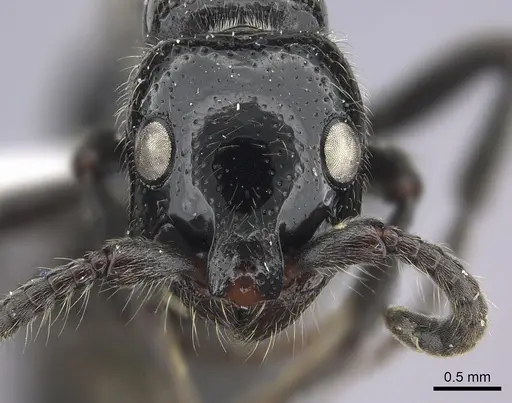
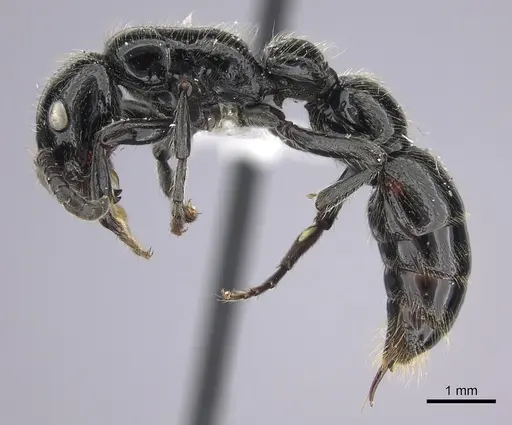
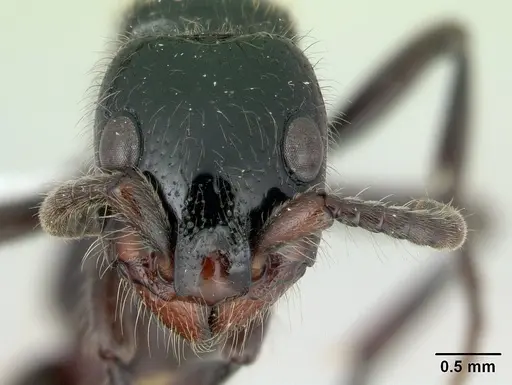
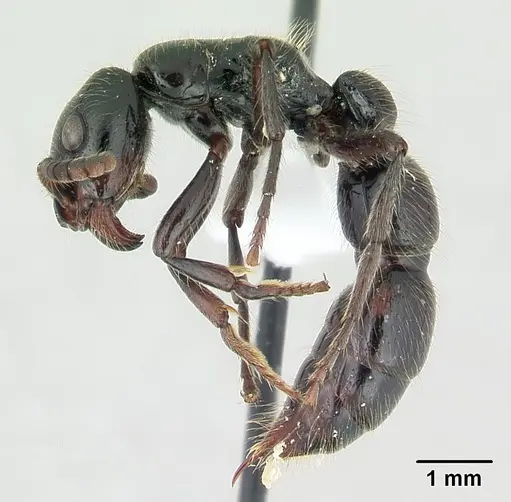
Simopone silens is a small, dark ant species native to Madagascar, belonging to the subfamily Dorylinae. Workers measure 1.96-2.16mm in head length with a robust, black body and blackish-brown to black appendages. The clypeus typically shows a dull reddish coloration. These ants inhabit tropical dry forests in the Tsingy de Bemaraha region, where they nest in dead branches above ground and in low vegetation [1]. This species is closely related to Simopone rex, sharing similar morphological features like relatively short frontal carinae and unarmed posterior corners of the second abdominal segment. The propodeal declivity usually displays fine longitudinal striolae that radiate upward from the insertion point of the petiole [1].
Quick Summary
- Difficulty: Expert
- Origin & Habitat: Madagascar, specifically Mahajanga Province, Tsingy de Bemaraha National Park, at elevations around 100m. Found in tropical dry forest habitats, nesting in dead branches above ground and on low vegetation [1][2].
- Colony Type: Colony structure is unconfirmed for this species. Dorylinae ants typically form colonies with a single queen (monogyne), though detailed colony structure data for Simopone silens specifically is not available.
- Size & Growth:
- Queen: Unknown, queen measurements not documented in available literature
- Worker: 1.96-2.16mm head length,1.56-1.84mm head width [1]
- Colony: Unknown, colony size data not available
- Growth: Unknown
- Development: Unconfirmed, development timeline has not been studied for this species (Based on typical Dorylinae patterns, development likely takes several months but this is an estimate)
- Antkeeping:
- Temperature: Keep at 24-28°C, these are tropical ants from Madagascar requiring warm conditions. A heating cable on one side of the nest can create a temperature gradient.
- Humidity: Maintain moderate to high humidity, they come from tropical dry forest with access to dead wood and vegetation. Keep the nest substrate slightly moist but not waterlogged.
- Diapause: Unlikely, being a tropical species from Madagascar, they probably do not require a diapause period. However, a slight reduction in temperature during cooler months may be beneficial.
- Nesting: Provide arboreal-style nesting options, in nature they nest in dead branches above ground. Y-tong (AAC) nests, plaster nests, or naturalistic setups with cork or wood pieces work well. They prefer tight, enclosed chambers that mimic their natural dead branch habitat.
- Behavior: This species is poorly studied in captivity. Dorylinae ants are typically predatory and secretive, with workers foraging individually or in small groups. They are not aggressive toward humans but may be defensive if disturbed. Escape prevention should be moderate, workers are small (under 3mm) but not extremely tiny. They are likely nocturnal or crepuscular foragers based on typical genus behavior. Their cryptic nesting in dead wood suggests they prefer dark, enclosed spaces.
- Common Issues: lack of captive husbandry information makes proper care challenging, tropical origin means temperature must be carefully maintained year-round, predatory diet may be difficult to replicate, live prey is likely essential, escape risk exists due to small worker size, limited availability in the antkeeping hobby
Natural History and Distribution
Simopone silens is endemic to Madagascar, specifically found in the Mahajanga Province within the Tsingy de Bemaraha National Park. The type locality sits at approximately 100 meters elevation, characterized by tropical dry forest habitat. Specimens have been collected from dead branches positioned above ground level and from low vegetation, indicating an arboreal or semi-arboreal nesting preference. The original type series was collected in November 2001 during the wet season. This species belongs to the emeryi species group within Simopone and is morphologically most similar to Simopone rex, with which it shares relatively short frontal carinae and unarmed posterior corners of the second abdominal segment. The key distinguishing feature is the shape of the anterior clypeal margin in front of the antennal sockets, and most S. silens specimens display very fine striolate sculpture on the propodeal declivity [1][2].
Housing and Nest Preferences
Based on their natural habitat in dead branches above ground, Simopone silens should be provided with nesting conditions that mimic arboreal wood cavities. Y-tong (AAC) nests work well because they provide dark, enclosed chambers similar to the inside of dead branches. Plaster nests or naturalistic setups with cork bark pieces are also suitable. The nest should be kept in a warm, humid area of your setup. Since they were found in tropical dry forest, they need stable warmth and moderate humidity. Avoid overly wet or overly dry conditions, aim for a balance where the nest material feels slightly damp but not saturated. Provide an outworld area for foraging that includes substrate or decorations they can explore.
Feeding and Diet
As a member of the Dorylinae subfamily, Simopone silens is expected to be predatory, feeding primarily on small invertebrates. In captivity, offer small live prey such as fruit flies, springtails, small mealworms, and other tiny arthropods. Sugar sources may be accepted but should not be the primary food, these are not typical honeydew feeders. Offer protein-rich foods regularly and remove any uneaten prey within 24-48 hours to prevent mold. The exact dietary preferences of this species have not been documented, so some experimentation may be needed. Start with small live prey and observe acceptance rates.
Temperature and Care Requirements
Simopone silens requires tropical conditions to thrive. Maintain temperatures in the range of 24-28°C consistently throughout the year. A heating cable placed on one side of the nest can help maintain these temperatures and create a gentle gradient allowing ants to thermoregulate. Room temperature may be insufficient in cooler climates, use a thermostat-controlled heating solution for reliability. Since they come from Madagascar, they do not require hibernation or diapause. Keep them away from drafts, air conditioning vents, and windows with direct sunlight that could cause temperature fluctuations. Stable, warm conditions are essential for this species.
Behavior and Temperament
Detailed behavioral observations of Simopone silens are limited in scientific literature. Dorylinae ants in general are known for their cryptic habits, often nesting in concealed locations and foraging individually or in small groups rather than forming large raiding columns. Workers are not typically aggressive toward keepers but may defend their nest if threatened. The small worker size (under 3mm) means they can squeeze through small gaps, use standard escape prevention with appropriate barriers. They likely prefer dark nesting areas and may be more active during twilight hours or at night. Their secretive nature means you may not see them frequently outside the nest.
Frequently Asked Questions
How long does it take for Simopone silens to develop from egg to worker?
The development timeline for Simopone silens has not been documented in scientific literature. Based on typical Dorylinae patterns and related ant species, development likely takes several months under optimal conditions. Without specific data, expect a minimum of 2-3 months from egg to worker at warm tropical temperatures (around 26°C).
What do Simopone silens ants eat?
As a Dorylinae species, Simopone silens is expected to be predatory on small invertebrates. Feed small live prey such as fruit flies, springtails, tiny mealworms, and other micro-arthropods. Sugar sources may be accepted occasionally but should not be the primary food. Remove uneaten prey promptly to maintain cleanliness.
What temperature do Simopone silens need?
Keep Simopone silens at 24-28°C consistently. These are tropical ants from Madagascar that require warm conditions year-round. Use a heating cable or mat on one side of the nest to maintain stable temperatures, especially in cooler climates.
Can I keep multiple Simopone silens queens together?
The colony structure for this species is unconfirmed. Dorylinae ants typically have single-queen colonies, but Simopone silens specifically has not been studied. Without documented evidence of multi-queen tolerance, keeping multiple unrelated queens together is not recommended.
Do Simopone silens need hibernation?
Simopone silens does not require hibernation. Being a tropical species from Madagascar, they need consistent warm temperatures year-round. A slight temperature reduction during winter months may occur naturally but is not necessary for their care.
How big do Simopone silens colonies get?
The maximum colony size for Simopone silens is unknown. Colony size data has not been documented in available scientific literature. Based on their small worker size and cryptic habits, colonies are likely to remain moderate in size compared to some other Dorylinae species.
Are Simopone silens good for beginners?
Simopone silens is not recommended for beginners. This species is extremely rare in the antkeeping hobby with very limited captive husbandry information available. Their specific care requirements (temperature, humidity, diet) are not well-documented, making successful keeping challenging even for experienced antkeepers.
Why are my Simopone silens dying?
Without established captive protocols, colony failures are likely. Common causes include incorrect temperature (too cold), improper humidity (too dry or too wet), stress from disturbance, and inadequate diet. Ensure warm, stable conditions around 26°C, moderate humidity, and offer appropriate live prey. Wild-caught colonies may also carry parasites or diseases that can cause colony collapse.
References

This caresheet is licensed under CC BY-SA 4.0 .
CASENT0000556
View on AntWeb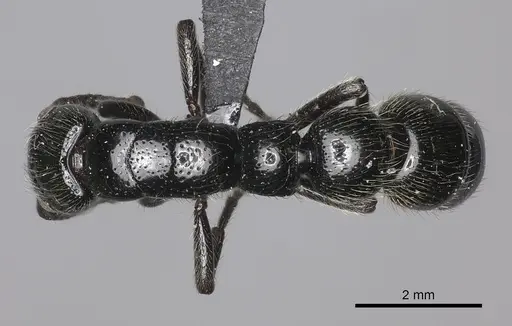
CASENT0000562
View on AntWeb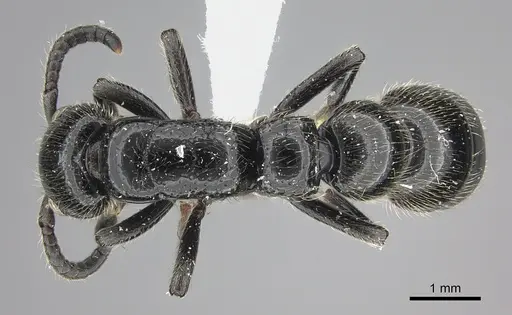
CASENT0410468
View on AntWeb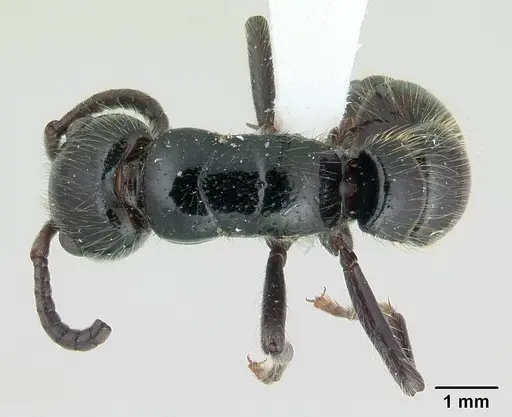
CASENT0740896
View on AntWeb
Literature
Loading...Loading products...