

Simopelta oculata
- Scientific Name
- Simopelta oculata
- Tribe
- Ponerini
- Subfamily
- Ponerinae
- Author
- Gotwald & Brown, 1967
- Distribution
- Found in 2 countries
Simopelta oculata Overview
Simopelta oculata is an ant species of the genus Simopelta. It is primarily documented in 2 countries , including Costa Rica, Panama. Detailed taxonomic data and occurrence records can be further explored via authoritative databases such as AntWeb or the Global Biodiversity Information Facility (GBIF).
Simopelta oculata
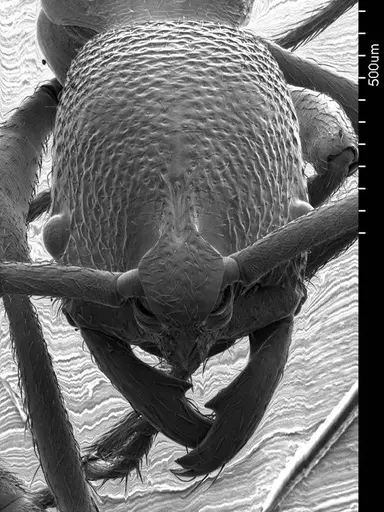
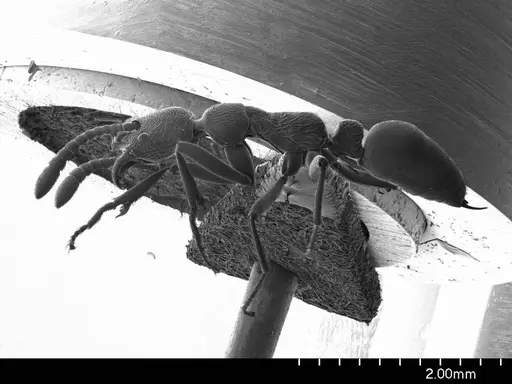
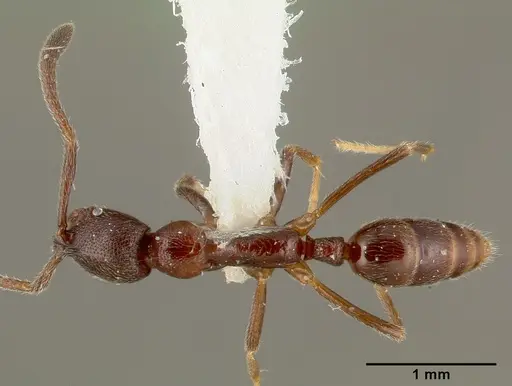
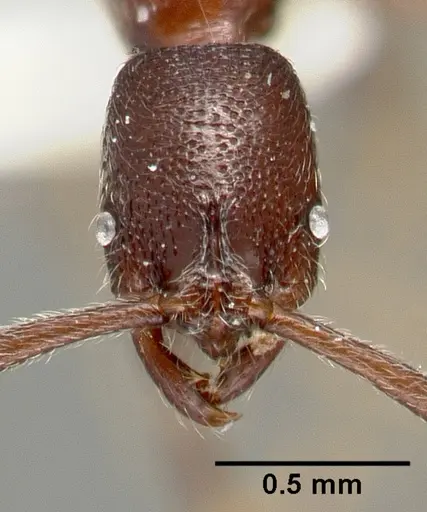
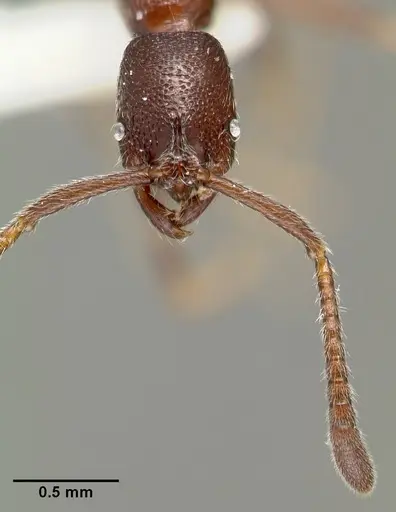
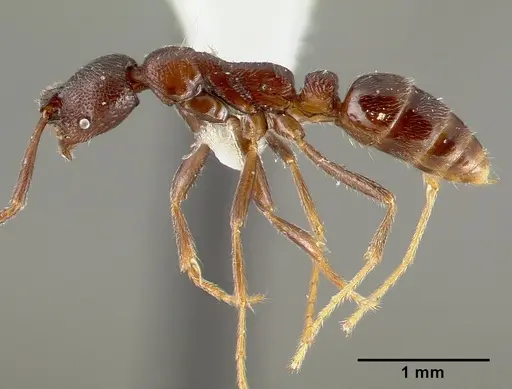
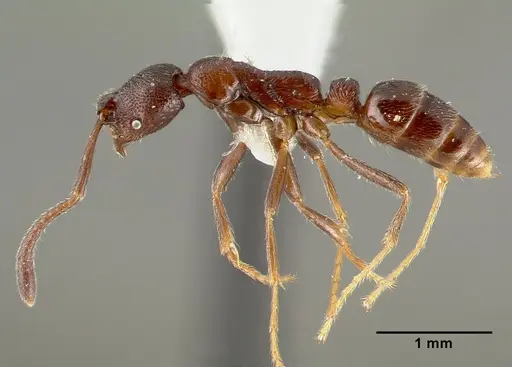
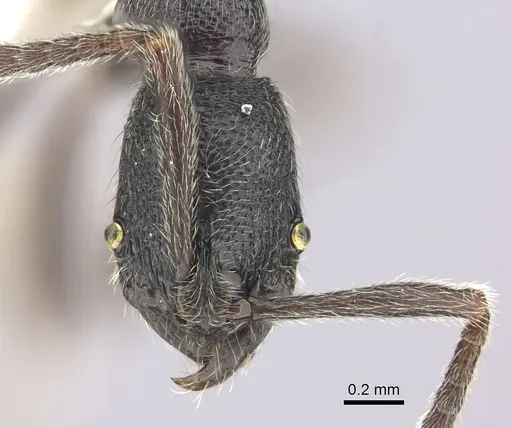
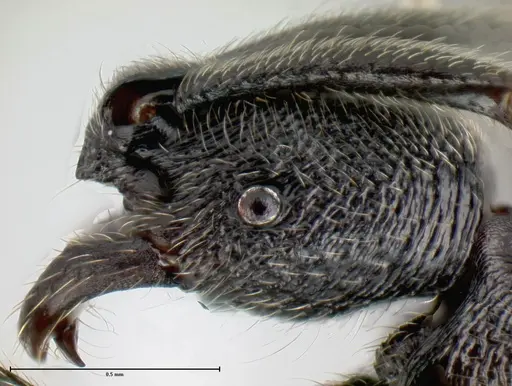
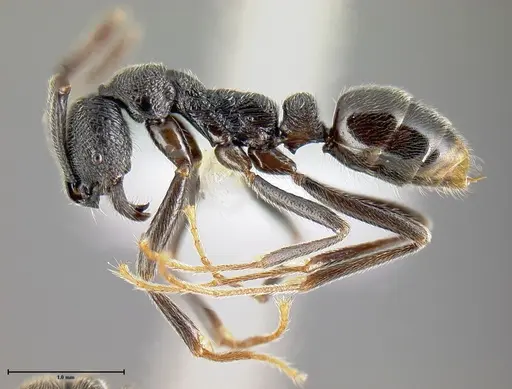
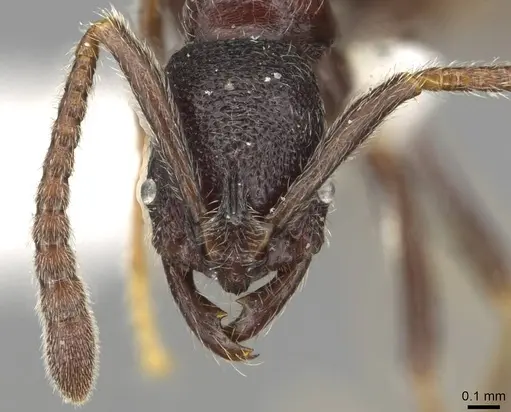
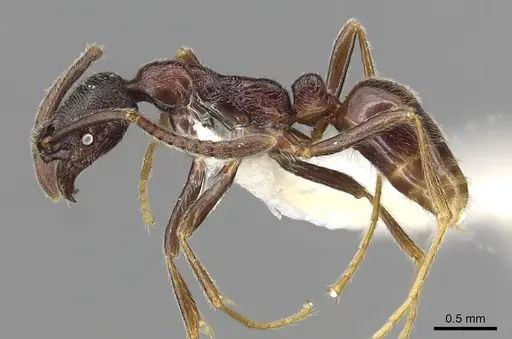
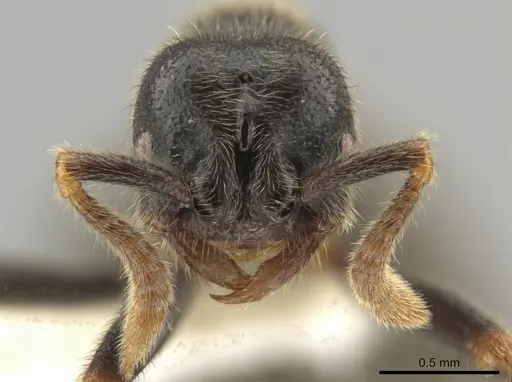
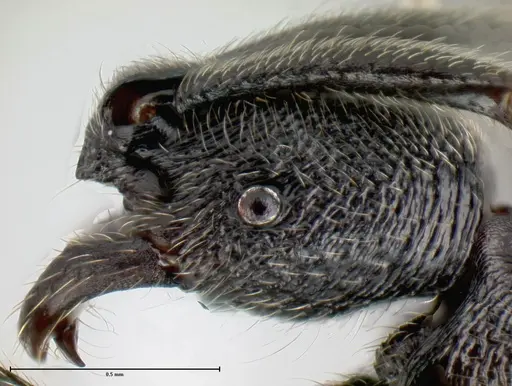
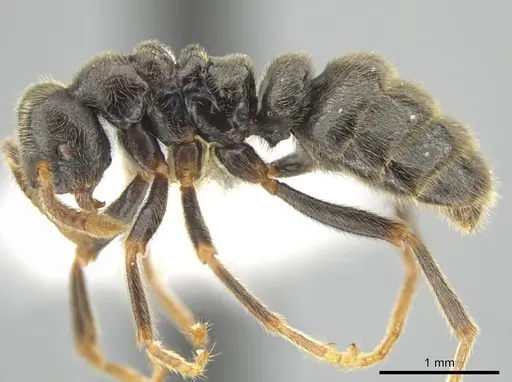
Simopelta oculata is a small predatory ant (workers around 3.5mm) native to the rainforests of Costa Rica and Panama on the Atlantic slope [1]. Workers are black with dark brown legs and have remarkably large eyes that give this species its name (oculata means 'eyed') [1]. The queen is wingless (ergatoid) with a large body and wide petiole [1]. These ants are specialized predators that raid the nests of other ants, particularly Pheidole species, and are known for their extremely fast movement and army-ant-like behavior when foraging in columns through the vegetation [1]. They nest in hollow twigs suspended above ground in deep shade, making them an arboreal species [1].
Quick Summary
- Difficulty: Expert
- Origin & Habitat: Atlantic slope of Costa Rica and Panama, in dense second-growth rainforest at middle elevations [1][2]. They live in deep shade and nest in hollow dead twigs suspended about 1.5m above ground by vines [1].
- Colony Type: Single-queen colonies (monogyne). The queen is wingless (ergatoid), which is unusual among Ponerinae. Colonies reach several hundred workers [1].
- Colony: Monogyne
- Size & Growth:
- Queen: Ergatoid queen, larger than workers with large protruding scutum and scutellum [1]
- Worker: 3.5mm total length [1]
- Colony: Several hundred workers [1]
- Growth: Moderate
- Development: Unknown, no specific development data available for this species (Based on related Ponerinae species, expect 2-4 months at warm temperatures. Ponerine ants typically have slower development than many common ant genera.)
- Antkeeping:
- Temperature: Keep at 22-26°C. These are tropical rainforest ants that need warm, stable temperatures [1].
- Humidity: High humidity (70-85%). They come from rainforest environments with consistent moisture. Keep the nest substrate damp but not waterlogged.
- Diapause: No, this is a tropical species that does not require hibernation. Maintain warm temperatures year-round [1].
- Nesting: Arboreal nesting. In captivity, they do well in naturalistic setups with small twigs/branches or in acrylic nests with high humidity. They prefer tight, enclosed spaces that mimic their natural twig nests [1].
- Behavior: Simopelta oculata is an aggressive predator that raids other ant colonies, particularly Pheidole [1]. Workers move rapidly and hold their antennae in an army-ant fashion [1]. They can sting, and the sting feels similar to a mosquito bite [1]. They are arboreal and form foraging columns in vegetation. This is an escape risk species, they are small and fast-moving. Excellent escape prevention is essential.
Housing and Nest Setup
Simopelta oculata requires an arboreal setup that mimics their natural twig-nesting behavior. In the wild, they nest in hollow dead twigs about 1.5cm in diameter, suspended vertically by vines roughly 1.5m above the ground [1]. For captivity, a naturalistic setup with small branches or twigs works well, or you can use a standard acrylic formicarium with high humidity chambers. These ants need tight, enclosed spaces, avoid large open areas. Because they are small (3.5mm) and fast-moving, escape prevention must be excellent. Use tight-fitting lids and consider fluon on any edges they might climb. High humidity is critical, aim for 70-85% relative humidity in the nest area.
Feeding and Diet
Simopelta oculata is a specialized predator that raids the nests of other ants, particularly Pheidole species [1]. In captivity, you should feed them small live prey, flightless fruit flies, pinhead crickets, and other tiny arthropods. They will also accept small insects like bloodworms, mealworm pieces, and other protein sources. Unlike many ants, they are not particularly interested in sugar sources, their diet is primarily predatory. Feed them protein 2-3 times per week, offering only what they can consume in 24-48 hours. Remove uneaten prey to prevent mold issues.
Temperature and Humidity
These are tropical rainforest ants that need warm, stable conditions. Keep the nest area at 22-26°C year-round, they do not tolerate cool temperatures. A heating cable on one side of the nest can create a temperature gradient if your room temperature is below this range. Place the heating element on top of the nest, not underneath, to avoid drying out the substrate. High humidity is essential, aim for 70-85% relative humidity. Mist the nest area regularly and use a water reservoir in your formicarium to maintain moisture. The substrate should feel damp but never waterlogged. Good ventilation is important to prevent mold while maintaining humidity. [1]
Behavior and Foraging
Simopelta oculata exhibits army-ant-like behavior. Workers form rapid-moving columns through vegetation when foraging, carrying prey back to their nest [1]. They are specialized predators that raid other ant colonies, particularly Pheidole nests [1]. Workers move extremely fast and hold their antennae in a characteristic forward position similar to Ecitoninae (army ants) [1]. They can sting, and the sting feels like a mosquito bite, not dangerous to healthy humans but can be irritating [1]. This species is not aggressive toward humans but will defend their nest if threatened. They are excellent climbers and will explore any surface, escape prevention is critical.
Colony Structure and Reproduction
Simopelta oculata colonies are monogyne, meaning they have a single queen. The queen is ergatoid, she is wingless and looks more like a large worker with a more robust thorax [3]. This is unusual among Ponerinae, where most queens are winged. The colony in the type series contained several hundred workers plus a female (queen) and brood [1]. The ergatoid queen likely cannot fly, so mating probably occurs on the ground or near the nest. Colonies grow to several hundred workers over time. Because the queen cannot fly, founding likely occurs in or near the parent nest, but the exact founding behavior has not been documented.
Frequently Asked Questions
Can I keep Simopelta oculata in a test tube?
Test tubes are not ideal for this species. Simopelta oculata is arboreal and naturally nests in hollow twigs suspended above ground [1]. They do better in naturalistic setups with small branches/twigs or in acrylic nests with high humidity chambers. If you must use a test tube setup, use multiple connected tubes with high humidity and add small twigs or texture for them to cling to.
How long does it take for Simopelta oculata to produce first workers?
The exact development timeline is unknown for this species. Based on related Ponerinae ants, expect 2-4 months from egg to first worker at optimal temperature (22-26°C) [1]. Ponerine ants typically have slower development than many common ant genera like Camponotus or Formica. Be patient, founding colonies can take time to establish.
What do Simopelta oculata eat?
They are specialized predators that raid other ant colonies, particularly Pheidole species [1]. In captivity, feed them small live prey like flightless fruit flies, pinhead crickets, bloodworms, and small mealworm pieces. They are not particularly interested in sugar sources, their diet is primarily predatory protein. Feed protein 2-3 times per week.
Are Simopelta oculata good for beginners?
No, this is an expert-level species. They require specific arboreal housing, high humidity, warm temperatures year-round, and a constant supply of live prey [1]. Their small size and fast movement make them difficult to contain. They are not forgiving of husbandry mistakes. This species is best suited for keepers with experience with Ponerinae or other predatory ants.
Do Simopelta oculata need hibernation?
No, they do not need hibernation. Simopelta oculata is a tropical species from Costa Rica and Panama [1]. They require warm temperatures year-round (22-26°C). Attempting to hibernate them could be fatal. Maintain consistent tropical conditions throughout the year.
How big do Simopelta oculata colonies get?
Colonies reach several hundred workers in the wild [1]. This is a moderate colony size compared to some Ponerinae that can reach thousands. In captivity, expect colonies to grow to several hundred workers over 1-2 years with good care.
Why are my Simopelta oculata escaping?
This species is a serious escape risk. Workers are small (3.5mm), extremely fast, and excellent climbers [1]. They will squeeze through tiny gaps and explore any surface. You must use excellent escape prevention: tight-fitting lids, fluon on all edges, and fine mesh on any ventilation. Check enclosures daily and seal any gaps immediately.
Can I keep multiple Simopelta oculata queens together?
No, Simopelta oculata is monogyne, colonies have a single queen [1]. Combining unrelated queens will likely result in fighting. If you acquire a colony, it should already have an established queen. Do not attempt to introduce additional queens.
When should I move Simopelta oculata to a formicarium?
Keep newly caught or purchased colonies in a founding setup (test tube or small container with high humidity) until the colony has at least 20-30 workers. Once established, you can move them to a naturalistic or acrylic setup that provides the arboreal conditions they need. Do not disturb the colony during the founding phase.
References

This caresheet is licensed under CC BY-SA 4.0 .
ANTWEB1008588
View on AntWeb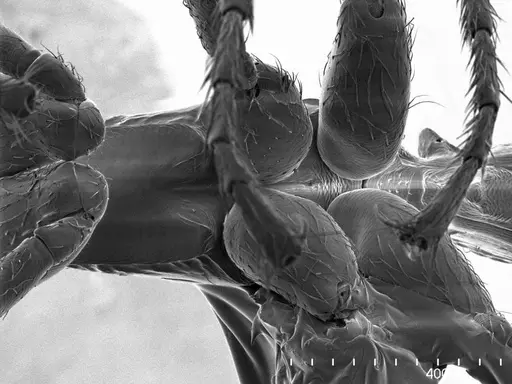
CASENT0003166
View on AntWeb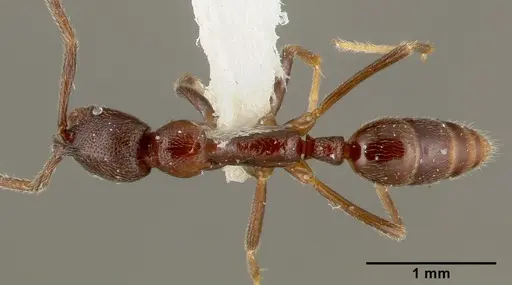
CASENT0249243
View on AntWeb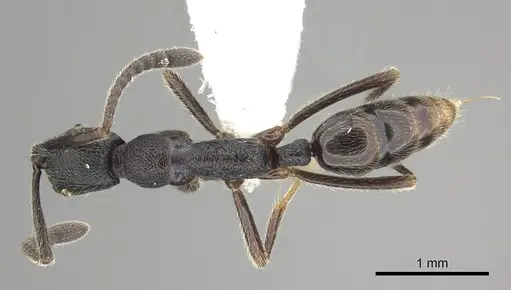
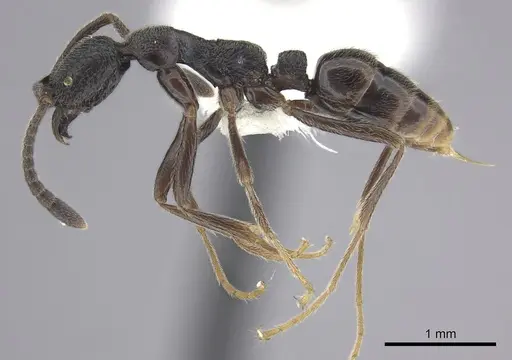
CASENT0649834
View on AntWeb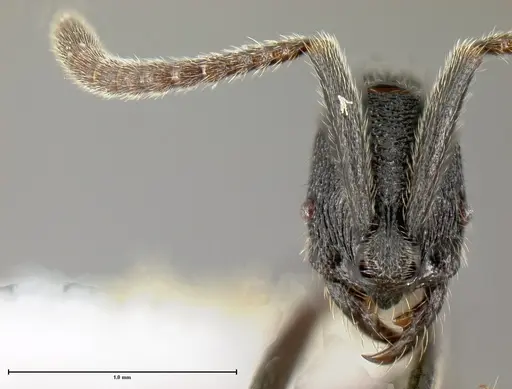
CASENT0915305
View on AntWeb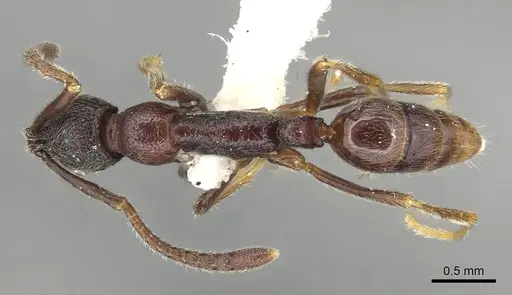
INB0003659405
View on AntWeb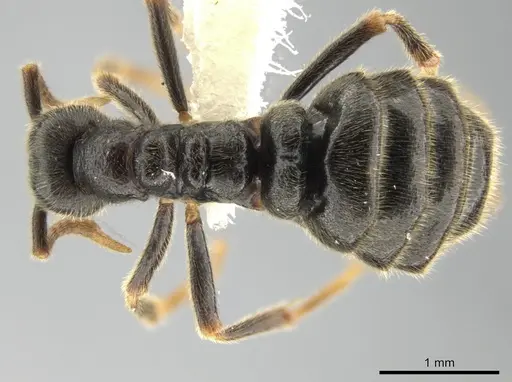
Literature
Loading...Loading products...