

Santschiella kohli
- Scientific Name
- Santschiella kohli
- Tribe
- Santschiellini
- Subfamily
- Formicinae
- Author
- Forel, 1916
- Distribution
- Found in 2 countries
Santschiella kohli Overview
Santschiella kohli is an ant species of the genus Santschiella. It is primarily documented in 2 countries , including Congo, Gabon. Detailed taxonomic data and occurrence records can be further explored via authoritative databases such as AntWeb or the Global Biodiversity Information Facility (GBIF).
Santschiella kohli
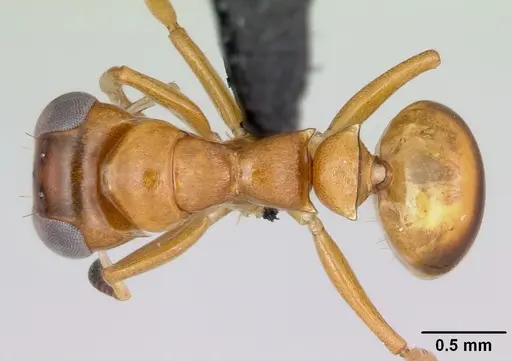
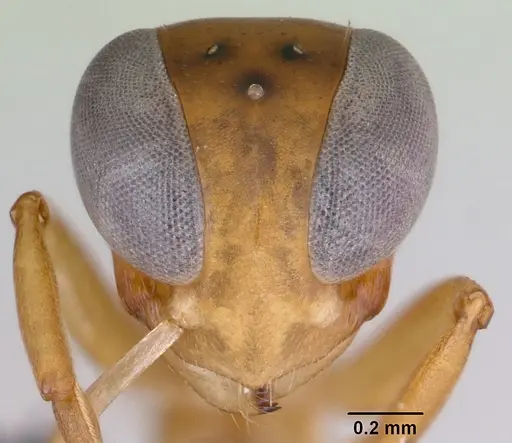
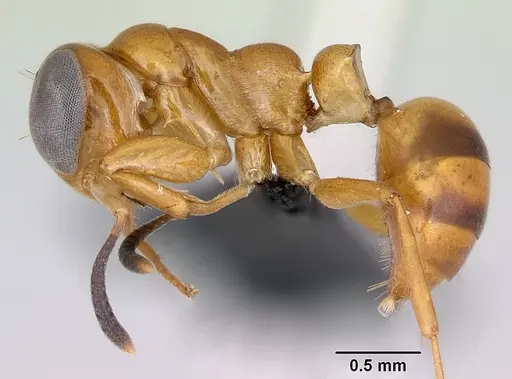
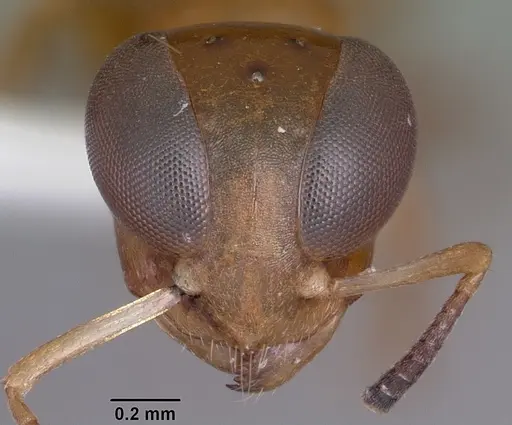
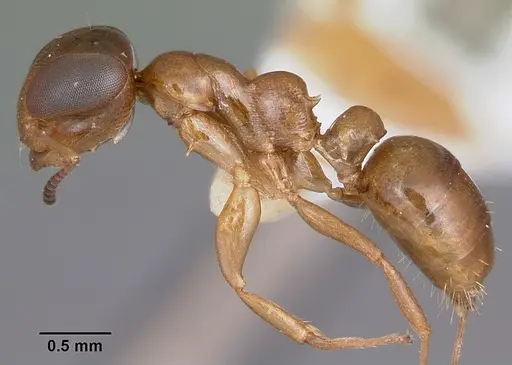
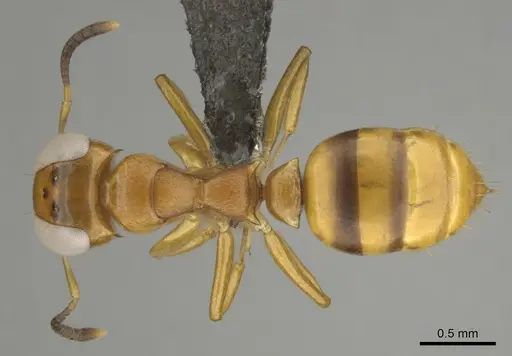
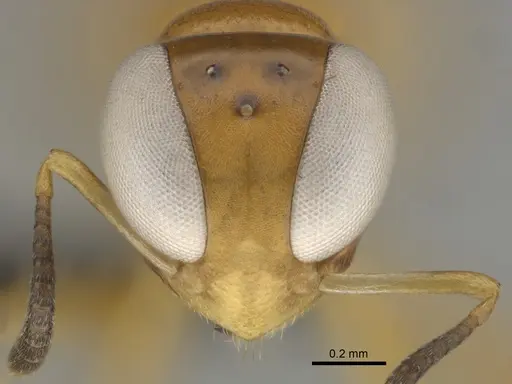
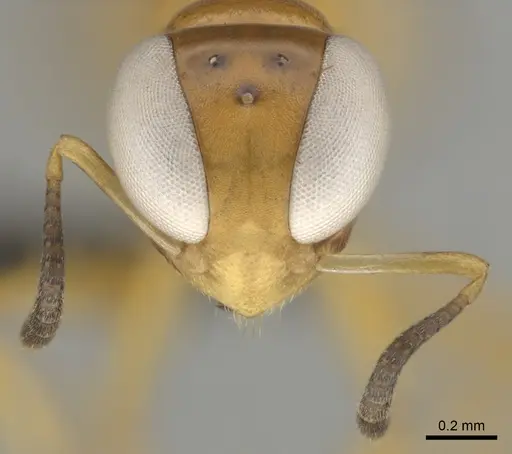
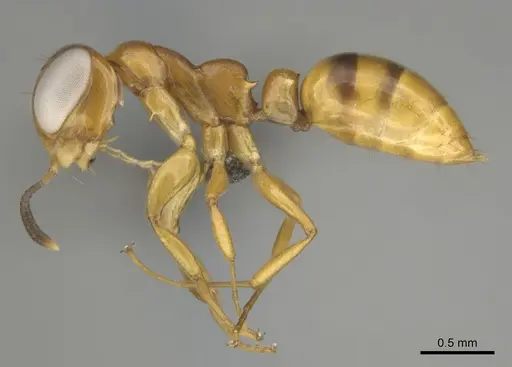
Santschiella kohli is a tiny, light reddish ant measuring just 3mm in length, making it one of the smallest ants you'll encounter [1]. This species holds a special place in the ant world as the sole member of its genus, it's a monotypic genus, meaning scientists have only ever described this single species and no close relatives exist today [2]. The species was first described in 1916 from specimens collected in what is now the Democratic Republic of Congo, and it wasn't recorded again until a 2004 survey in Gabon found a few workers at 375m elevation [3]. The original discoverer, Forel, speculated these ants live in trees since the specimens appeared to have fallen from above, later collections from sweep samples in the undergrowth and low canopy of coastal lowland rainforest supported this arboreal lifestyle [1]. Their closest known relative is the ancient fossil genus Gesomyrmex, making Santschiella a living relic of ant evolution [2].
What makes this species particularly challenging for antkeepers is that it's only known from a handful of stray workers, no queen, no colony, and no nest have ever been documented [1]. This means virtually nothing is known about their social structure, founding behavior, or captive care requirements. They represent an exciting frontier species where a dedicated keeper could potentially contribute to genuine scientific discovery, but the complete lack of baseline information means this is absolutely an expert-level project requiring significant resources and patience.
Quick Summary
- Difficulty: Expert
- Origin & Habitat: Democratic Republic of Congo and Gabon in coastal lowland rainforest [3][1]. Specimens have been collected from undergrowth and low canopy using sweep samples, suggesting an arboreal or semi-arboreal lifestyle in humid tropical forest environments.
- Colony Type: Unknown, only worker specimens have ever been collected as stray individuals. No queen, colony structure, or reproductive caste has been documented [1].
- Size & Growth:
- Queen: Unknown, no queen has ever been collected or described
- Worker: 3mm [1]
- Colony: Unknown, no colony has ever been observed
- Growth: Unknown
- Development: Unknown, no development data exists for this species (No brood of any stage has ever been documented for this species)
- Antkeeping:
- Temperature: Unknown, likely 24-28°C based on tropical rainforest origin. Start in the mid-range and observe colony activity for guidance.
- Humidity: Likely requires high humidity (70-85%) consistent with lowland rainforest origin. Keep substrate consistently moist but not waterlogged.
- Diapause: Unlikely, being a tropical African species, they probably do not require a diapause period. However, this is unconfirmed.
- Nesting: Likely arboreal or semi-arboreal. In captivity, consider setups that mimic vegetation-dwelling: small acrylic nests with tight chambers, or naturalistic setups with moss, leaves, and small twigs. Avoid soil-based setups.
- Behavior: Behavior is completely unstudied. As a Formicinae member, they likely have formic acid spray for defense rather than a stinger. Escape risk is low given their tiny 3mm size, but this also makes them vulnerable to escaping through standard barriers, fine mesh is essential. Temperament is unknown.
- Common Issues: no documented captive colonies exist, this is truly uncharted territory for antkeeping, no queen or brood has ever been observed, finding a mated queen would be a major scientific discovery, extreme rarity in the wild makes obtaining this species nearly impossible, complete lack of baseline care data means all husbandry is experimental, arboreal lifestyle may require specialized setups quite different from standard formicaria
Why Santschiella kohli Is a Frontier Species
Santschiella kohli represents one of the most poorly known ants in the world from a husbandry perspective. Unlike most ant species kept in captivity, which have at least some documented natural history, this species has only ever been collected as stray workers, individuals found wandering alone, not as part of an observed colony [1]. This means no scientist has ever documented a queen, a nest, brood (eggs, larvae, or pupae), or any aspect of their social biology. The original description from 1916 and a single collection in 2004 constitute essentially all we know about this species in the wild [3]. For antkeepers, this presents a unique opportunity to potentially contribute to genuine scientific discovery, but it also means proceeding with almost no guidance. Any successful captive breeding would be a genuine contribution to myrmecology.
The species' taxonomic isolation adds to its scientific interest. As the only living member of its genus, and with its closest relatives being Eocene fossils, Santschiella represents an ancient lineage that has survived for millions of years while leaving no close modern descendants [2]. Understanding more about its biology could provide insights into ant evolution, particularly regarding arboreal lifestyles in tropical forests. For the dedicated antkeeper, the chance to potentially observe behaviors or social structures never before documented carries a special appeal that established species simply cannot match.
Acquisition Challenges
Obtaining Santschiella kohli for captive keeping presents extraordinary challenges that cannot be overstated. The species has only been collected a handful of times across more than a century of ant research, and always as single workers captured in sweep samples, essentially dragging a net through vegetation and hoping to catch whatever is disturbed [3]. No one has ever located a nest, which means no one knows where or how these ants live in their natural habitat. There are no documented colonies in museums or research collections beyond the original type specimens.
This rarity likely reflects both genuine scarcity in the wild and the difficulty of finding arboreal ants that probably live high in the forest canopy. The Gabon collection at 375m elevation used specialized sweep sampling techniques specifically designed to catch insects in vegetation [3]. For antkeepers, this means acquiring this species would require either extraordinary field work in Gabon or the DRC, or connecting with researchers who might偶然 discover a colony. It is not a species that can be purchased from any commercial ant farm or collected from a local park. This acquisition difficulty is perhaps the single greatest barrier to anyone hoping to keep this species.
Inferring Care Requirements from Related Species
Since direct care data doesn't exist for Santschiella kohli, we must make educated inferences from what we know about related ants. Being in the subfamily Formicinae provides some baseline guidance: Formicinae ants typically have queens that seal themselves into a chamber during founding (claustral founding) and raise their first workers without leaving the nest to forage. They also use formic acid spray as their primary defense mechanism rather than a stinger [1]. However, these are general patterns and may not hold for this unusual species.
The arboreal lifestyle suggested by their collection in sweep samples from low canopy [1] points toward husbandry approaches used for other tree-dwelling ants. This likely means they prefer high humidity (70-85%) consistent with Gabonese lowland rainforest, and may nest in hollow twigs, under bark, or in similar elevated microhabitats rather than in soil. Temperature should probably be in the tropical range of 24-28°C. A naturalistic setup with small chambers, moss, and access to small prey items would be a reasonable starting point. But these are truly educated guesses, the species may have entirely unexpected requirements that only trial and error would reveal.
Experimental Husbandry Approach
Given the complete absence of documented care information, anyone attempting to keep Santschiella kohli must approach it as a genuine experiment with careful documentation. Start with a small, well-humidified enclosure, perhaps a small acrylic nest or a naturalistic setup with multiple small chambers. Temperature should be in the warm tropical range (around 25-26°C) with humidity on the higher side (75-85%). As tiny arboreal ants, they would likely appreciate vertical space and small prey items.
The most critical aspect of experimental keeping is meticulous record-keeping. Document every observation: what foods are accepted, what temperatures and humidity levels produce the most activity, how workers interact, and any behaviors that seem unusual. This documentation could contribute to genuine scientific knowledge if the colony succeeds. Given that no one has ever documented a colony of this species, even basic observations about worker behavior would be novel. Prepare for the very real possibility of failure, this is an unknown species in every meaningful sense, and success would be extraordinary.
Legal and Ethical Considerations
Before attempting to acquire Santschiella kohli, research the legal requirements for collecting and keeping this species. As an African species with extremely limited known distribution in the DRC and Gabon, there may be specific collection permits required or protections in place. Additionally, given the species' extreme rarity and scientific importance, any collection should ideally be done in collaboration with researchers who can properly document the specimens and any associated colony information.
From an ethical standpoint, collecting the only known members of a genus carries responsibility. If a colony is discovered, preserving some specimens for scientific study would ensure the knowledge gained extends beyond individual antkeeping. Working with local researchers or institutions in Gabon or the DRC would be the most responsible approach, potentially contributing to both antkeeping knowledge and broader scientific understanding of this remarkable species.
Frequently Asked Questions
Has anyone ever kept Santschiella kohli in captivity?
No documented captive colonies of Santschiella kohli exist. This is one of the least-known ant species in the world, only a handful of worker specimens have ever been collected, and no one has ever observed a nest, queen, or colony. Any successful captive keeping of this species would be a genuine first.
What do Santschiella kohli ants eat?
Diet is completely unconfirmed for this species. As tropical Formicinae likely living in trees, they probably eat small arthropods and likely tend aphids or scale insects for honeydew, similar to many arboreal ants. In captivity, offering small live prey like fruit flies or pinhead crickets, along with sugar water or honey, would be reasonable to try.
How big do Santschiella kohli colonies get?
Unknown, no colony has ever been observed or documented. The largest indicator is that only single workers have ever been collected, suggesting colonies may be small, but this is pure speculation. Related arboreal ants often have colonies ranging from dozens to a few hundred workers.
Is Santschiella kohli a good species for beginners?
Absolutely not. This is an expert-level species, possibly beyond expert-level, because no baseline care information exists. No queen, colony, or brood has ever been documented. Keeping this species would be genuine experimental husbandry with no established guidelines to follow.
Where does Santschiella kohli live?
The species is known only from the Democratic Republic of Congo and Gabon in coastal lowland rainforest environments. Specimens have been collected from undergrowth and low canopy vegetation using sweep samples, suggesting an arboreal or semi-arboreal lifestyle in humid tropical forest [3][1].
Do Santschiella kohli need hibernation or diapause?
Unlikely. As a tropical African species from lowland rainforest in Gabon and the DRC, they probably do not experience cold seasons that would require dormancy. However, this has never been studied or confirmed for this species.
What temperature should I keep Santschiella kohli at?
No specific temperature data exists for this species. Based on their tropical African origin, a warm range of 24-28°C would be a reasonable starting point. Start around 25-26°C and observe colony activity to fine-tune. High humidity should be maintained alongside any temperature settings.
Can I keep multiple Santschiella kohli queens together?
We don't know. No queen of this species has ever been documented, let alone observed in a colony context. The colony structure (single queen vs multiple queens) is completely unknown. This is one of many fundamental questions about this species that remains unanswered.
How long does it take for Santschiella kohli to develop from egg to worker?
Unknown, no egg, larva, pupa, or any brood stage has ever been documented for this species. Development timeline is completely unstudied. Any successful captive breeding would produce the first-ever documentation of their development.
What is the closest relative to Santschiella kohli?
The closest living relative is unknown, but the closest known relative overall is the fossil genus Gesomyrmex, known from Eocene European amber. This makes Santschiella a relictual lineage with no close modern relatives, an ancient ant lineage surviving in African rainforests [2].
Is Santschiella kohli endangered?
The conservation status has not been formally assessed. However, the species is known from only a handful of specimens collected in two countries over more than a century, suggesting it is either genuinely rare or very difficult to find. Any forest habitat loss in its limited range could threaten whatever populations exist.
References

This caresheet is licensed under CC BY-SA 4.0 .
Literature
Loading...Loading products...