

Royidris robertsoni
- Scientific Name
- Royidris robertsoni
- Tribe
- Crematogastrini
- Subfamily
- Myrmicinae
- Author
- Heterick, 2006
- Distribution
- Found in 1 countries
Royidris robertsoni Overview
Royidris robertsoni is an ant species of the genus Royidris. It is primarily documented in 1 countries , including Madagascar. Detailed taxonomic data and occurrence records can be further explored via authoritative databases such as AntWeb or the Global Biodiversity Information Facility (GBIF).
Royidris robertsoni
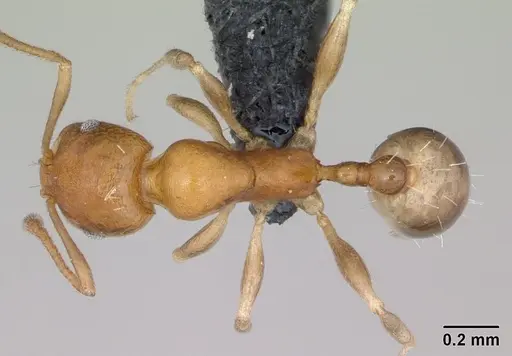
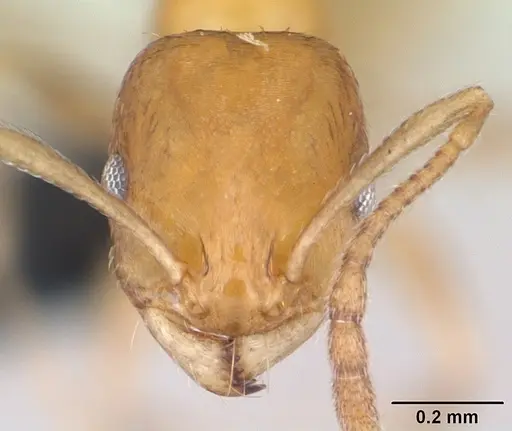
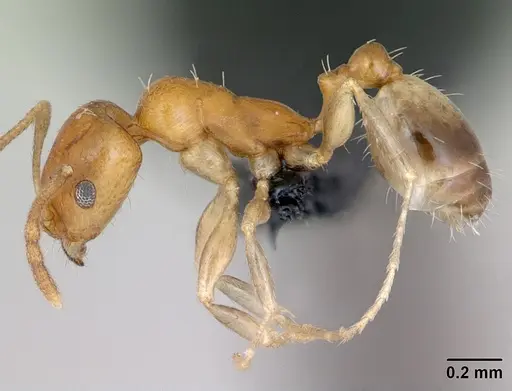
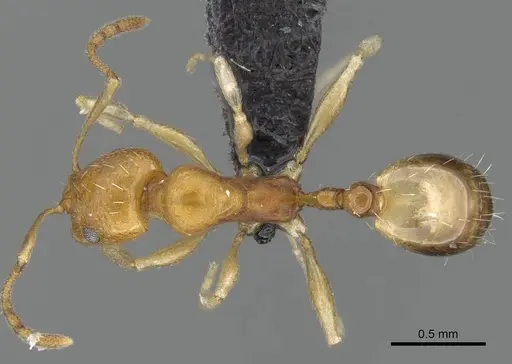
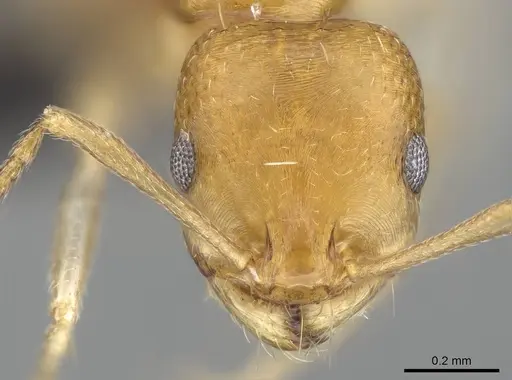
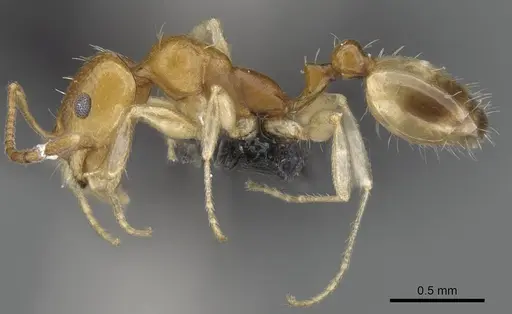
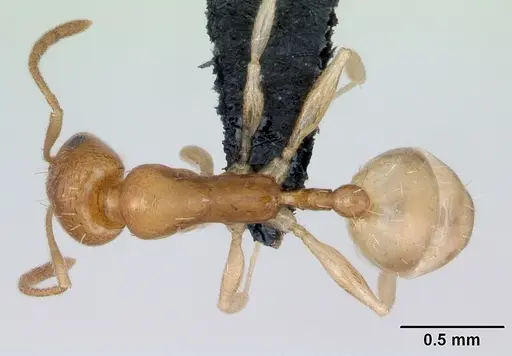
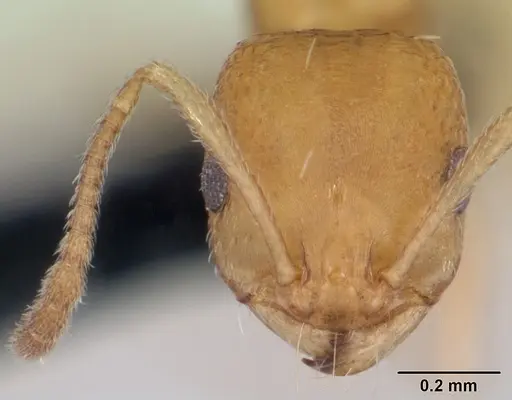
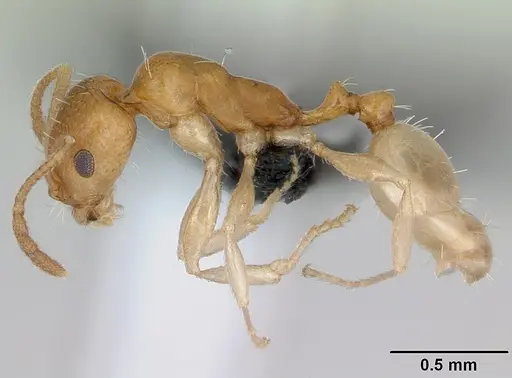
Royidris robertsoni is a tiny ant endemic to the spiny forests of southwestern Madagascar. Workers measure just 2.4-2.6mm and have a distinctive appearance with an orange-colored head, mesosoma and nodes, while the legs and mandibles are straw-colored and the gaster may be partially brown [1][2]. They have large eyes relative to their head size and a smoothly rounded propodeum without a distinct angle between the dorsal and declivitous faces [2]. This species is known only from the worker caste, queens have never been described [2].
What makes this species particularly interesting is its extremely restricted distribution. It is only known from three locations in the Toliara Province: Ifaly, Mandarano, and Ranobe, all at low elevations of 30-70 meters [3]. The fact that they have been caught in malaise traps suggests they may forage arboreally in addition to ground-level hunting [2][3]. This arboreal tendency is unusual for such small Myrmicinae ants and influences how you might set up their enclosure.
Quick Summary
- Difficulty: Expert
- Origin & Habitat: Endemic to the spiny forests and gallery forests of southwestern Madagascar, specifically the Toliara Province at elevations of 30-70 meters [3][2]. The spiny forest is a unique dry forest ecosystem characterized by thorny vegetation including baobab trees.
- Colony Type: Unknown, only the worker caste has been described. Colony structure (single queen or multiple queen) has not been documented [2].
- Size & Growth:
- Queen: Unknown, queens have never been described [2]
- Worker: 2.4-2.6mm (TL) [1]
- Colony: Unknown, only a few specimens have ever been collected
- Growth: Unknown
- Development: Unknown, no development data exists for this species (Development timeline is unconfirmed. Related Malagasy Myrmicinae species typically develop from egg to worker in 4-8 weeks at tropical temperatures, but this is only an estimate.)
- Antkeeping:
- Temperature: Based on their native habitat in southwestern Madagascar (a tropical dry region), aim for warm conditions around 24-28°C. This is an estimate since no thermal tolerance data exists for this species.
- Humidity: Low to moderate, spiny forests are dry environments. Keep the nest substrate lightly moist but allow it to dry out partially between waterings. Provide a shallow water dish for drinking.
- Diapause: Unknown, Madagascar does not experience cold winters, so a true diapause is unlikely. However, they may have reduced activity during cooler or drier periods.
- Nesting: In the wild they nest in leaf litter and soil. A naturalistic setup with a soil chamber and small rocks or pieces of bark would mimic their natural microhabitat. Given their small size and potential arboreal foraging, include vertical spaces or a formicarium with narrow chambers.
- Behavior: Very little is known about their behavior. The large eyes suggest they may be visually oriented foragers. Their small size and presence in litter samples indicates they likely forage on the forest floor, while the malaise trap captures suggest they also climb vegetation [2]. They are likely generalist foragers but their exact diet preferences are unconfirmed. Escape prevention is critical due to their tiny 2.4mm size.
- Common Issues: tiny size means escapes are likely without fine mesh barriers, queen and colony structure unknown, founding behavior unconfirmed, no established care guidelines exist for this species, only known from a handful of wild specimens, captive colonies may not exist in the hobby, arboreal foraging tendency may require more vertical space than typical ground-nesting setups
Discovery and Taxonomy
Royidris robertsoni was first described in 2006 by Brian Heterick under the name Royidris robertsoni, based on workers collected from spiny forest litter in Madagascar's Toliara Province [3]. In 2014,Bolton and Fisher moved this species to the newly erected genus Royidris as part of their revision of Madagascan Myrmicinae ants related to Eutetramorium [1]. The species is named in honor of Dr. Hamish Robertson of the South African Museum [4].
The species is characterized by its very small size (2.4-2.6mm), the smoothly rounded transition from propodeal dorsum to declivity (lacking any distinct angle), and its finely striolate exoskeleton throughout [1][2]. It belongs to the robertsoni species group within the genus Royidris, and is considered the most densely sculptured member of that group [4].
Natural Habitat
This species is known only from the spiny forest and gallery forest habitats of southwestern Madagascar, specifically from three localities: Ifaly, Mandarano, and Ranobe, all in the Toliara Province at elevations between 30-70 meters [3][2]. The spiny forest is a distinctive ecosystem found in the southern and southwestern parts of Madagascar, characterized by dry conditions, thorny vegetation, and iconic baobab trees.
Specimens have been collected by sifting through leaf litter in forest thickets, in pitfall traps at the base of baobab trees, and in malaise traps [2][3]. The capture in malaise traps is particularly interesting because it suggests these ants may forage arboreally (in trees and shrubs), rather than being strictly ground-dwelling [2]. This is unusual for such small Myrmicinae ants and may influence captive care arrangements.
Identification and Appearance
Workers are tiny at only 2.4-2.6mm total length, making them one of the smaller ant species you might encounter [1]. They have a distinctive color pattern: the head, mesosoma and nodes are orange, while the legs and mandibles are straw-colored, and the basal portion of the gaster is often brown [2]. Some specimens are more uniformly yellow with a paler or partially darkened gaster [1].
The most distinctive morphological feature is the propodeum, it is smoothly rounded without any angle separating the dorsal surface from the declivity (the sloping rear face) [2]. They have large eyes for their size, and a 12-segmented antenna with a 3-segmented club [1][2]. The worker caste is monomorphic, meaning all workers are the same size and form [2].
Keeping Considerations
This is an expert-level species to keep because virtually no captive husbandry information exists. Royidris robertsoni has never been kept in captivity on any significant scale, and only the worker caste has ever been described, queens remain unknown to science [2]. This means you would essentially be pioneering husbandry for this species.
Based on their natural habitat in Madagascar's dry spiny forest, they likely prefer warm temperatures (24-28°C) and moderate to low humidity. The potential arboreal foraging behavior suggests their enclosure should include some vertical space, not just horizontal tunnels. Their tiny 2.4mm size means escape prevention must be excellent, standard test tube setups may need additional barriers.
If you obtain a colony, document everything carefully. Your observations would contribute valuable knowledge to antkeeping, as this species has never been scientifically raised in captivity. Pay attention to: what foods they accept, when they are most active, how they construct their nests, and any unique behaviors they display.
Frequently Asked Questions
How big do Royidris robertsoni ants get?
Workers are very small, measuring only 2.4-2.6mm in total length [1]. Queens have never been described in the scientific literature, so their size is unknown [2].
Where is Royidris robertsoni found in the wild?
This species is endemic to Madagascar, specifically the southwestern Toliara Province. It is only known from three locations: Ifaly, Mandarano, and Ranobe, at elevations of 30-70 meters [3][2].
What do Royidris robertsoni ants eat?
Their exact diet is unconfirmed. In the wild, they have been found in leaf litter and caught in traps, suggesting they forage for small arthropods and likely tend aphids for honeydew. Given their tiny size, they would likely accept small live prey like springtails and fruit flies, plus sugar sources like honey water.
Can I keep Royidris robertsoni in a test tube setup?
A test tube setup could work for a founding colony, but their tiny 2.4mm size means escape prevention must be excellent. Consider adding a fluon barrier or fine mesh. Their potential arboreal foraging tendency suggests they may benefit from some vertical space in their enclosure.
Do Royidris robertsoni ants need hibernation?
Diapause requirements are unknown. Madagascar does not experience cold winters, so a true hibernation period is unlikely. However, they may have reduced activity during cooler or drier seasonal periods.
How fast do Royidris robertsoni colonies grow?
Growth rate is unknown, no captive colonies have been documented, and development data does not exist for this species [2]. Related Malagasy Myrmicinae may develop from egg to worker in 4-8 weeks at tropical temperatures, but this is only an estimate.
Are Royidris robertsoni good for beginners?
No. This species is rated Expert difficulty because no captive husbandry information exists, queens have never been described, and they are only known from a handful of wild specimens. You would essentially be pioneering their care.
What temperature do Royidris robertsoni need?
Based on their native habitat in Madagascar's tropical dry region, aim for warm conditions around 24-28°C. This is an estimate since no thermal tolerance data exists for this species.
Do Royidris robertsoni ants sting?
Stinging ability has not been documented for this species. As a Myrmicinae ant, they have a stinger, but whether it is functional or used defensively is unknown.
Why are Royidris robertsoni so rare in the antkeeping hobby?
This species has an extremely restricted natural distribution (only known from three locations in Madagascar) and was only described in 2006. Additionally, only the worker caste has ever been collected, queens remain unknown to science, making captive breeding extremely difficult if not impossible at this time.
References

This caresheet is licensed under CC BY-SA 4.0 .
Literature
Loading...Loading products...