

Royidris longiseta
- Scientific Name
- Royidris longiseta
- Tribe
- Crematogastrini
- Subfamily
- Myrmicinae
- Author
- Bolton & Fisher, 2014
- Distribution
- Found in 1 countries
Royidris longiseta Overview
Royidris longiseta is an ant species of the genus Royidris. It is primarily documented in 1 countries , including Madagascar. Detailed taxonomic data and occurrence records can be further explored via authoritative databases such as AntWeb or the Global Biodiversity Information Facility (GBIF).
Royidris longiseta
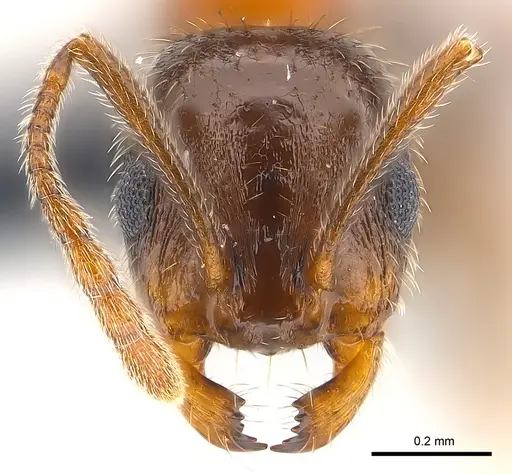
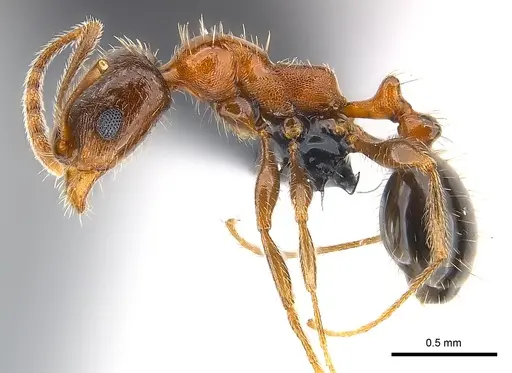
Royidris longiseta is an extremely rare tiny ant species endemic to Madagascar. Workers measure just 2.7-3.0mm in length, making them among the smaller ants you'll encounter in the hobby. They belong to the notorthotenes species group within the genus Royidris, which was separated from the related genus Eutetramorium in 2014 [1]. These ants have a distinctive appearance: a brown to orange-brown mesosoma, petiole and postpetiole, with a notably darker head and a glossy dark brown to black gaster. Their most striking feature is the numerous long, suberect setae (bristles) covering their body, particularly visible on the gaster where they can be as long as the diameter of their eye [1].
This species is known from only four specimens ever collected, one from spiny forest thicket, two from urban gardens, and one from shrubland in southern Madagascar [1]. This extreme rarity means we know almost nothing about their colony structure, founding behavior, or captive care requirements. What we do know comes from their habitat: they live in the hot, dry spiny forest regions of Madagascar's Toliara province, an environment very different from the typical damp forest floor setups many antkeepers use. This makes them a challenging species for experienced antkeepers interested in keeping something truly obscure.
Quick Summary
- Difficulty: Expert
- Origin & Habitat: Endemic to the spiny forest regions of southern Madagascar (Toliara province). They have been collected from spiny forest thicket, urban gardens, and shrubland at elevations of 80-400m [1]. The spiny forest is a hot, dry ecosystem with thorny vegetation adapted to arid conditions.
- Colony Type: Unknown, only worker caste has been described. The colony structure (single queen vs multiple queens) has never been documented. Based on related genera, they are likely monogyne but this is unconfirmed.
- Size & Growth:
- Queen: Unknown, queens have never been described [1]
- Worker: 2.7-3.0mm [1]
- Colony: Unknown, only four worker specimens have ever been collected [1]
- Growth: Unknown
- Development: Unknown, no breeding data exists for this species. Based on similar small Myrmicinae from Madagascar, estimate 4-8 weeks at tropical temperatures, but this is a rough guess. (No direct data exists. Development timeline is entirely inferred from related species.)
- Antkeeping:
- Temperature: Likely 24-30°C based on their native spiny forest habitat in southern Madagascar. This is a hot, arid region, avoid cool, damp conditions.
- Humidity: Low to moderate, spiny forest is a dry environment. Keep nest substrate moderately dry, not damp. Provide a shallow water source.
- Diapause: Unlikely, Madagascar remains warm year-round. No documented diapause requirement.
- Nesting: Unknown, no natural nesting observations exist. Based on collection method (pitfall traps) and habitat, they likely nest in soil or under stones in arid ground. A simple test tube setup with minimal moisture would be a reasonable starting point.
- Behavior: Behavior is unobserved in captivity. Based on their small size and Myrmicinae classification, they likely have a functional stinger for defense. Escape risk is moderate due to their tiny size, fine mesh barriers are recommended. Temperament is unknown but related Eutetramorium species are generally non-aggressive.
- Common Issues: extreme rarity makes obtaining this species nearly impossible, no captive breeding data exists, colonies may not survive transfer to captivity, unknown dietary requirements, they may refuse standard ant foods, dry habitat needs may conflict with typical moist ant setups, very small size makes them vulnerable to drowning in water sources
Rarity and Collection History
Royidris longiseta is one of the rarest ants in the world to keep, only four worker specimens have ever been collected since the species was described in 2014 [1]. The holotype was collected in 2002 from the Mahafaly Plateau in spiny forest thicket using a pitfall trap. A paratype came from Tsivory in 2006,also from spiny forest. Two additional specimens were found in urban garden settings, suggesting they can adapt to disturbed habitats [1]. This extreme rarity means no scientific study has ever observed their colony structure, queen behavior, or captive requirements. The species was originally misidentified as Royidris shuckardi (then in genus Eutetramorium) before Bolton and Fisher formally described it as a separate species [1]. For antkeepers, this means you're essentially pioneering all captive care knowledge, proceed with extreme caution and document everything.
Natural Habitat and Temperature
These ants come from the spiny forest regions of southern Madagascar, specifically the Toliara province at low elevations around 80-400 meters [1]. The spiny forest is a unique ecosystem characterized by thorny, succulent vegetation adapted to extreme heat and drought. Temperatures in this region regularly exceed 30°C and rainfall is minimal, this is not a damp forest environment. When keeping Royidris longiseta, avoid the moist, cool setups that work for many other ants. Instead, aim for warm, relatively dry conditions, think desert ant rather than rainforest ant. A temperature range of 24-30°C seems appropriate based on their native climate, with low humidity and a well-drained nest setup.
Identification and Morphology
Royidris longiseta workers are tiny at just 2.7-3.0mm [1]. They can be identified by their distinctive long, suberect setae (bristles) covering the body, particularly noticeable on the gaster where these hairs are nearly as long as the eye diameter. The propodeum (the section behind the mesonotum) has short standing setae that are less than half the length of those on the mesonotum [1]. The body coloration is distinctive: brown to orange-brown mesosoma, petiole and postpetiole, with a darker head and glossy dark brown to black gaster. The antennae have a 4-segmented club, and the scapes (antenna shafts) are moderately long, reaching slightly past the posterior margin of the head when laid straight back [1]. These are small, delicate ants that would be easily overlooked in the wild.
Taxonomy and Relationships
Royidris longiseta was formally described in 2014 by Bolton and Fisher as part of a major revision of Madagascan Myrmicinae ants [1]. The species belongs to the notorthotenes species group within the genus Royidris. Historically, this ant was considered part of the Royidris shuckardi-group, then placed in Eutetramorium before genetic analysis revealed it needed its own genus [2]. Royidris is closely related to Royidris gravipuncta, but R. longiseta has distinctly longer promesontal and gastral setae [1]. The genus Royidris is part of the tribe Crematogastrini, which includes many small, often cryptic ant species. Understanding their phylogenetic position helps, they're not closely related to common pet ants like Monomorium or Tetramorium, so don't assume similar care requirements.
Feeding and Diet
Diet is completely unconfirmed for this species, no observations of feeding behavior exist in scientific literature. As a Myrmicinae ant from a genus related to Eutetramorium, they likely have typical omnivorous habits: some protein (insects) and possibly carbohydrate sources (honeydew or nectar). However, this is pure speculation. Given their spiny forest habitat, they may have adapted to very specific food sources. My recommendation: start with standard ant foods (sugar water/honey, small insects like fruit flies) but expect that they may refuse everything. Document any acceptance carefully. Do not assume they'll accept typical ant keeper foods, this is an entirely unknown species in captivity.
Housing Recommendations
Since we have no captive data, housing recommendations are educated guesses based on their natural habitat. The spiny forest is hot and dry, so avoid the moist setups used for many other ants. A simple test tube setup with a small water reservoir (not a large swampy setup) would be appropriate. Keep the nest area warm (around 26-28°C) with a temperature gradient so the ants can choose their preferred spot. Because they're tiny (under 3mm), use fine mesh or fluon barriers to prevent escapes. Start very dry and gradually add moisture if the colony seems stressed. The key principle: these are not rainforest ants, emulate arid conditions, not damp ones.
Frequently Asked Questions
Is Royidris longiseta available in the antkeeping hobby?
No. This species is extremely rare, only four specimens have ever been collected in the wild. It is not known to exist in any ant colony in captivity. You will not find queens or colonies for sale from any major ant supplier.
How big do Royidris longiseta colonies get?
Unknown. We have no colony size data, only four worker specimens have ever been collected. Based on their tiny size and rarity, colonies are likely small (probably under 100 workers), but this is a guess.
Do Royidris longiseta ants sting?
Likely yes. As a member of the Myrmicinae subfamily, they have a functional stinger. However, their tiny size (2.7-3.0mm) means any sting would be negligible to humans. The real concern would be to the ants themselves, their stinger is a defense tool against other small invertebrates.
What temperature should I keep Royidris longiseta at?
Based on their native spiny forest habitat in southern Madagascar, aim for 24-30°C. This is a hot, arid region, they are warmth-loving ants. Avoid cool temperatures and damp conditions.
Can I keep multiple Royidris longiseta queens together?
We don't know. No queen has ever been described for this species, so we have no information about their colony structure. Combining unrelated foundresses has not been studied and cannot be recommended.
How long does it take for Royidris longiseta eggs to become workers?
Unknown. No breeding data exists for this species. Based on similar small Myrmicinae from Madagascar, development might take 4-8 weeks at tropical temperatures, but this is a rough estimate with no direct evidence.
What do Royidris longiseta eat?
Unconfirmed. No feeding observations exist. As Myrmicinae, they likely accept some protein and sugar sources, but their specific dietary needs are completely unknown. Start with sugar water and small insects, but expect trial-and-error.
Are Royidris longiseta good for beginners?
No. This is an expert-level species due to extreme rarity, complete lack of captive data, and unknown requirements. Even experienced antkeepers would struggle, we simply don't know how to keep them alive. Do not attempt this species unless you're prepared to document a completely unknown biology.
Where does Royidris longiseta live in the wild?
Only in southern Madagascar (Toliara province), specifically in spiny forest thickets, urban gardens, and shrubland at elevations of 80-400 meters. They are endemic to this very restricted region [1].
Do Royidris longiseta need hibernation?
Unlikely. Madagascar is tropical and remains warm year-round. There is no documented diapause requirement, and their spiny forest habitat does not experience cold winters.
References

This caresheet is licensed under CC BY-SA 4.0 .
CASENT0078298
View on AntWeb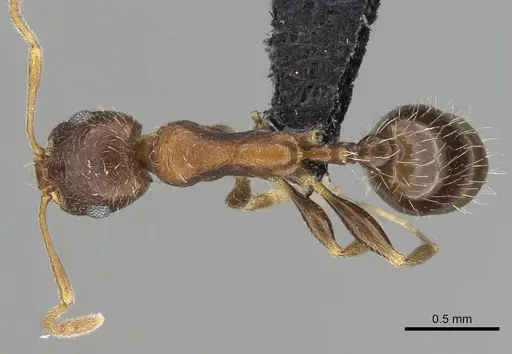
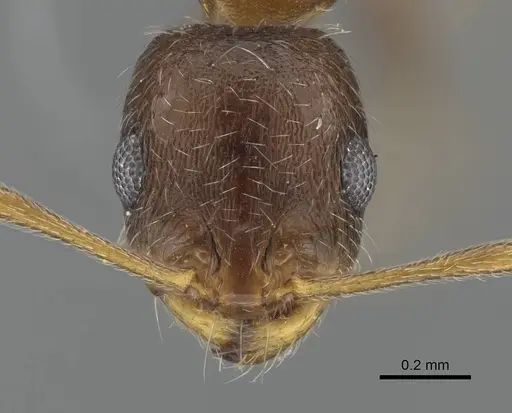
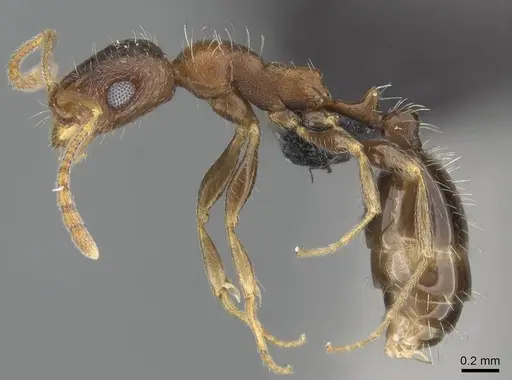
CASENT0120396
View on AntWeb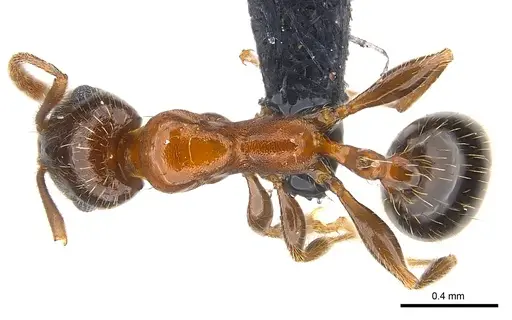
Literature
Loading...Loading products...